Guided Reading Lessons, Group Books, & More
The
Arctic Food Web - 0.5 - 4.4 [Group 1]
Introduction:
|

|
The
Arctic Food Web
Author:
Keith Pigdon
Co-Author: Marilyn Woolley
Illustrated by: Lynne Muir
Copyright: 2000
Synopsis: Have you ever wondered what kinds of plants and
animals live in the icy waters of the Arctic Ocean? This book tells you
about some of these living things and how they are connected to one
another and to you.
|
Vocabulary:
write any words you are uncertain about in your journal and look them up in a
dictionary. Write a brief
definition.
Summarize:
In your journal, write a summary about the pages assigned prior to our next
meeting. If you are reading a
nonfiction text, you should write the main idea about each topic.
If it is a fiction book, your writing should include retelling what the
story is about, making a prediction about what is going to happen next in the
story, and connecting it to an experience in your life or another book you have
read.
Read
to find out:
Phytoplankton
produce their own food from---sunlight and clean water - p 4
How
are crabs different from shellfish? crabs
have legs - p 7
During
the winter, gray whales, bowhead whales and humpback whales---
travel
to warmer waters near the equator - p. 13
What
exists under the shallow waters of the Arctic Ocean? a large amount of oil - p. 18
What
can happen if a bird's feathers are covered with oil? the bird could die from the cold p
Arctic Food Web
Objective
Students create food
webs for animals in the arctic.
Materials
- Arctic Food Web activity sheet
- pencils or pens
- resource materials
- computer with Internet access (optional)
Directions
Discuss with students
the fact that living things need food in order to survive. A food chain shows
how living things need each other for food. A green plant is usually found at
the bottom of a food chain. The plant uses energy from the sun to carry on a
process called photosynthesis. This allows the plant to produce its own food. As
a result, the plant in a food chain is called a producer.
The producer, or plant,
is eaten by an animal that is a herbivore, which is an animal that eats only
plants, or an omnivore, which is an animal that eats plants and other animals.
On the food chain, the animal that eats the producer is called a consumer. This
is because it consumes the producer.
In the next part of a
food chain, the consumer is eaten by another animal that is a carnivore, which
is an animal that eats only meat, or an omnivore. This animal is also called a
consumer.
Here is an example of a
food chain. Notice that the arrows start with the producer and point toward the
consumers.
Producer -->
Consumer --> Consumer
(Grass) -->
(Grasshopper) --> (Bird)
There are many food
chains living in a community. Some are very simple, while others are more
complex. Since most animals eat more than one type of food, they might have
several different food chains that can be made. When food chains connect or
overlap, it is called a food web. If one part of the food web becomes extinct,
the entire web may be affected, causing drastic consequences.
Write these examples of
food webs on the board:
Snowy Owl -->
Lemming --> Plants
Snowy Owl -->
Arctic Hare --> Plants
Snowy Owl -->
Ground Squirrel --> Plants
Ask students if they
can create a food web that begins with humans. Have them write some possible
webs on the board. Discuss what we are dependant on in order to survive.
Distribute copies of
the Arctic Food Web activity sheet to students. Have them use any resource
materials available to complete the activity.
Resources
Time
Internet Links
A to Z of Food
Chains and Webs
http://edu.leeds.ac.uk/~edu/technology/epb97/forest/azfoodcw.htm
Sea World/Busch
Gardens: Wild Arctic Activities
http://www.seaworld.org/arctic/
Animals of the
Arctic
http://tqjunior.thinkquest.org/3500/
Activity Sheets
Click
here to view and print the activity sheets.
To
view the activity sheets, you need Adobe Acrobat Reader. Click
here to download Acrobat Reader, complete with plug-ins for your browser.
Lesson
plans provided by Teacher Created Materials.
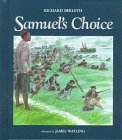
Samuel's
Choice -
0.5 [Group 2]
Introduction:
|
|
Samuel’s
Choice
Author:
Richard
J. Berleth
Illustrated by: James
Watling
Copyright: 1990
Synopsis: Samuel, a young slave who lives in Brooklyn in 1776,
listened to his master, Isaac van Ditmas, and to the slaves talk about the
colonists wanting to be free. He was not sure what "freedom" or
"liberty" meant, but he learned that people declared themselves
free. He knew he could not. However, other slaves like Old Toby and Sana
were planning on being free. When he met a young colonial soldier who was
hurt in battle, he then knew he had to make a choice—help the colonists
like Sana and Old Toby or follow the orders of his master. He chose to
help the colonists, saving the drowning soldiers and giving valuable
information to the officers of the Continental Army. Ultimately, Samuel
learned that he was free because his master, Isaac van Ditmas, traded his
property to the Continental Army in order to keep his freedom.
|
Vocabulary:
write any words you are uncertain about in your journal and look them up in a
dictionary. Write a brief
definition.
Summarize:
In your journal, write a summary about the pages assigned prior to our next
meeting. If you are reading a
nonfiction text, you should write the main idea about each topic.
If it is a fiction book, your writing should include retelling what the
story is about and making a prediction about what is going to happen next in the
story.
Read
to find out:
What
was Samuel's job at Farmer Isaac's? -ground
wheat at a flour mill?
What
did Samuel see that made him dream of freedom? -the gulls flying
The
war coming to Brooklyn was between the --- English king and the Sons of Liberty
What
did Isaac do with the Declaration of Independence? -He
tore it off a tree and stamped on it
What
did Washington's recruits look like to Samuel? -ragged
unsure men and boys
What
did Sana have in a bag on her shoulder? -freedom
flour
Samuel
decided to use his hands to --- pull the oars and rescue the soldiers in the
marshes
Major
Gist asked Samuel to --- cross the water in the dark with a rope
During
the night what did Washington's men do? -They
followed the rope in boats across the water
Who
was the officer in the blue coat who asked how deep the water was?
-General
Washington
Activities
Themes: making choices, life in the past, historical fiction
Samuel's Choice
is based upon The Battle of Long Island and the defeats suffered by the
Continental Army during the first days of the American Revolution. However, the
characters of Samuel, Toby, and Sana are fictional.
Although this is a book written for
advanced third graders, it should be incorporated into a unit on the American
Revolution.
DISCUSSION:
Have the students decide what freedom is. Let them list examples of freedom, as
they know it, and examples of freedom from the story.
SYNTHESIS:
Many students do not understand why the colonists wanted freedom from England.
They do not understand the idea of taxation without representation. I did the
following activity with a group of 5th graders when we studied the American
Revolution.
Explain to them that this activity will
give them an idea of how the colonists felt about being taxed. Give the students
a set amount of beans. The beans will serve as money to be used for privileges.
In order to do anything in the classroom, other than go to the restroom, have
them pay a tax for any privilege—sharpening pencils, playing at recess, having
to get homework from the backpack, etc. Have different amounts for the various
activities. Do this for 60 minutes. At the end of the allotted time, ask the
students how they felt and what they would change. The reactions will
vary—most will be unhappy, some will try to change the activity as it occurs,
and some will be unhappy but will continue working with it.
The story also shows that EVERYONE,
regardless of race, was involved in the fight for freedom. However, the slaves
did not receive their freedom until nearly 90 years later. It is important for
the students to understand this.
http://www.eduplace.com/rdg/index.html
Copyright © 2002 Houghton Mifflin Company.
http://einsy1.clpgh.org:8888/MARION/ABZ-8188
Paul
Revere's Ride - 0.5 [Group 2]
Introduction:
|
|
Paul
Revere's Ride
This
book is about the first battle of the American Revolution.
Can anyone tell me why we fought the American Revolution?
What did Paul Revere do? Do
you know what happened in the first battle of the war?
[The colonists drove the British back to Boston.]
If not, let’s read this story to find out.
Author:
Henry Wadsworth Longfellow
Illustrated by: John Fairbridge
Copyright: 1992
Synopsis: This is a beautifully illustrated poem of the
famous legend of Paul Revere and his midnight ride from Boston, through
Lexington, to Concord, Massachusetts. It includes a map and glossary.
|
"Listen,
my children, and you shall hear/Of the midnight ride of Paul Revere ..." So
begins one of the most stirring poems in American literature. Henry Wadsworth
Longfellow wrote "Paul Revere's Ride" in 1861, nearly 100 years after
the actual midnight ride that began on April 18, in 1775. The poem creates a
suspenseful story as American colonist Paul Revere decides with his friend
Robert Newman and others to avert a British attack on Concord, Massachusetts.
The British had come from Boston in search of the colonists' arms supply. What
Revere and his friends didn't know was whether the Redcoats would come by land
(around the mouth of the Charles River) or by sea (across the river). Newman
spotted the British "by sea" and signaled from the Old North Church
tower to Revere, who was "Ready to ride and spread the alarm/Through every
Middlesex village and farm,/For the country folk to be up and to arm." And,
by morning, the country folk were ready, indeed. "Chasing the red-coats
down the lane,/Then crossing the fields to emerge again/Under the trees at the
turn of the road,/And only pausing to fire and load." This battle, the
first of the American Revolution, drove the British back to Boston.
Ted Rand--well-loved illustrator of The
Hullabaloo ABC, Mailing
May, Knots
on a Counting Rope, and many other critically acclaimed titles--masters
the mood and movement of the famous midnight ride, and children will love the
power and drama of this historic American event. (Great read-aloud, ages 4 to
8) --This text refers to the School
& Library Binding edition.
Vocabulary:
write any words you are uncertain about in your journal and look them up in a
dictionary. Write a brief
definition.
Summarize:
In your journal, write a summary about the pages assigned prior to our next
meeting. If you are reading a
nonfiction text, you should write the main idea about each topic.
If it is a fiction book, your writing should include retelling what the
story is about and making a prediction about what is going to happen next in the
story.
Read
to find out:
The
signal to warn of the coming British was to be--- a lantern hung in a church
belfry
What
did Paul's friend do while Paul rowed across the bay? watched British soldiers march to the shore
Why
did Paul's friend light two lamps? He saw a line of boats where the river met
the bay
It
was twelve o'clock when Paul reached---Medford
Because
of Paul's midnight ride, the people were able to---turn back the redcoats'
attack
In
Search of the Great Bears - 0.5 [Group 3]
Introduction:
|
|
In
Search of the Great Bears
Author:
Buck Wilde
Photographer: Buck Wilde
Copyright: 1995
Synopsis: Read about survival secrets of the grizzly bear,
such as how they survive winter, how they hunt, how their senses work, and
other facts. The protection of remaining grizzlies is also discussed.
|
Vocabulary:
write any words you are uncertain about in your journal and look them up in a
dictionary. Write a brief
definition.
Summarize:
In your journal, write a summary about the pages assigned prior to our next
meeting. If you are reading a
nonfiction text, you should write the main idea about each topic.
If it is a fiction book, your writing should include retelling what the
story is about, making a prediction about what is going to happen next in the
story, and connecting it to an experience in your life or another book you have
read.
Read
to find out:
The Yavapai said the grizzlies “are like people, except they
don’t…” make fire – p 8
What happened to the cub that disappeared over a waterfall? It was
“adopted” by another grizzly – p 12
Why did the mother bear return to higher ground?
Smelled the scent of a human – p 14
Why didn’t the native Americans hunt the grizzlies?
They respected them as part of the natural world. – p 18
What marked the beginning of the end for the grizzly bears?
Explorers shot them – p 21
Why were the bears hungry and frustrated after fishing for a week?
The fishermen caught the salmon – p 26
How did the U.S. government harm the grizzly bears?
It paid bounty hunters to slaughter them – p 30
When did Silvertip’s 3 fertilized eggs begin to develop?
After she starts hibernating – p 34
Why is there a great concern for the remaining grizzly bears? Each
produces only 2 cubs – p 40
What was happening while grandfather slept?
A logging road is being built – p 44
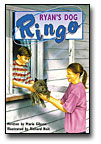
Ryan’s Dog Ringo – 3.0
[Group 4]
Introduction:
Vocabulary:
write any words you are uncertain about in your journal and look them up in a
dictionary. Write a brief
definition.
Summarize:
In your journal, write a summary about the pages assigned prior to our next
meeting. If you are reading a
nonfiction text, you should write the main idea about each topic.
If it is a fiction book, your writing should include retelling what the
story is about, making a prediction about what is going to happen next in the
story, and connecting it to an experience in your life or another book you have
read.
Read
to find out:
What
was one way Aunt Beth changed after Greg’s accident? She insisted on doing everything for him and didn’t have
time for anyone else – p 6
Zip
was Ryan’s kitten only for a week because… Greg takes over the kitten –
p 20-21
When
going to obedience school, why did Ryan ask Rachel to come over?
They needed Rachel’s help to get Greg down the steps – p 36
At the beach, why did Greg put Trixie under the blanket?
To hide her from the dog catcher – p 52
According to Ryan, what was one of Aunt Beth’s “impossible
rules”?
Why
didn’t Ryan want Trixie’s puppy to be called “Ringo”? – p 77
How
did Trixie’s obedience kill her? – p 86-87
Why
was Rachel unable to help Ryan with the puppy?
Ryan
angrily told Aunt Beth that Greg would never walk while …
What
is one reason Aunt Beth blamed herself for Greg’s accident?
The Journal: Dear Future II – 3.0 [Group #]
Introduction:
|
|
The
Journal: Dear Future II
Author:
Meredith Costain
Illustrated by: Teresa Culkin-Lawrence
Copyright: 1997
Synopsis: A time capsule, buried for more than two hundred
years, is found under Anika’s learning center. Inside is a journal
compiled by a 20th century girl. Anika is inspired to write her own
journal and makes another time capsule, providing a glimpse into our
possible future.
|
Vocabulary:
write any words you are uncertain about in your journal and look them up in a
dictionary. Write a brief
definition.
Summarize:
In your journal, write a summary about the pages assigned prior to our next
meeting. If you are reading a
nonfiction text, you should write the main idea about each topic.
If it is a fiction book, your writing should include retelling what the
story is about, making a prediction about what is going to happen next in the
story, and connecting it to an experience in your life or another book you have
read.
Read
to find out:
|
|
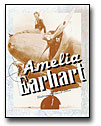
Amelia
Earhart
Author:
David Lowe
Synopsis: This book traces the life of Amelia Earhart from
birth to final flight, and highlights her drive and courage in the face of
skepticism based on gender. It features other international women
aviators.
|
|
|
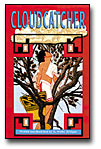
Cloud
Catcher
Author:
E. Wesley Jernigan
Illustrated by: Margie Chellew
Copyright: 1997
Synopsis: Manytracks, an Anasazi indian boy, can do nothing
right, and is sent away to work in the mountains. He decides it is time
for a change and captures a cloud, angering the Cloud People and his
uncle, the chief rain priest. The survival of his people depends on the
actions of Manytracks to bring rain to them.
|
|
|
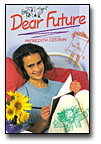
Dear
Future
Author:
Meredith Costain
Copyright: 1995
Synopsis: Anna decided to write a journal describing her
family, her grandmother’s illness, and the school concert, for the time
capsule project at school. By the time she finished, she decided to
continue writing so that she would have a record of her thoughts.
|
|
|
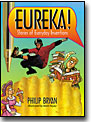
Eureka
Author:
Philip Bryan
Illustrated by: Mark Payne
Copyright: 1995
Synopsis: Stories that are behind everyday inventions can
have impact on children’s lives. Information about inventors and their
circumstances inspire creative problem solving.
|
|
|
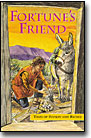
Fortune's
Friend
Author:
Multiple
Illustrated by: Multiple
Copyright: 1995
Synopsis: Information about many species of frogs, their
habitats, features, predators, food and life cycles are found in this
book. Environmental factors that endanger some frogs are discussed.
|
|
|
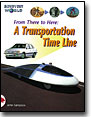
From
There to Here: A Transportation Time Line
Author:
John Sampson
Copyright: 1998
Synopsis: This book tells about the history of sea, land,
air, and space travel. Uses photos, illustrations, and charts.
|
|
|
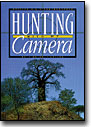
Hunting
with My Camera
Author:
Brian Enting
Photographer: Brian Enting
Copyright: 1992
Synopsis: A wildlife photographer goes game-spotting on
safari at Kruger National Park in southern Africa. See the photos of
impala, giraffes, baboons, elephants, warthogs, hippos, lions, hyenas,
zebras, and others.
|
|
|
Imagine
This, James Robert
Author:
Rebecca Weber
Illustrated by: Mike Spoor
Copyright: 1997
Synopsis: Jim Roberts has always had a vivid imagination,
which now comes in handy as he faces the fear of moving to a new place in
the mountains. Suspense builds as Jim stumbles on a plot that involves his
mother’s nasty boss -- a plot that could ruin the career of a
world-class skier. To save the day, Jim has to face his greatest fear and
learn how to ski.
|
|
|
In
Search of the Great Bears
Author:
Buck Wilde
Photographer: Buck Wilde
Copyright: 1995
Synopsis: Read about survival secrets of the grizzly bear,
such as how they survive winter, how they hunt, how their senses work, and
other facts. The protection of remaining grizzlies is also discussed.
|
|
|
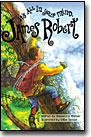
It's
All in Your Mind, James Robert
Author:
Rebecca Weber
Illustrated by: Mike Spoor
Copyright: 1995
Synopsis: James, the dreamer, who only imagines that he is a
brave adventurer, expects no adventure on his vacation with his parents.
Surprisingly, James’ saves a baby sea lion, and his bravery even stops
the dangerous Conners from polluting the ocean - and harming his parents.
|
|
|
Journal:
Dear Future II, The
Author:
Meredith Costain
Illustrated by: Teresa Culkin-Lawrence
Copyright: 1997
Synopsis: A time capsule, buried for more than two hundred
years, is found under Anika’s learning center. Inside is a journal
compiled by a 20th century girl. Anika is inspired to write her own
journal and makes another time capsule, providing a glimpse into our
possible future.
|
|
|
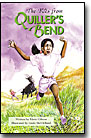
Kids
from Quiller's Bend, The
Author:
Marie Gibson
Illustrated by: Linda McCLelland
Copyright: 1997
Synopsis: Sharma thinks Quiller’s Bend is a great place to
live. Life is carefree and uncomplicated until Mr. Quiller dies and Sharma
meets the horrible Perkins family again. All the things that Sharma values
are threatened. The kids from Quiller’s Bend need to stick together to
save the Quiller house and Englebert, the goat.
|
|
|
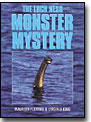
Loch
Ness Monster Mystery, The
Author:
Maureen Fleming
Co-Author: Virginia King
Illustrated by: Chris Johnston
Copyright: 1995
Synopsis: The Loch Ness Monster is a creature reportedly
sighted over 1500 years ago. The book combines newspaper accounts, photos,
and reports of sightings and scientific investigations, leaving children
with the question, What do you believe?
|
|
|
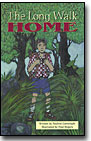
Long
Walk Home, The
Author:
Pauline Cartwright
Copyright: 1997
Synopsis: Because of the changes in Brad’s family life, he
decides to run away from home to where he and his father used to go
camping. He is determined to prove to his mother that he is old enough to
look after himself and make his own decisions. Soon Brad is lost and very
frightened, and he encounters an injured man. Together, they find their
way back out of the woods. The man helps Brad realize how lucky he really
is.
|
|
|
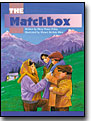
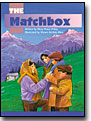
Matchbox,
The
Author:
Mary Finley
Illustrated by: Shawn Berlute-Shea
Copyright: 1995
Synopsis: This is the story of the daughter of two doctors
who joined the Italian resistance movement in World War II. Her parents
were captured by Mussolini’s soldiers, and later, Ginetta was also
captured. She almost gave up hope until someone smuggled her a special
message. After the war, she started Amnesty International to work for
human rights
|
|
|
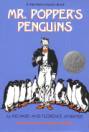
Mr.
Popper's Penguins
Author:
Richard
Atwater, Florence
Atwater, Robert
Lawson
Illustrated by: Robert
Lawson
More
than 60 years have not dated this wonderfully absurd tale--it still makes
kids (and parents) laugh out loud. Poor Mr. Popper isn't exactly unhappy;
he just wishes he had seen something of the world before meeting Mrs.
Popper and settling down. Most of all, he wishes he had seen the Poles,
and spends his spare time between house-painting jobs reading all about
polar explorations. Admiral Drake, in response to Mr. Popper's fan letter,
sends him a penguin; life at 432 Proudfoot Avenue is never the same again.
From one penguin living in the icebox, the Popper family grows to include
12 penguins, all of whom must be fed. Thus is born "Popper's
Performing Penguins, First Time on Any Stage, Direct from the South
Pole." Their adventures while on tour are hilarious, with numerous
slapstick moments as the penguins disrupt other acts and invade hotels.
Classic chapter-a-night fun. (Ages 5 to 10) --Richard Farr
|
|
|
Mr. Popper's
Penguins
Look
Inside This Book!
|
|
|
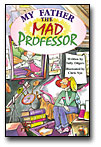
My
Father the Mad Professor
Author:
Sally Odgers
Illustrated by: Chris Nye
Copyright: 1997
Synopsis: Although other children envy her adventurous
lifestyle, Erica longs for a normal life. Her mother suggests that she
tries living with her father, a mad professor, whom she has never met.
Erica finds herself facing a whole year of strange inventions and
experiments - a far cry from the “normal” life she had wished for.
|
|
|
Paul
Revere's Ride
This
book is about the first battle of the American Revolution.
Can anyone tell me why we fought the American Revolution?
What did Paul Revere do? Do
you know what happened in the first battle of the war?
[The colonists drove the British back to Boston.]
If not, let’s read this story to find out.
Author:
Henry Wadsworth Longfellow
Illustrated by: John Fairbridge
Copyright: 1992
Synopsis: This is a beautifully illustrated poem of the
famous legend of Paul Revere and his midnight ride from Boston, through
Lexington, to Concord, Massachusetts. It includes a map and glossary.
|
|
|
|
|
|
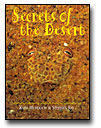
Secrets
of the Desert
Author:
Kath Murdoch
Co-Author: Stephen Ray
Illustrated by: Xiangyi Mo
Photographer: Ardea London
Copyright: 1995
Synopsis: This book describes desert climates around the
world, and explores how animals and plants find and store water, and how
sea fossils can be found in the middle of some deserts. It includes a
world map, a Glossary, Index, and many colorful and eye-catching
photographs.
|
|
|
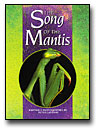
Song
of the Mantis
Author:
Peter Garland
Illustrated by: Nicola Evans
Photographer: Peter Garland
Copyright: 1995
Synopsis: This factual, free-verse poem depicting the life
cycle of the praying mantis is written in first person from the mantis’
point of view. Close-up color photography shows the mantis stalking,
attacking, and eating its spider prey. The book includes a two-page
diagram of a mantis.
|
|
|
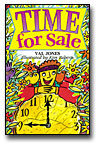
Time
for Sale
Author:
Val Jones
Illustrated by: Kim Roberts
Copyright: 1995
Synopsis: Herman meets a stranger who gives him a bag of
time, but warns Herman never to sell it. Because of his greed, he sells it
anyway and gets very wealthy. Then things go wrong and he loses all of his
possessions. Herman needs to do a selfless deed to realize the source of
true fortune and happiness.
|
|
|
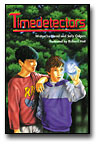
Timedetectors
Author:
Darrel Odgers
Co-Author: Sally Odgers
Illustrated by: Richard Hoit
Copyright: 1995
Synopsis: This science fiction mystery is set in the wild
Australian state of Tasmania. A time warp is created when two boys find a
prehistoric opalized skull and a two matching medallions. After
experimenting in time travel, the boys discover how to control the time
warp helping them to solve problems their fantastic adventures.
|
|
|
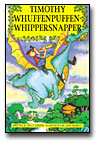
Timothy
Whuffenpuffen-Wippersnapper
Author:
Sally Odgers
Illustrated by: John Bennett
Copyright: 1995
Synopsis: Marcus receives another unwelcome animal gift from
his Great Uncle - a dragon! Unfortunately Marcus and his mother are
evicted from their home because of the dragon, and can not find Uncle
Hinckley to return it to him. An adventurous search draws them in to a
fantastic world of fun.
|
|

|
Trains
Author:
David Lowe
Copyright: 1992
Synopsis: Read this history of the first railroads; including
the time before railroads, railroad pioneers, building the railroads,
train travel and safety, famous trains, and railroads of the future.
|
|
|
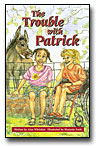
Trouble
with Patrick, The
Author:
Alan Whitaker
Illustrated by: Marjorie Scott
Copyright: 1997
Synopsis: Saina wishes for a pony to help compensate for the
hardships of leaving her friends behind when the family moved from the
city to the country. When her father comes home with a surprise donkey
instead, she must prove that she can look after him if she is ever to get
a real pony. Saina and her mother find a valuable ring, and Saina makes a
new friend. Her dreams come true thanks to Patrick, the donkey.
|
|
|
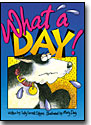
What
a Day!
Author:
Sally Farrell Odgers
Illustrated by: Mary Davy
Copyright: 1987
Synopsis: A day in the life of a family pet is told from the
dog’s point of view. Mr. D. describes his experiences with family
members, neighboring pets, and the Best Decorated Pet Contest.
|
|
|
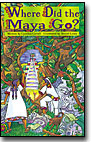
Where
Did the Maya Go?
Author:
Cynthia Carroll
Illustrated by: Daniel Luna
Copyright: 1997
Synopsis: A young Mayan girl wanted to know what became of
her ancestors when she came across the ruins of an ancient civilization in
the Central American jungle. During her siesta, she dreamt of a Mayan
prince who lived in the thriving ancient civilization, and when she awoke
she found an artifact of that ancient culture. The Appendix provides
historical facts of Mayan culture.
|
|
|
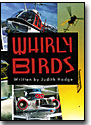
Whirly
Birds
Author:
Judith Hodge
Copyright: 1992
Synopsis: This book focuses on the history of the first
helicopters, how a helicopter flies, and differences between helicopters
and planes. Also, read the information about different types of
helicopters, and where and how they are used.
|
|
|
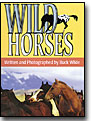
Wild
Horses
Author:
Buck Wilde
Photographer: Buck Wilde
Copyright: 1997
Synopsis: Through amazing photography, straight narrative and
dramatization Wild Horses traces nearly 60 million years of horse history.
Because of the demise of vast open grasslands, wild horses faced the
possibility of extinction. The book explores the ways that wild horse
populations are recovering, but still face dangers by predators and
inhospitable terrain.
|
|
|
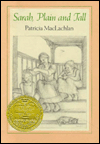
Sarah,
Plain and Tall
Patricia
MacLachlan
Synopsis
When their father
invites a mail-order bride to come and live with them in their prairie
home, Caleb and Anna are captivated by their new mother and hope that she
will stay. "Grades three to five." (Bull Cent Child Books) Sarah
answers Papa's advertisement for a mail-order bride, but the children are
afraid she will not want to stay. Newbery Medal 1986
|
http://rigby.com/corrlevel/assess/leveling_reader.asp
Mr. Popper's Penguins
http://www.teachervision.com/?wtlAC=familyeducation.com,LNnav
Books for Ages 9-10
Charlotte's
Web, by E. B. White
Wilbur, the pig, is desolate when he discovers that he is destined to be the
farmer's Christmas dinner until his spider friend, Charlotte decides to help
him.
Tuck
Everlasting, by Natalie Babbitt
The Tuck family is confronted with an agonizing situation when they discover
that a ten-year-old girl and a malicious stranger now share their secret about a
spring whose water prevents one from ever growing older.
Sarah,
Plain and Tall, by Patricia MacLachlan
When their father invites a mail-order bride to come live with them in their
prairie home, Caleb and Anna are captivated by their new mother and hope that
she will stay.
Bill
Peet: An Autobiography, by Bill Peet
The well-known author and illustrator relates the story of his life and work.
Bridge
to Terabithia, by Katherine Paterson
The life of a ten-year-old boy in rural Virginia expands when he becomes friends
with a newcomer who subsequently meets an untimely death trying to reach their
hideaway, Terabithia, during a storm.
Charlie
and the Chocolate Factory, by Roald Dahl
Each of five children lucky enough to discover an entry ticket into Mr. Willy
Wonka's mysterious chocolate factory takes advantage of the situation in his own
way.
Where
the Sidewalk Ends, by Shel Silverstein
Irreverent, hilarious and wildly popular, this collection of Silverstein's verse
is hard to put down.
Dear
Mr. Henshaw, by Beverly Cleary
In his letters to his favorite author, ten-year-old Leigh reveals his problems
in coping with his parents' divorce, being the new boy in school, and generally
finding his own place in the world.
Little
House on the Prairie, by Laura Ingalls Wilder
The adventures continue for Laura Ingalls and her family as they leave their
little house in the Big Woods of Wisconsin and set out for Kansas. They travel
for many days in their covered wagon until they find the best spot to build
their little house on the prairie. Sometimes pioneer life is hard, but Laura and
her folks are always busy and happy in their new little house.
James
and the Giant Peach, by Roald Dahl
For young James Henry Trotter, life with the exceedingly nasty Aunt Sponge and
Aunt Spiker is pure misery. James dreams of a better life, but he's totally
unprepared for the wild adventures ahead of him when he drops the magic crystals
he receives from a strange old man. Before long James is off on a weird,
wonderful journey inside a giant peach with a bizarre group of companions!
Tales
of a Fourth Grade Nothing, by Judy Blume
A nine-year-old is "given" a little brother and soon decides that she
is expendable. But some things about little brother are lovable too.
Shiloh,
by Phyllis Reynolds Naylor
Eleven-year-old Marty Preston "finds a stray dog that seems to be abused
and is determined to keep it at all costs. Because his family is very poor,
without money to feed another mouth, his parents don't want any pets.
Subsequently, there is a lot of conflict over the animal within the family and
between Marty and Judd Travers, the dog's owner
Mr.
Popper's Penguins, by Richard Atwater and Florence Atwater
The unexpected delivery of a large crate containing an Antarctic penguin changes
the life and fortunes of Mr. Popper, a house painter obsessed by dreams of the
Polar regions. Mr. Popper, a disheveled house painter,
dreams of exploring the South Pole and having a penguin as a pet. To his
astonishment Admiral Drake, an explorer, sends him a penguin. Eventually he has
a family of penguins.
Harriet
the Spy, by Louise Fitzhugh
Harriet M. Welsch is determined to grow up and be a famous author. In the
meantime, she practices by following a regular spy route each day and writing
down everything she sees in her secret notebook. Then one morning, her
classmates find her spy notebook and read it out loud! Harriet's in big trouble.
The other sixth-graders are stealing her tomato sandwiches, forming a
spy-catcher club, and writing notes of their own -- all about Harriet!
Stuart
Little, by E. B. White
The adventures of the debonair mouse Stuart Little as he sets out in the world
to seek out his dearest friend, a little bird who stayed a few days in his
family's garden.
Walk
Two Moons, by Sharon Creech
After her mother leaves home suddenly, thirteen-year-old Sal and her
grandparents take a car trip retracing her mother's route. Along the way, Sal
recounts the story of her friend Phoebe, whose mother also left.
Out
of the Dust, by Karen Hesse
In a series of poems, fifteen-year-old Billie Jo relates the hardships of living
on her family's wheat farm in Oklahoma during the dust bowl years of the
Depression.
Classics for Ages 9-12
A
Wrinkle in Time, by Madeleine L'Engle
Meg Murry and her friends become involved with unearthly strangers and a search
for Meg's father, who disappeared while engaged in secret work for the
government.
Charlotte's
Web, by E. B. White
Wilbur, the pig, is desolate when he discovers that he is destined to be the
farmer's Christmas dinner until his spider friend, Charlotte decides to help
him.
Charlie
and the Chocolate Factory, by Roald Dahl
Each of five children lucky enough to discover an entry ticket into Mr. Willy
Wonka's mysterious chocolate factory takes advantage of the situation in his own
way.
Harriet
the Spy, by Louise Fitzhugh
Harriet M. Welsch is determined to grow up and be a famous author. In the
meantime, she practices by following a regular spy route each day and writing
down everything she sees in her secret notebook. Then one morning, her
classmates find her spy notebook and read it out loud! Harriet's in big trouble.
The other sixth-graders are stealing her tomato sandwiches, forming a
spy-catcher club, and writing notes of their own -- all about Harriet!
James
and the Giant Peach, by Roald Dahl
For young James Henry Trotter, life with the exceedingly nasty Aunt Sponge and
Aunt Spiker is pure misery. Jame dreams of a better life, but he's totally
unprepared for the wild adventures ahead of him when he drops the magic crystals
he receives from a strange old man. Before long James is off on a weird,
wonderful journey inside a giant peach with a bizarre group of companions!
The
Lion, the Witch, and the Wardrobe, by C. S. Lewis What begins as a
simple game of hide-and-seek quickly turns into the adventure of a lifetime when
Peter, Susan, Edmund, and Lucy walk through the wardrobe and into the land of
Narnia.
Little
Women, by Louisa May Alcott
One of American Literature's most loved novels, this is a story of family, of
hope, of dreams, and of growing up as four devoted sisters search fro romance
and find maturity in Civil-War era 19th century New England.
The
Phantom Tollbooth, by Norton Juster
A bored, uninspired schoolboy takes an adventurous drive through a toy tollbooth
and begins a magical journey into a world of numbers and letters. Along the way,
he learns to appreciate life and the many exciting things it has to offer.
Tales
of a Fourth Grade Nothing, by Judy Blume A nine-year-old is
"given" a little brother and soon decides that she is expendable. But
some things about little brother are lovable too.
http://www.teachervision.com/lesson-plans/lesson-1607.html
Twenty Characters You
Should Know
James and the Giant Peach
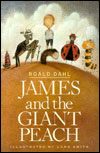
James
and the Giant Peach
by Roald Dahl
For James Henry Trotter, life with the exceedingly nasty Aunt Sponge and Aunt
Spiker is pure misery. Jame dreams of a better life, but he's totally unprepared
for the wild adventures ahead of him when he drops the magic crystals he
receives from a strange old man. Before long, James is off on a weird, wonderful
journey inside a giant peach with an odd assortmnet of traveling companions!
* Click on a topic below to gather your resources:
Enrichment
Activities
Internet
Resources
Books
by Roald Dahl
Enrichment Activities
Choral Reading
The poems in this story are especially great to read aloud. Have students
practice choral-reading techniques and deliver presentations to the rest of the
class or to other classes. Some kinds of choral reading are:
· Unison (all
read together)
· Refrain
(teacher reads verses, students recite a repetitive refrain)
· Antiphonal
(students are in groups with each group responsible for a certain part of the
poem).
You might also have the students experiment with volume and
pace -- variation makes for different experiences.
People We Know
Roald Dahl used the technique of personification (giving human
characterisitics or qualities to nonhumans) in this story. Many of these human
characterisitics are exaggerations. Yet, some of your students may recognize
these traits in people they know or in characters from another book. Create a
chart which details people or characters who have similar traits as the insects
and James. Remind students not to hurt anyone's feelings!
Research on Insects
Some students may be squeamish about the insects in this story . You can help
them to learn more about these critters by assigning research projects.
Poetry Writing
There is a great deal of wonderful poetry in this story. This would be a perfect
opportunity for your students to try their hand at writing poetry. You may want
them to mimic the narrative form of poetry in the story. Or you could explore
other poetic forms: haiku, diamante, odes, sonnets.
The Movie
Show your students the video version of James and the Giant Peach .
Discuss and/or create a Venn diagram to compare and contrast the movie with the
book. Which one was better? Why?
Draw A Scene
Roald Dahl developed
fantastic images in this book. Have your students create a mural of the places
the peach visited -- a timeline of the book's main events that runs along the
bottom of an extra-wide piece of paper will help orient them.
Overcoming Fear
A recurring theme in James and the Giant Peach is overcoming fear. Have
your students write about a time they had to overcome a fear. Questions you can
use to encourage good writing: What was James afraid of? What were the insects
afraid of? What are you (the student) afraid of? What strategies did the
characters use to overcome their fear? What strategies did you (the student) use
to overcome your fear? What are some common techniques of overcoming fear?
Return
to Top of Page
Internet Resources
James and the Giant Peach Activities
Grade Levels: Intermediate
http://www.eduplace.com/tview/tviews/j/jamesandthegiantpeach.html
Room 206 and the Giant Peach
Grade Levels: Intermediate
http://schools.cps.k12.il.us/suder/room_206_and_the_giant_peach.htm
ScreenIt Review of Movie
Grade Levels: Intermediate, Middle
http://www.screenit.com/movies/1996/james_&_the_giant_peach.html
Teacher's
Guides to Intermediate/Middle Literature
Select one of the titles below to view great supplemental material that will
assist students in enjoying and understanding these literature.
American Revolution
Books
http://www.teachervision.com/lesson-plans/lesson-10189.html
http://www.teachervision.com/tv/lounge/newsletter/newteacher/nov_01.html
http://www.teachervision.com/tv/lounge/newsletter/literature/ll_archive.html
Comparison
of the two different classrooms
In order to visualize the
two different types of classrooms, think about the structure of each:
|
Learner-centered
|
Curriculum-centered
|
|
Child-centered
|
Teacher-centered
|
|
Constructivist-driven
|
Standards-driven
|
|
Progressive
|
Traditional
|
|
Information-age
model
|
Factory
model
|
|
Criterion-based
|
Norm
(bell curve) based
|
|
Depth
|
Breadth
|
|
Thematic
integration
|
Single
subjects
|
|
Process-
and product-oriented
|
Product-oriented
|
|
Block
scheduling
|
Short
time periods
|
|
Collaboration
|
Isolated
teaching and learning
|
|
Experiential
knowledge
|
Rote
knowledge
|
Many teachers fall somewhere in the middle of this continuum. They are neither
strictly learner-centered nor only curriculum-centered. Teachers use what works
for them based on their fundamental belief structures.
The best audience is one that listens! It
does not have copies of what is being read. It does not have distracting items
such as pencils or popcorn. Simply stated, the best audience is prepared to
invest itself in the reading. It is part of the oral reading performance.


