|
CENTRAL CHURCH DOVERCOURT
HISTORY OF CENTRAL CHURCH AND ITS FORMER CHURCHES DOVERCOURT METHODIST CHURCH AND DOVERCOURT UNITED REFORMED CHURCH |
|
CENTRAL CHURCH DOVERCOURT
HISTORY OF CENTRAL CHURCH AND ITS FORMER CHURCHES DOVERCOURT METHODIST CHURCH AND DOVERCOURT UNITED REFORMED CHURCH |

The Webmaster would be interested to see any archive or historical material. Pictures please.
|
Where have we come from?
The Congregational Church erected a new building for their existing congregation in Cliff Road in 1904. (See Congregational Church for earlier history)
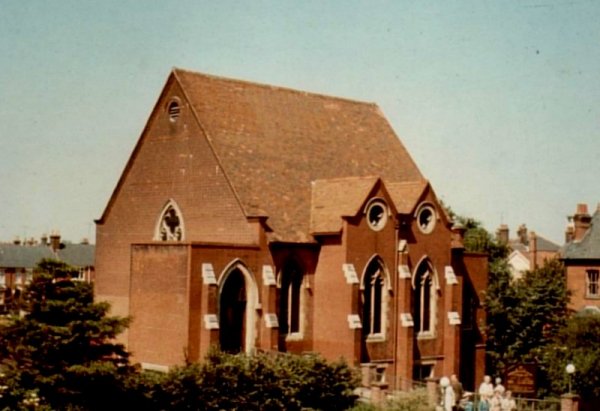
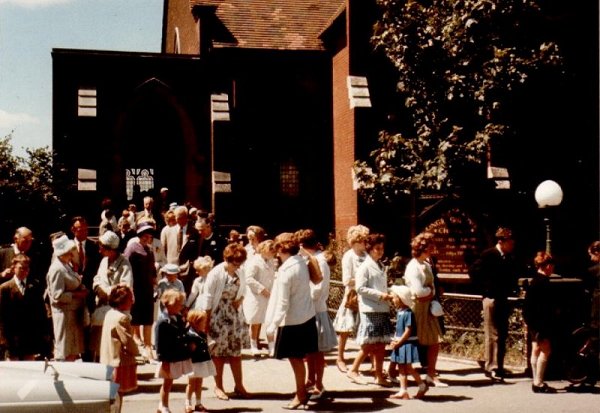
The Methodist Church began to worship in the present sanctuary in Main Road in 1905. A small hall and facilities were added later. (See Methodist Church for earlier history) During the Second World War (1939-45) both churches were much frequented by HM forces, stationed in Harwich. The two congregations had for many years shared worship on Good Fridays, and during the 1980's had for a time joined together for evening worship. In 1972 the Congregational Church became the United Reformed Church. In October 1987 the building in Cliff Road was badly damaged by a hurricane. After sharing the building of St Augustine's Anglican Church (now demolished) the United Reformed Church Congregation, during the Pastorate of the Rev Gordon Lemon, were invited to share responsibility for worship with the Dovercourt Methodist Church and to use their premises in 1989. From the beginning the two congregations worshipped together taking responsibility for alternate services according to the traditions of each denomination. During this time they learned more of each other's traditions and ways of Church life. In 1990 for the first time a Minister of the United Reformed Church, the Rev Colin Knight, was ordained in the building. By 1992 it was felt that it was time to enter into a "Joint Sharing Agreement" to officially recognize the joint use of the premises. 90th Anniversary Celebrations of the 90th Anniversary of the Methodist Chapel 1995 saw the 90th Anniversary for the Methodists in which everyone took part, with the Rev John Robinson from Brightlingsea leading. The development of the Cliff Road site as a Congregational Church was phased over several years, commencing in 1904 and ending in 1908, so that 1905 seemed a convenient intermediate date for marking the centenary as a celebration for both church fellowships. |
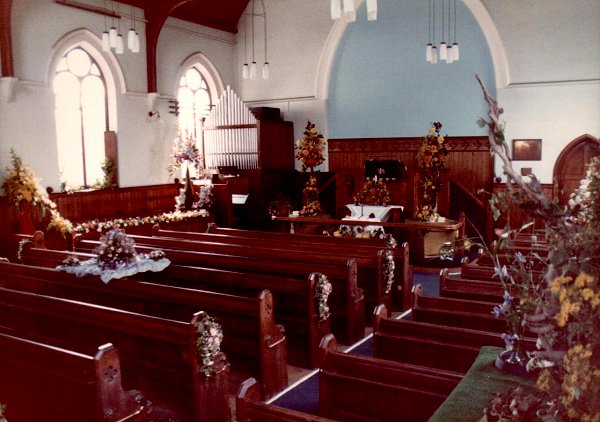
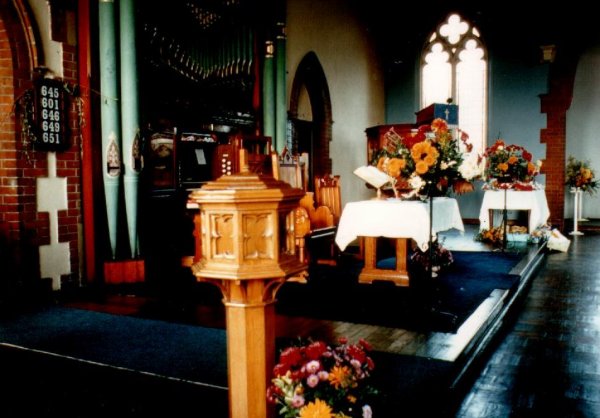
After continuing happy and successful working together, and much discussion and prayer, an Ecumenical Partnership was formed in 1997 under the leadership of the Methodist Minister, the Rev Philip Wagstaff. The Church then became known as Dovercourt Central Church (United Methodist/United Reformed). During the first year together much creative thought went into the way that the church could develop. In the same year a feasibility study to look at the possibility of redevelopment of the premises was begun. In 1998 Church Meeting agreed to redevelop the halls but keep the existing church and in 1999 plans were agreed. Fund-raising now began in earnest, while there were those who thought that it was too ambitious. Finally the work began in 2001. In the interim the congregation was accommodated at Parkeston Methodist Church, and all activities were continued. During this time a happy relationship developed between the two fellowships, which is still ongoing. Unfortunately, or fortunately, dry-rot was discovered in the church, and further renovations had to be done there, adding to the cost, but resulting in a transformed worship area, with an atmosphere of light and space. In August 2002 the congregation returned to the new building with great rejoicing. An open day attracted many from Harwich and Dovercourt and the surrounding area. Under the ministry of the Rev Suzette Manning the congregation and community have benefited from the new premises, which the Church puts at the disposal of various groups. The Church is grateful to all who have contributed to this result, whether in service or money, and continues to work to complete paying for this great undertaking. Mission Statement: We the members and adherents of Dovercourt Central Church declare our intention to continue and advance God's work in this town. Part of this process is to improve all existing facilities in the most appropriate and imaginative way so as to meet all opportunities for the local community to interact with the Church. |
EARLIER HISTORY
|
DOVERCOURT UNITED REFORMED CHURCH Formerly known as the Congregational Church
|
|
| Evidence of a
Congregational presence in Harwich stretches back to 1689 with a Meeting
House in the vicinity of West Street. Great expansion came during
the ministry of the Rev William Hordle (hence Hordle Street) who was
appointed in 1799 and continued his ministry for the next 50
years. His great enthusiasm and preaching skills attracted large
congregations.
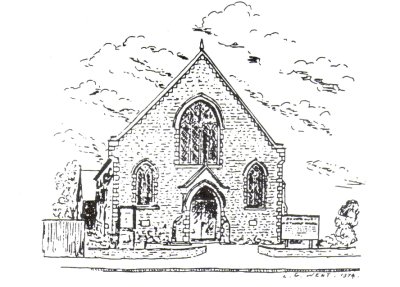
In 1868 Mr Isaac Perry of Chelmsford sent an iron building to the Harwich Congregational Church officers for use in Dovercourt, but it was not erected and was eventually used in another part of the county. The real development in Dovercourt began in 1900 when Congregational services were held in the Victoria Hall, adjoining the Cliff Hotel. Then it was decided to seek a permanent site for a church and a plot was purchased in Cliff Road from Mr A H Ward. Because the site was extremely awkward (it had been a brickfield) the building was developed in stages, beginning with the lower part of the chapel, which became the Sunday School. This section was opened on June 15th 1904 by Dr John Hunter. The top part of the building, with a seating capacity of 400, was completed and opened on July 29th 1908. this achievement required a huge fund raising effort which included a "Grand Naval Bazaar" staged at the Retreat, situated at the bottom of Beach Road (now an open space). Despite stormy and wet weather, this three day event, culminating in a grand firework display, was a great success, raising £148. The Pastor leading the congregation during these formative years was Rev. E E Greening. Included in the brochure describing the opening of the Cliff Road church is an Appendix entitled "The Jewel Casket" which contains 40 pages of proverbs, quotations, Biblical texts, sayings, poems or verses, each contributed by named individuals from Dovercourt or elsewhere. They are hugely various in tone ranging from the comic to the serious. Two examples are included. Master Frank Saunders of Dovercourt: definition of a gentleman - "A Gentleman is a growed-up boy wot used to mind his mother". Mr H Bellchamber of Dovercourt - "No destiny dispenses with endeavour". The Dovercourt Congregational Church became the Dovercourt United Reformed Church in 1972 when the Congregational Church in England and Wales united with the Presbyterian Church in England. It continued its worship, work and witness in the Cliff Road building until the roof was destroyed in the hurricane of 1987, when the congregation shared the building with St Augustine's Church of England until it closed in 1989, and then moved to share with the Methodist Church at its invitation, during the ministry of the Rev Gordon Lemon.
|
There was a very
lively Methodist presence in Harwich at the beginning of the 20th
century with two chapels in Harwich (Wesleyan and Primitive Methodist),
a third opposite the Park, a fourth at Upper Dovercourt and a fifth at
Parkeston.
Local enthusiasm lead to a decision to build a new church at Dovercourt. the Church of England had already established and extended St Augustine's in Hill Road and the Congregationalists were building in Cliff Road. A local builder, Edward Saunders was developing the Hill Crest Estate which included Brooklyn and Oakland Road. A site at the top of Oakland Road was selected for the new building. On June 22nd 1905, with Rev C. Kelly, President Elect of the Methodist Conference presiding, the new building was officially opened by the Mayor of Harwich. The church cost £1,960 and offered seating for 260. A large schoolroom was erected at the side of the building with spare land earmarked for extensions. When the Primitive Methodist Church opposite Cliff Park closed, its congregation and Sunday School pupils transferred to Oakland Road. Harwich had a long association with Methodism. John Wesley visited Harwich when he was "en route" to the Continent. He lodged with the Rector of Harwich, Revd John Jones who was a former colleague. He probably preached at the Chapel in Church Lane (opposite St Nicholas' Church). His journal dated 2nd December 1786 noted he "was much pleased in the evening with the largeness and seriousness of the congregation". the first Wesleyan church in Harwich was built in 1829. At their centenary in 1929, the preacher was the President of Conference, Dr J W Lightley. the names of two other ministers attending the service will strike a familiar note - Rev J H Bodgener and Rev H Whitmore. Both were former Sunday School pupils. Their families' names have long association with "Bodgenors" - a local tailoring business, whose shop by that name was later bought out by the present day Coe's. Interestingly, the present Mr John Whitmore was formerly a Deacon of the Cliff Road Congregational Church. It was the move of the population westwards from Harwich to the rapidly growing Dovercourt that gave the impetus to the establishment of Dovercourt Methodist Church. The Church has always been closely connected with the Methodist Home for the Ages at Alexandra House in Marine Parade (formerly the Alexandra Hotel). Residents have often been members of both the Dovercourt Methodist Church and the United Reformed Church whose congregations have supported the work. Accordingly a service is held in Alexandra House every Sunday led by Ministers and lay people from both traditions of the united congregation. The small Methodist congregation in 1989 welcomed the influx of new people from the United Reformed Church to share responsibility for its worship and the united congregation took on a new impetus. As is common today the present congregation is comprised of people from the whole range of Christian denominations who find their spiritual home here. |
Dovercourt Central Church Website compiled by C. Knight © February 2006 ; telephone 01255 880675