The first thing to do once you’ve decided to go out adventuring, and gotten your gear together, is to find the group of people you’re going to be traveling with. These people will be your most important resource. Groups are less likely to be attacked, get lost, not have the skills to accomplish something. And most important, when you’re hurt, and bleeding. Your friends will be the ones to defend your mangled body, bind your wounds, or get a saint to bring you back from death’s door and beyond.
A spartan man once complained that his sword was too short. His mother replied, “take a step forward and it shall prove long enough.”
There are 4 types of people to put in your party. There’s bricks, ranged, energy, and useless. Bricks are armored, shielded, and fight close quarters. They take a good amount of magic and/or hits to kill. Ranged throw or fire weapons at the opponent. Most anyone will have some knifes or something to throw, it makes good sense. But ranged have little ability to hold their own in a melee, hoping to instead end it before it comes to hand to hand. Energy sends out magic to hurt opponents or to protect their allies. The last is the useless. It may seem stupid to include people that have no value in combat. But they may have skills outside of combat that benefit the group. Or there may be times you are forced to protect someone who can’t protect themselves, escorting a noble for example. Regardless, the useless are sometimes the most important members of the group. Mages may become useless after their spells are used up, warriors who are wounded are pretty much useless, ranged who are out of ammo are useless. You wouldn’t just let these people die, thus the must be defended, they won’t last long if left to defend themselves.
The next thing to do is to organize your attack and defense. Place yourselves to minimize the danger to your party, and to rid yourselves of your enemy as quickly as possible. Even if your party is only taking one hit every 15 min, if you’re not doing at least as well, you’re going to die first. So placement is important, and even more important, maintaining your formation. Breaking formation can have disastrous effects. What you thought was only a lone orc, may turn into a horde before you know it. And be careful of where you run. If you runaway from one orc, don’t run into a group of many. To be sure all of you are working together and know what each other are doing, proper communication is required. Work out some kind of code, use standards and flags, have the bard use his fife or bugle to call out maneuvers, whatever you do, make sure everyone knows what they are supposed to be doing. It’s always disappointing to fight a hard battle yourself, to find out your energy are all dead and one of your ranged ran off in search of what he thought was an orc but turned out to be a tree stump. Make a system that’s easy to remember, and USE IT! If you hear a party member calling out a command, relay it. Call it out, even if you’re sure everyone knows it. It will meke you think about it, and help ensure commands aren’t ignored. By yelling it back, you’re saying you agree and will comply, if you don’t agree with a command, don’t let everyone run into a trap, yell out a negative to the command. Even the best battle plan doesn’t last past the first minute of engagement. You can’t expect one formation to hold in place, the enemy will move, they will try to flank you, or over power one section, it’s impossible for someone engaged with multiple enemies to know that someone else is having trouble, someone has to tell them. Or if you’re expecting that person to come and help, but they have their own trouble, they should tell you they are too busy. So talk. Have plans. Fighting is life and death; your friends are the only thing keeping you alive.
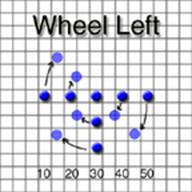
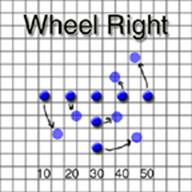
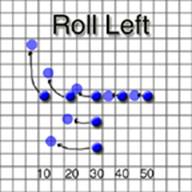
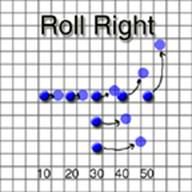
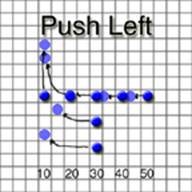
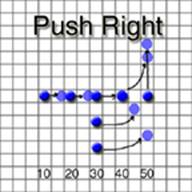
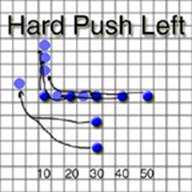
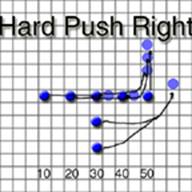
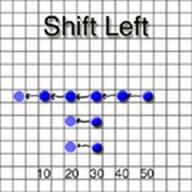
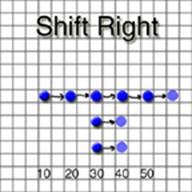
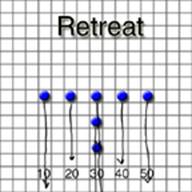
Here are some examples of maneuvers that you might find handy. They Aren’t to be followed absolutely like a dance or a marching band figure. Close formations aren’t possible or necessary in a battle. No two terrains are exactly the same, no two enemies will act exactly the same, no two encounters are the same. You need to have someone who can see everything there to tell what to do, and to advise the actions of the front line fighters, the bricks. In the diagrams, the cross bar of the T is made up of bricks. The two in the back represent the ranged, energy, and useless. They can form themselves in any shape they want, they are in a line to just give the impression of a shape. They should still follow the motions shown for them in the diagrams.