
whose purpose was to investigate the problem and lobby state-by-state for
legislation to end the abuse. It was not effective because each state feared
restrictive legislation could give other states a competitive advantage in recruiting
industry. In 1907 a federal law against child labor, sponsored by Senator Alan
Beveridge of Ohio (1899-1911) went down to defeat. In 1910 there were still an
estimated two million children employed in industry.
In 1912 a Children's Bureau was established as an agency of the Department of
Commerce and Labor. Its mandate was to examine "all matters pertaining to the
welfare of children," which included child labor, and it was led by Julia C.
Lathrop, the first woman to head a federal agency. Progress, however, was still
slow. In 1916 senators Robert L. Owen and Edward Keating sponsored a bill that
restricted child labor, which passed both houses of Congress with the strong
support of President Woodrow Wilson. The law was based on a recommendation
of the National Child Welfare Committee, but it only prevented the interstate
shipment of goods produced in factories by children under 14 and materials
processed in mines by children under 16. It also limited their workday to eight
hours. In 1918 the Supreme Court declared this law unconstitutional, because it
was directed toward the regulation of working conditions, not the control
interstate commerce. In 1919 Congress passed the Child Labor Act, which placed
a tax on companies that used child labor, but the court too overturned it. In 1924
there was an attempt to amend the Constitution to prohibit child labor, but it never
received approval from the required number of states.
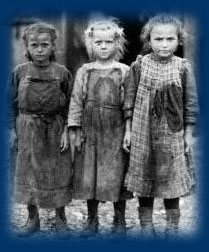
educational requirements became more stringent and truancy laws more strictly
enforced, it became harder for companies to depend on child labor. Also demands
within industry for a better skilled, more highly trained labor force inhibited the
hiring of children. By 1920 child labor was in decline nationally.
President Franklin Delano Roosevelt's domestic reforms in the 1930s, which are
known collectively as the New Deal, also attacked child labor and settled the
legality of the issue. The National Labor Relations Act of 1935 prohibited the use of boys under 16 and
girls under 18 on projects where the U.S. government contributed $10 thousand or more. Another bill,
the Fair Labor Standards Act, which was passed in 1938, remains the major piece of federal legislation
directed against child labor. It prevented children, including the offspring of migrant workers, from
taking jobs that would interfere with their education, health or general well being. It forbade the full-
time employment of those 16 and under, and this prohibition could be raised to include those 18 and
under for work in dangerous or unhealthy industries. The law also provided for certain exemptions.
Children 14 and over could be employed after school hours. Young people were able to work in a
family-owned business or at home, or deliver newspapers or act.