Building Section B
To
begin expanding the number of chords available to us and learning how they
relate to one another, we will use the alternating note pattern mentioned
previously. I’ll refer to this as the “Alternating Tone Principle”, or chords for
dummies.
If
any scale note is possible to be used to form a chord, there must be more
chords that are available than shown on the simple C chord chart from part 2.
Using
the alternating tone principle, you can start with any note in the key of C and
by skipping every other note come up a series of chords that can be used.
To
see how this fits the 1 3 5 formula, put your thumb on C4, skip a note to E4
skip a note to G4.
What
about starting with the note B4 skipping a note to D5 then skipping another
note to F5?
It
looks like we have another Triad for the key of C not previously mentioned.
This chord has the symbol Bdim (diminished). All the
notes can be found in the scale of C and none of the notes are outside the C
scale. We have mentioned this before but it needs to be emphasized.
Expanding
on this principle and using the alternating tone approach we can build 4 note
and 5 note chords related to each scale.
The
next chart shows the chords of the C Major Scales with related chords and their
symbols. The 4 note chords are made by skipping a tone to the next note.
The
5 note chords are formed by skipping yet another tone.
We
will not be using those chords just yet but you should note here how they were
arrived at since you will see these chord designations in many fake books.
Check the link before going on to see the related chords in the key of C and
note the numerical formula as well which makes it so much easier to remember
these related chords.
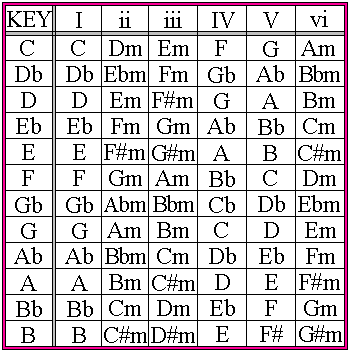
Look
at the chart shown previously. You see the
chords C F G Dm Em Am are listed as important chords. Now that you can form
these C major chords, you can test an earlier premise that any of the notes (C
thru B) of the C scale are compatible with each of these chords. Listen to the Chord midi where each of the 6 chords are played in the
left hand, while the right hand plays two octaves of notes from the C scale(C4
to C6). By loading this midi into your sequencer and looking at it in staff view
you see how the chord and notes are annotated. You should try adding the 4th and
5th alternating notes to the chords and playing them in your
sequencer program. To do that, you just need to skip a note on the staff and
insert a note based on the alternating tone principle.
In
the Chord example midi, the C chord is played first, followed by the F, G, Dm,
Em, Am chord in that order. Notice the sound as each chord plays over the same
notes of the C scale. Also note the effect changing the chord has on your
feelings as you listen to them. Did you notice your tension level rising or
falling as you move thru them? You should spend some time listening and
analyzing their sound and effect since you will use them to invoke emotions in
your music.
Now look at and listen to these examples of
five progressions using related chords
formed from our alternating tone principle. Some of these may sound familiar;
notice the comments for each of the progressions. Also pay attention to how
some of the sounds were not anticipated and how that made you feel. How they
make you feel is important in conveying that to an audience. The additional
chord base gives more flexibility to sound. This is not the end as you will
see.
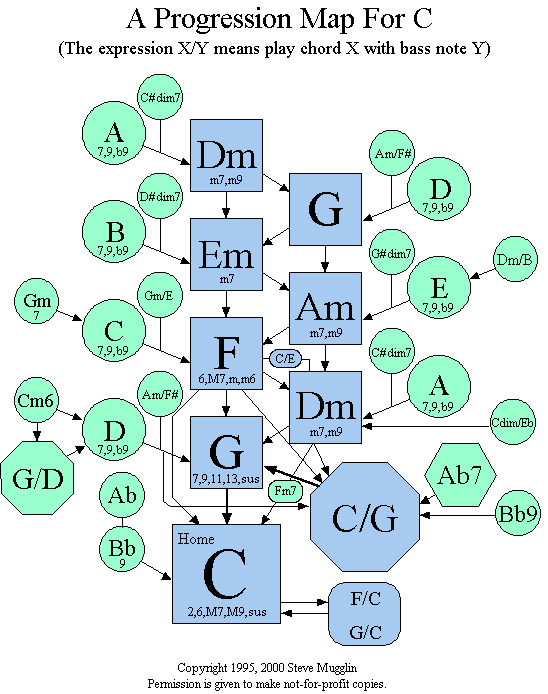
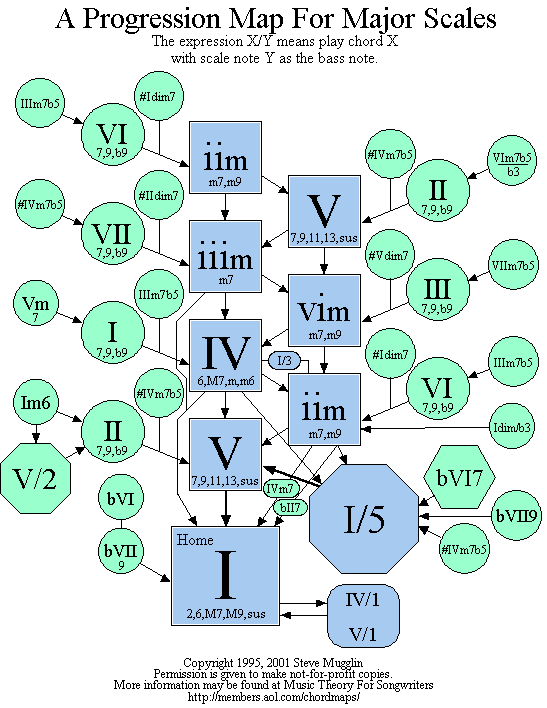
The
next two links will show charts of chords first for the Key of C then a generic
map for all keys using the Roman numeral designations. The chords connected by arrows
show a normal, pleasing passage from one to another. This chart includes many
more chords than we have discussed utilizing keys not related to the key of C.
Those chords colored Green are from keys of other scales.
You
may now use these charts without knowing the theory behind it to make chord
progression as was done with the simple C chart.
Remember
when using this chart whatever location you jump to from the base chord there
is a secret tunnel between identical chords that you can move to in order to
alter your path in returning to the IChord
root. You can use this slide to magically take you from one spot to another
identical chord anywhere on the chart and follow that path to its conclusion.
You
should spend some time creating as many progressions as you can for up to 8
chord progressions, enter them in your sequencing program as an 8 bar section B and listen to the results. They will
enable you to get many different ways to express yourself musically and provide
a base for creating or modifying your section B of an AABA structure
as well as the other section A’s.
The
effort spent in doing this exercise will bring tremendous rewards and stimulate
your artistic capability. Note the 8 chord limitations is only a suggestion
based on typical 8 bar sections in a lot of music and reduces the complexity of
evaluating these paths. Listen for any emotional effects they might produce.
These maps can be used to select 8 bar chord
progressions for your Section B of
the AABA song structure.