 |
|
|
|
|
|
|
|
|
|
|
|
|
|
|
|
|
|
|
|
|
|
|
|
|
|
|
|
|
|
|
|
|
|
|
|
|
|
|
|
|
|
|
|
|
|
|
|
Nazca |
|
|
|
 |
|
|
|
The Nazca Desert and its famous lines are completely unexplained to this day, fantastic explanations as to their purpose have come and gone over the years,
Some of which include messages from ancient gods, a landing strip for alien spaceships , an astronomical calendar. Or even a map of underground water supplies and natural springs
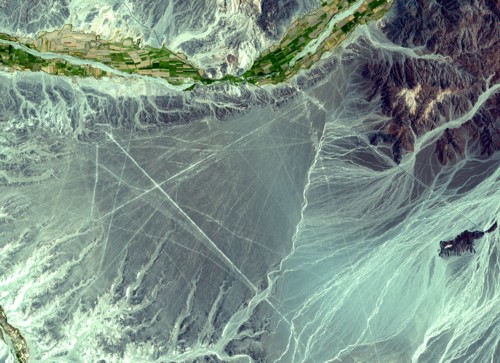
But basically nobody knows what they�re for or what purpose if any they serve, though of course speculation has always been rife and sometimes if you�re really, really lucky the speculation has been laughable. The claim that the entire vista can be seen from the air is a little erroneous too. You can see individual details from the air but at the height you need to be to see the whole plain the animals are too feint to be made out, as you can see from this next picture |
|
|
|
 |
|
|
|
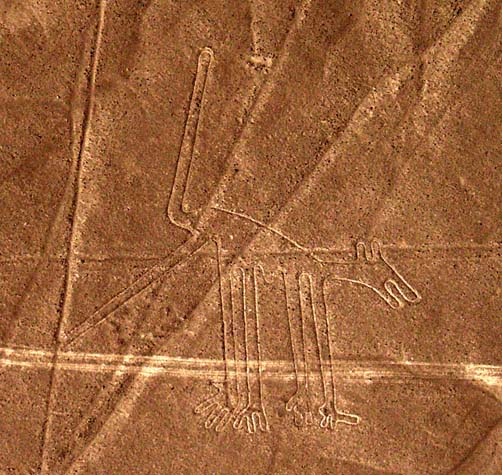
Here�s a picture of just one of the many animals |
|
|
|
 |
|
|
|
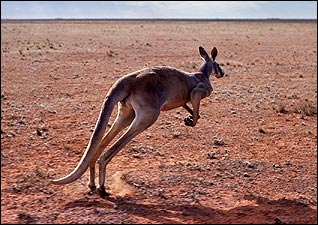
It�s known as the nazca dog. If you look closely you can see a small lump in between its fore and rear legs. The lump in most cases is referred to as its genital area, but there aren�t any dogs that have genitals in their stomach area and just look at the proportions of the tail. Its back legs are significantly longer than its front as well.
Bit like a kangaroo really. But that would be silly. |
|
|
|
 |
|
|
|
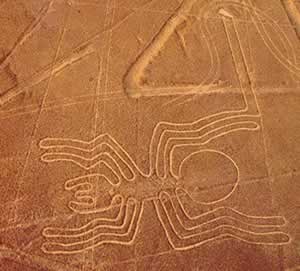
This is another animal from the Nazca plain |
|
|
|
 |
|
|
|
It�s known as the spider and it is particularly fascinating. It�s perfectly detailed and measures some 150 feet in length formed by one continuous line. What is remarkable about this drawing is that it is a recognised species, a member of a spider genus known as Ricinulei, which is found only living beyond the reach of sunlight in the Amazon rainforest |
|
|
|
 |
|
|
|
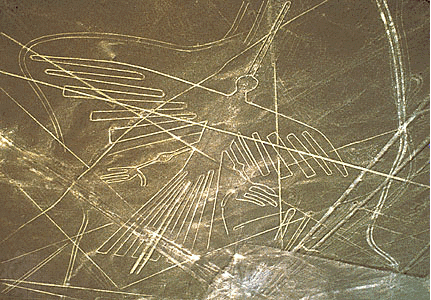
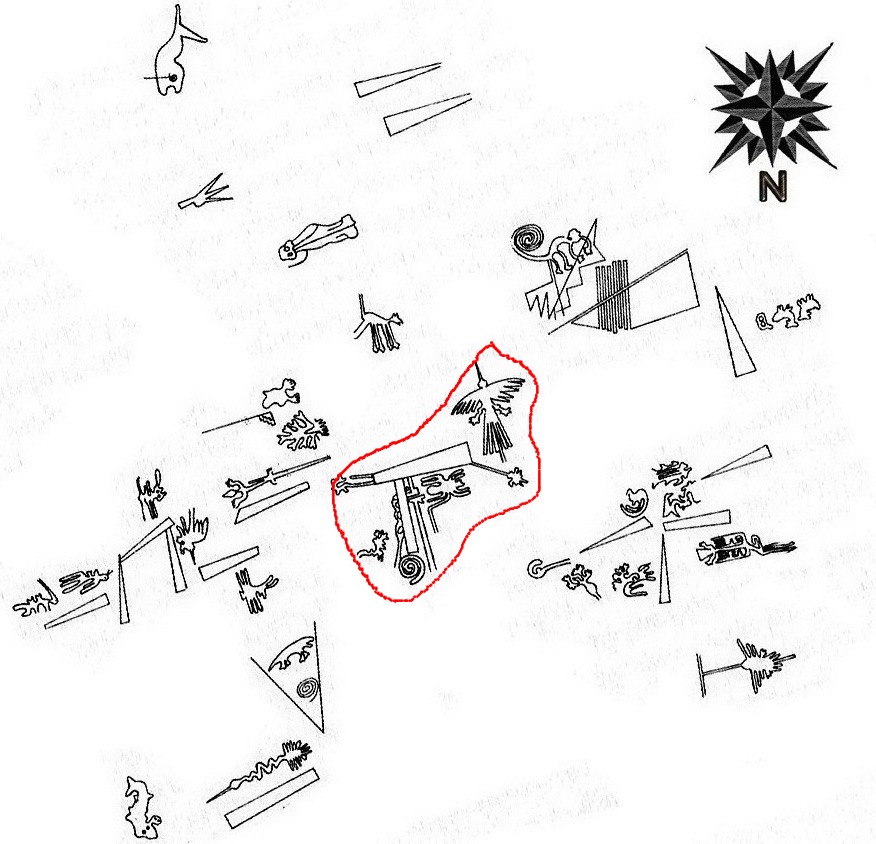
This is the Condor, another South American animal. It�s right next to the Amazonian spider. So if we draw a line round them we could say that it represents the fauna of South America. That�s not my own conclusion. That�s just logical |
|
|
|
 |
|
|
|
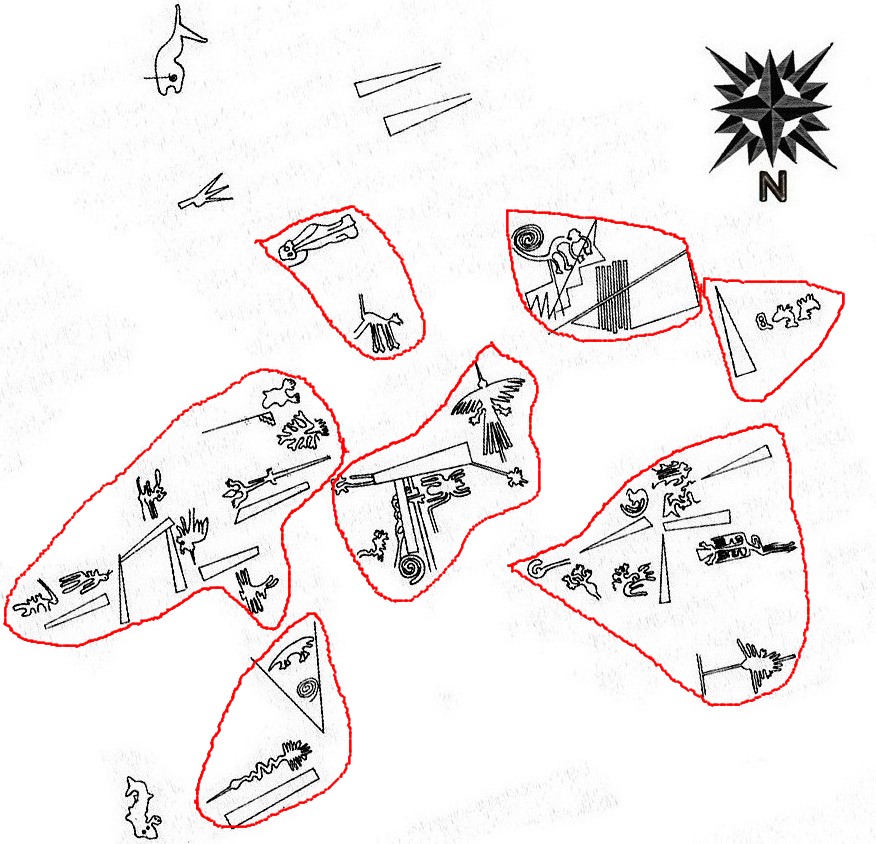
It gets a little more difficult after that but by using the same method
and outlining the other animals into their continental groups you get this |
|
|
|
 |
|
|
|
Seven separate continents. Of course that�s where the similarity ends. No one would claim that it is a good representation of the earth from that perspective |
|
|
|
 |
|
|
|
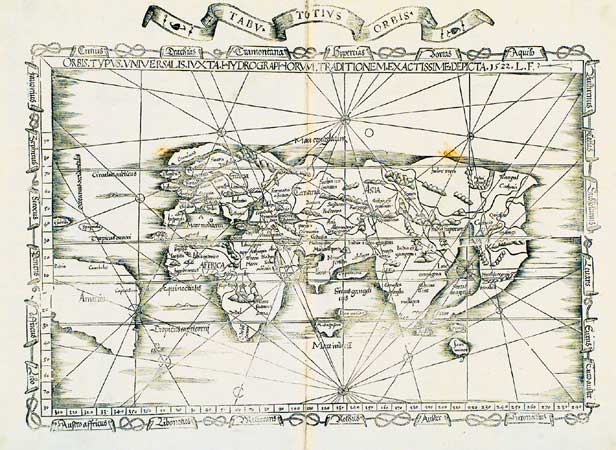
This is a fries map of the world published in 1522 before our modern Mercator system was in use. Is it similar you think?
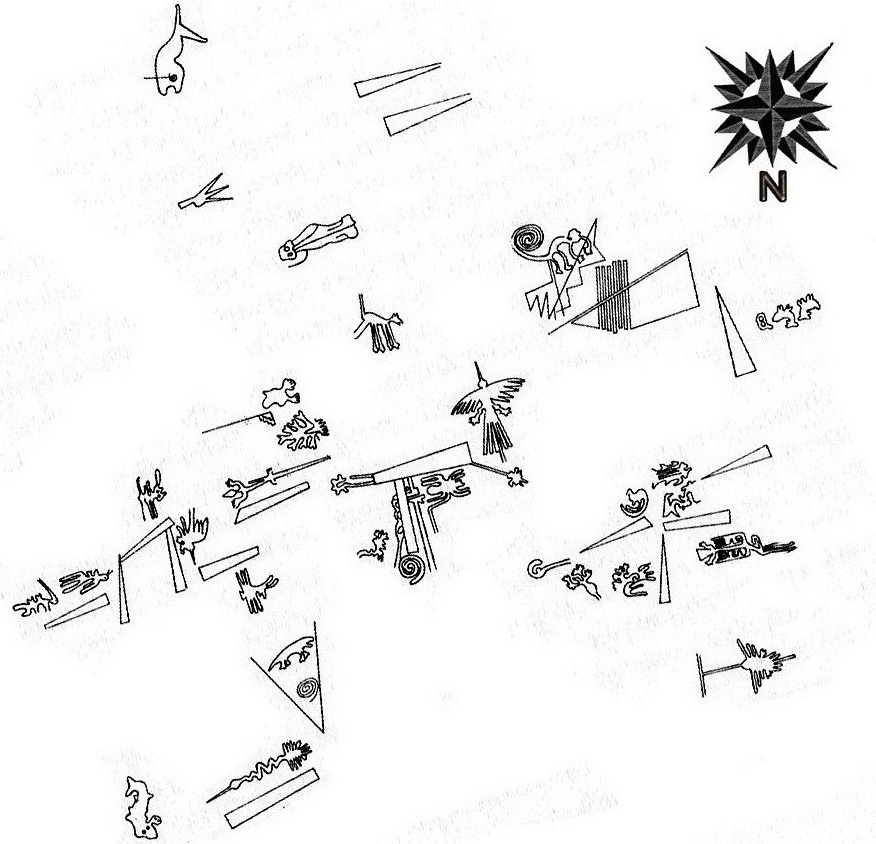
Of course there are not just animals at Nazca
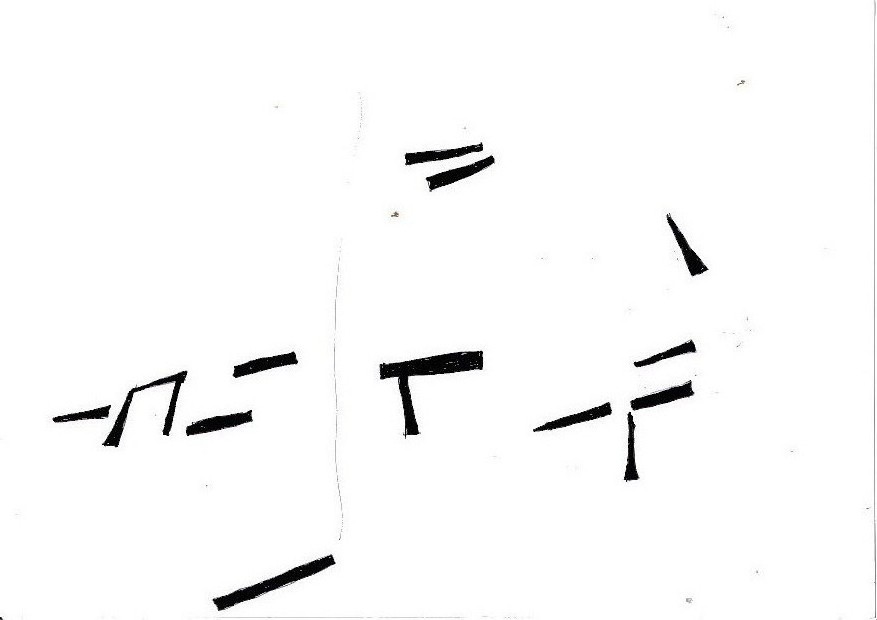
There are also lines. But heres the problem. People aren�t interested in the lines as much as they are the animals. There�s nothing wrong with that it�s just the way that our brains work. The minds eye is drawn to things we can identify
. So heres probably the best representation of the larger lines that I�ve ever found. |
|
|
|
 |
|
|
|
Using the many photographs of the animals you can see the smaller lines that don�t appear on most of the maps.
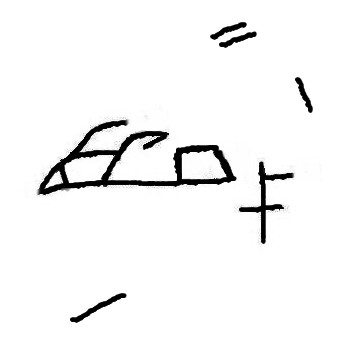
So connecting all the missing lines to the larger ones you end up with this |
|
|
|
 |
|
|
|
Looks like a stylised horse doesn�t it.
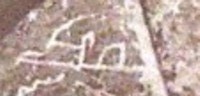
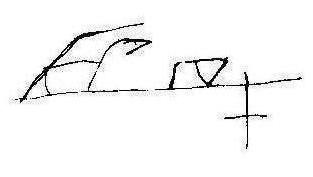
A few years ago a monolith was found near Teotihuacan. It�s called the pokotia monolith and it had a strange inscription on its left side, which looks like this |
|
|
|
 |
|
|
|
 |
|
|
|
This Inscription isn�t a horse of any kind. It�s a very old form of writing known as Proto cuneiform. It�s Sumerian in origin and hasn�t been used since 3100bce.
Its part of a larger phrase which translated intoEnglish says
"The Diviner proclaims the phenomenal depth of this area , of the deity's power, to entrust man with wisdom"
The lines at nazca and the inscription on the pokotia monolith are quite similar in a Sumerian way aren�t they?
. |
|