 |
|
|
|
|
|
|
|
|
|
|
|
|
|
|
|
|
|
|
|
|
|
|
|
|
|
|
|
|
|
|
|
|
|
|
|
|
|
|
|
|
|
|
|
|
|
|
|
|
|
|
|
|
|
|
|
|
|
|
|
|
|
|
|
|
|
|
|
|
|
Cylinder Seals |
|
|
|
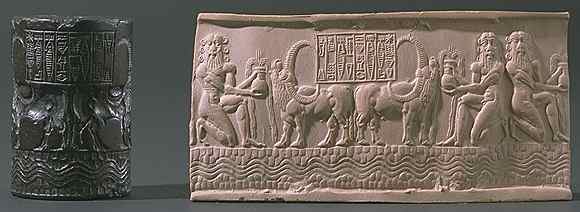
The cylinder was rolled over wet clay to mark or identify clay tablets, envelopes, ceramics and bricks. The clay would be the positive impression and the seal itself the negative impression in a similar way that camera film and pictures are classified today It so covers an area as large as desired, an advantage over earlier stamp seals. Its use and spread coincides with the use of clay tablets, starting at the end of the 4th millennium up to the end of the first millennium. |
|
|
|
 |
|
|
|
Cylinder seals are important to historians. The seals were needed as signature, confirmation of receipt, or to mark clay tablets and building blocks. With the owners name.
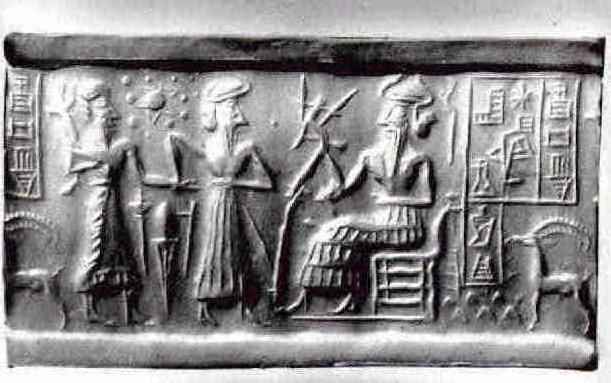
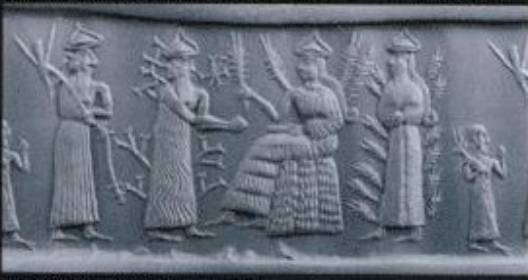
Theres this fellow called Zechariah Sitchen. He first brought Mesopotamian cylinder seals to the attention of a larger audience. This one he made very famous. It�s called Va243 and it currently resides in a Berlin museum. |
|
|
|
 |
|
|
|
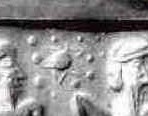
The part that Zechariah Sitchin bought to the world�s attention was this bit |
|
|
|
 |
|
|
|
He claimed that it showed the planets in our solar system plus one extra, which he labelled �Nibiru� which has a 3600-year elliptical orbit. Allegedly
Did you notice the staff that the king (sitting) is holding is a trident |
|
|
|
 |
|
|
|
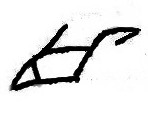
Here�s the pertinent detail and do you know it actually is a proto Sumerian symbol that means �mi mesh� or �Praise the diviner.� Or basically praise God.
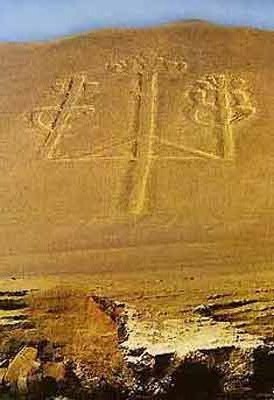
This is also in the desert at Nazca but a little way further off. Another similarity? It�s about 80 miles away on the coast and points the way to the other figures. It�s known as the candelabra because of its similarity to a modern day candelabras. How�s that for original thinking� |
|
|
|
 |
|
|
|
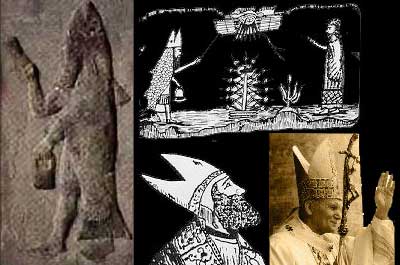
Tridents are important in Sumerian mythology because they are a symbol of kingship. An old Sumerian myth tells the tale of �Adapa� who is more popularly known in his Greek name of �Oannes�. He was a Fisherman at Eridu one of the earliest Sumerian cities. The story tells of his travel to the other world or heaven where he is instructed not to eat or drink and in a roundabout way is cheated out of the gift of immortality by a misunderstanding |
|
|
|
 |
|
|
|
He�s the earliest fisherman in any myth recorded and it�s his tradition that led to the Greek God Hermes who was Poseidon in Rome. They still had the trident. These days the tradition continues in the Roman Catholic Church with the fisherman of Rome. He has a very similar hat in the very least. Though he�s changed his staff of office to a shepherds Crook. That�s similar to the legendary Sumerian King Gilgamesh who was known as the shepherd king of Uruk.
Then there�s that other detail on the seal. The one just below the trident top |
|
|
|
 |
|
|
|
 |
|
|
|
 |
|
|
|
|
|
think that�s similar to this
???
It would be if it was on its side wouldn�t it. It�d be very similar indeed.
As time passed it changed its appearance on similar seals and became less and less stylised. Here it appears on the far left over the figures shoulder. But then as time passed less and less Scribes were able to read the old language. Because Sumerian cuneiform had taken over completely by 3000bce. |
|
|
|
 |
|
|
|
All pretty similar so far without any speculation or personal conclusions.
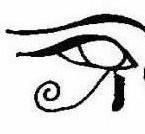
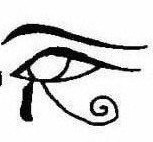
In far off Egypt they had another symbol that represented kingship |
|
|
|
 |
|
|
|
 |
|
|
|
|
|
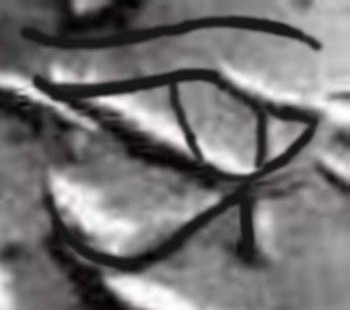
It was this one. The left eye is known as the eye of Thoth. Thoth is an Egyptian moon god who it is alleged brought the gifts of civilisation to Egypt. In fact his actual epithet is "the one who created writing�. The right eye is known as the eye of horus and It�s very well known and is still used as a sign in many religions and mystical groups in the world today. It represents the Pharaohs of Ancient Egypt who established their divine right by claiming to be a descendent and living embodiment of Horus
They look similar to the cylinder seal too don�t they? |
|
|
|
|
|
|
|
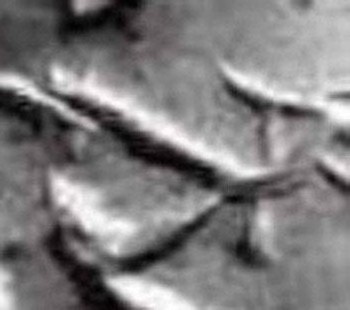
Maybe if I make it a little clearer so its blatant similarity stares out at you |
|
|
|
 |
|
|
|
 |
|
|
|
|
|
|
|
|
|
|
|
|
|
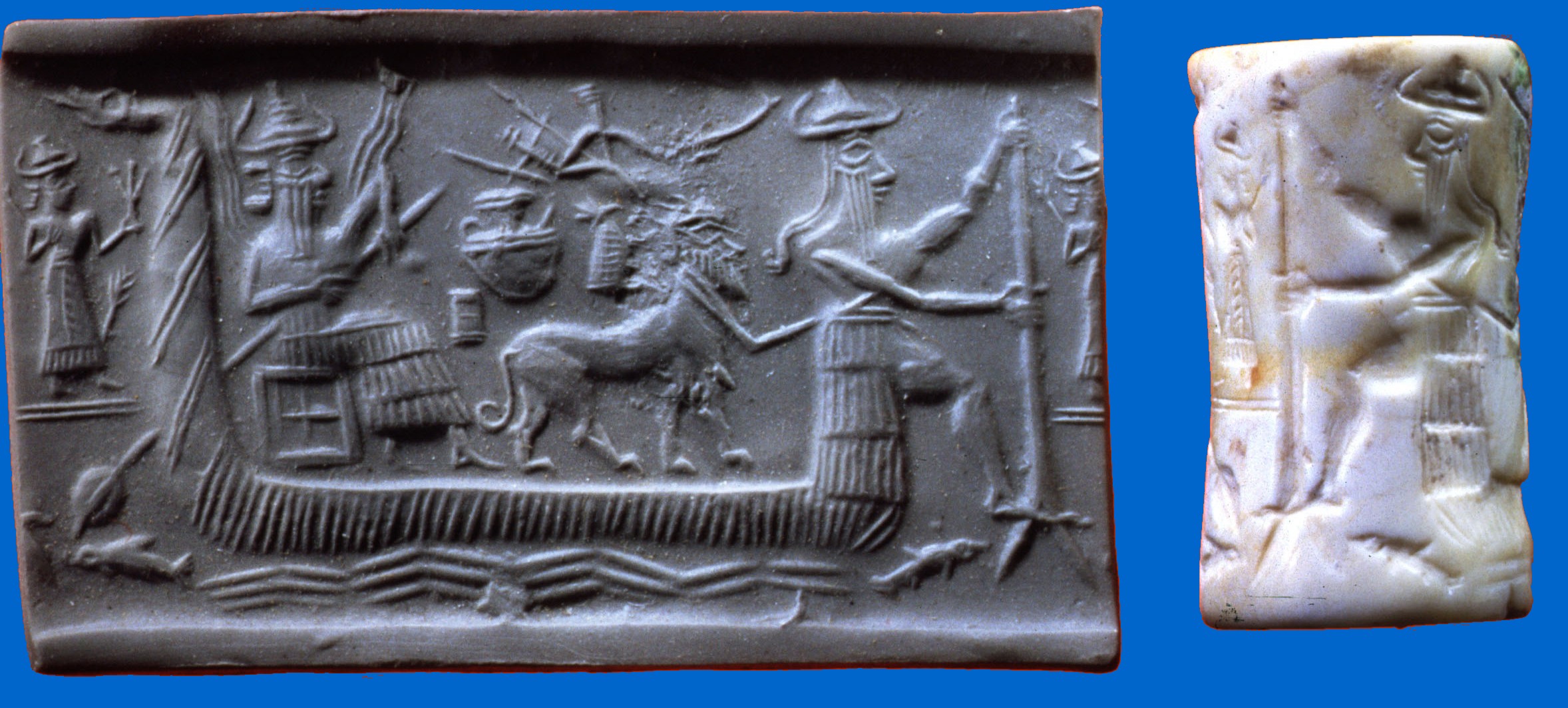
So the eye of Thoth appears on a cylinder seal impression that dates from 2500bce. That by definition means that the eye of Horus its reverse must appear etched on the seal itself. So on one Sumerian cylinder seal we have a king holding a trident that is similar to the candelabra and which is also similar to the Nazca/pokotia inscription which is similar to the eye of hours and have a similar purpose in that they both represent Kingship. The original Sumerian symbol dates to at least 3100bce because it�s written in Proto Sumerian which became a dead language while at a similar date. Egypt was founded as a civilisation. Remember the cylinder seal with the boat depicted on it from the earlier chapter aptly called boats. |
|
|
|
 |
|
|
|
This is the orthodox version of events according to this cylinder seal
�Here, the sun god - rays emanating from his shoulders - journeys by water in a fantastic vessel. Another deity, who forms the prow of the boat poles it along as the sun god steers. Also travelling with the sun god is a Sphinx, which has been tied to the prow. Floating in the air above the lion are a plow, a spouted vase with a handle, and two objects, one of which is perhaps a bag of seed. Behind the boat stands a figure representing the goddess of vegetation. She is characterized by ears of grain, which grow from her robe while she holds a flowering branch. The exact meaning of this scene is not known. It suggests a metaphorical journey indicating the relationship of the life-giving rays of the sun to the growth of vegetation and the flourishing of crops. � The oriental institute of the university of Chicago
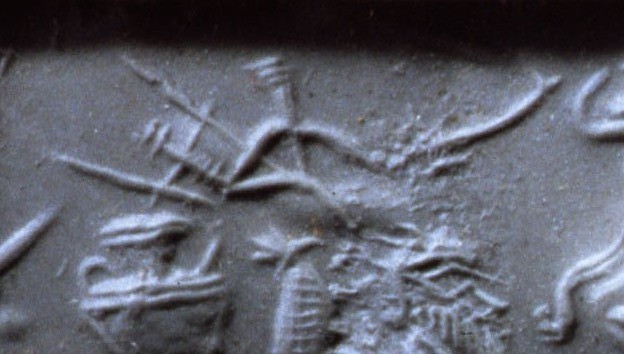
And here is the �Divine proclaimer symbol again in a similar context. |
|
|
|
 |
|
|
|
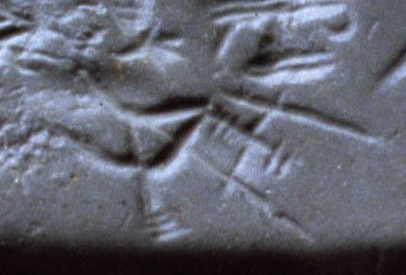
Oh ok here it is the other way up so it looks more like the eye of Thoth |
|
|
|
 |
|
|
|
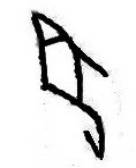
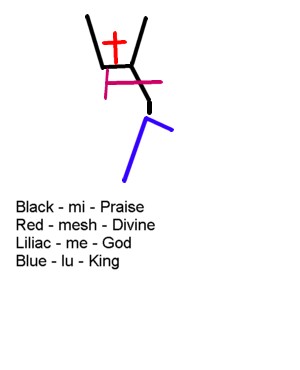
You know in Sumeria the scribes were taught how to read and write with the use of cylinder seals. An impression would be made with a teaching seal or stamp and the scribe would simply have to copy it onto another piece of clay. That�s very similar to how we teach our kids to read and write today. Very similar. Heres's the way that the eye breaks down in Sumerian. |
|
|
|
 |
|
|
|
Praise the Divine God King |
|