The two engines offered in the 2002 Integra incorporate a host of
innovative features designed to deliver a cutting-edge combination of
performance, efficiency, and low emissions. Most important is the
first local application of Hondas latest i-VTEC 'intelligent' valve
control system, a technology that combines VTC (Variable Timing
Control) - which continuously adjusts inlet camshaft timing - with
Variable Valve Timing and Lift Electronic Control (VTEC), which
changes valve lift, timing and duration. The result is impressive
horsepower and high torque with outstanding fuel economy and low
exhaust emissions. In addition, the engine has been rotated 180
degrees, bringing the exhaust manifold closer to the catalyst for
improved light-off and reduced emissions at start-up.
 The
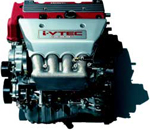
Integra VTi's engine is an all-aluminium, 2.0 litre design that uses
16 valves, a dual-stage intake manifold, and the i-VTEC system (VTC on
intake camshaft only) to deliver 118kW (160 horsepower) at 6500 rpm
and 191Nm of torque at 4000 rpm. (New Zealand power specs, 10% more
for Japan's)
The
Integra VTi's engine is an all-aluminium, 2.0 litre design that uses
16 valves, a dual-stage intake manifold, and the i-VTEC system (VTC on
intake camshaft only) to deliver 118kW (160 horsepower) at 6500 rpm
and 191Nm of torque at 4000 rpm. (New Zealand power specs, 10% more
for Japan's)
The
Type R's engine builds upon this heady foundation by adding a
high-performance version of the new i-VTEC system and a fixed,
high-efficiency intake manifold. These features boost output to 147kW
(200 horsepower) at 7400 rpm and 193 Nm of torque at 6000rpm. (New
Zealand power specs, 10% more for Japan's)
In
keeping with Honda's proven commitment to the environment, both
engines meet the strict Low Emission Vehicle-II (LEV-II) standards due
for implementation in the USA in 2004.
i-VTEC
VALVE CONTROL SYSTEM
 The all-new 2002
Integra unveils the latest version of the remarkable VTEC system:
i-VTEC. The 'intelligent' i-VTEC system adds new VTC (Variable Timing
Control) to VTEC to provide continuously variable camshaft timing -
taking the concept of variable valve timing to new heights. In short,
VTEC + VTC. Not only does i-VTEC provide a substantial performance
increase across a broad power band, it boosts fuel economy while also
reducing exhaust emissions.
The all-new 2002
Integra unveils the latest version of the remarkable VTEC system:
i-VTEC. The 'intelligent' i-VTEC system adds new VTC (Variable Timing
Control) to VTEC to provide continuously variable camshaft timing -
taking the concept of variable valve timing to new heights. In short,
VTEC + VTC. Not only does i-VTEC provide a substantial performance
increase across a broad power band, it boosts fuel economy while also
reducing exhaust emissions.
VTEC
(Variable Timing and Lift Electronic Control)
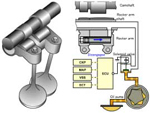
The innovative VTEC system is able to adjust the lift and opening
duration of the valves to help the engine produce both abundant
low-rpm torque and excellent high-rpm power. At low rpm, VTEC adjusts
valve timing and lift for optimum cylinder filling and fuel
efficiency. In addition, the timing of the intake valves is staggered
and their lift asymmetric - creating a swirl effect within the
combustion chamber. The result is increased burn speed with improved
combustion stability. As engine rpm builds, VTEC transitions to a
high-lift, long-duration cam profile for improved high-rpm engine
output.
The
new Integra uses two variations of VTEC - a new extra-efficient
version for the VTi, and a high-performance version for the Type R.
The
118 kW VTi employs a new version of VTEC to boost performance and
reduce emissions that applies variable timing and lift to the intake
valves only. Additionally, the system is further simplified by using
only two roller arms per pair of intake valves (instead of the usual
three). During low-rpm operation, intake air is drawn almost
exclusively through the primary intake valve, thereby creating a very
strong swirl effect to maximize combustion. At higher rpm, the
secondary rocker arm engages the primary roller causing both intake
valves to open for the same lift and duration, substantially
increasing airflow into the cylinder and boosting performance.
The
147kw Integra Type R uses the same high-performance VTEC design as the
NSX, a three rocker arm system that varies the lift and duration of
both the intake and exhaust valves for maximum power output. At low
rpm, the valves follow low lift, short duration camshaft profiles to
help boost low-end torque. At higher rpm, the intake and exhaust
valves are operated by high-lift, long-duration cam profiles, for
maximum high-rpm horsepower.

VTC
(Variable Timing Control)
The new i-VTEC system adds a new camshaft VTC (Variable Timing
Control) system to VTEC for continuously variable camshaft phasing
across the engine's entire power band. As engine rpm builds, a VTC
actuator - controlled by an engine-control unit that monitors cam
position, ignition timing, exhaust emissions and throttle position -
advances or retards the intake cam throughout a 50 degree range,
optimising engine output and reducing emissions.
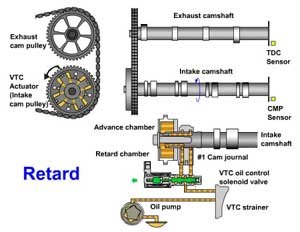
VTC
camshaft adjustment mid way through retarding motion.
Solenoid open to release pressure and intake cam pulley rotating
anticlockwise
During
typical operation, the intake camshaft timing is almost fully retarded
at idle to help provide more stable idling while reducing the exhaust
emissions (Nox). As rpm increases, the intake camshaft is advanced,
opening the intake valve sooner and providing additional valve
overlap. This results in increased fuel economy (by reducing pumping
losses) and a further reduction in exhaust emissions (by creating a
large internal exhaust gas re-circulation effect).
Also,
to generate additional power throughout the rev range, the intake
camshaft is continuously varying the amount of advance or retard,
instantly adjusting to provide additional power as required by the
driver.