
A: The system has worked well for over 17 years, and we have a great group of players. Having such quality teammates is an honor. We deal with cheaters in a straight forward way; we boot them.
As you know, I was a field operator, and I had to play. It was my job. Yes, for me it was a tough job. For years, to prepare for a game, I stayed up all night. Cleaning guns, masks and preparing ammo. It was mind numbing and tedious. On Friday or Saturday, I usually got two hours sleep. There were a lot of times that I didn't want to go to work. However, like any job, you take the pay, and you do the work. What you want doesn't matter. One night, I was making a bazooka for a simulation and I sliced my trigger finger open. After spending the night in the emergency room, I played the next morning, and used my middle finger to pull the trigger.
Q: Why do they call you Sensei ?
A: Mark picked that name for the video. To help him I accepted the name. I will be using it for paintball magazine articles, but not for my book. Sensei means teacher, and I teach Paintball tactics.
Questions from the video. "Do you use a ghillie?" No, I don't wear a ghillie. I am a point man, and I need to move through thick brush without making noise or getting stuck. The ghillie limits you. There are problems, but I can offer you solutions: First, ghillies will catch brush and tangle the player up. Solution, use it like a camo net. Spread it over yourself, and if you have to run, leave it. Solution 2, if attached, use only a shoulder and back ghillie jacket. Never use the poncho type. The poncho will not allow pb's to break. To use one is to cheat. Third,: it is incredibly hot. Don't wear it, carry it in a pack desiginated for squad use. You won't always be able to be the sniper. If you have a weak player, put him under the ghillie. Sharing is good for the team.
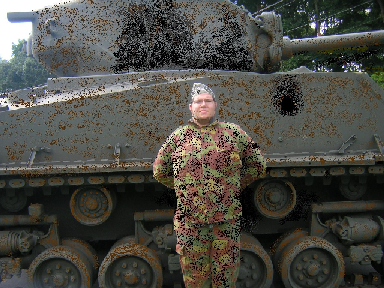
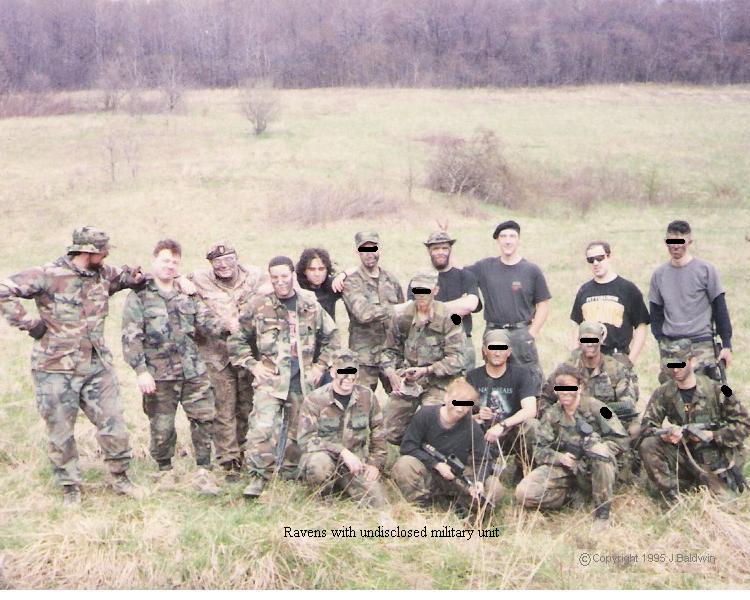
I did use the ghillie before I played paintball. You can see I was wearing a Ghillie helmet, and British camo in the photo to the right. They are incredibly effective in the fall and winter. Incidentally, starting in 1987, and for 13 years, I didn't allow ghillies on my field. They were an easy way to cheat, and I didn't want anyone being a cheater. In 1999, I changed my rule. I decided that it was part of the real world, and banning them wasn't right.
Incidentally, the ghillie in the video and the gun that I held were things that the producer asked me to hold. I didn't think about them at the time. Now, I am associated with Tippmann and ghillies!
Question: Will there be more? Maybe
To live, for me, is Jesus.
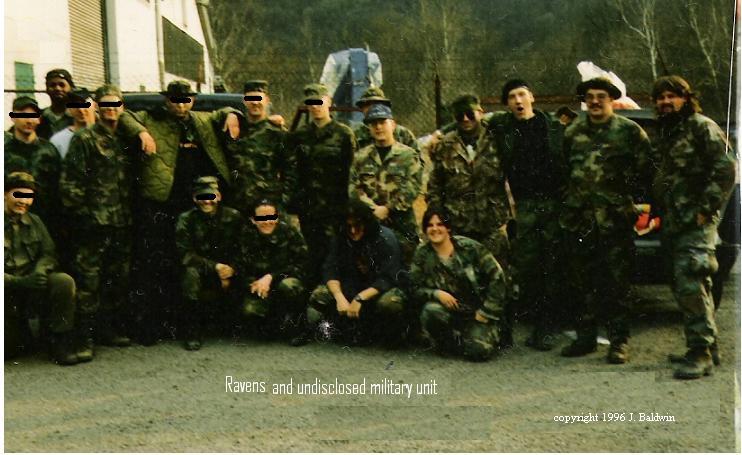
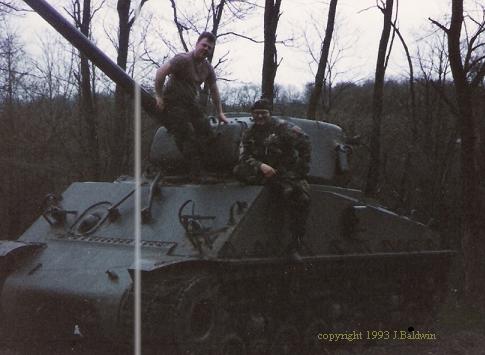
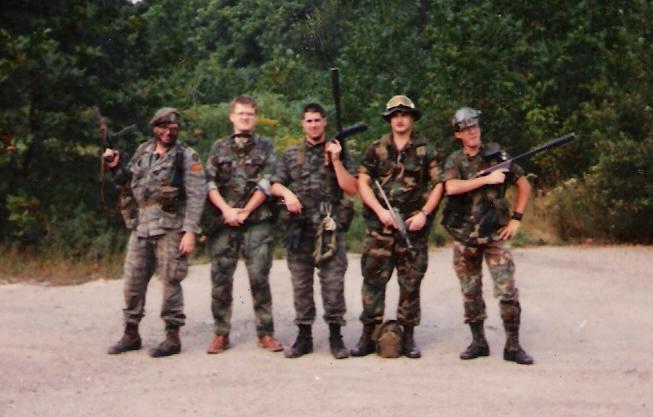
When I read these words, I was amazed.
Horner looked at his watch, and then at his chief. "Master Chief?"Watson sttood up a and surveyed the group. All eyes wer on him. "We've been well briefed, and we've rehearsed it. Everybody knows exactly what they're supposed to do. Now I know we've all got the jitters, and that's normal--this is our first real operation and our first opportunit for combat. But trust me on this one men, and it' important--you've all been there before. It may seem hard to believe, but there's no difference between the real thing and a paint-gun fight. The SEALs trained extensively with pistols and rifles that fired paint pellets. Close-quarter battle training ususally consisited of SEALS armed with paint guns and eye goggles moving from room to room atacking other SEALs with paint guns and eye goggles dressed up like terrrorists. The paint pellets clearly marked a hit, and a good-sized welt let a SEAL know he'd been shot.
"You'll get the same rush, and you'll get the same tunnel vision. After the first rounds, you won't hear or see much of what's going on around you--just like a paint-gun fight. So, just like you've been trained, you must concentrate on your shooting mechanics and constantly be aware of where the other guys are. Remember, if we're engatged before Comander Bishop can disarm the explosives, it'll be a squad action. Once he diesarmed the demolitions, it'll be a standard room-clearing drill-- Tap 'em twice and keep moving. We've done this all before, and like Lt. Horner said, concentrate on the little things-- move quietly. Follow the SOPs, keep your eyes moving-- and you'll do just fine.