 Language Arts Block  
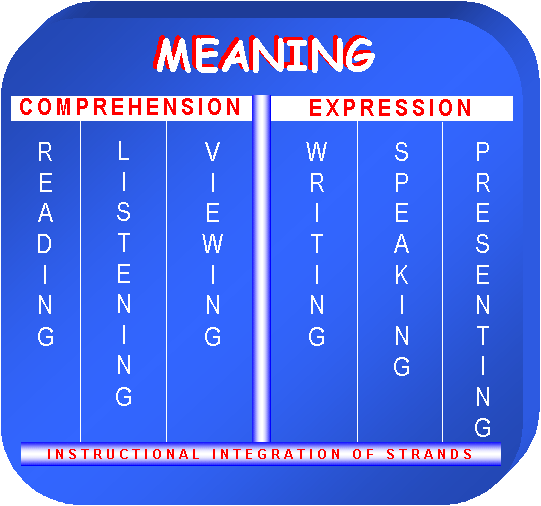
Second-grade students are becoming more competent communicators and thinkers. They are developing more capability for applying strategies that enhance comprehension. These strategies help students to construct their own meanings from oral, written, and visual material. Students read
for pleasure and to gain information as they continue to develop fluency. Through reading, hearing, and viewing literature and through studying language and how it works, these students are growing in their appreciation and understanding of language. They express meaning more effectively, competently, and confidently in various spoken and written formats. As they become more adept in process writing, their written products show improvement.
 WHY READ? 1. Read with your child every night for at least 20 minutes. A Huntsville Public Library card is free for residents of Madison County. I strongly encourage you to get one for you and your child!! 2. Discuss books after they have been read. Ask such questions as, "Who were the main characters? What was the setting? What was the problem? How was the problem solved? What did you like the best about the book?" 3. Encourage your child to write, write, write!!! The only way to practice the English language is to use it! Writing ideas include letters to friends or family members, email, thank you notes, stories/books about family trips. 4.
Talk with your child. Discussing things with them increases their
vocabulary. Research has proven that students with larger vocabularies
become better readers.
|