GRUPO DE CINE
INSURGENTE
y
MASCARÓ, CINE
AMERICANO
[email protected] // +54 11 4932-4210 // 4857-1479
CATÁLOGO
DE VIDEOS // VIDEOS CATALOG
- VHS y DVD – pal / ntsc
NUEVAS PRODUCCIONES 2003-2004 / NEW PRODUCTIONS
2003-2004
YAEPOTA
ÑANDE IGÜI – Queremos nuestra tierra
El 16
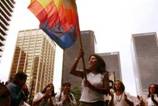
de septiembre de 2003 la Comunidad Guaraní de El Tabacal (Salta), fue reprimida
y desalojada a tiros y palazos por orden del Ingenio San Martín del Tabacal,
propiedad de la multinacional Seaboard y productor del azúcar Chango. Niños,
mujeres embarazadas y ancianos padecieron los golpes y simulacros de
fusilamiento. Son 150 familias que reclaman 5000ha, del territorio conocido
como La Loma, donde se encuentran sus cementerios.
Dirección Colectiva: Grupo de Cine Insurgente
16 minutos, S-VHS, 2004
ASAMBLEA:
OCUPAR ES RESISTIR
ASSEMBLY: To OCCUPY is to RESIST
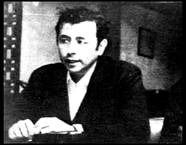 Luego de la rebelión popular del 19 y 20 de Diciembre de
2001, los vecinos comenzaron a juntarse espontáneamente en las esquinas más
importantes de los barrios, en torno a la consigna ”que se vayan todos”.
Luego de la rebelión popular del 19 y 20 de Diciembre de
2001, los vecinos comenzaron a juntarse espontáneamente en las esquinas más
importantes de los barrios, en torno a la consigna ”que se vayan todos”.
De esta
manera se constituyeron asambleas en todo el país. Algunas decidieron que como
parte de la lucha debían recuperar lugares que le pertenecían, con el fin de
organizar comedores, bibliotecas y espacios culturales.
La
Asamblea de Villa Crespo, el 13 de Julio del 2002, luego de seis meses de
reunirse en la calle, decide ocupar una
sucursal propiedad del banco provincia, abandonada, luego haber sido usada como
local partidario por Duhalde, en ese momento presidente interino, tras la huida
de Fernando De La Rúa.De esta manera la asamblea consigue enfrentar al gobierno
en su legitimo derecho. Este documental esta realizado desde el interior de la
asamblea y contado por sus propios protagonistas.
Además,
es el único que registra un seguimiento del movimiento asambleario después del
estallido social de 2001 y narra como
continua la lucha en Argentina contra el sistema neoliberal.
After the popular rebellion of the
19 and 20 of December of 2001, the neighbours began to join spontaneously in
the most important corners in the neighbourhoods, around the watchword “All leave” . This way assemblies were
constituted in the whole country. Some decided that as part of the fight they
should recover spaces that belonged to them, with the purpose of organizing
dining rooms, libraries and cultural spaces.
The Assembly of Villa Crespo, the
13 of July of 2002, after six months of meeting in the street, decides to
occupy a branch property of the bank of Province of Buenos Aires, abandoned,
that has been used as a political centre of Duhalde, in that moment interim
president, after the escape of Fernando de la Rúa. This way the assembly is able to face the
government in its I legitimate right. This
documentary done from the interior of the assembly and tollen by it’s own main
characters. Also, it is the only one
that registers a pursuit of the assembly movement after the social explosion of
2001 and narrates the continuous fight in Argentina against the neoliberal system.
Dirección Colectiva / Direction: Grupo de Cine Insurgente
Guión / Script: Natalia Polito
Edición y Montaje / Editing: Nahuel Scherma, Omar Neri
Cámaras
/ cameras: Natalia Polito, Lorena Riposati
30
minutos / minutes, S-VHS, 2004
Subtítulos / subtitles:
Inglés / Italiano
GUERNICA,
LO QUE NO SE VE (MTD Maximiliano Kosteki)
GUERNICA, THE UNSEE (MTD Maximiliano Kosteki)

Este
documental muestra que más allá de los cortes de ruta y de los subsidios hay
gente trabajando. Son desocupados el la provincia de Buenos Aires, que con muy
pocos recursos se organizan para enfrentar las miserables políticas del
gobierno. Un día compartido con el Movimiento de Trabajadores Desocupados de
Guernica, Pcia. de Buenos Aires: Sus necesidades, sus emprendimientos, sus
sueños.
This documentary shows that beyond
the road blocks and the subsidies there are people working. They are unemployed
of Buenos Aires that are organized to face the
government's misery politics with very few resources. One day shared with the Movement of Unoccupied
Workers of Guernica, Province of Buenos Aires: Their necessities, their
productions, their dreams.
Realización / Producers: Héctor Rivero
25
minutos, S-VHS, 2003
Subtítulos / subtitles:
Inglés / Italiano
USO MIS MANOS, USO MIS IDEAS
I USE MY HANDS, I USE MY IDEAS
 En 1973, un grupo de militantes populares iniciaron un
proyecto de alfabetización de adultos en un barrio de Neuquen, Argentina.
Tomando en cuenta las experiencias cubanas y las desarrolladas por Paulo Freire
en la década del 60, los alumnos aprendieron a leer y escribir, teniendo
presente que éstas son herramientas de transformación social. Esta iniciativa
fue filmada por Raúl Rodríguez, con el objetivo de realizar una película que
sirviera para otros barrios. 30 años después, se rescatan estas imágenes y los
testimonios de quienes participaron en la experiencia, precursora de las
campañas nacionales de alfabetización.
En 1973, un grupo de militantes populares iniciaron un
proyecto de alfabetización de adultos en un barrio de Neuquen, Argentina.
Tomando en cuenta las experiencias cubanas y las desarrolladas por Paulo Freire
en la década del 60, los alumnos aprendieron a leer y escribir, teniendo
presente que éstas son herramientas de transformación social. Esta iniciativa
fue filmada por Raúl Rodríguez, con el objetivo de realizar una película que
sirviera para otros barrios. 30 años después, se rescatan estas imágenes y los
testimonios de quienes participaron en la experiencia, precursora de las
campañas nacionales de alfabetización.
In 1973 a group of popular militants began a project
on adults literacy in the province of Neuquén (Argentine), recapturing the Cuban experiences and
those developed by Paulo Freire in the decade 60’s. The group learned how to
read and to write, keeping in mind that these were the abc tools of social
transformation. Raúl Rodriguez was the one who had the initiative of filming
the experience, with the objective of carrying out a movie that would be good
for other communities. 30 years after that experience, “I use my hands, I use
my ideas” tries to tell account for story through the life of their main
characters, the story of the movie and also through these facts to narrate the
political events that constitute the historical memory of a town struggle.
Premios
y menciones: 1er. Premio en el V Festival Internacional de Cine
y video de Derechos Humanos, 2003. // Premio Centro Audiovisual Rosario al
video más destacado por su valor educativo en el 10mo. Festival Latinoamericano
de Videos Rosario 2003 // Premio al mejor Film o Video Educativo en el 12·
certamen de Cine y Video de Santa Fe 2003 // Mención por el trabajo de
investigación, en el 4to. Festival Nacional y Primero del MERCOSUR de cine y
video documental // Selección oficial
para la sección informativa del 25· Festival
Internacional del Nuevo Cine Latinoamericano La Habana, Cuba 2003 //
Selección oficial para la 5· Muestra Internacional Documental, Colombia, 2003.
Declarada
de interés por: Universidad Popular Madres de Plaza de Mayo,
Universidad Nacional del Comahue,
Ministerio de Educación, Ciencia y Tecnología de la Nación // Honorable
Cámara de Diputados de la Nación
Dirección Colectiva / Direction Mascaró, Cine Americano // Montaje y Edición / Editing : Omar Neri, Mónica Simoncini // Producción /
Production: Laura Lagar y Susana
Vazquez // Ayudante de Producción
Assistant Production: Aldo Getino // Postproducción
de Sonido / Sound: Martín Castelli // Música
Original / Music: Giunta de Bueyes // Dirección
película 1973 / Director film 1973: Raúl Rodríguez //
Orientación en Educación Popular / Orientation in Popular
Education: Elsa Palavicini,
Claudia Korol
55 minutos, mini DV, 2003
Subtítulos / subtitles:
Inglés / Italiano / Portugués
SANTUCHO
Y EL PRT-ERP
SANTUCHO and the PRT-ERP
 En 1965, un grupo de abnegados luchadores populares
provenientes de todo el país, se propusieron una audaz tarea: fundar una
organización revolucionaria y, a través del trabajo político–jmilitar, derrocar
a la burguesía y al imperialismo e instaurar un gobierno OBRERO Y POPULAR para
construir el SOCIALISMO en la ARGENTINA.
En 1965, un grupo de abnegados luchadores populares
provenientes de todo el país, se propusieron una audaz tarea: fundar una
organización revolucionaria y, a través del trabajo político–jmilitar, derrocar
a la burguesía y al imperialismo e instaurar un gobierno OBRERO Y POPULAR para
construir el SOCIALISMO en la ARGENTINA.
In 1965, a group of self-denying
popular fighters came from the whole country, intended an audacious task: to found
a revolutionary organization and, through the political-military work, to
overthrow the bourgeoisie and the imperialism and to establish a workers and
popular government to build socialism in Argentina.
Dirección Colectiva / Direction: Mascaró, Cine Americano
Montaje y Edición / Editing: Omar Neri, Aldo Getino
Producción / Production: Laura Lagar y Susana Vazquez
35 minutos, mini DV, 2003
Subtítulos / subtitles: Inglés / Italiano
1997 – 2002
DIABLO, FAMILIA Y PROPIEDAD
DEVIL, FAMILY AND PROPERTY
 Esta película narra las luchas sociales en
los grandes ingenios azucareros del norte argentino. La leyenda de “EL FAMILIAR” habla de un
demonio que a cambio de la prosperidad de la fábrica exigía a los patrones la
sangre de uno o mas trabajadores aborígenes o criollos.
Esta película narra las luchas sociales en
los grandes ingenios azucareros del norte argentino. La leyenda de “EL FAMILIAR” habla de un
demonio que a cambio de la prosperidad de la fábrica exigía a los patrones la
sangre de uno o mas trabajadores aborígenes o criollos.
“Casualmente” aquellos que desaparecían eran
quienes cuestionaban el sistema de explotación extrema al cual eran sometidos.
El filme recorre un período que va desde principios
de siglo hasta la actualidad, desde las migraciones obligadas de los aborígenes
hasta los cortes de ruta de los desocupados.
“Diablo, familia y propiedad” fue estrenada
el 7 de noviembre de 1999 en el Cine Cosmos manteniéndose en cartel 5 semanas
apoyada por las críticas favorables de los medios. En el circuito no
convencional (escuelas, universidades, cine clubes, centros culturales,
festivales, etc.) fue vista por mas de 10.000 personas en todo el país y el
exterior.
This
film tells the story of the class struggles in the large sugar refineries from northern Argentina.
The legend “THE FAMILIAR” is about a devil that in exchange for prosperity of
the factory, demanded that the bosses should give him the blood of one or more
aboriginal or local workers.
Those
who disappeared were actually the ones who questioned the extreme exploitation
they were subject to.
The
film goes from the beginning of the century to the present day, from the
compulsory migration of the aborigines to the blocking of roads of the
unemployed.
“Devil,
Family and Property” was released on November 7th, 1999
at Cosmos Cinema. It was on for 5 weeks with favorable reviews from the media.
In non-mainstream venues (schools, universities, film clubs, cultural centres,
film festivals, etc.) it was seen by more than 10,000 people nationwide and
abroad.
Guión y Dirección / Script and
Direction: Fernando Krichmar
Producción / Production: Alejandra Guzzo, Agustín Fernández
Idea Original / Original Idea: Agustín Fernández
Fotografía / Cinematography: Segundo Cerrato
Montaje / Editing: Fernando Krichmar
Sonido / Sound: Pupe Baigros
Asistencia de dirección /
Assistant Director: Lorena
Moriconi
90 minutos / minutes,
Betacam, 1999
Subtítulos / subtitles:
Inglés / Francés
L’HACHUMYAJAY
(Nuestra manera de hacer las cosas)
L’HACHUMYAJAY (Our way of doing things)
 “L’hachumyajay” es una voz wichí que
significa “Nuestra manera de hacer las cosas”.
“L’hachumyajay” es una voz wichí que
significa “Nuestra manera de hacer las cosas”.
En este documental prescindiendo de tradicional “voz en off” de
un locutor, los aborígenes de las etnias Wichí, Chorote y Toba que habitan el
Gran Chaco a la orilla de los ríos Pilcomayo y Bermejo cuentan sus costumbres,
sus tradiciones y sus luchas.
“L’hachumyajay”
is a word of Wichi origin which means “Our way of doing things”.
Without the traditional
“voice off” of an announcer, this documentary shows aborigines of various
ethnic groups – Wichi, Chorote and Toba – who live in the Great Chaco on the
banks of rivers Pilcomayo and Bermejo, retelling their customs, traditions and
struggles.
Guión y Dirección / Script and
Direction: Fernando Krichmar,
Adrián Diez
Producción / Production: Agustín Fernández
Asesoramiento
Antropológico / Anthropological Consultant:
Leda Cantor
Fotografía y
Montaje / Cinematography and Editing:
Fernando Krichmar, Adrián Diez
Música /
Music: Melodías aborígenes
recopiladas por el músico chorote Artín Bravo / Aboriginal tunes collected by
chorote musician Artín Bravo
60 minutos / minutes, S-VHS, 1997
POR UN NUEVO CINE, UN NUEVO PAÍS
FOR A NEW CINEMA, A NEW COUNTRY
 Una mirada distinta sobre la Rebelión popular
del 19 y 20 de diciembre de 2001 en Argentina, que terminó con el Gobierno de Fernando
De la Rúa, Rodríguez Saa y tres presidentes interinos por aquellos días.
Una mirada distinta sobre la Rebelión popular
del 19 y 20 de diciembre de 2001 en Argentina, que terminó con el Gobierno de Fernando
De la Rúa, Rodríguez Saa y tres presidentes interinos por aquellos días.
Más de quince camarógrafos independientes,
integrantes de la Asociación de
Documentalistas de Argentina, fundada el 19 de diciembre de 2001, muchos de
ellos realizadores de largometrajes, se unen en este material colectivo, que
brinda una mirada distinta a la que ofrecieron los medios de comunicación
de los grandes multimedios directamente relacionados con el poder económico y
político. Seleccionada Competenica Oficial Documental 24º Festival
Internacional del Nuevo Cine Latinoamericano La Habana – Cuba.
A
different point of view of the people’s rebellion on December 19th
and 20th, 2001 in Argentina,
which made the administration of Fernando De la Rúa, Rodríguez Saá and
three other interim presidents collapse.
More than fifteen independent
cameramen, members of the Argentine Documentary Makers’ Association, founded on
December 19th, 2001, and many of whom are feature film cameramen, joined
together to produce this collective material, which offers a point of view of
the rebellion different from the one shown by mass media corporations
directly related to the economic and political power. Selected Official
Documentary Competition 24th International New Latinamerican Film
Festival La Habana – Cuba.
Compañía Productora / Production Company: ADOC/ Argentina
Dirección / Direction: Fernando Krichmar, Myriam Angueira
Producción / Production: Alejandra
Guzzo, Natalia Polito
Guión / Script:
Fernando Krichmar,
Myriam Angueira
Investigación Periodística / Journalistic Research: Natalia Vinelli
Montaje / Editing:
Myriam Angueira,
Fernando Krichmar
Cámaras / Cameras:
Fernando Krichmar,
Dionisio Cardozo, Natalia González, Pedro Acuña, Claudio Remedi, Nahuel
Scherma, Matías Artese, Lorena Riposati, Guillermo Caviasca, Fabián Piorucci,
Alejandra Guzzo.
Música / Music:
Temas de "Las
manos de Fillipi" y "Carajo" / Songs: “Las manos de Fillipi” and
“Carajo”
20
minutos / minutes, Mini-DV Cam, 2002
Subtítulos / subtitles:
Inglés / Francés
“LAS
MADRES” en la rebelión popular del 19 y 20 de diciembre de 2001 “THE
MOTHERS” in the people’s rebellion of December 19th and 20th,
2001
 "Cuando se gobierna con estado de Sitio, es porque los
gobernantes le temen al pueblo movilizado. Las Madres de Plaza de Mayo le
advertimos a toda la dirigencia política corrupta, que el pueblo tiene el
derecho de combatir la opresión y ejercer la justicia que se
le niega".
"Cuando se gobierna con estado de Sitio, es porque los
gobernantes le temen al pueblo movilizado. Las Madres de Plaza de Mayo le
advertimos a toda la dirigencia política corrupta, que el pueblo tiene el
derecho de combatir la opresión y ejercer la justicia que se
le niega".
(Declaración del 22 de diciembre de 2001.
“The reason why a country is in state of siege is that
the leaders are afraid of the people in demonstrations. The Mothers of the
Plaza de Mayo warn the corrupt political leaders that the people should have
the right to fight against oppression and to exert the justice they are denied.”
Asociación de Madres de Plaza de Mayo.)
Seleccionada Sección Informativa 24º Festival Internacional del Nuevo Cine
Latinoamericano La Habana – Cuba.
(December 22nd, 2001.
Association of Mothers of Plaza de Mayo.) Selected Informative Section 24th
International New Latinamerican Film Festival La Habana – Cuba.
Compañía Productora / Production Company: Grupo de Cine Insurgente
Dirección y
Producción / Direction and Production: Realización
Colectiva Grupo de Cine Insurgente (con
materiales propios, archivos de los medios y materiales cedidos por compañeros)
/ Joint Production Cine Insurgente Group (with own materials, media archives
and materials granted by colleagues)
37
minutos / minutes, Mini-DV
Cam, 2002
Subtítulos / subtitles:
Inglés
LA RESISTENCIA
THE RESISTANCE
Este material fue realizado
colectivamente durante la Marcha de la Resistencia de 1997 y los cortes de
rutas de La Matanza que quisieron dar un carácter activo al paro de la C.G.T.
del mismo año. Hebe de Bonafini rescata el ejemplo revolucionario de la
generación del `70 mientras la lucha del pueblo gana las calles.
This material was collectively accomplished during both the 1997 Resistance March and the
blocking of roads in La Matanza, actions that wanted to impress a militant
nature to the C.G.T.-ordered strikes (General Confederation of Labour) of the
same year.
Hebe de Bonafini follows the revolutionary example of
the generation of the seventies, while the people’s struggle is taking over the
streets.
Producción / Production:
Grupo de Cine Insurgente
70
minutos / minutes, S-VHS, 1997
TERCER TIEMPO
THIRD TIME (*)
A través del testimonio de tres jubilados,
“Tercer Tiempo” se acerca a una lucha que comenzó prácticamente diez años
atrás, durante el gobierno de Carlos Menem (hoy procesado por delitos varios) en Argentina.
El registro de una lucha con objetivos muy
claros: la dignidad y la justicia social en manos de los olvidados de esta
sociedad, viejos que alzan sus brazos y se lanzan todos los miércoles a la calle, a pelear, frente al Congreso de
la Nación.
Through the story retold by three retirees, “Third
Time” follows the struggle which began about ten years ago, during Carlos
Menem’s administration in Argentina (at present Menem is prosecuted for several
offences).
A struggle with clear aims: dignity and social justice
for the excluded of this society, the elderly who raise their arms in protest
and take over the streets every Wednesday to demonstrate, in front of the
National Congress building.
Realizadores / Producers:
Lorena Riposati, Nahuel Scherma, Mónica Yaría, Matías Artese
Producción / Production: Grupo de Cine
Insurgente
15 minutos / minutes,
S-VHS / DV Cam, 2000
Subtítulos / subtitles:
Francés
EL DÍA DEL CEVICHE
CEVICHE DAY (*)
Historias de una pensión porteña. Cesar, un inmigrante peruano de 18 años cuenta su
historia y la de otros inmigrantes como él mientras se cocina una de las
comidas típicas del Perú como es el ceviche en un domingo de julio de 2000.
Stories of a boarding house
in Buenos Aires.
César, an 18-year-old Peruvian immigrant tells the story of himself and other
immigrants like him while he is cooking one of the typical Peruvian meals,
ceviche (raw fish marinated in lemon juice), on a Sunday in July 2000.
Dirección / Direction:
Ariana Harwicz, Martín Wain
Producción / Production: Grupo de Cine
Insurgente
35 minutos / minutes, S-VHS, 2000
(*) Tercer
Tiempo y El día del Ceviche,
versión conjunta. / Third Time and Ceviche Day, both documentaries in the
same tape.
EL CHE: POETA Y PERIODISTA / / EL CHE: POET AND JOURNALIST
Un recorrido distinto. Una
indagación por los senderos de la palabra. Pero no una palabra vacía, no una palabra
silenciosa. Esta es una palabra escrita con el cuerpo, una palabra en acción.
Hubo un hombre que escribió poemas. Y recorrió Latinoamérica y tomó apuntes.
Fue guerrillero en la Sierra Maestra. Revolución, Verde Olivo, Radio Rebelde,
Prensa Latina. No es un fruto perfecto, son gritos en el cielo y en la tierra
son actos. Y en Bolivia, lleva en su bolso un poema: Farewell (hasta siempre)
de Pablo Neruda.
A different journey. An inquiry for the paths of the
word. But not an empty word, not a silent word. This is a word written with the
body, a word in action. There was a man that wrote poems. He traveled through Latin America and took notes. He was “guerillero” in the
Sierra Maestra. Revolución, Verde Olivo, Radio Rebelde, Prensa Latina. It´s not a perfect fruit, there are screams in the sky
and actions in the earth. And in Bolivia he carries a poem in his handbag: “Farewell (until
always)” of Pablo Neruda.
Realización / Producers: Mascaró, Cine Americano
24 minutos, S-VHS,
2002
ARGENTINA ARDE COMPILADO 2002- VIDEOINFORMES
ARGENTINA ARDE COMPILED 2002 - VIDEOINFORMES
Contiene 6 informes
realizados por Cine Insurgente durante el año 2002, para el colectivo de
contrainformacion Argentina Arde:
It contains 6 reports made by Cine Insurgente during
the year 2002, for the community of counter-information Argentina Arde:
Dirección Colectiva / Director: Grupo de Cine Insurgente
60 minutos, S-VHS, 2002
Subtitulado: Inglés
1-
MEMORIA, VACUNA CONTRA LA MUERTE
MEMORY, VACCINATES AGAINST DEATH
Recordando
el 24 de marzo de 1976, cuando en Argentina se instaló la dictadura militar,
surge la necesidad de hacer memoria y reflexionar para que no se repita la
historia.
Remembering March 24 of 1976, when in Argentina was settled the military dictatorship, the necessity
arises of making memory and to meditate so that the history won’t be repeated.
2 - DANDO VUELTAS / GIVING TURNS
Un breve informe en formato de video clip que narra
cronológicamente las jornadas del 18, 19 y 20 de diciembre de 2001 que acabaron
con el gobierno asesino de Fernando De la Rúa.
A brief report in format of
video clip that narrates the days of December 18, 19 and 20 of 2001, that put
an end to the murderous government of Fernando de la Rúa.
Las obreras que desde el
18 de Diciembre de 2001 han tomado la fábrica, sufren un allanamiento a
mediados de 2002, son sacados de la fábrica pero logran recuperarla.
The workers that have occupied the factory from
December 18th of 2001, suffer a levelling at half of 2002, they are taken out
of the factory but they are able to recover it.
4 - ESCRACHE A LOS MEDIOS
Los
medios masivos de comunicación son denunciados como cómplices del sistema por
el movimiento asambleario.
The Massive Communication Networks are denounced as
accomplices of the system by the assembly movement.
5 - RECTORADO TOMADO / / TAKEN UNIVERSITY
La Facultad de Ciencias Sociales de la UBA cuestiona el poder
universitario centralizado, y reclamando derechos básicos, ejerce la toma del rectorado
por más de 30 días.
The Faculty of Social
Sciences of the UBA (University of Buenos Aires) questions the concentrated university power, and
claiming basic rights, it exercises the taking off of the office of the
universities principal for more than 30 days.
6 - LOS METODOS PIQUETEROS / THE PIQUETEROS METHODS
Video clip de la banda de rock contestataria de
Argentina, Las Manos de Filippi.
Video
clip of the most combat rock band of Argentina, Las
Manos de Filippi.
POR LOS CINCO ¡Libertad a los Presos Políticos del Imperio!
FOR THE FIVE… Freedom to
the Political Prisoners of the Empire!
Desde
1998, cinco cubanos se encuentran recluidos en prisiones federales
norteamericanas, cumpliendo injustas condenas que llegan hasta la doble cadena
perpetua. Se los enjuició por haber luchado, a riesgo de sus vidas, contra
grupos terroristas que operan libremente en Miami. La esposa de uno de ellos y
una jurista cubana, visitaron Argentina para relatar los malos tratos que
reciben, la imposibilidad que los familiares tienen de verlos y las trampas
ilegales del juicio. En "Por los cinco", se entrecruzan las infamias
judiciales a las que fueron sometidos, las manifestaciones de apoyo que
recibieron en Argentina y la vida personal de estos cinco héroes de la
revolución cubana.
From 1998, five Cubans were confined in the United States federal prisons, victims of unjust condemnations that
are up to the double life imprisonment. They have been prosecuted because of
their struggle, even taking to risk their lives, against terrorist groups that
operate freely in Miami. The wife of one of them and a Cuban jurist visited Argentina to relate the bad treatments that receive, the
impossibility that the relatives have to visit them and the illegal traps of
the trial. The film "For the five", combine the judicial infamies to
those that were subjected, the support manifestations that they received in Argentina and the personal life of these five heroes of the
Cuban Revolution.
Dirección Colectiva / Direction: Grupo de Cine Insurgente
Guión / Script: Alejandra Guzzo, Omar Neri
Edición / Editing:
Omar Neri
Cámaras / Cameras:
Natalia Polito, Alejandra Guzzo, Fernando Krichmar
42 minutos, S-VHS, 2003
EL ATLÉTICO / THE ATHLETIC
El centro clandestino de
detención "Club Atlético" funcionó desde mediados de 1976 a diciembre
de 1977. Durante su funcionamiento alojó a más de 1500 personas. El personal,
integrado por fuerzas de seguridad actuaba en contacto con otros campos. El
procedimiento de secuestros era de 6 o 7 por día, aunque a veces llegaban hasta
20. A intervalos regulares, un grupo importante de detenidos, partía con
destino desconocido. "El
Atlético" indaga las excavaciones de recuperación del ex centro
clandestino desde la óptica de un antropólogo y un estudiante de arquitectura,
ambos parientes de detenidos desaparecidos.
The secret Center of detention Athletic Club worked
from 1976 to December of 1977. During their operation it housed more than 1500
people. The personnel, integrated by forces of security acted in contact with
other centers. The procedure of kidnappings was of 6 or 7 per day, although
they sometimes arrived up to 20. To regular intervals, an important group of
detainees, left with unknown destination.
"The Athletic" investigates the excavations of recovery of the
former secret Center from the optics of an anthropologist and an architecture
student, both relatives of missing detainees.
Realización / Producers: Nahuel Scherma, Pablo Peirano, Loreley Unamuno, Christian
Lemcke
22
minutos, MiniDV
PUENTE
PUEYRREDON, DOS CRONICAS / TWO CHRONICLES
Buenos
Aires. 26 de junio de 2002. Ante la cada vez más acuciante situación económica
del país los piqueteros salen a cortar las rutas y son detenidos frente a este
puente y reprimidos brutalmente por la policía bonaerense y la gendarmería
nacional. Mueren dos jóvenes: Maximiliano y Darío, integrantes de la
Coordinadora Aníbal Verón que nuclea a 13 organizaciones piqueteras.
Buenos Aires. June
26th, 2002.
Due to the country’s increasingly pressing economic situation, the “piqueteros”
block roads. When they get to the bridge, they are arrested and brutally suppressed
by the police of the province of Buenos Aires and the national gendarmerie. Two young men died:
Maximiliano and Darío, members of the Anibal Verón Coordinating Committee,
which groups 13 organizations of “piqueteros”.
Realización / Producers: Mascaró, Cine Americano
27
minutos, S-VHS, 2002
EL
REY ESTABA DESNUDO
THE KING WAS NAKED (**)
Raúl Gomés De Olivera “El Maestro” acampa en la puerta de la
Casa de la Provincia de Buenos Aires desde el 11 de septiembre de 2000. Ruckauf y la dirigencia cómplice de la
S.U.T.E.B.A. dicen que está loco, la gente pasa indiferente. Pero el Maestro,
con su lucha, demuestra que los consejos escolares de la provincia son un verdadero
coto de caza de los punteros del Partido Justicialista para financiar sus
patotas, sobre el hambre de los niños que ven los comedores escolares vacíos.
Raúl Gomés de Olivera “The Teacher” has been camping
at the door of the Buenos Aires Regional Information Office since September
11th, 2000.
Ruckauf and the conspiratorial leaders of S.U.T.E.B.A. (Education Workers’ Union of the Province of Buenos Aires) say he is insane, people walk past uninterested. But
the Teacher, with his struggle, proves that the Province’s school boards are
the place where the leaders of the Justicialist Party use in order to finance
their mobs, at the expense of hungry children who see the school dining halls
empty.
Dirección / Direction:
Sofía Loviscek, Silvina Di Caudo, Cecilia Uriarte
Producción / Production: Grupo de Cine
Insurgente
30 minutos / minutes, S-VHS, 2001
AISLADOS
IN ISOLATION (**)
Un documental que 20 años después vuelve a buscar
a los verdaderos combatientes, los soldados “colimbas”, que cuentan su
historia, una historia de hambre, de frío, de muerte cotidiana... Ellos sin intervención de una voz en off
explican como a los 18 años y sin preparación fueron enviados a una guerra
contra Gran Bretaña y la OTAN para luego volver y ser tratados con indiferencia
por una sociedad que los trato como a “los loquitos de la Guerra”.
A documentary which looks for the real combatants 20
years later. The soldiers, “colimbas”, retell their story, one about hunger,
cold, daily death...
They explain, without a voice off, that at 18 years
old and without any preparation they were sent to a war against Great Britain and NATO and then they came back and were treated
indifferently by a society that considered them as the “weirdoes back from the
War”.
Dirección / Direction:
Leo Gorosito, Mauricio Tombari
Producción / Production: Grupo de Cine
Insurgente
38 minutos / minutes, S-VHS, 2001
(**) El rey estaba desnudo y Aislados, versión
conjunta.. / The king was naked and In isolation, both documentaries in the
same tape.
PRODUCCIÓN COLECTIVA DE ALUMNOS DE PERIODISMO
(UNIVERSIDAD POPULAR MADRES DE PLAZA DE MAYO)
JOINT
PRODUCTION OF JOURNALISM STUDENTS (POPULAR UNIVERSITY “THE MOTHERS OF PLAZA DE
MAYO”)
Durante el año de trabajo del Taller de
Formación Audiovisual se plantea abordar el tema de la resistencia en
diferentes grupos a lo largo y ancho de todo el país, del cual resultan 5
cortometrajes que así lo expresan.
During the year spent working in the Audiovisual
Education Workshop, it is intended to deal with the subject of the resistance
in various groups nationwide. 5 short films express this concept:
No hay lo que reformar / There’s nothing
to change: 16 minutos / minutes, S-VHS, 2001
Informe 2001 sobre resistencia y represión / 2001 Report on
resistance and repression: 18 minutos /
minutes, S-VHS, 2001
¿Damas gratis? / Ladies free?: 18 minutos / minutes, S-VHS, 2001
La casa es de todos / The house is
for everyone: 16 minutos / minutes, S-VHS, 2001
Y después de esto ¿qué? / And... what
comes after this?: 16 minutos /
minutes, S-VHS, 2001
DE MARQUETALIA A BOGOTÁ
FROM MARQUETALIA TO BOGOTÁ
En un profundo reportaje Javier Calderón
(F.A.R.C. – E.P.) desmenuza a fondo la situación colombiana luego de la
ofensiva revolucionaria y la imposición de una zona desmilitarizada de 42.000
km². La historia de los éxitos de F.A.R.C. – E.P. pueden resumirse en una frase
de Calderón: “Siempre supimos quiénes son los amigos y quiénes son los enemigos
del pueblo”.
In an in-depth interview, Javier Calderon (F.A.R.C. –
E.P.) analyses the Colombian situation after the revolutionary offensive and
the imposition of a 42,000 square kilometre demilitarised zone. The history of
F.A.R.C. – E.P.’s successes can be summarised in the words of Calderon: “We
always knew who the people’s friends are and who the foes are”.
Realización / Producers: Fernando Krichmar, Daniel Rivero
Producción / Production: Grupo de Cine Insurgente
90
minutos / minutes, Betacam, 2000