NEW PLAN FOR NATURAL RESOURCE MANAGEMENT
What is the New Plan? A major new change to natural resource management occurred in New South Wales in 2003. This was largely a change in the structure of government bodies managing natural resources, and not so much a change in philosophy. The basic changes in philosophy, towards greater openness, greater integration between management bodies, and much increased stakeholder consultation and involvement were underway years before.
The first great changes were regulatory ones, introducing stronger regulations as demanded by gowing environmental consciousness in Australia but also incongruously at a time when overall political trends were in the direction of deregulation. Nonetheless, there resulted a considerable body of regulation aimed at environmental protection. The 1992 Intergovernmental Agreement on the Environment (IGAE, 1992) provided a framework for defining the respective responsibilities and roles of the States and Commonwealth. A major stimulus for Commonwealth involvement is the need to meet environmental obligations under international agreements to which it is a party.
Significant factors in the development of environmental regulation are well known - the Bruntland report Our Common Future (1987), the international move towards endorsement of principles of ecological sustainable development ESD as at the United Nations Conference on Environment and Development in Rio de Janeiro in 1992, and so forth. The Brundtland report, published by the World Commission on Environment and Development, paved the way for future bringing -together of economic and environmental policy systems by suggesting that 'current patterns of economic growth could not be maintained on ecological grounds'.
Since 1987, the concept of ESD has been widely accepted internationally as a framework for action on environmental issues, and in the last few years even the mining industry which many would have seen as not sustainable (say in the same sense as forestry) embraced the principle of sustainability in a large way, inclusive of a world-wide coordinated program aimed at winning a conceptual societal licence or contract to carry on its business of mining. The industry promoted itself as now far more responsible than when "past mistakes" happened. Leading the sustainability promotion have been Western Mining Corporation and its CEO Hugh Morgan, BHP, Rio Tinto and North Ltd - even though some of these have done near-universally criticised things to the environment (esp. BHP and its river dumping of tailings).
In New South Wales, in the introduction of early tradeable property rights schemes for pollution control and harvesting of natural resources, the Hunter River salinity management scheme became a well known example. In this, coal mines in the area generate saline water, and each mine is allocated a tradeable permit under which it can discharge to the river a certain fraction of the salt load being allowed to enter the river, credits being given for good environmental performance. Other early tradeability schemes were a system of tradeable permits introduced in NSW in 1994 as part of a new fisheries management system; and a system of tradeable permits for carbon dioxide emissions that began to be developed in 1998 in connection with greenhouse strategy.
Following the inital phase of regulatory improvements came increased efforts towards integration, stakeholder involvement, and attempts to move decision-making to a better basis of scientific evidence usage. To this end the NSW Government established a Natural Resources Audit Council (NRAC) in 1993 as an independent body reporting to the Government. Its main objective was to facilitate a systematic and comprehensive audit of all the values of public lands and natural resources of New South Wales on a regional basis.
When the Carr Government came into power in March 1995 it had a commitment to provide a broad based mechanism for natural resource decision making. This was implemented by restructuring NRAC facilitate this policy. NRAC later become known as the Resource and Conservation Assessment Council (RACAC), in June 1995. Mr Knowles said in the Legislative Council Estimates Committee No. 2 of November 1st, 1995 that RACAC was established in light of legislation that had recently passed through both Houses of Parliament about accessing environmental trusts. NRAC/RACAC around the time of transition has six employees.
RACAC existed from 1995 till 2003 when it was replaced by another ‘NRAC’ (Natural Resouces Advisory Committee). The original NRAC had been concerned with a comprehensive audit of all natural resources, including minerals. Whilst RACAC too could advise the Government on broad based land issues or any natural resources, it in fact focussed almost solely on forestry issues because that is where the pressing needs were in terms of political conflict. Mineral resources were 'audited' under the initial NRAC aims but after the RACAC transition, minerals played only an auxilliary part (a conservation of access to mineral resources role) in what was dominantly forestry industry and conservation determinations. RACAC met once a month and reported to the forestry sub-committee of Cabinet. RACAC oversaw the implementation in New South Wales of the Government's forest policy to balance the need for forest conservation and protection with the need for ecologically sustainable forest industries. RACAC also considered various other conservation and land management issues, including regional land use proposals. The main functions and goals of RACAC were:
• Interim assessment of high conservation value old growth forests. • Co-ordination of comprehensive regional assessments of forested lands. • A Comprehensive Adequate and Representative Reserve System. • Negotiation of Regional Forest Agreements with the Commonwealth. • Facilitate wilderness assessments in accordance with the following process. • Regional analyses of the allocation and use of public and private lands. • Facilitate World Heritage, National Estate and other strategic commitments. • Complete the work of the previous Natural Resources Audit Council. • Facilitate the implementation of biodiversity survey. RACAC stated that it was the first forum in New South Wales that would provide a mechanism for the heads of the main conservation and resource agencies and key community interest groups to work towards a shared understanding of forestry issues. It intitally comprised the heads of relevant Government agencies as well as representatives of the key interest groups the forestry industry, the major timber union, the conservation movement and the scientific community. Later on the representatives of additional interests were added. In October 2003 the NSW Premier announced further major reforms to the management of natural resources in the State - to form a new model of "integrated" natural resource management. These reforms followed recommendations by the Native Vegetation Reform Implementation Group (NVRIG) and created a Natural Resources Commission and the Natural Resources Advisory Council. Together the Natural Resources Commission, Natural Resources Advisory Council and the Department of Infrastructure, Planning and Natural Resources would create a new strategic plan or platform to change the management of the State’s natural resources. The Natural Resources Commission The Natural Resources Commission (NRC) is central to changed moves in relation to the natural resources debate. The NRC, in its capacity as an independent body, makes recommendations to government based on an "impartial" assessment of all the issues, using available scientific, economic and social information. The independent NRC is a formally constituted statutory authority with a Commissioner, supported by Assistant Commissioners. It is serviced by its own secretariat and supported by day to day relationship with the Ministry for Infrastructure and Planning and Natural Resources. The NRC will have the main function of establishing statewide standards and targets for a range of resource management issues: including water quality, salinity, soil and biodiversity. Expert panels to help develop these standards and targets are formed from the scientists from various NSW Government agencies including: • Department of Infrastructure, Planning and Natural Resources (DIPNR) • Department of Environment and Conservation (DEC) • Department of Agriculture • NSW Fisheries • State Forests, and • NSW Department of Mineral Resources. The NRC also recommends on approval of the catchment action plans developed by Catchment Management Authorities (CMAs). A core function of the NRC will be to audit the implementation of the catchment action plans. The NRC may engage Government agencies and consultants to provide assistance as well as seek advice from the advisory committees which it may appoint and other bodies and stakeholders. Natural Resources Advisory Council The Natural Resources Advisory Council (NRAC) comprises key stakeholders involved in natural resource management. It functions as a powerful single source of stakeholder advice to NSW Government. The NRAC will provide up to date information, advice and feedback from stakeholder groups to the NSW Government on the range of issues affecting natural resource management. The specific functions of NRAC are to: • provide a high level forum for stakeholders to advise the NSW Premier and the Minister; and • at the Minister’s request, broker agreements between the representative stakeholder groups on contentious natural resource management issues. Membership is to include representation from: • Birds Australia • Catchment Management Authorities • Country Womens Association • NSW Farmers Association • fisheries resource management expertise • Forest Products Association • Labor Council of New South Wales • Landcare community • Indigenous community • NSW Irrigators Council • Local Government Association of NSW • NSW Minerals Council • Nature Conservation Council • Planning Institute of Australia • Rural Lands Protection Board • scientific community • Shires Association of NSW • Total Environment Centre • World Wide Fund for Wildlife • and any other stakeholders appointed by the Minister. NRAC is serviced by the Department of Infrastructure, Planning and Natural Resources. As from January 2004, NRC and NRAC replaced the following peak natural resource advisory councils and committees: • Advisory Council on Fisheries Conservation • Fisheries Resource Conservation and Assessment Council • Coastal Council of NSW • Healthy Rivers Commission • Native Vegetation Advisory Council • Resource and Conservation Assessment Council • State Catchment Management Coordinating Committee • State Weir Review Committee • State Wetlands Advisory Committee • Water Advisory Council Aspects of land
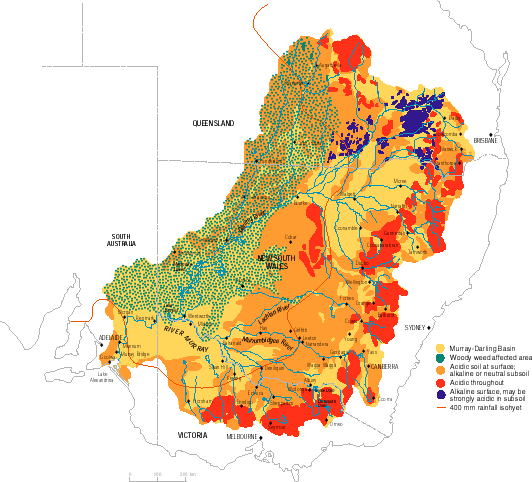
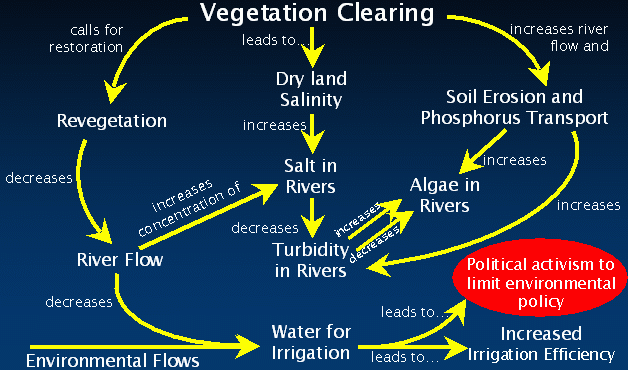
degradation in the Murray-Darling basin (source: Land Assessment and Policy Unit, CRCSLM; Spencer et al. 1996; Noble 1997). The above schema on vegetation clearing and salinity factors
comes from a lecture given by Prof. Bob Wasson, Convenor of the National Institute of Environment on July 4th 2003 in Canberra (http://www.anu.edu.au/nie/events/2003_wasson.htm). He spoke on salinity but stressed that it was just one part of the "Environment Problem". Most environmental problems are connected and should be managed as a whole, not one by one. Integrated (or Total) Catchment Management, Integrated Assessment, Integrated Natural Resource Management, Management for Sustainability …etc. ... are all attempts to manage the whole. However, under "program" and corporate management regimes it is the norm that environmental problems will continue to be described and "managed" individually. Management agencies are usually organised into what John Mant in his "place management" theories called "silos". Research funding is often for single problems, national action plans in the past have typically not been holistic, and training & education are not holistic either. To give but one example, a large gap remains between the earth and social sciences. This could be addressed by more balanced disciplinary education with an integrated approach that includes human institutions and motivations as well as "hard" sciences. The main thing would be to better train natural resource managers in holistic thinking. Funding could be more explicitly targeted to integrated projects, assessed by integrated thinkers, rather than to single discipline specialists. Prof. Bob Wasson recommended that policy makers, managers and developers be required more to use integrative analytical tools, that a stop be put to the development of single-problem national action plans, and that they be replaced with holistic regional action plans .... Those who were around in the 60s and 70s might recognise here the similarity with bioregionalism. Although some of its key figures were expressing themselves on pertinent matters in the 1950s, bioregionalism had roots in the environmentalism of the 60s and later. Bioregionalism was popularised in the 1970s by the ecologist Raymond Dasmann and activist Peter Berg. The Planet Drum Foundation was founded by Berg and others in 1973 to advance bioregional ideas, and in the mid 70s, the Nova Scotia Institute for Bioregional Research was also among the early and influential organisations. Planet Drum Foundation is a direct descendent of the utopian social experimentation of Haight-Ashbury at its peak, and the larger cultural upheaval of the civil rights movement and '60s counterculture. Peter Berg and his wife Judy Goldhaft migrated west independently, drawn by unique cultural history of San Francisco. They there joined the Diggers, a Haight-Ashbury version of the of the original 17th-century Diggers who were a peasant movement in England with ideals of anti-authoritarian democracy and common ownership of land. In 1972, Berg made the acquaintance of ecologist Raymond F. Dasman who was in despair and saying the biosphere was going to be murdered. Their meeting was nevertheless auspicious and together they wound up with the concept of bioregionalism. It was likely inspired by ideas of the first Indian inhabitants of North America - that humans build their culture around local food, shelter and energy sources to ensure long-term sustainability. Berg and Goldhaft are now getting on in years and are at heart a pair of doting and devoted nature lovers. They still live in San Francisco in the Twin Peaks area .. which is full of gum trees from Australia. Berg and Goldhaft don’t like the gums. thinking the eucalyptus nuts and leaves tend to kill stuff and make the soil acid "you can see how unvegetated it is underneath these trees. Very few things can grow. This stuff is poisonous" they maintain (http://sfgate.com/cgi-bin/article.cgi?file=/gate/archive/2004/02/05/plnetdrm.DTL). Berg and Goldhaft agree that the United States is home to a "very wide" green movement that encompasses everything from worst-case-scenario industrial "greenwashing" to grassroots campaigns to preserve ancient forests. Although they are most notably utopian in their enthusiasm for democracy and voting, these veteran activists are suspicious of politicians and political parties, most notably the Green Party. Laments about environmental degradation are age old, and in Australia our first native born poet, Charles Thompson who was educated at the old Castlereagh Academy north of Penrith, wrote of the destruction of the bush (in his poem "Fair Castlereagh" - Thy spreading vale - but here let mem’ry tax, the rude invasion of the spoiling axe; that chased the dryads from th’affrighted glade, and lopped each shrub that once composed their shade. .. written possibly about the mid 1820s). But it was not until the environmental crises of the 1960's and 1970s that world-wide recognition was given to the effects of the industrial economy in a series of international initiatives including the United Nations Conference on the Human Environment and the release of the Club of Rome report in 1972. This precipitated a critique of conventional economics by humanistic economists who cited its moral bankruptcy and the empirical evidence of its failure to deliver sustainability. Bioregionalism is also somewhat linked with social ecology, a field of study first named and developed by Murray Bookchin, a well-known North American anarchist, in the 1960s. The guiding principles he emphasised were unity in diversity and complexity, spontaneity, complementary and mutualistic rather than hierarchical relationships, active, participatory democracy and bioregionalism. Social ecology aims to integrate from personal to social to environmental, in contrast with the usual change frameworks which highlight the economy, society and the environment, in that order! By doing that, they of course may exclude the individual from responsibility and perpetuate the role of money, rather than some higher system of values, as the basis for decision making. Social ecologists offer disagree with the mainstream large environment groups like World Wildlife Fund. They regard as an insidious sellout that there is active participation of some US-based environmental groups in government-funded international development efforts. They believe that international development assistance ostensibly designed to encourage environmental improvement is often used as a wedge to satisfy the needs of transnational capital. The main example has been the U.S. Agency for International Development (USAID) advocating in the 1990s "the forging of environmental policies to favor private sector, market-based solutions . . . and supporting market-based approaches to biodiversity preservation and enhancement." Then technical assistance to address environmental problems was often tied to the enactment of measures to limit the liability of foreign investors for environmental damages. In 1993, $132 million in such assistance was funded by USAID and channeled through the international activities of environmental organizations such as the World Wildlife Fund, Nature Conservancy, Conservation International and the World Resources Institute.
A bioregion is a natural region defined by its ecological coherence. Each bioregion has a distinct geological formations, climatic conditions and ecology. Later developments most often selected waterway catchments as the natural bioregional unit (e.g. "Planet Drum developed the concept of a bioregion: a distinct area with coherent and interconnected plant and animal communities, and natural systems, often defined by a watershed." In New South Wales, a new report A New Model For Landscape Conservation in New South Wales that was released in February 2003 has led to the establishment of an extensive new catchment management structure to environmental management. To this extent we can see the similarity to bioregionalism, although there is no direct connection apparent. The New Model underpinning the changes in NSW was formulated by a consortium of environmental scientists (Wentworth Group) with no particular emphasis on bioregionalism. Planet Drum magazine in 2003 dedicated an issue to "Rejuvenating Bioregionalism". One commentator, Brian (http://csf.colorado.edu/bioregional/2003/msg00058.html) felt that "Many say that the 60s died with American Pie, but I think the movement went into the woodwork, the bioregions and started practicing what we were yelling about in the streets of the 60s. The same with bioregionalism - its in the doing-it stage now." APPLICATION OF BIOREGIONAL CONCEPTS IN AUSTRALIA
Although the new plan was announced as a new model of integrated natural resource management, there are elements and ideas in it which are by no means new. Tracing the history of some of the key ideas is engaged in here.
Bioregionalists have stressed getting to know their "place" or region, trying to live in harmony with the earth, studying species, helping to repair habitats, looking for simpler solutions or simpler ways of living, and a knowledge of past lifestyles (e.g. Holmes et al., 1992). Somewhat folksy, bioregionalism was popular with environmental activists but has not been strong in academic geography, even though it clearly has space and place as its concerns. Nevertheless, from a merging of classical regional geography and general systems one could have expected a bioregional synthesis to emerge. It can be considered as a regional system comprising three sub-systems - a biophysical sub-system, an inhabiting sub-system, and a network sub-system.
Bioregions are relatively large land areas characterised by broad, landscape-scale natural features and environmental processes that influence the functions of entire ecosystems.
There are 17 bioregions in NSW. Two lie wholly within the NSW boundary, while the other 15 are shared with bordering States.
THE AUSTRALIAN SCENE AND THE WENTWORTH GROUP The study of Margaret Gooch at Griffith University was of individuals who volunteer for environmental organisations with a catchment focus. The aim of the study was to capture all of the ways that participants experience catchment volunteering, to gain a deep understanding of why people might undertake such work, and what the social and environmental benefits might be. Data were collected through a qualitative research approach (phenomenography) which seeks variation in the ways individuals experience certain phenomena. Her work showed how developing a "sense of place" and an ecological identity can be a strong motivation for further volunteering. Why is volunteering important? Because Australia’s environment cannot be conserved solely by force, or by fining individuals and corporations - voluntary cooperation must be a key factor. The best understand the new plan for natural resource management that is emerging at least in Eastern Australia we need to move on from early bioregionalism ideas and next consider "The Wentworth Group of Concerned Scientists". The birth of the Wentworth Group occurred on 10 October, 2002, when a small group of scientists gathered in a Sydney hotel to share a meal and their concerns about the directions the national discussion on the environment had taken. The group had been invited by the World Wide Fund for Nature (WWF) to gather to discuss some of the amazing things being given prominence by radio commentators during the drought that was then raging. Radio commentator Alan Jones had been proposing the turning of the coastwards-flowing streams inland (not a new idea) in order to "drought-proof" Australia. Jones started a radio campaign to turn the rivers inland so as to "stop wasting" the water that was flowing to the sea. He advocated a variety of massive engineering projects; including piping water from the Ord to Adelaide and then on to the Murray-Darling Basin, as well as the turning back of the coastal rivers. Eleven scientists responded to the WWF invitation - Leith Boully, Peter Cosier, Peter Cullen, Tim Flannery, Ronnie Harding, Steve Morton, Hugh Possingham, Denis Saunders, Bruce Thom, John Williams and Mike Young. The Chair of Group Professor Peter Cullen. He has delivered public talks about the history and functioning of the Wentworth Group, on themes like "How Does Science Change Public Policy?". He clearly believes that scientists should not be muted or blinkered. The group’s actions have addressed a widespread malaise in the public services where there has been significant deskilling under managerialiam. Substantial technical knowledge was becoming a barrier to promotion in the managerial or policy ranks, where generalists are preferred (technical knowledge being seen as a liability) (Thompson, Canberra Times 27/11/03). Allied with a culture that the public service is there to implement the Government’s policy, alternative policy ideas to present policies are often not encouraged. The Group also subscribes to the "silo" view, that bureaucracies are often more interested in expanding their power, influence and funding than solving problems. Cullen also hopes that the success of this group speaking out for national interests will help attract students to careers in science by showing that scientists CAN make a difference, and that scientists are concerned about fixing the problems of the world. Professor Peter Cullen has worked in the field of natural resource management for over 35 years. He was awarded the Prime Minister's Prize for Environmentalist of the Year in 2001 for his work on the National Action Plan for Salinity and Water Quality. Peter is a graduate in Agricultural Science from the University of Melbourne and his major professional work has been in the areas of nutrient dynamics, eutrophication, lake ecology and environmental flows. He is a member of the International Water Academy and a Director of both Land and Water Australia and Landcare Australia Limited. Peter was also founding Chief Executive of the Cooperative Research Centre for Freshwater Ecology, where he served from 1993-2002. Peter is now a Professor Emeritus of the University of Canberra, where he was Dean of Applied Science. He is a member of the Community Advisory Council, the Murray-Darling Ministerial Council and is Chair of the Scientific Advisory Panel for the Lake Eyre Basin Ministerial Forum. There were some views expressed that it was inappropriate for Government funded scientists in CSIRO to be associated with the Wentworth Group who were making recommendations seen as damaging to some irrigators. Murray Irrigation is reported to have met with the Minister for Science Peter McGauran in an "attempt to thwart the influence of the Wentworth Group in the present water debate" (Pastoral Times, 21/11/03). The Group has responded publicly to these criticisms. Alan Jones’ approach was of the Snowy Mountains genre (successful enough in the past) that humans can tame the country through massive engineering works. This was not something that the Wentworth Group. Society had just gone through a debate that resulted in Governments committing significant resources to return at least some water to the Snowy River, and here were proposals for further massive works that could repeat these "mistakes" in the view of the Wentworth Group scientist. The view of those experienced natural resource scientists was that engineering could not solve the problems and it would be better if Australians would learn to live with the variability of our continent rather than trying to ignore these realities. The First Wentworth Dinner which the WWF convened started at around 5.00 pm for discussion of such issues, and hopefully to develop some counter arguments. A spirited discussion took place, and there was broad agreement amongst the attending scientists about the main points, although as might be expected, there were many differing views on the emphasis and priority that could be given to various aspects of the issue. At about 7.00 pm the group adjourned into an adjacent room for dinner, where they were joined by three invited journalists, Nick Grimm from the ABC AM program, Anthony Hoy from the Bulletin and Asa Wahlquist from the Australian. Asa Wahlquist described the dinner in an article in the Weekend Australian Magazine of May31 2003. "Desert eaten, the discussion continued to take many energetic, if undisciplined turns. The evening was threatening to collapse under the weight of so many fine ideas, when one of the journalists present banged the table. "What are you going to do about it?" he demanded. This was a sobering challenge. Scientists enjoy the tussle of ideas, and spend most of their time arguing about the contestable parts of their knowledge. This challenge meant we had to return to the core things we all agreed upon, rather than continuing to push the boundaries of our knowledge. It was not difficult, and in 15 minutes we had agreed the five-point plan that was the foundation of the Wentworth Group’s "Blueprint for a Living Continent". It was recorded by Nick Grimm, and went to air next morning on AM. As Asa Wahlquist reports in the Australian article "The astonished journalist applauded". The statement hit the media like a drought-breaking storm and Nick Grimm subsequently won a Eureka Prize for Environmental Journalism for that report. Nick Grimm later noted, when receiving his prize, that whilst they were all articulate, passionate and highly motivated, they were uncertain about how to communicate to a wider audience. He suggested they needed a statement, one that would advance the national environmental debate. And he facilitated that statement reaching a massive audience. The resulting Blueprint for a Living Continent prompted Prime Minister John Howard to call a scientific summit to look at ways to respond to Australia's drought. Besides the Prime Minister, other politicians generally welcomed the Blueprint and acknowledged receiving it. Some invited group members to explore issues further with them or their staffs and this led to the Wentworth group report on land clearing and catchment management for NSW. The "Wentworth Group of Concerned Scientists" went on to become recognised by political leaders and media outlets, and to produce a further New Model for Landscape Conservation in New South Wales after NSW Premier Bob Carr invited the Wentworth Group to develop a way forward to address the problems of clearing of native vegetation in NSW. In this exercise, some Wentworth Group members worked with farmer interest and conservation groups to hammer out a Plan that has subsequently been adopted by the NSW Government. Their report A New Model For Landscape Conservation in New South Wales was released in February 2003. That then led to the formation of the Sinclair committee to implement the main ideas which has led to the establishment of catchment management structures in NSW. In the New Model the Group stated that the drought then gripping much of Australia might bring long-lasting damage to the Darling and Murray Rivers. In the face of such a terrible drought there were calls for drought-proofing Australia and turning the coastal rivers inland. But Australia cannot be drought-proofed. What we need to do is to start living sustainably in Australia, living in harmony with the land and not fighting against it. On 23 October 2002 one dust-storm crossed the Australian continent and blew away an estimated 7 million tonnes of irreplaceable topsoil. We are taking more resources from our continent than its natural systems can replenish. That, by any definition, is unsustainable. To live in harmony with the environment they suggested: 1. Clarify water property rights and the obligations associated with those rights to give farmers some certainty and to enable water to be recovered for the environment. 2. Restore environmental flows to stressed rivers, such as the River Murray and its tributaries. 3. Immediately end broadscale landclearing of remnant native vegetation and assist rural communities with adjustment. This provides fundamental benefits to water quality, prevention of salinity, prevention of soil loss and conservation of biodiversity. 4. Pay farmers for environmental services (clean water, fresh air, healthy soils). Where we expect farmers to maintain land in a certain way that is above their duty of care, we should pay them to provide those services on behalf of the rest of Australia. 5. Incorporate into the cost of food, fibre and water the hidden subsidies currently borne by the environment, to assist farmers to farm sustainably and profitably in this country. The proposals were put to COAG, the Council of Australian Governments, to make three significant changes immediately - ending broadscale clearing of remnant vegetation, requiring the clarification of water property rights, and agreeing to purchase urgently needed environmental flows for the Murray River and its tributaries. Achieving reform also requires fundamental changes in our approach to engaging with farmers and rural communities: 1. It is vital that we cut the bureaucratic red tape that is strangling on-ground action in Australia by: -· creating accountable institutions that are owned by rural communities most affected by the problems; -· providing funding directly to farmers and regional communities to help them implement nationally accredited priorities, supported by world class scientific advice; and -· establishing a business-like national Natural Resource Management Commission (the environmental equivalent of the Productivity Commission) to oversee this process. 2. There is also an urgent need for a National Water Plan focusing on improving the health of our damaged rivers, protecting our remaining healthy rivers and improving water use efficiency across Australia. -· Despite water being our most scarce natural resource, we treat rivers as drains. If we keep doing this, neither our rivers nor the rural communities who depend on them have viable futures. Everything we do in the landscape impacts in some way on water quality – even in the driest parts of the continent. 3. To implement these steps it is vital that Commonwealth and State governments signal an in-principle, long-term commitment to an investment strategy to help the restoration work over the next 10 to 20 years, so that regional communities can face the challenge with confidence that the nation is behind them. -· Recent studies commissioned for the Business Leaders Roundtable and others suggest that a public investment of $20 billion is required over that timeframe. The Wentworth Group later released The Blueprint for a National Water Plan on 31 July 2003, and that Blueprint also got reasonable media coverage. It laid out the immediate challenges for water reform: 1. Protect river health and the rights of all Australians to clean usable water, by: • ensuring that the environmental needs of our river systems have first call on the water required to keep them healthy, protecting both their environmental values and ability to meet human needs into the future; • establishing comprehensive water accounts and management systems that reflect the linkages between run-off, river water and groundwater systems; • agreeing to bring over-allocated river and groundwater systems back into balance by recovering water for the environment; • protecting Australia’s less developed rivers by adopting an Australia-wide classification system to guide management strategies, and guarantee protection of important natural and cultural values; and • investing in the science required to make better management decisions in the future.
2. Establishing a new, nationally consistent water entitlement and trading system that provides security to both water users and the environment by: • defining water entitlements as a perpetual share of the available water resource; • clearly articulating ways that water can be used in each catchment to protect both the environment and other uses; • linking entitlements and allocations to transparent and balanced water accounts; and • removing impediments and simplifying temporary and permanent water trading so that water can be used to create greater social and economic value.
3. Engage local communities and ensure a fair transition, by: • supporting community-based catchment, river and estuary management; • establishing Environmental Water Trusts for stressed river systems to provide active and accountable environmental management; • reducing fresh water use in our cities and towns; and • ensuring that steps to recover environmental water are both fair and efficient, so that no group is asked to bear an unreasonable burden in achieving these national goals.
Overall there have been a number of highly important outcomes from the activities of the Wentworth Group. Firstly, Governments have responded to the issues addressed by the group, and while many others have also been important in these reforms, the activities of the Wentworth group are widely regarded as having been very influential. The Labor governments of both New South Wales and Queensland moved to follow recommendations made by the Wentworth Group of Concerned Scientists. The controls of tree clearing in NSW and Qld, the commitment to a new round of water reform in the National Water Initiative with funding of $500 million and the decision of the federal Government and subsequently the Murray-Darling Basin Ministerial Council to commit 500 GL as the first step in restoring the Murray river to health are significant outcomes. On January 19, 2004 conservation groups hailed the $150 million commitment by the ALP to control land clearing in Queensland. The environment groups called on all other political parties to follow the Premier’s lead and support this visionary policy, which became an environmental benchmark. The commitment of $150 million is to assist landholders affected by the controls and to provide incentives to protect bushland. Similarly in NSW the New Model and controls on land clearing have been welcomed by environment groups. REFERENCES TO THE WENTWORTH GROUP Lane, M., McDonald, G.T. and Morrison, T.H., 2004. Decentralisation and Environmental Management in Australia: A Comment on the Prescriptions of the Wentworth Group. Australian Geographical Studies. March 2004. 42 (1) 103-115. Nick Grimm Broadcast: ABC AM program 11th October 2002 Lunney, 2003. A way forward, yes; a Blueprint for a living continent, no: a critical look at the Wentworth group’s report of November 2002. Editorial Australian Zoologist, October 2003. Wentworth group of Concerned scientists. "Blueprint for a living continent. A way forward from the Wentworth group of concerned scientists" (www.wwf.org.au/download/blueprint-for-a-living-continent.pdf) Wentworth group of Concerned scientists. "Blueprint for a National Water Plan.
There has been a trend for government agencies throughout Australia to adopt a bioregional approach to nature conservation. Planning for biodiversity at this scale recognises the significance of broad natural processes and gives the greatest opportunity to conserve biodiversity in sufficient numbers and distribution to maximise the chance of long-term survival.
The mapping of the bioregions of Australia was undertaken by the Federal Government in cooperation with State and territory conservation agencies to provide a framework for biodiversity assessment and planning. The result of this Australia-wide mapping exercise was the production of the Interim Biogeographic Regionalisation of Australia or IBRA (Thackway and Cresswell, 1995). This divides Australia into bioregions on the basis of their dominant landscape-scale attributes. IBRA was developed as a framework primarily to identify deficiencies in the Australian network of protected areas and to set priorities for further enhancing the reserve system.
Across Australia some 130 biogeographic regions were first identified but there was little congruency across State and territory boundaries about these regions. The use of further datasets and environmental information including climate, lithology, geology, landform, vegetation, flora and fauna, land use and other attributes provided the means of rationalising the 130 regions into 85 bioregions as recognised in Australia today.
The decision by the New South Wales government to adopt a radical new land management plan that will end broadscale land clearing throughout the state has established a global precedent for sustainable agriculture.
The plan, devised by the Wentworth Group of Concerned Scientists in co-operation with NSW Farmers and environment groups, was adopted by Premier Carr as the basis for government policy.
The Premier announced the adoption of the Wentworth Group model on March 15 2003 at a farm near Wellington.
The announcement by the Premier was poised to hopefully end years of conflict between farmers and conservationists over the impact of land clearing on the state’s rivers, landscapes and biodiversity and the need to ensure the viability of agricultural production.
The Wentworth Group model for New South Wales land management advocates strengthening and simplifying native vegetation laws and ending broadscale clearing of remnant vegetation and protected regrowth; setting environmental standards and clarifying responsibilities for native vegetation management; using property management plans to provide investment security; management flexibility and financial support for farmers; providing significant levels of public funding for farmers to help meet new environmental standards and support conservation results; restructuring institutions by improving scientific input into policy setting; improving information systems and regionalising administration.
This under the new Natural Resources Commission Act 2003 the NSW government has established an independent commission and an advisory council. The commission will set environmental targets and standards, and audit outcomes and effectiveness of catchment action plans. The council will advise the Government on natural resource management issues and broker agreements between the representative stakeholder groups on contentious natural resource management issues.
In announcing the new Nature Conservation Council on
29 October 2003, NSW Natural Resources Minister Craig Knowles stated that it came with the roll-out of the new $406 million state wide Catchment Management Authority (CMA) model, announced by the Premier on October 15. When fully operational, the Natural Resources Commission will set environmental targets and standards based on the best scientific, economic and social information available. "This will be the first time New South Wales has had a single source of independent, expert advice for natural resource matters," Mr Knowles said. "There is universal acknowledgment that we need to move away from ‘argy bargy style conflict’ that historically goes with natural resource debate. That’s why the establishment of the Natural Resources Commission is so crucial." The second important CMA oversight group will be the Natural Resources Advisory Council (NRAC) which will contain key stakeholders such as The Nature Conservation Council, The Total Environment Centre, NSW Irrigators Council, NSW Farmers’ Association, NSW Minerals Council, Forest Products Association, and the 13 Catchment Management Authorities. Additional scientific, aboriginal, union and local government representative bodies will also be appointed. State wide the NRAC will subsume thirteen existing advisory bodies and committees and will be a source of independent and reliable advice to the NRC.Enterprise based conservation in Western NSW and elsewhere
Acclaim of the new management planning, presented as a new scheme which pays farmers to preserve land, was given in a newspaper article and on ABC television program by reporters Daniel Lewis and Paul Lockyer respectively (Lewis 2004, Lockyer 2004). There it was presented as a novel idea, that if Australians want the rural and regional environment preserved it will be wise to pay the farmers to do it. This innovative five-year pilot program is believed to be the first program in Australia to conserve uncleared areas though regular payments rather than by funding land rehabilitation.
The notion has been explored previously by farmers and conservationists but has been restricted to funding remedial works on degraded land. The new "Enterprise-based conservation" project or pilot program is seen as an alternative to the creation of national parks which farmers have often criticised as not being managed properly.
Under the new planning, station owners in far western NSW are already being paid to fence off large areas to bring them back to nature.
The report stated that this initiative is being hailed by conservationists as the biggest breakthrough in twenty years, and hoped to be adapted as a conservation model right across rural Australia.
One example shown by the ABC is a five-year project in "escarpment country" north-east of Broken Hill. It is part of 4,000 hectares on Churinga Station now being set aside for conservation. Grazier Garry Hannigan is one of 10 graziers in the far west of NSW who are embracing the new conservation measures. The 4,000 hectares is ten per cent of his property and his goal will be to have the escarpment country return to its natural state. It is home to many valuable native plant and animal species including knobtailed geckos, short-beaked echidnas, threatened pink cockatoos and endangered Nelia plants.
After "the worst drought in 100 years" it is not only giving the country an opportunity to regenerate but also giving the graziers financial incentive. The land-holders are paid between $2-3 a hectare per annum to care for their conservation areas, a scheme jointly funded by the NSW and federal governments.
Graziers are required to fence the areas to keep out stock and goats.
Other contral programs must also be maintained to allow endangered wildlife to recover. Altogether, more than 65,000 hectares in the far west will be managed for conservation for the next five years, costing $900,000. The 11 areas involved range from 320 to 23,000 hectares. The 10 owners tendered for the funding and must fence the conservation land, destock it or greatly reduce grazing pressure, and remove feral animals and weeds so native animals and plants can thrive and heritage sites can be preserved.
Paul Lockyer reported that the idea originally came from the graziers themselves, searching for ways to sustain an outback existence in the midst of a grinding drought and that it was enthusiastically supported by the Western Lands Commissioner.
Peter Beven, 63, is another grazier who was one of the first to tender for conservation funding. His Sturts Meadows Station, at Bijerkerno Gorge where Eight Mile Creek breaks through the Barrier Ranges, still runs 10,000 sheep but the returns are modest by comparison with wool's glory days and the harsh environment offers few alternatives to grazing. He'll get more than $14,000 a year to care for 5,500 hectares of country which includes a picturesque gorge that leads to the remains of a tin mine. The Sturts Meadows Conservation area is the largest formal conservation area in the Barrier Ranges.
Tourist possibilities also exist. Peter Bevan imagines that people will want to visit, may wish to camp in the area, and that he might establish camping areas.
Since word about the general new Commonwealth-State ideas for conservation has spread through the outback, many other land-holders have indicated that they want to be part of any expanded scheme. Supporters have suggested that the millions of dollars earmarked for drought relief might be better invested in schemes like this, ensuring alternative income during the dry times. Whatever happens with funding, Peter Beven declares that he is determined to preserve the patch of country he's put aside on Sturts Meadows at Bijerkerno Creek.
This funding is part of the "WEST 2000 Plus" $12.4M rural recovery program for the Western Division of New South Wales. The program follows on from the WEST 2000 Rural Partnership Program, and is partnership between landholders, the NSW Government and the Australian Government (Department of Agriculture, Fisheries and Forestry). The overall program will provide a range of assistance measures for Western Division graziers (Training and skills development $2M, development of alternative industries $700K, natural resource management $3.85M million, and rural restructuring support $4.55M). Some $900K is for the Enterprise Based Conservation initiative.
Enterprise based conservation is defined as the process whereby the sustainable management of a property is encouraged by offering financial incentives to landholders to undertake activities designed to improve the management and care of the natural resource base. The ten projects which won grants under the scheme were chosen through a competitive process by an independent assessment panel and cover a variety of land types and conditions throughout the Western Division. They total over 650 square kilometres of Western Division land managed for conservation, or roughly equivalent to the area of Singapore. The cost of managing this area for conservation, rather than production is less than $2.60 per hectare per year.
Although support for enterprise based conservation follows from the Wentworth group recommendations, which themselves arose in reaction to radio announcer Alan Jones "drought proofing" campaign, these new measures do in fact allow Western Division land holders to "drought proof" part or all of their property by reducing their reliance on production, and having the ability to undertake conservation activities for financial gain.
Obviously substantial changes to the land condition may take much longer than the project's initial five years duration to fully develop, and continued funding is very likely. Enterprise Based Conservation, once implemented, is likely to become a permanent landuse.
Besides the abovementioned graziers in western NSW, the Brewarrina Regional Vegetation Committee has joined in promoting the same market-based solution to conservation termed Enterprise Based Conservation. Enterprise Based Conservation views the conservation of native vegetationas the "primary product" (outcome) and "secondary products" include salinity reduction, improved soil and biodiversity conservation. Estimates of a one-off cost of $500M have been made to conserve 10% of the rangelands of Australia. In the longer term, it is expected that conservation products would trade on the free market in competition with other commodity production.
"Enterprise based conservation" has been under development in Nepal and elsewhere since 1994 to link enterprise development to biodiversity conservation incentives. Singh et al. (1997) describred the enterprise based approach for a Sikkim Himalayan case. In 2000-2001 the World Bank gave support to further countries, declaring that the majority of conservation resources to date had gone to parks and protected area models and that more innovation in people-centered, enterprise-based resource management strategies was needed. An NGO named EnterpriseWorks Worldwide of Washington DC, USA has been prominent in such programs in Asia since 1994, using USAID and Ford Foundation finance. It has operated in Nepal, India, Indonesia, and the Philippines. In Nepal natural products were included in forest management plans for the first time through the process of handing over government forest to community forest user groups(CFUGs). The CFUGs are able to earn royalties on materials harvested from their forest and pasture lands. These royalties previously went to the central government that did not reinvest the money in the communities. The CFUGs, by contrast, now have the capital to hire forest guards and invest in community development and conservation activities. In one success story the women of Thali village profit from essential oils and the project established a community-owned oil distillation plant, Humla Oil (Pvt.) Ltd.
The World Wildlife Fund (WWF) has also been involved in enterprise based conservation. One WWF-India initiative involved using commercial orchid cultivation such as the Cymbidium species in the degraded jhumlands of Arunachal Pradesh. Orchid species have a vast market potential both within the country and overseas. Using tissue culture as a multiplication tool, the Cymbidium species were mass propagated and approximately 2,500 hardened seedlings were provided to three entrepreneur-farmers at Zero and Potin in district Hapoli. Demonstration nurseries, for training the local people were developed at Sessa and Dirrang. In order to bring benefit to the farmers, the implementors also established a marketing line for the sale of cut flowers. The success of this initiative has motivated other farmers to take up orchid cultivation as an additional source of income. A seond WWF-India involvement was with another enterprise-based conservation effort wherein very high quality clumps of ten species of bamboos and broomgrass were collected and multiplied at germplasm banks. The improved quality clumps of bamboo and seedlings of broomgrass were provided back to local farmers for cultivation in their farms and degraded lands in their villages. To transfer the technology of cultivation and to develop entrepreneurship and bring about conservation awareness, the farmers were also given training. Farmers of Lohit and Papumpare took special interest and collected more than 11,000 plants of broomgrass and 120 plants of bamboos for cultivation. The sale of improved quality of broomsticks and bamboos has proved to be a profitable enterprise besides their preservation in germplasm banks as an effort to conserve the precious genetic wealth of India (Government of India Press Information Bureau feature article http://pib.nic.in/feature/fe1299/f0812991.html).
The Biodiversity Conservation Network (BCN)was a US$20 million, 1993-1999 program funded by the US Agency for International Development which involved a consortium of the WWF-US, The Nature Conservancy, and the World Resources Institute. BCN’s mandate included the analysis of the effectiveness and impact of enterprise based conservation strategies and it gave rise to at least 20 conservation based enterprises in various countries.
BCN was established in September 1992. The key hypothesis behind the enterprise-based conservation strategy is that if local people directly benefit from a business that depends on the biodiversity at a given site, then they should have the incentive to act to protect it against both internal and external threats to its destruction. Through a competitive review
process, BCN funded 20 three-year Implementation Grants in seven
countries.
Ferraro and Burnside (2004) have evaluated the WEST 2000 'Rural Partnership' program as a case study for effective natural resource management investment in rangelands. They found that the regional impact of the measures varied greatly - from high in the case of training activities, to low for some of the on-property support measures. Furthermore, the benefit/cost ratios for some natural resource management investments were less than desirable.
The WEST 2000 Rural Partnership Program is one of 12 such programs addressing chronic socio-economic and environmental problems in rural areas of Australia. WEST refers both to the western part of NSW and to the acronym "Working for Equity and Sustainability Together". The NSW and Commonwealth Governments, drawing from the Rural Adjustment Scheme, the Natural Heritage Trust and State Agencies provided $17.5M WEST 2000 between 1997 and 2001.
WEST 2000 focussed on providing assistance in natural resource management, rural restructuring and training and skills development. Most WEST 2000 funds (60%) were distributed directly to landholders in the form of grants, with a lesser amount going to projects which indirectly assisted landholders (30%). The remaining 10% of funding was used for program management.
Comments received in the consultation process generally indicated the grant-based projects worked well for some individuals but there is a question about their impact at an industry or regional scale. Some considered a need for a greater emphasis on wider regional needs, including directing effort to addressing social issues, Aboriginal issues, and the future of regional towns as well as grazing properties.
A key question was the degree to which WEST 2000 is achieving lasting and beneficial change in the condition of the natural resources in the Western Division with a level of investment which reasonably balances public and private benefits. This question is set within a larger concern about how government investment in private landholder behaviour can be best structured to maximise the public benefits in terms of improved condition of the natural resources. Bore capping and piping was clearly a sound investment for public dollars, based on the value of the water saved. There is also evidence that encouraging the sensible adoption of technologies to manage total grazing pressure will have long-term public and private benefits. Conversely, the Benefit Cost Analyses for woody weed control and rabbit control projects indicated sub-optimal financial outcomes for landholders and the public.
About one third of respondents indicated they will continue and do more in managing natural resources without external support provided they have sufficient funds. The other two thirds would not have undertaken any work without WEST 2000 assistance. The assumption in these projects is that non-dollar returns will come from benefits in terms of improved range condition and achievement of defined environmental values. However, achievement of environmental aims must occur within a regional context. This requires regional planning including the establishment of clear goals, followed by targeted investment at locations and situations where these goals can be achieved.
Investment in natural resource management projects (including woody weed prevention and rabbit control) needs to be directed into activities that will yield maximum public and private benefits. This suggests aligning investment strategies with regional natural resource management goals and objectives. The Western Catchment and Lower Murray-Darling Catchment Plans should provide the basis for developing regional priorities.
As seen from the review herein, the "new plan" being adopted for natural resource management in Australia is the enterprise based conservation strategy which was promoted in many countries by the World Wildlife Fund in the 1990s. The model appears to have originated in the US ca. 1992. It was effectively promoted into Australia by WWF which facilitated the creation of the influential Wentworth Group of Concerned Scientists.
Administration will be via catchment-focussed regionalisation. This in turn has arisen out of bioregionalism which was originally a very fringe concept but has since been carried into the mainstream managment sphere where it now enjoys governmental political favour (particularly in the Commonwealth, NSW and Queensland governments) with a large imperative placed on regional management flow of funding (to catchment management authorities) for direct payments to land holders for doing the right thing to assist conservation (as determined by the standards-setting body which in the case of NSW is a natural resources commission). Other noteworthy ideological links are to international neoliberalism and more locally to place management ideas as have been promoted over many years by John Mant. Under place management goals all support or leverage funding should go mostly straight to a regional centre for deployment, rather than to any major agencies of the bureaucracy (which Mant referred to as "silos").
To further assess how effective such measures might be we can monitor the development of the "new plan" as well as looking for and reviewing comparative precedents like the "Landcare" program in Australia.
It is desirable to continue reviewing regulatory change - i.e. a comparison of different strategies seen over time, as part of the critique of the movement to "regulatory reform" and quality achievement via standards-setting. For a basic survey of regulatory reform already carried out CLICK HERE. This review, however, is in need of updating (its bibliography does not extend beyond 1998).
Alexander, Donald. 1990. "Bioregionalism: Science Or Sensibility?" Environmental Ethics, v12n2 (Summer 1990): 161-173.
Berg, Peter (ed.). 1978. Reinhabiting A Separate Country : A Bioregional Anthology of Northern California. San Francisco: Planet Drum Foundation.
Bookchin, M., 1968. The Ecology of Freedom: The Emergence and Dissolution of Hierarchy. Cheshire Books, Palo Alto, CA.
Brunckhorst, D. J., 2000. Bioregional Planning: Resource Management Beyond the New Millennium. Amsterdam: Harwood Academic.
Dick, R. (ed) 2000. A multi-faceted approach to regional conservation assessment in the Cobar Peneplain biogeographic region – an Overview. NPWS, Hurstville.
Dodge, J. 1981. 'Living by Life: Some Bioregional Theory and Practice'. The CoEvolution Quarterly. Winter: 6-12.
Environment Australia 2000. Revision of the Interim Biogeographic Regionalisation for Australia (IBRA) and development of Version 5.1 – Summary Report. Environment Australia, Canberra.
Tim Ferraro, T. and Burnside, D., 2004. WEST 2000: A Case Study of Natural Resource Management Investment in the NSW Rangelands. Paper presented to: Australian Association of Natural Resource Management, NSW Branch Conference - Taking Charge of Change - November 23/24, 2001, Dubbo, NSW.
Foster, C. H. W., 1984. Experiments In Bioregionalism: The New England River Basins Story. Hanover, NH: University Press of New England.
Gooch, M. (forthcoming) A sense of place: ecological identity as a driver for catchment volunteering, Australian Journal on Volunteering. A powerpoint version of this was presented at the Australia
Johnson, K. N. et al. (eds.). 1999. Bioregional Assessments: Science At the Crossroads of Management and Policy. Washington, D.C.: Island Press.
Kahn, C. 1993. "The Bioregional Paradigm - Applications To STS Education," Bulletin of Science Technology & Society, v13n3 (1993): 125-127.
Holmes, H., Lawless, G. and Sale, K., 1992. "Being Bioregional; The Environmental Wisdom of Getting To Know Your Place In the World," GARBAGE The Practical Journal for the Environment, v4n2 (March-April 1992): 32(6).
Lewis, D., 2004. "Farmers reap rewards for harvesting heritage of the west ". Sydney Morning Herald, April 3 2004. [Viz. http://www.smh.com.au/text/articles/2004/04/02/1080544687565.html]
Lockyer, P., 2004. "New scheme pays farmers to preserve land". Australian Broadcasting Corporation, TV Program Transcript. Broadcast 26/04/2004. [Viz. http://www.abc.net.au/7.30/content/2004/s1095184.htm]
McGinnis, M. V. (ed.), 1999. Bioregionalism, London: Routledge.
McTaggart, W. D., 1993. "Bioregionalism and Regional Geography: Place, People, and Networks," Canadian Geographer, v37n4 (Winter 1993): 307-319.
Metzner, R., 1995. The Place and the Story: Where Ecopsychology and Bioregionalism Meet. Trumpeter, 1995.
Morgan, G. 2001. Delineation and description of the Eastern Environmental Subregions (provinces) in New South Wales Study. NPWS, Hurstville.
Parsons, J. 1985. 'On "Bioregionalism" and "Watershed" Consciousness'. The Professional Geographer 37: 1-6.
Popper, D.E. & Popper, F. J., 1994. "The Buffalo-Commons, A Bioregional Vision of the Great-Plains," Landscape Architecture, v84n4 (Apr, 1994): 144-144.
Powell, J.M., 1993. The Emergence of Bioregionalism in the Murray-Darling Basin. Murray-Darling Basin Commission, Canberra.
Russ, J., 1995. A Bioregional Perspective on Planning and Regional Economics. Trumpeter.
Russel, D., 1993. "The Wildest Bill On the Hill. (proposed bill that would turn the Northern Rocky Mountains into a bioregion) (News and Comment)," The Amicus Journal, v14, n4 (Wntr 1993): p14(2).
Sale, K., 1983. Mother of All - An Introduction to Bioregionalism, 45pp, 3rd, Annual E.F. Schumacher Lecture, Oct. 83.
Sale, K. 1985. Dwellers in the Land: The Bioregional Vision. San Francisco: Sierra Club Books.
Singh, H. B., Chettri , N. , Panda, N., Lepcha, R., Sundriyal, R. C., Rai, S.C., Sharma, E. and Jain, N., 1997. Enterprise based approach to protect biodiversity: a Sikkim Himalayan case study. Paper presented in “International Symposium on Sustainable Utilization of Biodiveisity” , (8-10 March 1997). Organized by Sai Institute of Environment, Dehra Dun and Reliable Distributors, Delhi, India
Smith, G., 1993. "Shaping Bioregional Schools (educational changes as economics decentralizes)," Whole Earth Review, n81 (Winter 1993): 70(5).
Thackway, R. and Cresswell, I.D. 1995. An interim biogeographic regionalisation for Australia: a framework for setting priorities in the National Reserves System Cooperative Program, Version 4.0. Australian Nature Conservation Agency, Canberra.

