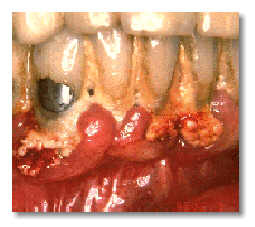
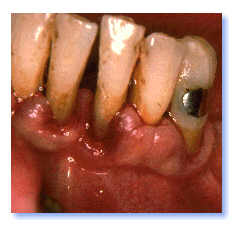
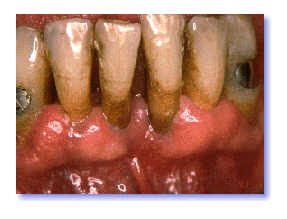
The Gums. Just as a well made house will fall with a poor foundation, the healthiest teeth in the world will fail with unhealthy gums. This problem, known as periodontal disease, is one of the most prevalent diseases in America today. However, many people are unaware of these types of problems until very late in the disease process. Just as high blood pressure can go undiagnosed without proper monitoring, so can periodontal disease. When symptoms finally due occur, many times the disease is already in the later stages, making the treatment more difficult and the outcome more uncertain. Not to mention recent studies in medical literature demonstrating a strong relationship between periodontal disease and cardiovascular disease. To be put simply, periodontal disease is a significant risk factor for suffering a heart attack or stroke.
Treatment of periodontal disease involves three basic steps:
1. Diagnosis, most important.You can't treat a problem you don't know you have!
2. Getting things clean. Periodontal disease is caused by bacteria below the gumline. Once diagnosed, this bacteria needs to be removed professionally in a variety of ways to try and achieve a healthy starting point. The goals of periodontal treatment are: bacteria removal from below the gumline, reduction in amount of space below the gumline for bacteria to accumulate (pockets), and patient education and motivation as to their role in treatment.
3. Keeping things clean. Once removed it becomes very important to prevent bacteria from reaccumulating below the gumline. Bacteria below the gumline triggers the body's inflamatory response. This chronic inflamation is what is most destructive to the periodontal tissues, as well as the entire body. Home care instructions, as well a professional recall appointments are essential in controling periodontal disease. |