 Return to Biochemistry
PROTEINS AND ENZYMES
Download a copy of this study guide
 Return to top
THE AMINO ACIDS
| NAME |
SYM |
STRUCTURE |
R-GROUP |
GROUP / OTHER |
| GLYCINE |
Gly
G |
 |
Proton |
NONPOLAR, ALIPHATIC
The only NON-CHIRAL amino
acid.
Minimal hindrance allows much
more structural flexibility. |
| ALANINE |
Ala
A |
 |
Methyl |
NONPOLAR, ALIPHATIC
|
| VALINE |
Val
V |
 |
Isopropyl |
NONPOLAR, ALIPHATIC
|
| LEUCINE |
Leu
L |
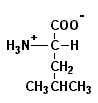 |
Isobutyl |
NONPOLAR, ALIPHATIC
|
| ISOLEUCINE |
Ile
I |
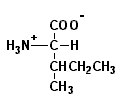 |
sec-Butyl |
NONPOLAR, ALIPHATIC
Not that it has TWO CHIRAL
CENTERS -- at alpha-Carbon and
at first Carbon of chain. |
| PROLINE |
Pro
P |
 |
Cyclopentyl
Amine
|
NONPOLAR, ALIPHATIC
Rigid configuration = less structural
flexibility.
Only a.a. with a 2 amino group.
Side chain is covalently bonded to
the nitrogen of the amide.
Often found at beta-turns (corners)
of beta strands and sheets |
| SERINE |
Ser
S |
 |
1 Alcohol |
POLAR, UNCHARGED
|
| THREONINE |
Thr
T |
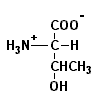 |
2 Alcohol |
POLAR, UNCHARGED
Also has TWO CHIRAL
CENTERS. |
| CYSTEINE |
Cys
C |
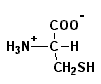 |
Thiol |
POLAR, UNCHARGED
Readily oxidized to form cystine =
two cysteine molecules joined by a
disulfide bridge. |
| METHIONINE |
Met
M |
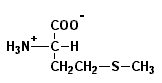 |
Sulfur Ether |
POLAR, UNCHARGED
Cannot form a disulfide bridge. |
| ASPARAGINE |
Asn
N |
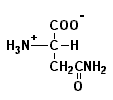 |
Amide,
connected at
alpha-Carbon |
POLAR, UNCHARGED
The amide of aspartate.
The shortest of the two a.a.'s
containing amides in the side chain. |
| GLUTAMINE |
Gln
Q |
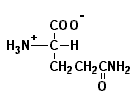 |
Amide,
connected at
beta-Carbon |
POLAR, UNCHARGED
The amide of glutamate.
|
| PHENYLALANINE |
Phe
F |
 |
Toluene |
AROMATIC
A phenyl group is substituted for
one of the H's of alanine -- hence
the name. |
| TYROSINE |
Tyr
Y |
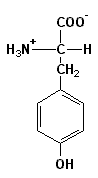 |
para-Methyl-phenol
|
AROMATIC
Crystalline substances found on
crusty cheese. Named for "Tyros,"
Greek God of cheese.
Can form hydrogen bonds.
Important in enzymatic activity --
tyrosine cascade.
More polar than phenylalanine. |
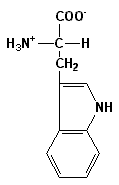
| TRYPTOPHAN |
Trp
W |
 |
|
AROMATIC
More polar than phenylalanine.
Strongly absorbs ultraviolet light.
Only bicyclic side-chain.
Known as an INDOLE structure. |
| LYSINE
pKa 10. |
Lys
K |
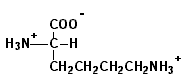 |
Butyl amine |
POSITIVELY CHARGED
(BASIC)
If pH of environment < 10, the
group is positively charged.
If pH > 10, the group is neutral. |
| ARGININE
pKa 12: MOST
BASIC of all amino
acids. |
Arg
R |
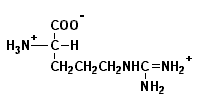 |
Guanidino
Group |
POSITIVELY CHARGED
(BASIC)
Arginine is almost always positively
charged. No biological
environment is basic enough to
neutralize it. |
| HISTIDINE
pKa 7 |
His
H |
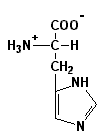 |
Imidazole
group |
POSITIVELY CHARGED
(BASIC)
It's charge is specifically controlled
by the pH of its biological
environment. |
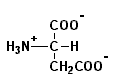
| ASPARTATE
ASPARTIC ACID
pKa 5 for the SIDE
CHAIN.
pKa = 2-3 for the
PEPTIDE CHAIN, as it
usually does. |
Asp
D |
 |
|
NEGATIVELY CHARGED
(ACIDIC)
At pH < 5, it is acidic (with COOH)
and called aspartic acid.
At pH > 5, it is in form COO-and
called aspartate. |
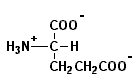
| GLUTAMATE
GLUTAMIC ACID
pKa 5 for the COOH
SIDE CHAIN.
pKa = 2-3 for the
PEPTIDE CHAIN, as it
usually does. |
Glu
E |
 |
|
NEGATIVELY CHARGED
(ACIDIC)
At pH < 5, it is acidic (with COOH)
and called glutamic
At pH > 5, it is in form COO- and
called glutamate
|
Return to top
BASIC PROTEIN STRUCTURE
Classifications of Proteins:
- Globular
- Fibrous
- Lipoproteins
- Nucleoproteins
- Glycoproteins / Proteoglycans
Ways to show a protein:
- Chemical (molecular) structure.
- Ball and stick model.
- Space-Filling Model: Based on the Van-der-Waals maximum radii each nucleus would
occupy.
Chirality: alpha-Carbon is chiral, in all amino acids except Glycine.
- L-forms of amino acids are the kinds that are found in nature.
Other Amino Acids not found in proteins:
- GABA: Gamma-Amino Butyric Acid.
- Ornithine -- metabolic intermediate
- Homocysteine -- vitamin metabolism intermediate
- Homoserine
- Thyroxine -- catabolic hormone from thyroid gland, derived from tyrosine.
Weak Acid / Acid Equilibrium Constant: 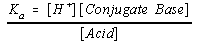
Henderson Hesselbach Equation: 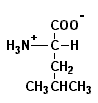
Tyrosine as a weak acid:
- pKa1 = 2.2
- Carboxylate dissociation: COOH ------> COO- + H+
- So, at pH of 2.2, 50% of the COOH moieties are dissociated.
- pKa2 = 9.1
- Amino dissociation: NH3+ ------> NH2
- pKa3 = 10.1
- Phenol hydroxyl group ------> phenoxide
- So, at biological pH, it has a net charge of zero (COO-, NH3+, and OH)
Isoelectric Point: The point at which the net charge on the protein is zero, and the concentration
of zwitterion is at its highest.
Ultraviolet Absorption of Proteins:
- Aromatic amino acids show up on UV-Absorption spectra: Tryptophan is the strongest
signal, and Phenylalanine the weakest. Tyrosine in the middle.
Post-Translational Modifications:
- Cystine: The oxidized form (disulfide bridge) of two cysteines.
- Many other examples... collagen, glycosylation, etc.
Structural Analysis of Proteins:
- Primary sequence can be determined by the Edman Degradation.
- Individual amino acids can be separated by ion-exchange, high-pressure liquid (HPLC),
and gas chromatography.
- Can predict from nucleic acid sequence.
Clinical Example of Too Little Protein: Spherocytosis
- Decreased level of the erythrocyte anion transporter, Band-3, leads to spherocytosis.
Biconcave shape can no longer be accomplish by erythrocytes.
- Lack of the anion-transporter leads to reduced osmotic capabilities
Polyacrylamide Gel Electrophoresis: PAGE gel, separating proteins after detergent with
Sodium Dodecyl Sulfate (which denatures the protein).
- Then move them on an electrical sieve: polyacrylamide gel.
- The smallest proteins will travel the fastest (i.e. the furthest).
Clinical Example of Too Much Protein: Myeloma
- Light Chain Deposition Disease: Too much of the mappa (small) chain of
immunoglobulins. Proliferation of the plasma cells that make this single chain globulin.
- Immunoglobulins consists of four subunits, but they are not quaternary, because they
subunits are covalently linked to each other.
Primary Structure: The sequence of amino acids.
Secondary Structure: Alpha-Helices and Beta-sheets. The interactions and special orientations
of neighboring amino acids.
Supersecondary Structures: Locally folded domains. The folding in local regions of a
protein.
- Locally folded domains are repeated in discrete proteins throughout the genome. Similar
motifs (and repeating motifs) arise in many different proteins, indicating repetition of gene
sequences in evolution.
Tertiary Structure: The folding and three-dimensional shape of entire proteins, resulting from
covalent and non-covalent interactions between regions.
Quaternary Structure: The non-covalent (physical) interactions between different monomers of
a polymeric protein, such as hemoglobin (4 subunits) and tubulin (2 subunits).
Techniques for Structural Analysis of Tertiary Conformation:
- X-Ray Crystallography: Must form stable crystals or possess repeating structural
patterns in order to visible by this method.
- Magnetic Spectroscopy: NMR-Spectra. C-13 and H-1 absorption of radio frequencies
in a magnetic field.
Heme Group: Coordinate ligands form, usually with Fe in the middle. The best example of a
prosthetic (non-amino-acid) group in a globular protein.
- Cytochrome-C contains a Heme-group. It interacts with a membrane. Since the
membrane is negatively charged, it has positively charged Lysine groups to achieve the
interaction.
- The positively charged Lys residues are highly conserved across species, in the
same 3 position.
- It is a porphyrin ring, as well as an Iron.
- Iron has six coordination points
- Four of them contributed by the porphyrin ring.
- Two of them are sulfur atoms contribute by Methionine and Nitrogen contributed
by Histidine.
Non-Covalent Interactions: Important to secondary and tertiary structure
- Electrostatic Forces: +/- attraction
- Hydrogen Bonding: OH, NH, SH
- Hydrophobic Interactions: Physical attraction between hydrophobic moieties in water.
- Van der Waals Forces: Weakest, interactions relative to size.
Peptide Bond: A Condensation Reaction, formed by the exclusion of water between two amino
acids.
- The peptide bond is rigid and planar.
- It is rigid because it has double-bond character (resonance) resulting from the partial
negative charge of the nitrogen and carbonyl (alpha,beta-unsaturated characteristics).
- Phi (phi): The angle between each nitrogen and the alpha-Carbon.
- Psi (): The angle between each alpha-Carbon and the Carbonyl-carbon
Alpha Helix:
- 3.6 residues make up each complete helical turn.
- It is a right-handed helix.
- Electrostatic interactions (charged residues) are uncommon, and when they are present
they mutually cancel or attract each other to stabilize the turn.
Beta-Strand: Form an approximate plane.
- Beta-Sheet: Adjacent beta strands, in parallel or anti-parallel orientations.
- Turns: The point where the strands of a beta-sheet may change direction.
- Glycine is often found in turns, due to small size and no steric hindrance.
- Proline if often found in turns, due to its secondary alpha-carbon and natural angle
for bending.
- The R-Groups in beta-strands point away from the plane, usually in alternating up and
down directions.
Ramachandran Plot: Plot of Psi -vs- Phi angles, showing what theoretical values of Psi and Phi
are possible between residues, and what secondary conformations they dictate.
Hypercholesterolemia: Results from the single-point mutation of Apo-B (gigantic protein),
from Gly ------> Val. Gives us 2 to 4 times too much LDL (low density lipoprotein)
cholesterol is a result.
- They think it screws it because Gly is at a key turn, and Val is too bulky to allow the turn
to remain... changes tertiary conformation.
Primary Structural Analysis: Strategy of putting puzzle pieces together
- Digest (oxidize) cystine bonds to cysteic acid.
- Digest with Trypsin, which cuts at specific residues.
- Cleaves at the Carboxyl terminus of Lys and Arg.
- Digest with Cyanogen Bromide, which cuts at different specific residues. This cleaves at
the Carboxyl terminus of Methionine.
- So, if you cut one chain into two pieces, then you know that Met was in the middle
of the chain. If, on the other hand, you get one piece, then you know that Met was
at the end (C-Terminus) of the chain.
- Align peptides with overlapping sequences from the two above.
Protein Chaperones (Heat Shock): Proteins that aid proteins in folding and unfolding. They
unfold proteins so that they can get through a membrane intact, and then refold them on the other
side.
Fluorescent Spectroscopy: Identification technique to tell the relative abundance of the aromatic
amino acids. It will distinguish between a polar and non-polar environment for these residues.
Return to top
HEMOGLOBIN, MYOGLOBIN, OXYGEN TRANSPORT
Hemoglobin: Oxygen affinity
- Oxygenated blood has Oxyhemoglobin, which holds four oxygens each bound to an iron
in the Heme group.
- Deoxygenated blood has Carbaminohemoglobin (carbamate). Two CO2's can be held
by each hemoglobin. The rest is dissolved in plasma as HCO3-.
Myoglobin: Similar to hemoglobin, it has even higher affinity for O2 (and can take O2 from Hb).
Found in skeletal and cardiac "red" muscle.
- Made up of 75% alpha-helices. The rest is random coil. Predominately hydrophobic.
Non-polar in order to...
- In order to bind solubilize non-polar O2
- In order to bind the non-polar Heme group.
- Protein can be divided into 8-segments (A-H)
- Heme group has one (not four) Iron atoms.
- It is a ring system, mae mostly of carbon atom. The four atoms closest to the iron
are nitrogens.
- Porphyrin Ring forms an almost exact plane.
- In deoxy-Mb, the Fe sits above the plane. It is pulled out of the plane by the
proximal Histidine (His-93), the 5th coordinating ligand.
- The rest of the protein minimizes the oxidation of Fe -- tries to keep it in Fe+2
form, which bins O2 much better than Fe+3.
- Oxygenation of the Myoglobin does not change its structures very much, as compared to
hemoglobin. Only 3 residues swing out of the plane a little bit.
- The Mb molecule has dynamic configurations: (1) it opens up a little to let the O2
in, then (2) it clamps down to "hold on" to the O2.
The Bohr Effect, CO2 / Hemoglobin Interactions:
Carbonic Anhydrase: The enzyme that catalyzes CO2 + H2O ------> HCO3- + H+, to store
CO2 in plasma.
- Both HCO3- and H+ are picked up by the deoxyhemoglobin.
- The sloughed off HCO3- and H+ go back to CO2 + H2O in the lungs (compliments of
carbonic hydrase), and the CO2 is expelled.
Oxygen Dissociation Curve: A graph of the Partial Pressure of O2 in the blood -vs- the Hb-Saturation -- the percentage of Hemoglobins that have O2 bound.
- P50 = the point of half-saturation. For myoglobin that is around 2 or 3 partial pressures
O2, which is pretty low, which means that myoglobin can bind O2 at low partial pressures.
- Because of myoglobin's high O2-affinity, it would not be a good O2-transporter, because it
wouldn't release O2 into the tissues.
- Sigmoid (S-Shaped) Curve: For O2-Dissociation, it shows weak binding in tissues and
strong binding in lungs.
- Proteins that show S-Shaped curves have multiple binding sites (as in Hb).
- Hill Coefficient: There is cooperation between the multiple binding sites. The degree of
cooperation is quantified by this coefficient. It is a measure of that degree to which one
bound site promotes the binding of further sites.
- For Hb the hill coefficient can have a value from 1 to 4. For Hb, it is usually 3.
- For Myoglobin, the Hill Coefficient value is 3, indicating no cooperation.
- Oxygen Saturation: Different ways of calculating Y
- Y = (Occupied ligand binding sites) / (total binding sites)
- Y = (Oxygenated Myoglobins) / (Total Myoglobins)
Hemoglobin Structure:
- Hb consists of 4 subunits
- alpha1beta1 exist as a "dimer" subunit. alpha2beta2 exist similarly. They are each
called heterodimers.
- Variability can be accommodated in the beta-structures as long as certain critical
residues remain the same.
- T-State: Deoxy Hemoglobin exists in the T-State. "Tense, tight, taut."
- Non-covalent interactions between the two heterodimers is strong.
- The cavity between the beta-subunits is large.
- R-State: Oxy-Hemoglobin. Relaxed.
Bohr Effect: Negative effectors that decrease O2-affinity
- Lower pH: Shifts the O2-dissociation curve to the right.
- More CO2: Shifts the O2-dissociation curve to the right.
- 2,3-bisphosphoglycerate: Shifts the O2-dissociation to the right.
- It is a polyanion. The deoxy form (larger beta-cavity), which is a positively
charged center more readily accommodates the multiple negative charges.
Bohr Effect: Positive effectors that increase O2-affinity.
- Oxygen: Shifts the O2-dissociation curve to the left.
- The presence of O2 facilitates the binding of more O2!
Hemoglobin-F: Fetal Hemoglobin
- Has a higher affinity for O2.
- Structure = alpha2gamma2. The gamma-chain differs from the beta-chain by only one
amino acid.
- Replace His143 with Ser, resulting in less negative charge ------> less affinity for
BPG ------> Curve shifts to the left.
Mutant Hemoglobins: If the mutation is harmful, then it is an hemoglobinopathy. However,
many Hb mutations are "silent."
- Methemoglobin: Oxidized Ferrous ------> Ferric. Result = hypoxia. Symptom =
Cyanosis.
- Shepherd's Bush: Hear the curve shifts to the left ------> Too high of an affinity for O2
- Polycythemia = too many red blood cells in circulation. This is the result. More
red-blood cells (hence a larger denominator in the O2-saturation value) means a
lower overall saturation. So this is a compensatory symptom.
- Hammersmith: Heme group can no longer bind the beta-chains due to a point-mutation of
Phe ------> Ser, which leads to less hydrophobicity.
- Only two O2-binding sites as result.
- Bibba: Dissociation of the tetramer.
- Hemoglobin Kansas: Found a mutation on half of the beta-chains in this case. It
affected the interaction in the contact regions between alpha1 and beta2.
Return to top
COLLAGEN
Hallmark Structure of all Collagens: Triple Helix. There are different types, use SCAB to
remember:
- S = SKIN = Type I Collagen
- C = CARTILAGE = Type II Collagen
- A = Aorta (vessels) = Type III Collagen
- B = Basal Membrane = Type IV Collagen
- Collagen Types can be identified by the chains that constitute them, ex. Collagen I consists
of (Alpha-1-I)2(Alpha-2-I)
Diseases Caused by Collagen Mutations:
- Ehlers Danlos Syndrome (EDS): A group of disorders characterized by laxity of joints,
skin abnormalities, arterial aneurysms. Mutations in the synthesis of collagen (not
necessarily structure)
- EDS VII: Mutation alters the cleavage site in Type Procollagen (with end-tails
still attached). Prevents by cleavage by Procollagen N-Proteinase. Accumulation
of procollagen alters fibril formation.
- EDS IV: Mutation in Type III Collagen.
- EDS VI: A deficiency where cross-links cannot be made due to mutated lysyl
hydroxylysine enzyme.
- Osteogenesis Imperfecta: Mutation of Type I Collagen, causing brittle bones.
- Structurally defective pro-alpha-chains of Type I, which interfere with folding of
the triple helix (3 conformation) or with fibril formation.
- Alport Syndrome: Type IV mutation. Problems in the ears and kidneys. Autoantibodies
targeted to type IV.
- Goodpasture Syndrome: Acquired disorder in which patient develops antibodies against
their own collagen.
Structure of the Collagen Chain:
- One collagen chain is a triple helix, composed of three sub-chains, consisting of a total of
about 1000 amino acids.
- Hydroxyproline: Collagen chains all have the OH group added on Proline residues.
- Hydroxylysine: College chains all have OH group added to Lys residues.
- Contain Fructose disaccharide (Glucose + Galactose), hooked onto the Lysine residue.
Glycosylated Lysines are unique to all collagens.
- Every third residue is Glycine. It is the smallest, and it is the only residue that can fit in
the pocket of the helix. Any point mutation replacing Gly will cause a kink in the chain
and change the properties of the collagen.
Tropocollagen: A soluble form of collagen that must be further processed to form a fiber.
- It will form fibrils by using the quarter-stage overlap (three fourths of each helix chain
overlapping).
- collagen has a lot of post-translational modifications. One of them is the formation of
cross-links between chains. The cross-links are formed between lysine and hydroxylysine.
Hydroxylysine is essential to cross-linking.
- Hyperextensibility of the skin: Failure to form cross-links due to no formation of
hydroxylysine.
Biosynthesis of Collagen:
- Procollagen: The form of the individual chains inside the cell. They are soluble and still
have their tails.
- Procollagen has end-pieces called propeptides.
- Tropocollagen: Outside the cell, the procollagen is first converted to tropocollagen.
Once the propeptides are gone, self-assembly of the procollagens occurs.
- The tropocollagen is then converted to a fiber, and then to a cross-linked fiber.
- Prolyl Hydroxylase: Enzyme that converts proline to hydroxyproline.
- This enzyme requires Vitamin C! Scurvy, Vit-C deficiency, results from no
hydroxyproline.
- Fe+2, O2, and alpha-ketoglutarate are also needed. Vitamin-C serves to keep Fe+2
in the reduced (+2) state.
- Lysyl Hydroxylase: Enzyme converts lysine to hydroxylysine.
- Requires the same cofactors as prolyl hydroxylase.
- Lysine and Hydroxylysine, again, are the precursors of the cross-links.
- Lysyl Oxidase: The enzyme that forms that cross-links between Lysine and
Hydroxylysine.
- It converts the OH groups on the hydrolysines to aldehydes. They then form
cross-links, aldol condensations, with other aldehydes.
Osteogenesis Imperfecta: Revisited. Type I Collagen defects.
- One of the disorders is related to a shortened chain (deletion). Then the mutated chain is
shorter than the other two, ruining the whole structure.
Return to top
ENZYMES
Osteoarthritis: Collagenase is not repressed during adult life, resulting in digestion of collagen in
joints. Collagenase is only supposed to be active during development for reshaping of collagen.
Rheumatoid Arthritis: Tissue proliferates and invades the joints.
Cancer Metastasis: Proteolytic Enzymes are required for cancer cells to metastasize, as they must
degrade the basement membrane of the origin tissue to get through to the lymph system, and
degrade the basal membrane of the target tissue to get into it.
Phenylketonuria: A disorder caused by mutation in the enzyme phenylalanine hydroxylase, which
converts phenylalanine to tyrosine.
Thermodynamics:
- First Law: Energy is neither created nor destroyed. It only changes form.
- DeltaE = Q - W = (Heat absorbed by system) - (Work done by system)
- This only applies to the system. Energy can be lost to / taken from
surroundings.
- DeltaETOT = DeltaESYS - DeltaESURR
- Second Law: A process occurs spontaneously only if the sum of the entropy in the system
and its surroundings is greater than zero. Entropy always increases.
- 1M NaCl diffusing through membrane to create a partition with 0.5M on either
side is an example of increasing entropy, increasing randomness.
- Gibbs Free Energy: DeltaG = DeltaH - TDeltaS
- DeltaG provides no info about the rate of a reaction. That depends on the free
energy of activation, DeltaG.
Zero-Order Kinetics: Rate of the reaction is constant.
First-Order Kinetics: Rate of the reaction is dependent on concentration of one of the substrates
- Rate = (k)[Reactant]

Concentration of Reactant, [A]: At any time, it is equal to (rate of reverse reaction) - (rate of
forward reaction)
Second-Order Kinetics:
- Rate = k[A][B]
- When B is much larger than A, B is no longer limiting the reaction, and it appears to be
dependent on [A]. This kapparent.
Standard Free Energy: How to get standard free energy from the Keq 
Free Energy of any particular reaction: 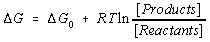
Relation between Free Energy of Activation and K: Increasing the activation energy causes an
exponential decrease in the rate constant.
- Ground State: The lowest energy and most stable form.
- Transition State: The highest energy and least stable form.
Classifications of Enzymes:
- Oxireductases: Enzymes that swap electrons / do redox reactions.
- Transferases: Enzymes that transfer functional groups to another component.
- Hydrolases: Cleavage (hydrolysis) using water.
- Lyases: Cleavage of double-bonds (reduction).
- Isomerases: Converting the reactant from one isomer to a different isomer.
- Ligases: Join structures together.
Cofactor: A non-enzyme component of a reaction that is required for the reaction to run.
Usually a vitamin or mineral. Cofactors are usually easily separated from their enzyme.
Coenzyme: A cofactor that is also itself an enzyme.
Prosthetic Group: Cofactors that are more tightly bound to an enzyme, usually covalently, as in
the heme group of hemoglobin.
Unique Features of Enzymes:
- Efficiency: Either much faster, or in the case of collagenase, slower than the reaction
would otherwise be.
- Binding Specificity
- Allows reactions to occur under physiological (mild) conditions.
- Catalytic activity may be regulated by other enzymes or the physiological environment.
ACTIVE SITE: The part of the enzyme where the reaction takes place.
- It is relatively small.
- It is a three-dimensional structure.
- Substrates bind to the active site by multiple weak interactions (and sometimes covalent).
- Active sites are clefts or crevices. Polar residues are often found in active sites, to create a
specific electrostatic environment.
- Induced Fit Hypothesis: Active sites change conformation when bound, to
accommodate the substrate.
- Active sites have specificity:
- Trypsin is specific for Lys and Arg.
- Chymotrypsin is very similar to trypsin except it has different active sites. It
binds to hydrophobic aromatic residues in its active site.
- Elastase, also similar, recognizes small residues like Gly and Ala.
- Collagenase: Contains two Zinc atoms in its active site: one for catalysis, and one that
helps fold the protein.
MICHAELIS-MENTON KINETICS:
- When the concentration of substrate, [S], is very high compared to enzyme, the enzyme
will be saturated with substrate, and the rate of rxn will depend only on the amount of
enzyme present -- not substrate.
- vmax = The maximum rate possible, under ideal circumstances, when substrate
concentration is high and enzyme concentration is relatively low.
- Given steady state, the rate, vmax = k3[ES] = [rate of formation of product] x
[concentration of ES-Complex]
- Four Assumptions of the Michaelis-Menton Model:
- A complex between E and S, ES, is formed.
- The concentration of S is much larger than E.
- The degradation of Product back to the ES-Complex is ignored.
- A steady-state concentration of the ES-Complex is established during
measurement.
- The steady-state forms practically instantaneously.
- Steady state means that the concentration of ES remains constant, i.e. the
rate at which the reaction occurs is uniform.
- Total Enzyme, Et, under the steady state = [ES] + [Eunbound]. Some of the enzyme
remains unbound in the steady state.
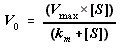
- V0 = initial rate
- Vmax = Maximum rate in steady state
- Km = The concentration of substrate, [S], at which the current rate, (V0), is equal to half
of the maximum rate, Vmax.
- Once Km is known, it is possible to calculate the fraction of sites filled.
- Lineweaver-Burk Plot: A plot of the reciprocal of rate -vs- reciprocal of substrate
concentration. It is linear.
IRREVERSIBLE INHIBITION: An inhibitor that covalently and permanently alters an
enzyme, rendering it dysfunctional.
- Diisopropyl Phosphoro Fluoridate (DFP): Is a SERPIN -- Serine Proteinase Inhibitor.
- Iodoacetamide irreversibly inactivates cysteine residues by alkylating them.
- Aspirin is a Non-Steroidal Anti-Inflammatory Drug (NSAID). It is an irreversible
inhibitor of Prostaglandin-H Synthetase, the enzyme that makes prostaglandins. Aspirin
is thus an anti-inflammatory drug.
- Prostaglandin has cyclooxygenase activity: Arachidonic Acid ------> PG2
- Prostaglandin has hydroperoxidase activity: PG2 ------> PGH2.
- Penicillin: Irreversibly inhibits the synthesis of peptidoglycans in bacterial cell walls.
- It inhibits glycopeptide transpeptidase, which cross-links poly-Gly with D-Ala. It
imitates the Ala-D-Ala.
- Transition-State Analog: It has a four-member lactam ring, highly strained, and
it imitates the transition state of Ala-D-Ala in the reaction above.
REVERSIBLE INHIBITORS:
- Competitive Inhibitor: The inhibitor resembles (mimics) the substrate and thus
competes directly with the substrate for the same active site.
- Competitive Inhibitions increases km -- a higher substrate concentration is required
to achieve the same vmax. Hence adding more substrate can alleviate the effects of
the inhibition.
- Lineweaver-Burk plot: the slope increases.
- 2,3-bisphosphoglycerate mimics 1,3-bisphosphoglycerate. Malonate mimics
succinate.
- Non-Competitive Inhibitor: Allosteric Inhibitor. The inhibitor hooks to a different site
on the enzyme, which can temporarily render it dysfunctional.
- No matter how much substrate you add, you can't dilute the effects. Hence vmax is
decreased. km does not change!
alpha1 Proteinase Inhibitors: A mutation in alpha1-antitrypsin (Serine-Proteinase-Inhibitor
family, SERPINs) caused it to mimic caused the protein to inhibit thrombin instead of trypsin,
which led to hemophiliac symptoms! Mutation of Arg for Met.
- The alpha1-Antitrypsin normally inhibits trypsin, neutrophil elastase, and cathepsin-G.
- In its absence emphysema can also form due to the lost inhibition of neutrophil (i.e.
macrophage) elastases in the lungs.
- Smoking causes the oxidation of the key Met-358 to methionine sulfoxide, thus ruining
the anti-elastase activity ------> emphysema.
alpha2 Macroglobulin: Molecular Trap: Sterically hinders (traps) endopeptidases. This
enzyme is found in serum in large quantities.
- Endopeptidase: Enzymes that cleave proteins only on the inside.
- Exopeptidase: Enzymes that cleave proteins only on the outside (terminal) part.
- Aminopeptidase: Exopeptidase that cleaves at the amino terminus.
- Carboxypeptidase: Exopeptidase that cleaves at the carboxy terminus.
- Molecule has four subunits, two of which are disulfide linked. There is a bait region
which almost all endopeptidases recognize. The peptidases bite the bait, and the
macroglobulin changes conformation so as to physically enclose ("trap") the molecule.
- The enzyme is still catalytically active! It just sterically hinders the peptidases so that
peptides can't reach them. It does inhibit them.
- Physiologic Purpose: alpha2-Macroglobulin traps proteolytic enzymes that are released
during edema.
Principles of Enzyme Assay:
- The initial rate of reaction should be measured only.
- Zero-order: Large excess of substrate.
- vmax can still be reached to 90%, even when using a high concentration of
substrate. High substrate conc should be used so that rate is proportional to
enzyme concentration only.
- Spectrophotometry: Can measure trypsin by visualizing its cleavage products with p-nitroanaline (410 nm).
Collagenase: Collagenase cuts collagen at one locale in order to denature all three sub-chains.
- Has important roles in physiology roles and pathology.
- Physiological roles:
- Embryo implantation in uterus. Collagenase eats its way through
endometrium.
- Pathology:
- Arthritis: Collagen II is found in normal joints. It may start to
deteriorate, via too much collagenase activity.
- Rheumatoid Arthritis: Synovial membranes in the joints proliferate
around the collagen (II), and then start to degrade.
- Osteoarthritis: Auto-immune disease causing bone breakdown (self-digestion by macrophages).
- Metastasis: Collagenase must eat through ECM for cancer cells to
spread.
- Detecting Collagenase activity: Difficult. It recognizes a stretch of residues. Some
flourescent techniques have been developed.
Measuring a Reaction by Coupling it to another Reaction:
- Lactate Dehydrogenase (LDH) can be measured by coupling it to hydrazine.
- Reaction: Pyruvate ------> Lactate. It normally tends toward lactate strongly.
- In the presence of hydrazine, it removes pyruvate, pulling the reaction in that
direction. (keq for that reaction is strongly in the other direction).
- So use hydrazine to measure the reverse reaction (i.e. the formation of pyruvate).
- Another example of coupling: Phosphoenol-pyruvate + ADP ------> Pyruvate + ATP.
- This rxn normally tens toward the PEP. But use NADH to drive it the other
direction.
- NADH depletion can then be measured photometrically.
UNITS: Amount of product produces / unit time. A measurement of enzyme activity.
SPECIFIC ACTIVITY: Units / mg protein. A measurement of the reactivity of a protein, or
the relative rate of reaction for an enzyme. It is total enzyme activity / total protein.
- Specific Activity will increase as the enzyme becomes purified.
- Can always measure specific activity as (Volume)(Units / mL) / (Total protein) = (Units /
mg)
ENZYME-LINKED IMMUNOSORBENT ASSAY (ELISA): A way of measuring the
amount of enzyme present, not its activity.
- Procedure:
- Attach an antibody specific to the protein being measured.
- Add the unpurified sample. The antibody will attach to the protein being
measured.
- Add a second antibody specific for the enzyme (at a different antigen site). The
second enzyme is already coupled to an indicator. This will create a solid platform
of hooked enzyme.
- Add the substrate and measure the product, usually photometrically.
NEOEPITOPE ANTIBODY ASSAY: It measures newly regulated antibody binding sites. Can
be sued to measure the cleavage products of collagenase.
Mechanisms of Enzyme Catalysis:
- Proximity Effect: Reaction rate is increased when reactants are closer together, i.e. there
is a higher probability of collision. Enzymes can act by bringing the reactants closer
together.
- As the free rotation of the reactants decreases, reaction rates increase, as the
reactants can be brought closer together (in right orientation) with more ease.
This is also the proximity effect.
- Enzymes decrease the possible loss of entropy, which decreases the activation energy.
- General Acid-Base Catalysis: Enzymes act as acids and bases.
- His residues often catalyze hydrolysis of ester ------> acid + alcohol. It can do it
at neutral pH.
- Covalent Catalysis.
- Nucleophilic groups can attack to form nucleophilic intermediates (such as acyl
intermediates)
- Coenzymes can participate in the reaction stoichiometrically (such as NADH).
- Enzymes can lower activation energy by inducing a strain on the substrate, making it more
energetically favorable to go into the transition state.
Protease: Describes both endopeptidases and exopeptidases.
Proteinases: Cleave proteins and are thus only endopeptidases.
Serine Proteases: Enzyme that use Ser as a nucleophile in the active site, in order to cleave
proteins at specific residues.
- DFP is a good agent to use to recognize them. It is specific to Ser proteases.
- Examples:
- Trypsin
- Chymotrypsin
- Neutrophil Elastase
- Pancreatic Elastase
- Thrombin -- very similar to trypsin
- TPA: Tissue Plasminogenic Activator
Cysteine Proteases: Similar to Ser proteases, except Cysteine does the cleaving at the active
site. Cysteine has sulfur (thiol) -vs- Serine's oxygen (alkoxide) as the nucleophile.
- Inhibited (and identified) by iodoacetate.
- Catalysis proceeds through a thiol-ester intermediate.
- Examples:
- Lysosomal Enzymes! Cathepsins B, H, L, S.
- Papain, from papaya
- Interleukin 1b converting enzyme
Aspartic Proteases: Have two Asp residues as the active cleavers.
- No good specific inhibitors as above, but pepstatin is a good competitive inhibitor.
- Optimal pH for the enzyme is often acidic.
- Examples:
- Pepsin
- Cathepsin D
- Renin, Rennin
- HIV Proteinase
Metalloproteases: Often contain Zn+2 in the active site.
- Examples:
- Collagenase is a matrix metalloproteinase.
- Carboxypeptidase A and B
- Thermolysin -- a bacterial enzyme that has three residues (His, His, Glu) that
"hold" Zn in place.
- The Zn+2 attacks the carbonyl oxygen, making the electropositive center.
Water then attacks the carbonyl carbon.
- A nice tetrahedral intermediate is formed once again.
- His acts as an acid in the reaction -- relinquishes a proton to the tetrahedral
intermediate.
CATALYTIC MECHANISM OF CHYMOTRYPSIN: A Serine Protease
- Ser-195: It was discovered that it was a two-step mechanism because of the burst-assay.
First the rate went fast and then it leveled off.
- They tested it with p-nitrophenol. Two-step process was revealed.
- Step-1 = release of the p-nitrophenol group.
- Step-2: Hydrolysis of the acetate to form the acetyl enzyme intermediate.
- His-57: The catalytic role os His-57 was discovered by affinity-labeling.
- TPCK, Tosyl phenylalanine chloromethyl ketone, specifically binds to the His
residue.
- The phenylalanine goes into the hydrophobic chymotrypsin pocket, and it turns out
that the chloromethyl part is bound to a histidine.
- The reaction is highly stereospecific. It won't work with D-chymotrypsin.
- Catalytic Triad: Ser-195, His-57, Asp-102. All three participate in the cleavage
reaction.
- His accept the proton from Ser-OH, making Ser-O- a nucleophilic alkoxide moiety.
- Asp- stabilizes the positive charge created on His+.
- A tetrahedral transition state is formed.
- An oxoanion pocket is formed in the intermediate, with Ser-O- residue central in the
pocket.
- Cleavage occurs at the Carbonyl-Nitrogen bond, and the C-terminus peptide is released
into solution.
- There is a charge-relay network in the catalytic triad, a stabilization of charge.
Cofactors and Coenzymes:
- Apoenzyme: Inactive form of enzyme without the cofactor present.
- Holoenzyme: Active enzyme with the cofactor present.
- NAD+/NADH NADP+/NADPH: Modified forms of the vitamin niacin.
- The functional group is nicotinamide... which is oxidized and reduced.
- FMN/FMNH FAD/FADH2: Flavin Adenine Dinucleotide, from riboflavin, vitamin B2.
- Vitamin B6 (pyridoxine): Works as a cofactor for transaminases in protein metabolism.
- Transfers an amino group from an amino acid to a keto acid.
- The cofactor is covalently attached to the enzyme. It combines with a Lys residue
in the transaminase to form a Schiff base.
- Vitamin B12: Cobalamin: Main part consists of a corrin ring, which remains attached to
four nitrogen atoms (similar to a heme group).
- At the sixth coordination position, the most reduced state can accept the 5' deoxy
adenosyl group. Otherwise it can't. That depends on the oxidation state of cobalt.
- Lack of Vit-B12 leads to a problem in making methionine, in amino acid
metabolism.
- Tetrahydrofolate is needed for production of purines and pyrimidines. THF
synthesis requires Vitamin B-12. Hence, in the absence of B-12, purines and
pyrimidines (i.e. new DNA) can't be reduced, so cells don't proliferate.
- Result = anemia, lack of proliferation of red blood cells. CONC: Vit-B12
deficiency causes anemia.
RIBOZYMES: RNA-Enzymes
- It is self-splicing RNA. It can act as a catalyst for its own splicing.
- L19 Ribozyme can act as an endonuclease. It has the pentacytidine and RRRRR
mechanism.
Blood Coagulation:
- Intrinsic Pathway: Only very small amounts of the early materials are present (or need
be present).
- Damaged surface stimulates Kininogen and Kallikrein.
- XII ------> XIIa
- XI ------> XIa
- IX ------> IXa (Ca+2 required)
- With help of VIIa, IXa activates X ------> Xa
- Extrinsic Pathway:
- Trauma starts it (Damaged tissue)
- VII ------> VIIa
- It activates X ------> Xa
- Common Pathway:
- V ------> Va (Ca+2 required)
- Prothrombin ------> Thrombin (Ca+2 required)
- Pro-Thrombin has gamma-Carboxyglutamic Acid, a post-translational
modification of Glu residues.
- Vitamin-K is required to make that modification. Vitamin-K is important
in other factors as well. Vitamin-K deficiency leads to hemorrhaging and
hemophiliac symptoms.
- Dicumarol is an antagonist to Vitamin-K. Drugs containing dicumarol or
dicumarol analogs are used in anti-coagulant therapy.
- Fibrinogen ------> Fibrin
- Two A fibrinopeptides and 2 B fibrinopeptides are removed. Fibrin
(alphabetagamma)2 is left.
- Factor XIII ------> XIIIa cross-links with the fibrin.
- Cross-links Glu and Lys residues.
Thrombolysis: Regulation and reversal of clotting
- Antithrombin III most strongly inhibits thrombin.
- Heparin binds to Antithrombin III and allosterically enhances its effect on
Thrombin.
- Thrombin self-regulates by activating Protein C, which digests factors Va and VIIIa.
- Normal Clot Lysin:
- Tissue Plasminogen Activator (TPA) activates Plasminogen ------> Plasmin.
- TPA is released from endothelial cell only when there is local injury.
- When a person gets older, TPA doesn't work as well, and clot-buildup
(atherosclerosis) results.
Enzyme Regulation in the Duodenum:
- Zymogen: Inactive, uncleaved precursor to an active enzyme. The zymogen is usually
activated by proteolysis.
- Chymotrypsinogen is activated by Trypsin.
- First forms PI-Chymotrypsin, which is itself active.
- Then PI-Chymotrypsin self-cleaves to form the still-active alpha-Chymotrypsin,
which contains three chains that are disulfide linked.
- Trypsinogen is changed to Trypsin via enteropeptidase in the duodenum. Trypsin also
activates proelastase and procarboxypeptidases.
- Pepsinogen auto-cleaves itself to convert to Pepsin, in an acidic environment in the
stomach. The propeptide is more basic while the active enzyme is more acidic.
Reversible Covalent Modifications:
- Glycogen Phosphorylase: In skeletal muscle.
- Phosphorylase A, R (relaxed, active) form, is the most active form. It is
phosphorylated.
- Phosphorylase B, T (taut, inactive) form, is the least active form.
- Phosphorylase Kinase catalyzes the transformation of Phosphorylase B ------>
Phosphorylase A.
Isozymes: Enzymes that have different chemical and physical properties, but that catalyze the
same reaction. They may have different kinetics.
- Lactate Dehydrogenase (LDH) has the H (heart) and M (muscle) forms. There are four
subchains and five combinations of them, ranging from H5 to M5.
- LDH-1 (pure H) is found in heart. It favors pyruvate over lactate, so that pyruvate
isn't used for anaerobic respiration when it needs to be used for aerobic. The km
for pyruvate is low.
- LDH-5 (pure muscle M) is found in skeletal muscle. It favors formation of lactate,
to reoxidize NADH in skeletal muscle. That is necessary, as muscles work in
bursts.
- CORI CYCLE: Glycolysis and Gluconeogenesis. Same enzymes used in both places.
- Skeletal Muscle: Glucose ------> Pyruvate ------> Lactate.
- Liver: Lactate ------> Pyruvate ------> Glucose.
ASPARTATE TRANSCARBAMYLASE (ATCase):
- It is an enzyme used to form CTP (part of nucleic acid synthesis). The presence of CTP
inhibits its via allosteric negative feedback.
- The presence of ATP allosterically stimulates its (increases rate). So, when ATP is
around more of the stuff is made to make more nucleic acid for cell division.
- The curve is sigmoidal, indicating cooperative type interactions, where the activation of
some encourages even more.
- The substrate binding changes the 4 conformation.
- Mercurial compounds like p-hydroxymercuribenzoate, desensitize the enzyme. It still
has activity at the active site, but the regulatory sites no longer work. No more positive or
negative allosteric regulation.
Concerted Model: Allosteric Effects
- There are two forms, R (relaxed, active) and T (taut, inactive).
- There is virtually no intermediate. The substrate binds the T-form, which causes
practically instantaneous conversion to the R-form, allowing more binding (or complete
binding) of substrate.
Sequential Model: Has a combination form possible (intermediate) of half T-form and half R-form.
Return to top