|
The reason why Marijuana is Illegal in the United States:
The cause of: click here to find out the history of marijuana Doesn't this sound like the same definition of the United States' Plan for Corruption and Fascistic hatred? |
The Skull and bones' goal for mankind:
Education - how the population of the future will behave; Their BROAD VIEW of the goal is = To create a NEW WORLD ORDER Please NOTE when reading this document: Richard Nixon, Jimmy Carter, George Bush and Ronald Reagan are all members of the Skull and Bones. |

marijuana Table of contents
 |
Bibliography used - the different effects in Alcohol compared to Marijuana (David Icke) *you can find the official document online, this is the same information compiled on this page along with other material. this document is seen everywhere on this site. I just wanted to give him credit for researching all the interesting information. |
* In 1972, after reviewing the scientific evidence, the National Commission on Marihuana and Drug Abuse concluded that while marijuana was not entirely safe, its dangers had been grossly overstated. Since then, researchers have conducted thousands of studies of humans, animals, and cell cultures. None reveal any findings dramatically different from those described by the National Commission in 1972. In 1995, based on thirty years of scientific research editors of the British medical journal Lancet concluded that "the smoking of cannabis, even long term, is not harmful to health."
 |
Marijuana has been shown to be effective in reducing the nausea induced by cancer chemotherapy, stimulating appetite in AIDS patients, and reducing intraocular pressure in people with glaucoma. There is also appreciable evidence that marijuana reduces muscle spasticity in patients with neurological disorders. A synthetic capsule is available by prescription, but it is not as effective as smoked marijuana for many patients. Pure THC may also produce more unpleasant psychoactive side effects than smoked marijuana. Many people use marijuana as a medicine today, despite its illegality. In doing so, they risk arrest and imprisonment. |

| *
Studies have found that if you had glaucoma, marijuana could lower your internal eye pressure and effectively slow the onset of blindness. AIDS patients get a lot of
pain that can be eased by marijuana. It can also stimulate the appetites of people suffering malnutrition from AIDS �wasting syndrome�. Multiple sclerosis, epilepsy,
and spinal cord injuries cause muscle spasticity and chronic pain that can be alleviated by marijuana. Cancer, anorexia, migraines, and even arthritis patients can all
benefit from marijuana. It has been found successful over and over in helping stop nausea and vomiting. Recent reports from the National Institutes of Mental Health
have stated that delta-9-tetrahydrocannabinol (THC-the chief psychoactive compound in marijuana) and cannabidiol (CBD-a non-psychoactive component) both appear
to protect brain cells from the damage that often occurs during a stroke. When the blood supply is cut from the brain, THC and CBD act as antioxidants, protecting the
brain cells from glutamate (a toxic brain chemical). This also indicates that marijuana can hold medicinal value for the treatment of brain injuries and diseases like
Alzheimer�s and Parkinson�s (4,8,12,16). Anonymous �Patient No. 9� signed up to participate in marijuana testing about five years ago. He had already signed �do-not-resuscitate papers� expecting his death soon from AIDS. Fighting Pneumocystis pneumonia, Kaposi�s sarcoma, and internal parasites�his weight dropped from 240 to163 pounds. This experiment turned his life around. The pneumonia and parasites were cured. The sarcoma receded. His AIDS virus levels, �once sky-high, became undetectable in tests� (5). �Doctors and patients should decide what medicines are best. Ten years ago, I nearly died from testicular cancer that spread to my lungs. Chemotherapy made me sick and nauseous. The standard drugs, like Marinol, didn�t help. Marijuana blocked the nausea. As a result, I was able to continue the chemotherapy treatments. Today I�ve beaten the cancer, and no longer smoke marijuana. I credit marijuana as part of the treatment that saved my life.��James Canter (12). |
 |
* Most people who smoke marijuana smoke it only occasionally. A small minority of Americans - less than 1 percent - smoke marijuana on a daily basis. An even
smaller minority develop a dependence on marijuana. Some people who smoke marijuana heavily and frequently stop without difficulty. Others seek help from drug
treatment professionals. Marijuana does not cause physical dependence. If people experience withdrawal symptoms at all, they are remarkably mild.
None of the medical tests currently used to detect brain damage in humans have found harm from marijuana, even from long term high-dose use. An early study
reported brain damage in rhesus monkeys after six months exposure to high concentrations of marijuana smoke. In a recent, more carefully conducted study,
researchers found no evidence of brain abnormality in monkeys that were forced to inhale the equivalent of four to five marijuana cigarettes every day for a year. The
claim that marijuana kills brain cells is based on a speculative report dating back a quarter of a century that has never been supported by any scientific study.
Marijuana produces immediate, temporary changes in thoughts, perceptions, and information processing. The cognitive process most clearly affected by marijuana is
short-term memory. In laboratory studies, subjects under the influence of marijuana have no trouble remembering things they learned previously. However, they display
diminished capacity to learn and recall new information. This diminishment only lasts for the duration of the intoxication. There is no convincing evidence that heavy
long-term marijuana use permanently impairs memory or other cognitive functions.
 |
* According to the National Survey on Drug Use and Health in 2002, an estimated 120 million Americans (12 or older) reported being current drinkers. That is just over half of the population. Also about 54 million Americans participated in binge drinking at least once in the 30 days prior to the survey. That comes out to 1 in 5 Americans over the age of 12. Over 33 million people (1 in 7) drove under the influence at least once in the 12 months prior to the survey. In 2001 more than 6 million children lived in a household where at least one of their parents abused or was dependent on alcohol. In 2002, an estimated 18.6 million people needed treatment for alcohol problems�2.2 million actually received treatment (13, 14). |
Looking at all of these numbers, I can not help but to think of a lifetime of memories where alcohol was the source of infinite problems. Is alcohol the real gateway
drug? Has America made the assumption that�it�s legal, so it can�t be that bad, or is it the classic-he did so I figured it would be ok? At the same time, alcohol does
have some positive aspects, doesn�t it? It provides temporary relief of insomnia�even though there are over the counter and prescription drugs for that. It helps
people with high blood pressure by thinning the blood. Wait a second; doesn�t aspirin do the same thing? There are also prescription drugs for high blood pressure.
When you have a rough day it can help you forget your problems. Although, the next day you will remember your problems and maybe even have a few new ones
accompanied with a headache from dehydration. Alcohol can help shy people be more sociable, but they might do something a little too sociable and be filled with
regret the next day.
If all of this is true then why is alcohol still legal? The fact is�it is part
of our culture, a way of celebration. America would still continue to drink if
it was outlawed. It was made against the law and look what happened�it went
underground.
* This is exactly where marijuana is today. In 2002, about 54% of young adults (18-25) and 21% of youths (12-17) had tried marijuana. In the month prior to the survey in 2002, about 14.6 million people smoked marijuana. Of that 14.6 million, 12.2% smoked on 300+ days out of the year. That is close to 3.1 million daily pot smokers. In 2001, there were an estimated 2.6 million new users. That number has nearly doubled in the last decade. So if this many people use it, why are we wasting our time trying to catch all of these �criminals�? Why not turn it into the capitalist-American way of life and legalize to make money and quit trying to stop the inevitable?
"Make the most of the Indian hemp seed, and grow it everywhere.��George Washington.
�The greatest service which can be rendered any country is to add a useful plant to its culture.��Thomas Jefferson.
This makes me wonder even more: why is it illegal?
In my opinion, it is unethical to have marijuana illegal especially when drugs like alcohol and cigarettes are legal. I feel that the illegality of marijuana is an extreme economic, cultural, and medical limitation to the advancement of our society. I feel that the evidence speaks for itself and that America should know the truth.
I found this paper to be the most mentally rewarding out every other research paper I have ever done. My feelings toward this topic are very strong. Upon completion, it was just another reason for me to think of how corrupt our government is.
Here is what America was doing with Marijuana before this law occurred:
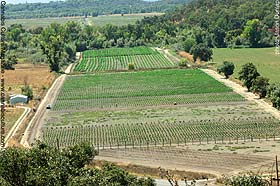
America's first marijuana law was enacted at Jamestown Colony, Virginia in 1619. It was a law "ordering" all farmers to grow Indian hempseed. There were several other
"must grow" laws over the next 200 years (you could be jailed for not growing hemp during times of shortage in Virginia between 1763 and 1767), and during most of
that time, hemp was legal tender (you could even pay your taxes with hemp -- try that today!) Hemp was such a critical crop for a number of purposes (including
essential war requirements - rope, etc.) that the government went out of its way to encourage growth.
 |
The United States Census of 1850 counted 8,327 hemp "plantations" (minimum 2,000-acre farm) growing cannabis hemp for cloth, canvas and even the cordage used
for baling cotton. In the early 1900s, the western states developed significant tensions regarding the influx of Mexican-Americans. The revolution in Mexico in 1910 spilled over the border, with General Pershing's army clashing with bandit Pancho Villa. Later in that decade, bad feelings developed between the small farmer and the large farms that used cheaper Mexican labor. Then, the depression came and increased tensions, as jobs and welfare resources became scarce. |
 |
It all started in 1914 when a drunken white man was killed in El Paso, Texas by a drunk and stoned Mexican. So they put the blame on the marijuana�instead of the
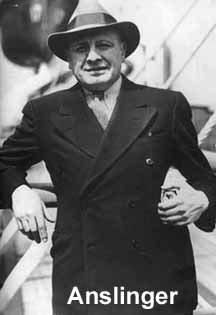
booze. Possession became illegal in El Paso because of this incident. Then came the real problem�prohibitionist-Harry J. Anslinger, the Commissioner of the
Federal Bureau of Narcotics. He believed that if the laws were tough enough, then America could do away with alcohol.
|
However, the first state law outlawing marijuana did so not because of Mexicans using the drug. Oddly enough, it was because of Mormons using it. Mormons who traveled to Mexico in 1910 came back to Salt Lake City with marijuana. The church was not pleased and ruled against use of the drug. Since the state of Utah automatically enshrined church doctrine into law, the first state marijuana prohibition was established in 1915. (Today, Senator Orrin Hatch serves as the prohibition arm of this heavily church-influenced state.)
Other states quickly followed suit with marijuana prohibition laws, including Wyoming (1915), Texas (1919), Iowa (1923), Nevada (1923), Oregon (1923), Washington (1923), Arkansas (1923), and Nebraska (1927). These laws tended to be specifically targeted against the Mexican-American population.
When Montana outlawed marijuana in 1927, the Butte Montana Standard reported a legislator's comment: "When some beet field peon takes a few traces of this stuff...
he thinks he has just been elected president of Mexico, so he starts out to execute all his political enemies." In Texas, a senator said on the floor of the Senate: "All
Mexicans are crazy, and this stuff [marijuana] is what makes them crazy."
| In the eastern states, the "problem" was attributed to a combination of Latin Americans and black jazz musicians. Marijuana and jazz traveled from New Orleans to Chicago, and then to Harlem, where marijuana became an indispensable part of the music scene, even entering the language of the black hits of the time (Louis Armstrong's "Muggles", Cab Calloway's "That Funny Reefer Man", Fats Waller's "Viper's Drag"). |
 |
|
|
Again, racism was part of the charge against marijuana, as newspapers in 1934 editorialized: "Marihuana influences Negroes to look at white people in the eye, step on
white men's shadows and look at a white woman twice." Two other fear-tactic rumors started to spread: one, that Mexicans, Blacks and other foreigners were snaring white children with marijuana; and two, the story of the "assassins." Early stories of Marco Polo had told of "hasheesh-eaters" or hashashin, from which derived the term "assassin." In the original stories, these professional killers were given large doses of hashish and brought to the ruler's garden (to give them a glimpse of the paradise that awaited them upon successful completion of their mission). Then, after the effects of the drug disappeared, the assassin would fulfill his ruler's wishes with cool, calculating loyalty. By the 1930s, the story had changed. Dr. A. E. Fossier wrote in the 1931 New Orleans Medical and Surgical Journal: "Under the influence of hashish those fanatics would madly rush at their enemies, and ruthlessly massacre every one within their grasp." Within a very short time, marijuana started being linked to violent behavior. |
These are quotes said by Harry J. Anslinger: who helped abide the law, along with William Randolph Hearst--- all lies--- the example of racism and yellow journalism.
"There are 100,000 total marijuana smokers in the US, and most are Negroes, Hispanics, Filipinos, and entertainers. Their Satanic music, jazz, and swing, result from
marijuana use. This marijuana causes white women to seek sexual relations with Negroes, entertainers, and any others."
"...the primary reason to outlaw marijuana is its effect on the degenerate races."
"Marijuana is an addictive drug which produces in its users insanity, criminality, and death."
"Reefer makes darkies think they're as good as white men."
"Marihuana leads to pacifism and communist brainwashing"
"You smoke a joint and you're likely to kill your brother."
"Marijuana is the most violence-causing drug in the history of mankind."
"In the year 1090, there was founded in Persia the religious and military order of the Assassins, whose history is one of cruelty, barbarity, and murder, and for good
reason: the members were confirmed users of hashish, or marihuana, and it is from the Arabs' 'hashashin' that we have the English word 'assassin.'"
"Users of marijuana become STIMULATED as they inhale the drug and are LIKELY TO DO ANYTHING. Most crimes of violence in this section, especially in country
districts are laid to users of that drug."
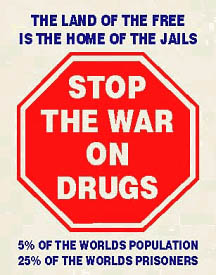
| If enough people went to jail, eventually the public would learn to behave. He then turned and applied this philosophy to begin America�s famous �war on drugs�. He quickly realized that it would be impossible to police 48 states with a �depression strapped budget�, so he lobbied for the states to pass the Uniform Narcotics Law. Here comes the propaganda. During the 20�s, marijuana caused �physical and mental ruin�. In the 30�s it was �if you smoke it you will kill people�. When they all finally signed, Anslinger was able to get Roosevelt to pass the Marijuana Tax Act of 1937�without public debate, scientific inquiry, or political objection. This prohibited the possession of marijuana in the United States without a special tax stamp from the treasury department. Only the treasury department never issued any stamps�oh and did I forget to mention that Anslinger�s position was in the treasury department. Then to make sure the public supported the law and to induce fear, the propaganda continued to pour. In the 40�s, the public service announcement was �marijuana: assassin of youth; causing violence, insanity, and murder� |
 |
 |
*
The next tough soldier in the �war on drugs� was
President Nixon. First, he launched �operation intercept�. Since it was off-time from war, he used the military to do
what was officially called the largest search and seizure operation. He put people all along the Mexican border to stop the marijuana. After about three weeks of wasted time and money, the operation was abandoned. So Nixon poured the money into police drug training. At this time the propaganda was�if you smoke it �bad things will happen� (but we don�t know what they are). Nixon wanted to find out what these bad things were so he used millions of dollars to set up the National Commission on Marijuana and Drug Abuse. After strenuous testing the commission put out their first report. It concluded that �marijuana did not cause crime. Current laws against marijuana led to selective prosecution. The police were suspected of using these laws to arrest people with objectionable hairstyles, skin color, or politics. The enormous costs of trying to enforce laws against marijuana overwhelmingly outweighed any deterrent value of these laws. In conclusion, private use and possession should not be a criminal act.� Just to give you an idea of the �enormous costs� of the �war on drugs� mentioned above� 1937-1947=$220 million 1948-1963=$1.5 billion 1964-1969=$9 billion 1970-1977=$76 billion 1980-1998=$214.7 billion |
This was the most comprehensive and highly publicized study of marijuana ever done. When Nixon got the feedback with the report, he became very angry and
tossed the report in his wastebasket without ever reading it. Doing the exact opposite of what was recommended; Nixon formed the Drug Enforcement Agency (DEA).
This combined all of the anti-drug agencies into one super agency. With over 4000 agents and analysts, the DEA had the authority to �request wire taps, enter private
homes without knocking, and to gather intelligence on ordinary citizens� (6).
Things began to look up when
Jimmy Carter took office. He was openly for decriminalization. He wanted to end federal criminal penalties for possession of up
to one ounce of marijuana. Then a man named Peter Bourne (one of Carter�s appointments) got caught up in a cocaine scandal and ruined it. Carter could no longer
afford to appear soft on drugs. His proposal to decriminalize just died in congress (6).
When Carter left office
Ronald Reagan became the new general in the �war on drugs�. Since they had no real evidence of the dangers of marijuana, they had
to take the broad approach. Recognize this��This is your brain, this is your brain on drugs�. Reagan also pioneered the �just say no� campaign. Then when George
Bush took office he wanted to take real action. �Drug trafficking should be grounds for the death penalty,��George Bush. So along came about the Anti-Drug Abuse
Act of 1986 and 1988. This allowed the seizure of property because of a threat to national security. They say like father, like son. When September 11 hit, it gave
George W. Bush the chance to get more laws through congress. So all of a sudden, all of the drugs were coming from Afghanistan. The government has the right to
put a bug in your home, car, and phone. The big change was that this evidence was now admissible in court. What ever happened to the right to privacy (6)?
I can�t understand why the government would push so hard for all of these years to keep it outlawed. Since Proposition 215 was passed in November of 1996,
effectively legalizing medicinal marijuana in California�quite a bit of testing has gone on.
* If they legalized marijuana, it could fix the economy and the greenhouse effect, this document explains:
Scientists throughout the world agree: the single most effective way to halt the greenhouse effect is to stop burning fossil fuels.
| The nationwide popularity of Earth Week 1990 festivities seems to indicate the American People are concerned with the continuing degradation of the global
environment. The twentieth anniversary celebration of the original Earth Day focused on ways the individual citizen can reduce waste and retard pollution.
The necessity of recycling used materials and lowering power consumption was demonstrated in a plethora of multi-media displays from coast to coast. It was
indicated a change in lifestyle is needed to halt the poisoning of earth. An environmentally conscious populace would prove to be a frugal one if those Earth Week programs were adopted. |
 |
Assuming Americans are willing to cut back on energy consumption and muster the effort to recycle their trash, are industrial corporations and energy producers
willing to do the same?
Will corporate America drop the aggressive sales pitches wherein billions are spent encouraging people to buy impulsively? Will people be able to kick the
mass consumption habit generations in the making? Will corporate America even entertain abstaining from the short term profit fix and consider what the consequences
of quick return capitalism has done and will do to future generations of life on earth?
President George Bush's speech, given just days after Earth Week 1990 at the 17 nation conference dealing with global pollution problems held in Washington
D.C., drew criticism from European participants. He emphasized scientific and economic uncertainties in what was seen as a White House foot dragging effort on the
environmental issue.
A memo prepared by administration staffers for members of the U.S. delegation read, under the heading Debates to avoid: It is "not beneficial to discuss
whether there is or is not warming, or how much or how little warming. In the eyes of the public we will lose this debate. A better approach is to raise the many
uncertainties that need to be better understood on this issue." Bush repeatedly stressed the need to find policies that do not limit economic growth: Environmental
policies that ignore the economic factor, the human factor, are destined to fail." [Science News, April 28, 1990]
President Bush is proud of the public image his career in the oil industry presents. He is, to say the least, an energy industry celebrity. And he has gone to great
lengths to represent himself as the environmental president.
|
|
If the
Bush administration believes, "in the eyes of the public," they will lose the debate questioning the scientific validity of the greenhouse effect; is it
reasonable to conclude they don't believe the excessive accumulation of greenhouse gasses generated by burning fossil fuels is unbalancing the global carbon
dioxide cycle? Or is it possible the corporate industrial energy complex that controls the trillion dollar per year energy industry fears profit loss, and unlike the American
people, is in no way willing to make a sacrifice in corporate "lifestyle" to help heal the Earth? President Bush is right about one thing: "Policies that ignore the economic factor, the human factor, are destined to fail." In this case the economic factor and the human factor converge in the dire strait: if we do not convert from a fossil fueled economy to a biomass fueled economy, the human factor will become fossil history on planet earth. |
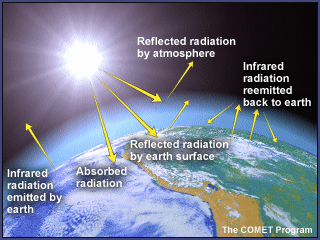
| The corporate industrial energy complex is collectively holding its breath on the topic of biomass resource conversion to replace fossil fuels. The industrial energy giants spend millions in public relations explaining how they are environmentally responsible energy producers. Yet it is the fossil fuel resources they peddle that are endangering the fragile ecosphere. The majority of scientists throughout the world agree: the single most effective way to halt the greenhouse effect is to stop burning fossil fuels. |
|
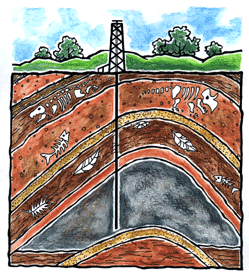
It was proven in the 1970's that biomass, specifically plant mass, can be converted to fuels that will replace every type of fossil fuel currently produced by
industry -- and these biomass fuels are essentially non-polluting.
Fossil fuel materials: coal, oil and natural gas were made by nature from earth biomass that lived over 160 million years ago. Crude fossil fuels contain
hydrocarbon compounds that were made by plant life during the process of photosynthesis. Carbon dioxide and water were converted into hydrocarbon rich cellulose.
Plants manufacture many other biochemicals in the complex and mysterious act of living, but cellulose and lignin are the compounds that give plants structure, body
and strength. They are the main components of plant mass.
Nature took millions of years to concentrate the ancient plant mass into what we call fossil fuels. The eons long process that converted the once living biomass
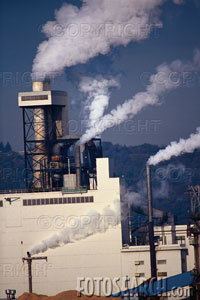
into hydro-carbon rich fossils also compressed sulfur into the fossil biomass. It is this sulfur that causes acid rain when belched out of power plant smoke stacks.
According to Brookhaven National Laboratory 50,000 Americans and 10,000 Canadians die each year from exposure to acid rain.
Mankind through the science of chemical engineering can transform modern biomass into hydrocarbon fuels that contain no sulfur because the fresh plant mass
contains no sulfur. And the scientific method of biomass conversion into hydrocarbon fuels requires mere hours instead of eons to accomplish.
The inherent problem with burning fossil fuels to power industrial energy systems and economies is the mega-ton release of CO 2 into the air.
However biomass
derived fuels are part of the present day global CO 2 cycle.
| The quantity of CO 2 released into the air from burning biomass fuels is equal to the amount of CO 2 the biomass energy crop absorbed while it grew. If the
energy crop is an annual plant then one years biomass fuel when burned will supply the CO 2 needed for the next year's fuel biomass growth. There will be no net
increase in atmospheric CO 2.
|
 |
The Bush Administration's plan is futile as long as fossil fuels remain America's major energy resource. And at the rate forests are being cut down to make the
paper our society is wrapped up in, a billion saplings a year will barely compensate for that loss in CO 2 absorption.
Wood happens to be the government's chief biomass candidate to replace the dwindling fossil fuel supply. Officials claim U.S. yearly energy consumption can
be met by harvesting one third of the trees in the National Forests on a rotating basis coupled with more intensive silvaculture (tree farming) techniques. Estimated
yearly biomass production in the National Forests is one ton per acre. [Progress in Biomass Conversion Vol. 1 Kyosti V. Sarkanen & David Tillman, editors]
The U.S. Forestry Service is the government bureaucracy promoting this ludicrous forests-for-fuel idea. However private industry has been clear-cutting without
conscience timber stands not protected in National Forests and Parks. And none of that wood goes into biomass fuel conversion.
The trees of the world are the biosphere's CO 2 cycle safety valve. Trees convert CO 2 into wood. Since a tree will live for centuries, forests can gradually pull
the excess CO 2 out of the air. Trees are not only aesthetically pleasing -- they are the cure for our ailing atmosphere.
Is it realistic to halt construction to save trees or ask people to stop using paper? If wood resources cannot hope to meet the demand for lumber, paper and
biomass fuels, can any plant be cultivated to meet these needs?
This problem is not new. Civilizations have been exhausting vital resources and dooming themselves for many centuries. Versatility, cleverness and common
sense are the hallmark of the ones that survive.
About seventy-five years ago two dedicated USDA scientists projected that at the rate the U.S. was using paper we would deplete the forests in our lifetimes.
Those government scientists were endowed with common sense -- something government officials are hopelessly lacking nowadays. So USDA scientists Dewey and
Merrill looked for an alternate agricultural resource for paper products l to prevent the disaster we now face.
They found the ideal candidate to be the waste material left in the fields after the hemp harvest. The left over pulp, called hemp hurds, was traditionally burned in
the fields when the hemp fiber had been removed after the time consuming retting (partially rotting the hemp stalk to separate the fiber from the hurds) process was
completed.
| Hemp hurds are richer in cellulose and contain less lignin than wood pulp. Dewey and Merrill found after much experimentation that harsh sulfur acids used to break down the lignin in wood pulp were not necessary when making paper from hemp hurds. Sulfur acid wastes from paper mills are known to be a major source of waterway pollution. The coarse paper they made from hemp hurds was stronger and had greater folding durability than course wood pulp paper. Hemp hurd paper would make better cardboard and paper bag products than wood paper. They found the fine print quality hemp hurd paper to be equal to writing quality wood pulp paper. [ Dewey and Merrill, Bulletin #404, Hemp Hurds As Paper-Making Material, U.S.D.A., Washington, D.C., October 14, 1916.] |
|
 |
The only problem to implementing the paper industry resource change from wood to hemp hurds was machinery to separate hemp fiber from the hurds needed to be developed. Separation was still done by hand after the machine breaks had softened the hemp stalks. The "decorticating" machine that separated the fiber and hurds wasn't developed until the early 1930's. Even Popular Mechanics declared in 1937 that hemp would be a billion dollar a year crop because of this new machinery. And their predictions did not consider hemp's potential as a biomass fuel resource. Unfortunately, hemp was maligned. Its flower tops were condemned as marijuana and subsequently outlawed just when the fiber-hurd separating machinery was perfected. |
If America had not been infected with marijuana hysteria, hemp could be solving our energy problems today. When marijuana was outlawed most people did not
know "marijuana" was Mexican slang for cannabis hemp. The American people, including doctors who routinely prescribed cannabis extract medicines, thought hemp
and marijuana were two different plants. Otherwise hemp prohibition would never have happened.
Eastern Europeans were not subjected to the hysterical anti-marijuana syndrome plaguing the West. Poland, Hungary and Czechoslovakia among others,
continued to make clothing from hemp fibers and medicines from hemp flowers. They pressed the versatile and edible oil from the seeds and used the left over high
protein seed mash to make breakfast cereal and livestock feed. And they used surplus hemp for building insulation.
Currently in the U.S.A. a private firm, Mansion Industries, has pioneered the use of agricultural fibers to make sturdy light weight construction paneling to replace
plywood. Mansion Industries uses straw to make their Environcore(TM) panels. Based on Dewey and Merrill test results, if hemp was an available resource,
Environcore(TM) construction paneling would be even stronger.
It's not too late to save our environment, but it is absolutely essential that we start now. Restoring the balance to the biosphere's ecosystem will require courage
and determination, but not self-denial. We need not give up our comforts or quality of life.
America stands at the cross roads of greatness and decline. The might of weaponry will not sustain us anymore. Our chance to again lead the world will require
the same kind of determination we once initiated to convert our peace time economy into war production during the 1940's. But now the "war mentality" won't help. This
time we must be innovative and change the very way we produce our energy resources.
Hemp prohibition must end at once in order to inaugurate a nationwide green economy. To save the world that gives us life we must begin immediately to grow
our own energy.
Hemp is the only plant capable of becoming the American biomass energy standard. Hemp grows well everywhere on earth except the polar regions. Hemp will
out produce wood at a rate greater than four to one per acre in cellulose/pulp. And by analyzing pre-prohibition hemp crop reports from various States, ten tons per
acre becomes a reasonable biomass production figure. Hemp will make ten times more biomass per acre than forest wood.
Wood is not a viable fuel resource. The forests are essential to scrub the excess CO 2 from the air. Soft wood forests should not be harvested for paper
products or biomass -- their only economic value. Hemp can supply that need. Hardwood trees should be harvested, utilizing sustainable yield ecology, for board and
finishing lumber only. Hemp will make pressed board lighter in weight and more durable than plywood.
Hemp can be grown for: crude biomass fuels on energy farms; fiber/hurds for textiles, pressed board and hurd cellulose products; seed for oil and high protein
foods; flowers for pharmaceutical grade extract medicine and recreational herbal products for adults.
| The Green Economy based on a hemp multi-industry complex will provide income for farmers in every state. Regions for each hemp agricultural industry application will be established through open free market competition. The historical and traditional hemp fiber growing areas in the eastern U.S. will re-emerge creating new jobs in an old industry. The economically devastated northern plains will see a boom as the nation's energy farming states. Medicinal and intoxicant grade hemp will be grown on less productive higher elevation lands. Mountainous areas have traditionally produced intoxicant quality hemp. |
|

Ironically, the hemp medicine and intoxicant industry will generate the least amount of capital, though it is the target of prohibitionist "reefer" propaganda. The
hemp seed oil and food resource industries, and the hemp textile and cellulose industries will develop thousands of new products generating tens of thousands of
sustainable new jobs. Hemp energy farming will become the backbone of a trillion dollar a year non-polluting energy production industry. And the petroleum
corporations need not fear this for their expertise, hardware and manpower are vital to turn the farmers' raw biomass into refined fuels.
These projections represent a tremendous boon to our flagging economy that can be realized as a by-product of saving our world from human induced biocide.
If we as a society have the courage and determination to set upon this bold path to planetary restoration, we can, in our life times, leave a healthier world to our
children; and a lifestyle based on renewable resources in a balanced ecosystem that our children can leave to their children for generations to come.
Burning fossil fuels is the major cause of the greenhouse effect. The forests of the world can reverse it, if the trees are allowed to grow.
Hemp is a renewable natural resource capable of providing biomass alternatives to fossil fuels. Hemp cellulose and fibers can supply the demand for all products
derived from wood.
Renewable resources mean economic growth and stability.
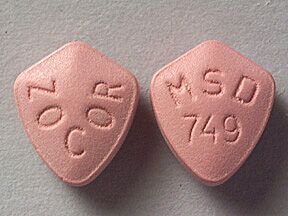 |
An example of side-effects with a
prescription drug a prescription drug, statin (or HMG-CoA reductase inhibitors) form a class of hypolipidemic agents, used as pharmaceuticals to lower cholesterol levels in people at risk for cardiovascular disease because of hypercholesterolemia. These are |
| Nausea Irritability and short tempers Hostility Homicidal impulses Rapid loss of mental clarity Amnesia Kidney failure Diarrhea Muscle aching and weakness Tingling or cramping in the legs Inability to walk |
Problems sleeping Constipation Impaired muscle formation Erectile dysfunction Temperature regulation problems Nerve damage Mental confusion Liver damage and abnormalities Neuropathy Destruction of CoQ10, a vital nutrient for health |
| www.prisonplanet.com |
If you want to know more about how we are living in a police state, and how much corruption there really is, check out these sites for more details.

