|
|
|
Tamils1
all
over
the world celebrate the harvest festival of PONGAL
during the month of January. Pongal2
is
a four-day festival
traditionally celebrated in southeastern part of India and in Sri
Lanka.
 This festival
pays tributes to the Sun and to the cattle
that help
farmers in their livelihood. Owing to cultural diversity within the
Tamil
community, each day of the festival comes with its own flavor in each
region of
the contemporary Tamil heartland! After
the hectic northeast monsoon rains in
the southern
part of India, crops are ready for harvest by January. Sunny skies and
anticipation of a bountiful harvest keep peasants in the right mood to
indulge in
a long celebration.
This festival
pays tributes to the Sun and to the cattle
that help
farmers in their livelihood. Owing to cultural diversity within the
Tamil
community, each day of the festival comes with its own flavor in each
region of
the contemporary Tamil heartland! After
the hectic northeast monsoon rains in
the southern
part of India, crops are ready for harvest by January. Sunny skies and
anticipation of a bountiful harvest keep peasants in the right mood to
indulge in
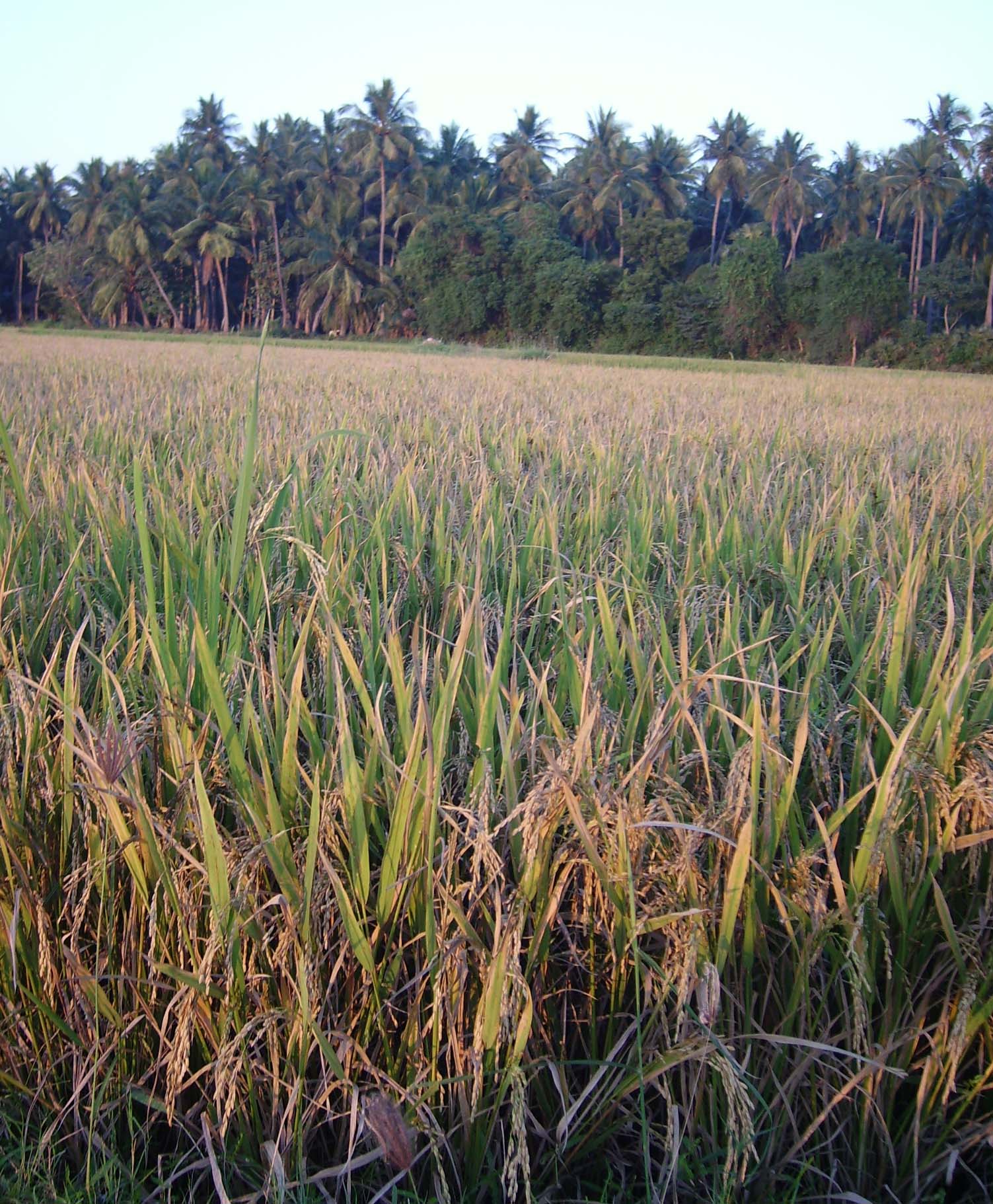
a long celebration.After
the monsoons, the fruit of hard work, awaits harvest.Sprawling
rice paddy fields are a common sight in Tamil country.
The first day of the celebration is Bohi3, which falls on the last day of the month of Margazhi as per Tamil calendar. Tidying up homes is a typical practice on this day in most places. This day is also an occasion for parents to send gifts, called Varisai, to the households of their married daughters. These gifts are usually in the form of farm products such as rice, sugarcane, turmeric, coconut, ripened banana etc. However, sending gifts in the form of money is also not uncommon these days! 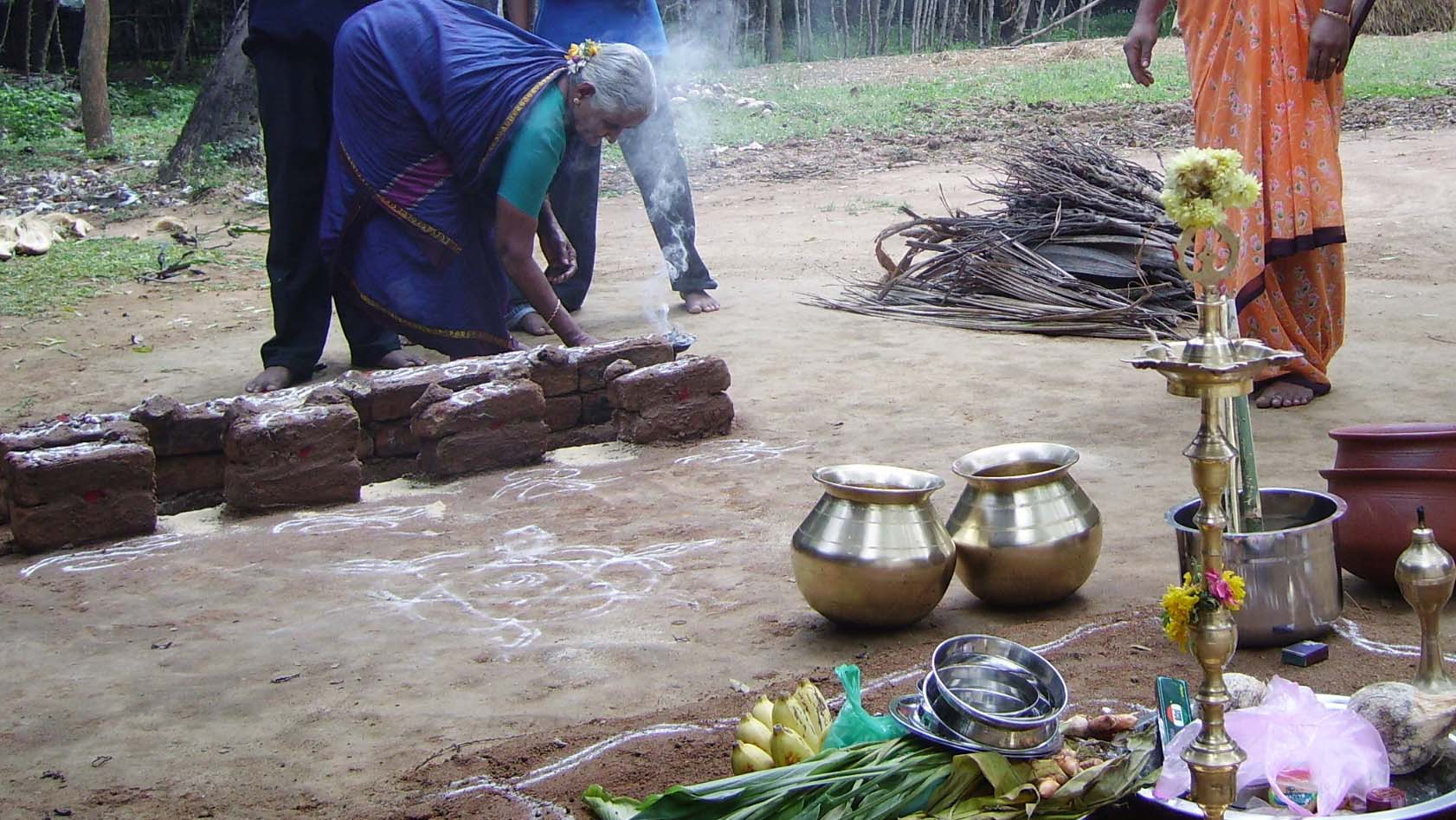 A
senior person of the household
performs
the inaugural customs before Pongal.
On the left is make-shift clay and
brick stove. Firewood is kept nearby. The offering mound is partly
visible in the foreground. Note Kolam
drawings in white. A
senior person of the household
performs
the inaugural customs before Pongal.
On the left is make-shift clay and
brick stove. Firewood is kept nearby. The offering mound is partly
visible in the foreground. Note Kolam
drawings in white.The next day, the primary day of the festivity, called Pongal2, falls on the first day of the auspicious month of Thai in Tamil calendar4, This is, in fact, a thanksgiving day for the Sun. Though the entire family participates, women and children play an active role in it. In the countryside, in the morning, people set up makeshift clay stoves outside their homes, usually in the main entrance area. The stove and its immediate surroundings are decorated with drawings called Kolams, done using dry rice flour. 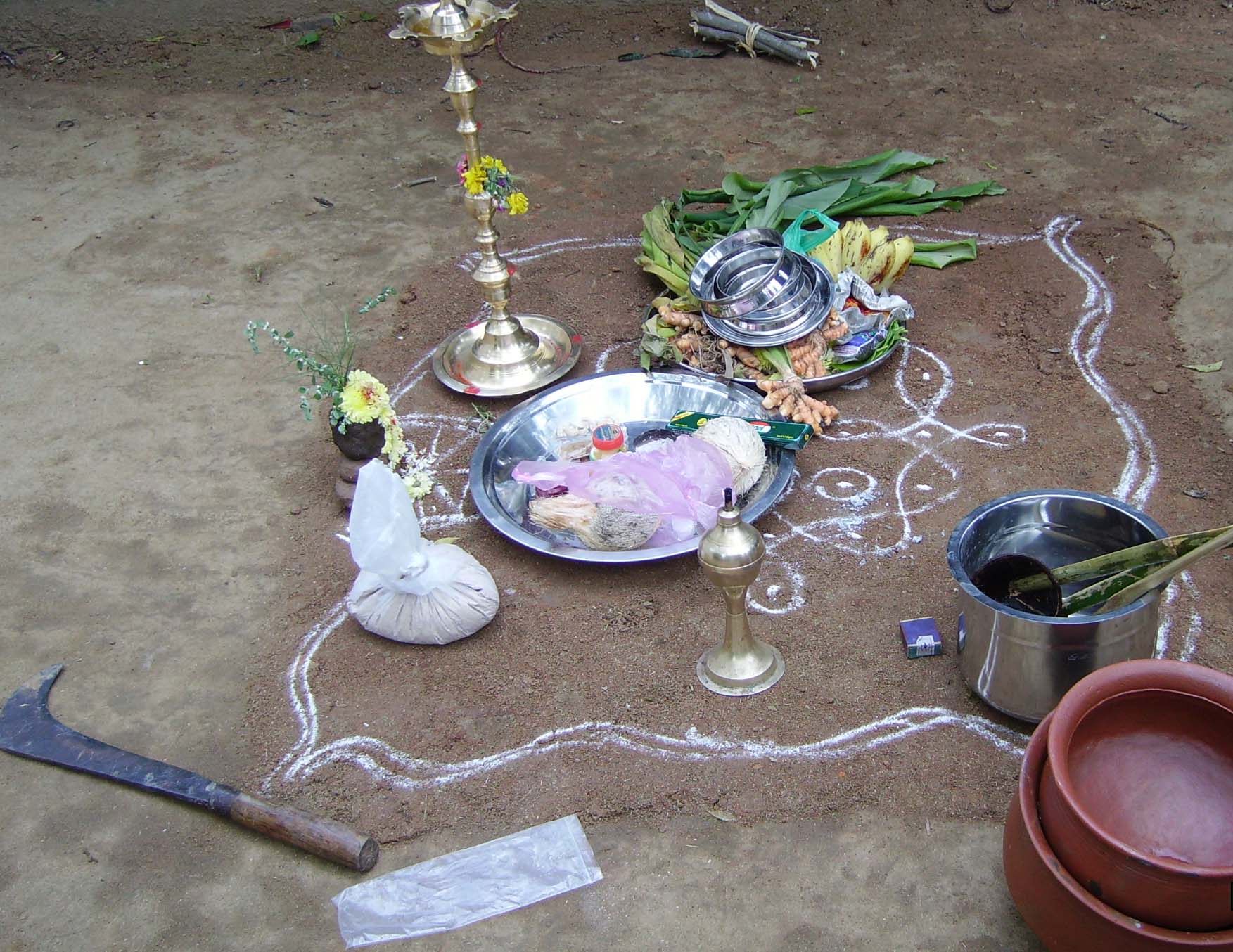 Using new
terracotta vessels,
sweetened rice (from fresh harvest, sweetened with jaggery, milk and
raisins) is
cooked on these stoves. The Sun, whose day
it is, directly looks down
upon the
event gracefully. After sweetened rice
preparation, along with other special items for the day, primary of
which is karumbu (sugarcane), a Padayal or offering is made to
Sun.
Later, the
entire family enjoys the feast. Children particularly like the
sweetened rice,
which is not part of every day menu! Using new
terracotta vessels,
sweetened rice (from fresh harvest, sweetened with jaggery, milk and
raisins) is
cooked on these stoves. The Sun, whose day
it is, directly looks down
upon the
event gracefully. After sweetened rice
preparation, along with other special items for the day, primary of
which is karumbu (sugarcane), a Padayal or offering is made to
Sun.
Later, the
entire family enjoys the feast. Children particularly like the
sweetened rice,
which is not part of every day menu! The
offering mound (Padayal area)
has several items used on this day. Unused baked terracotta wares,
wooden spoons made of coconut shell and bamboo, turmeric plant with
tubers, husked coconut, banana etc. The machete at the lower left
is a handy tool for husking and cracking coconut.
The following day is Maattupongal5, thanksgiving day for the cattle. Men and women have distinct roles to play on this day. As opposed to the previous day, Mattupongal has the distinction of being a community celebration, with several households or clans coming together in some open area in their neiborhood, in the evening. Cows and bulls are given a bath, their horns are painted colorfully, their necks are decorated with garlands and they are particularly fed well with fresh green grass instead of routine hay! 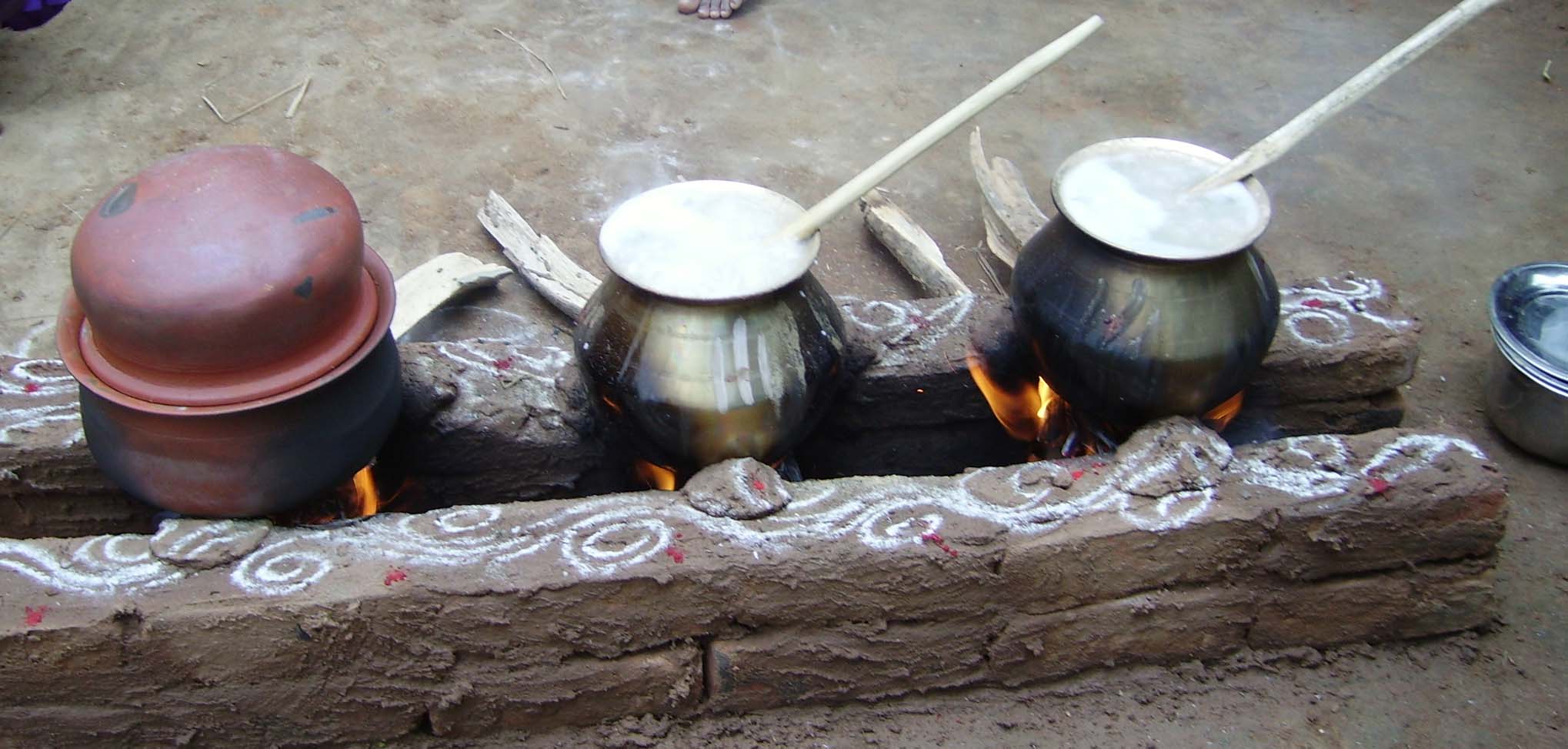 In
the meantime
women,
particularly young girls decorate the floors of their homes with
drawings made
out of watery rice flour (MaaKolam). In
the meantime
women,
particularly young girls decorate the floors of their homes with
drawings made
out of watery rice flour (MaaKolam). Pongal,
the boiling rice, in brass vessels. Though used to be made of clay,
metal
pots are common these days, symbolizing a change in culture as well.
Decorated cattle are brought to the open area and made to stand in order. Simultaneously, men dig-up large cooking spots in the ground. Large metal vessels are used to cook rice that had been collected from participating households. Cooked rice is spread on plantain leaves placed on temporary mounds and strewn with jaggery, grated coconut and crushed ripened banana. This again is a form of sweetened rice. After a Padayal, cattle are given symbolic ‘oil bath’ and symbolic ‘feeding’ with this rice preparation. Then the entire community shares the food. In many places women and very young children are kept off the event, perhaps in view of large gatherings of cattle to avoid any mishaps. The last day of the celebration is very diverse and is called by various names, such as Kannupongal, Kannipongal, Kaanumpongal etc. Sporting activity is the hallmark of this day. Particularly groomed bulls are put into action on this day and young men try to overwhelm the bulls in an attempt to fetch the bounty that goes to the winner. Jallikkattu and Manjuvirattu are two forms this sport. Coconut fight, in which one person tries to crack open his opponents’ husked coconut are also common. Apart from these traditional games, various other kinds of games are also in vogue for children and girls. In urban areas, on this day, younger members of families visit their elders to exchange pleasantries. 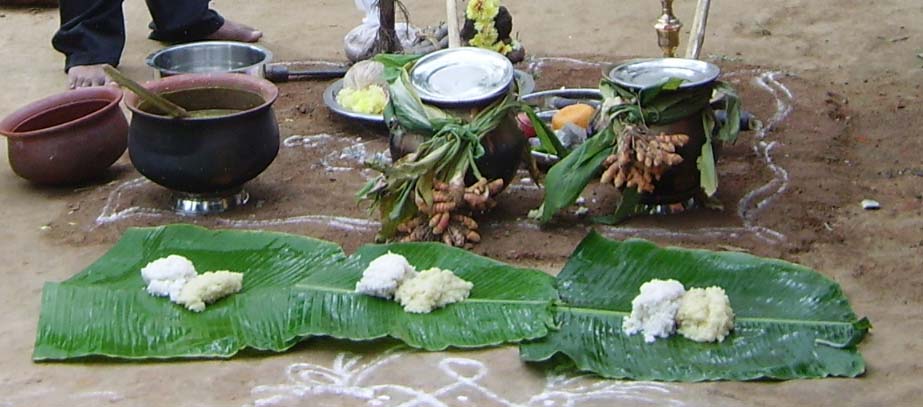 Rice pots, one for sweetend and the other for plain rice, are tied with turmetic plants. A clay pot has Sambar on the left. Three terminal pieces of banana leaves with offerings on them. Though traditionally done, the importance of three instead of one leaf is not clear. Harvest festival is celebrated in different parts of India, though they are called by different names in different regions, Sankaranthi (Sankranti), Bhoghi, to name a few. Pongal celebration is one such 'cultural' festival, celebrated by Tamils living around the world. As Indians, Tamils have a myriad of functions to celebrate, but perhaps Pongal is the only festival Tamils have for themselves to connect with their Tamil cultural roots6. References
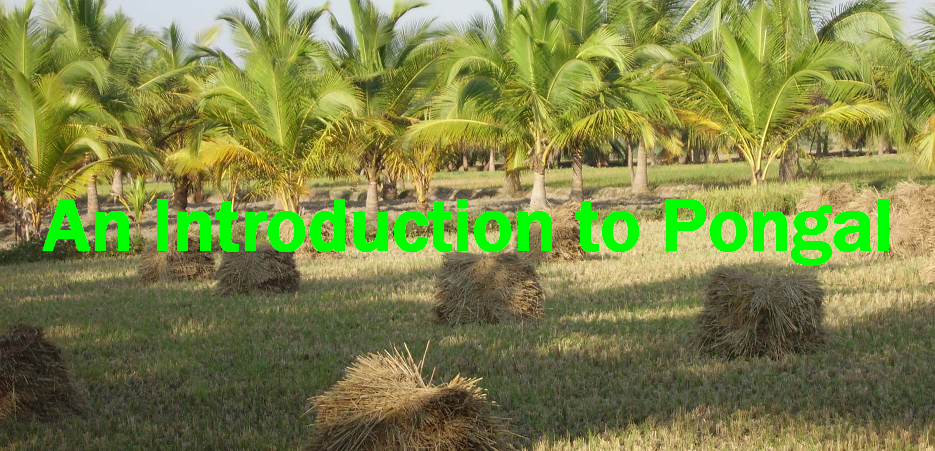
Title image: Bales of fresh rice
paddy reap in
the field, ready for 'thrashing'. Young coconut trees are in the
background.
This page was created
on
January
15,
2005, modified on August 13, 2006 and
is maintained
by Duraiswamy
Navaneetham & Anandhi Narayanaswamy.
An introduction
to Pongal Copyright © 2005-2006 Duraiswamy Navaneetham
|