| ORDINATION |
| BACK TO GUIDE |
| BACK TO SACRAMENTS |
 |
|
| What is a priest? |
| Ordination - or - Holy Orders is a sacrament through which the mission entrusted by Christ to be his apostles continues to be exercised in the Church until the end of time... |
| As soon as Jesus began his public ministry he got men around him called "apostles". The word apostle is Greek for "one who is sent". Apostles understood what Jesus was hear to do. After Jesus death he told the apostles that is was their turn to go out and complete what He had started- to bring the good news to the people. He gave them instructions to look after his Church. Over time the followers of Jesus came to call this special role in the Church as priesthood. |
| A priest acts in the name of Jesus as a "go-between" for God and people. A priest does for people today what Jesus did while he was on the earth. |
| Men who are called to receive Holy Orders are commissioned to act in the name of Jesus in service to the Church. |
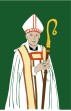
| Several stages, or degrees to the Sacrament of Holy Orders ( order comes from the Latin Word for "rank" or "degree of responsibility" Bishop is the highest order of the sacrament. Considered to be the successors of the first apostles. Bishop are the go between the local (diocese) and the world Church. And have the duty to teach the truths of the Catholic faith to the members of his assigned diocese. |
| Jesus made Peter the leader of the apostles. After Peter was matyred, a man chosen to lead the church in Rome was considered the sucessor of Peter. The Pope is the Bishop of Rome, and the Successor of Peter. |
| Deacons are considered the lowest rank in the of responsibility. They are ordained by a Bishop. They do not have the power of a priest. They cannot reside over the Eucharist, or absolve sins in the Sacrament of Pentance. But the can preach, and be witnesses to weddings, and preside at Baptisms' Those seeking to become priests are first deacons. they are called Transitional deacons. Those who intend to become priests, must remain single. |
| Two symbols play a major role in the rite of Holy Orders. One is the anointing of oil the order the laying of hands. OIl is a symbol of bestowing power on a person apart for a special task, or role. Laying of hands is a symbol for passing on power, blessing, responsibility or duty. A bishop has a third symbol, a Crosier (a staff) modeled after a shepherd's staff and symbolizes his responsibilities as shepherd of the diocese. |
 |