
Studio Monitors 101
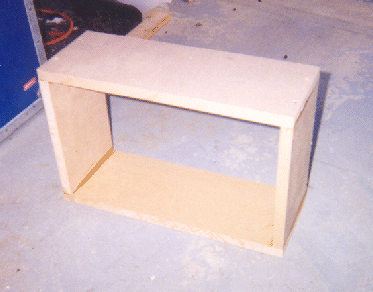 Here
all we started with is was the top, bottom, and sides of the cabinet. They
were all cut at the same time. We ripped a very long skinny piece of wood
and then brought it over to the radial arm saw and cut the pieces to length.
Cutting the pieces from one strip of wood ensures that they will all be
the same width. While gluing and screwing them together we made sure that
they are totally square.
Here
all we started with is was the top, bottom, and sides of the cabinet. They
were all cut at the same time. We ripped a very long skinny piece of wood
and then brought it over to the radial arm saw and cut the pieces to length.
Cutting the pieces from one strip of wood ensures that they will all be
the same width. While gluing and screwing them together we made sure that
they are totally square.
 Next
came adding the front to the frame we just constructed. Instead of trying
to cut the front to the exact size of the frame, we cut it about a 1/4"(1/8"
per side) too big. then screwed it down to the frame. With a laminate cutting
bit and our router we traced the frame so that it cut the front peice of
wood to the exact shape of the frame. Fitting the front this way assures
that there is no lip between adjacent peices.
Next
came adding the front to the frame we just constructed. Instead of trying
to cut the front to the exact size of the frame, we cut it about a 1/4"(1/8"
per side) too big. then screwed it down to the frame. With a laminate cutting
bit and our router we traced the frame so that it cut the front peice of
wood to the exact shape of the frame. Fitting the front this way assures
that there is no lip between adjacent peices.
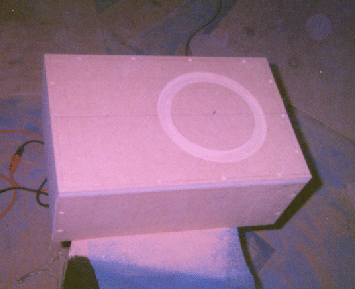
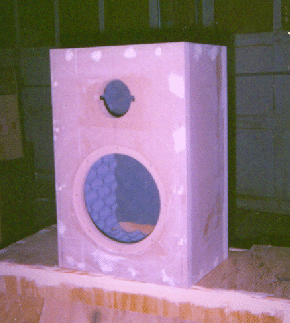
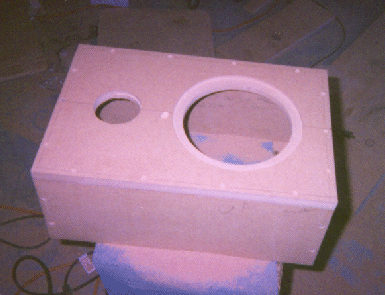 One
the left we used a router equiped with a circle cutting jig to cut a circluar
recess about a 1/4" deep. The diameter of the circle is a little bigger
than the outside diameter of the speaker basket. This will allow the speaker
to be flush mounted. This is not a manditory step but I wanted the speaker
flush mounted. On the right you can see the results of cutting a thru-hole
with a smaller diameter. Before this hole was cut, we made a test hole
on a scrap peice of wood to make sure it would fit the speaker with no
movement. In this picture the tweeter hole was cut with a hole saw, since
the router couldn't cut such a small diameter hole.
One
the left we used a router equiped with a circle cutting jig to cut a circluar
recess about a 1/4" deep. The diameter of the circle is a little bigger
than the outside diameter of the speaker basket. This will allow the speaker
to be flush mounted. This is not a manditory step but I wanted the speaker
flush mounted. On the right you can see the results of cutting a thru-hole
with a smaller diameter. Before this hole was cut, we made a test hole
on a scrap peice of wood to make sure it would fit the speaker with no
movement. In this picture the tweeter hole was cut with a hole saw, since
the router couldn't cut such a small diameter hole.
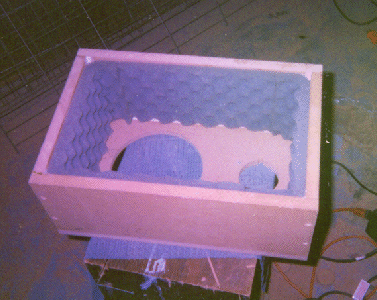
 On
the left you can see the back hasn't been put on yet. We did line the inside
with egg crate foam. The back was attached the same way the front was.
When screwing the peices together the screw holes were counter sunk. The
holes were then filled with wood puddy and sanded flat. It is important
that the surfaces were smooth because the next step will be attaching the
laminate covering.
On
the left you can see the back hasn't been put on yet. We did line the inside
with egg crate foam. The back was attached the same way the front was.
When screwing the peices together the screw holes were counter sunk. The
holes were then filled with wood puddy and sanded flat. It is important
that the surfaces were smooth because the next step will be attaching the
laminate covering.
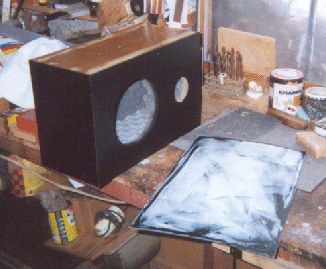
 The
covering is regular counter top laminate available at either Home Depot
or Lowes. On the left you can see how the laminate goes on. To adhere the
laminate to the wood contact cement was used. Notice the peice to be applied
is bigger than the side it is going on. After the contact cement has dried
a router and laminate cutting big was used to cut the overhanging laminate.
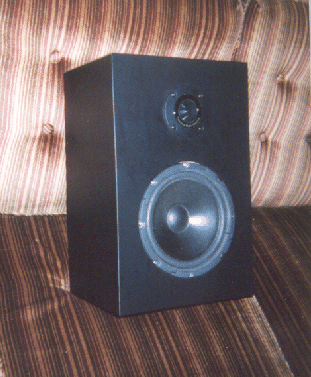
On the right here you can see the speakers installed. What you can't see
is the crossover which is mounted inside. A banana plug receptical was
installed in the back of the cabinet. This is a pretty straight forward
project, it just took alot of time to complete.
The
covering is regular counter top laminate available at either Home Depot
or Lowes. On the left you can see how the laminate goes on. To adhere the
laminate to the wood contact cement was used. Notice the peice to be applied
is bigger than the side it is going on. After the contact cement has dried
a router and laminate cutting big was used to cut the overhanging laminate.
On the right here you can see the speakers installed. What you can't see
is the crossover which is mounted inside. A banana plug receptical was
installed in the back of the cabinet. This is a pretty straight forward
project, it just took alot of time to complete.
Home