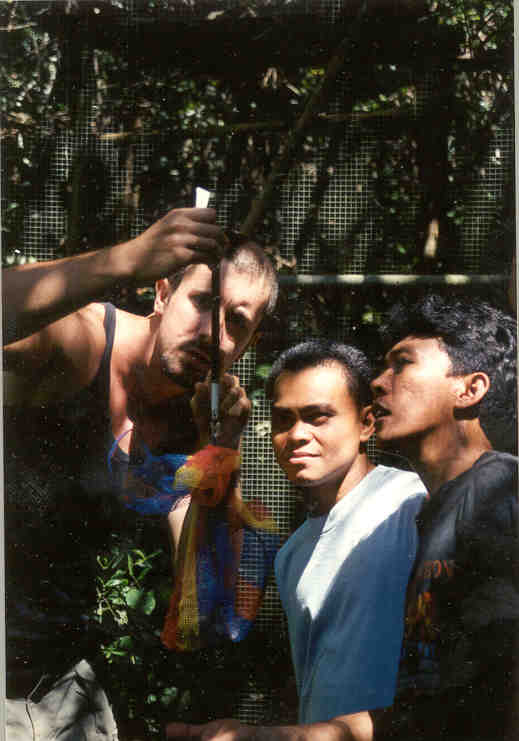
In 2002, I completed a study with Philippine Tarsier Foundation coworkers on the establishment of a semi-captive tarsier population. This semi-captive approach allows for the keeping and protecting of these shy nocturnal creatures in large outdoor enclosures. The 7000 + square meter enclosure allows for the free movement of tarsiers within the enclosure while protecting them from exotic predators such as feral house cats. In addition, the walls are designed so that young tarsiers are unable to leave the enclosure while adult tarsiers can come and go as they please, further protecting the vulnerable offspring of the tarsier who has a very slow reproductive cycle.