

Reading Tea Leaves
Righty ho lets get stuck in : ) Welcome to the section of Tea Leave Reading : )
The best kind of tea to use if tea-cup reading is to be followed is China tea, Indian tea and the cheaper mixtures don't work as well and teabags are useless : ) (obviously) The best shape of cup to use is one with a wide opening at the top and a bottom not to small. Cups with almost perpendicular sides are very difficult to read, as the symbols cannot be seen properly, and the same could be said of small cups. (in other words don't use a cup which looks like one on the top of this page) : ) A plain surface cup is the best to use and the interior should be white and have no patterns printed upon it.
The pre-reading ritual to observe is very simple. The tea drinker should drink the contents of his or her cup so as to leave only about half a teaspoonful of the beverage. (I've always wondered if you were aloud to add milk and sugar to the mixture, but I'm guessing you're not meant to) : ) They should next take the cup by the handle in their left hand, rim upwards, and turn it three times from left to right in one fairly rapid swinging movement. (i.e., hold the cup and swish the remaining tea clockwise round in a circle three times) They should then very slowly and carefully invert it over the saucer (turn it upside down) and leave it there for a minute, to permit all the moisture to drain away.
The cup to be read should be held in the hand and turned about in order to read the symbols without disturbing them, which will not happen if the moisture has been properly drained away.
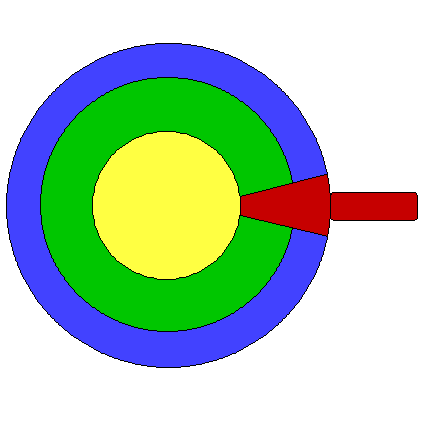
The handle (Red Area) represents the consultant, by this fixed point, judgments are made about journeys from home, messages or visitors to be expected, relative distance and so forth. The bottom of the cup (Yellow Area) represents the remoter future foretold; the side of the cup (Green Area) represents not to be far distant, and matters symbolized near the rim (Blue Area) are those that may be expected to occur quickly. The fortune may be equally well told whether there are many or few leaves, but of course there must be some.



2