 INTERVIEW WITH CLEA SIMON
Clea's Email
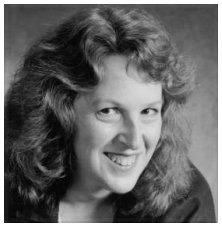
Clea Simon is the author of Mad House: Growing Up in the Shadow of Mentally Ill Siblings (Penguin), Fatherless Women: How We Change After We Lose Our Dads (Wiley), and the upcoming The Feline Mystique: On the Mysterious Connection Between Women and Cats (to be published by St. Martin's Press in August, 2002).
THE FELINE MYSTIQUE
Being an animal lover and someone owned by eleven former
stray or feral cats, I would want to know about Musetta.
I noted you had other cats.
I have great respect for the people who do rescue work with ferals, but I
tend to be a "cat monogamous" woman -- one cat at a time for me. For nearly
17 years, that one cat was Cyrus, a mixed-breed gray long hair to whom "The
Feline Mystique" is dedicated. He was my first love, in a way. He passed
away during the writing of the book -- which, sad as it was, really made me
able to relate to a lot of other pet owners who have been through this. The
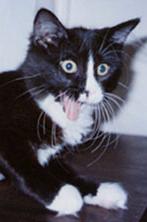
book ends with me and my husband adopting Musetta. When we thought we might
be ready, we went to a local shelter and she was this lively perky black and
white bundle of energy and we fell in love. She's now a glossy, plump
1-year-old and we both love her madly. (She is the copy-editing cat on my
Web site.)
What made you decide to pick this particular subject for a book? Did it involve a lot of research and did you do this online or at libraries or both? Did you interview other cat lovers?
Well, I am fascinated by relationships: What do we want from them, what do
we give, and how honest are we? And a friend (who doesn't have cats, by the
way) pointed out that I have an intense relationship with cats. I then
started thinking that there are tons of humor books about cats, and lots of
jokes and "old wives' tales" about women and cats, but that nobody had taken
the subject seriously. Women and cats have been linked -- sometimes for bad
resaons -- throughout history! And no serious book had asked why! So...
Ibegan reading: first lots of history, about goddess worship and witchcraft,
about mythology, and then about animals, specifically the domestication of
animals. The public library was great: Not only did they have a lot of
books, but often if I found a reference to a book or an academic article on
line, they would get it for me. That research was the base for "Feline
Mystique." Then I started interviewing women. I tried to get a wide range --
from an older woman whose sole companion is a cat to a young, glamorous
tiger trainer, and lots in between. I also interviewed a lot of experts:
vets, animal therapists and behaviorists, people like that. And finally I
wove my own story in to show that I'm a cat woman also!
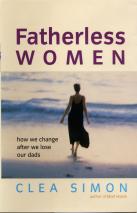 The Book on Fatherless Women makes me wonder what inspired
you to write this book?
The Book on Fatherless Women makes me wonder what inspired
you to write this book?
It was rather odd. When my dad died I thought I was too exhausted to move.
He passed away in Jan, 93, but then by March I had started working on my
first book and by July I was dating the man I'm now married to. I didn't
think about this at the time, but within a few years a few friends also lost
their fathers. They also started changing their lives and it made me wonder:
What happens to us after our dads die? Why do so many of us suddenly get our
lives in order then? What does this tell us about the influence of our
fathers on our lives?
Your father was obviously a marvelous man and you had a nice ordered childhood. Was this book a labor of love?
It was, but it was also painful, because it meant being honest with myself
about the ways that we didn't agree and sometimes, the things he did that
were not for the best.
Did you write solely about your own experiences or did you study
other women who had less than happy experiences?
I spoke with 100 other women for "Fatherless Women." Interviews with about
70 ended up in the book, although I changed everyone's name. I wanted to get
a range of experience and thought my story alone wouldn't fit everyone
else's.
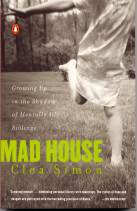
Since you wrote on siblings with problems, how was this handled
in your homelife?
Even though mental illness effects at least 1 percent of the population, my
family felt a lot of shame. The way we handled it was by denying it -- which
didn't help anyone. So for me, writing about my brother's and sister's
schizophrenia in "Mad House" was a way of coming clean. It was my way of
saying, "Look, it is genetics and it isn't anyone's fault. But it did hurt
all of us." I believe that by talking about things, you can feel less alone.
It was my way of reaching out to others who grew up in similar families and
from the letters, calls, and emails I've received, I think it was a good
thing to do.
I personally have had experience with a family
suicide and had many questions about it at a time when there was
not much out there. Was the suicide one of the factors that made you
want to write this book?
I am so sorry. You probably understand what I meant by the mix of shame and
guilt. Was it my fault? Was there anything I could do? For me, my brother's
suicide was a big part of my writing "Mad House." But we'd lived with
sadness and confusion for so many years, it was just the final act, so to
speak. I wanted to come clean about all of it, to say, "let's share this
burden."
When I do these interviews, we always ask: If you could write in
another genre, what would it be and why? Who is YOUR own favorite
writer? And I usually ask about September 11, 2001...where were
you, how did it effect you and, if it did, your writing?
I'd love to write fiction! I love reading good, thick novels -- often
British ones. They have such atmosphere. My current favorite authors are
Hilary Mantel (particularly "A Place of Greater Safety") and Sarah Waters
("Fingersmith"). I wish I could dream up plots and people like they do.
Sept. 11: It was horrible. I was listening to the news when they broke in,
getting my husband's lunch ready for him to go to work. When we heard about
the second tower, we ran to the TV and watched. He went to work eventually, but
I sat there all day.
I don't think it has influenced my writing except in that it has made me
more aware of life's fragility. Carpe diem!

Clea also does a fair amount of journalism, including the Boston Globe's "Radio Tracks" column about New England radio, which is published on Thursdays and can be read on that day each week at http://www.boston.com/globe/ (check in the Living/Arts section). Her writing also pops up occasionally in the New York Times and the Boston Phoenix, and such magazines as American Prospect, Ms., and Salon.com. She used to do a fair amount of music criticism, but now primarily focuses on relationships, feminism, and psychological issues.
She grew up in East Meadow, on suburban Long Island, N.Y., and came to Cambridge, Mass., to attend Harvard, from which she graduated in 1983. She's never left, and now happily cohabits with her husband, Jon S. Garelick, who is also a writer, and their cat Musetta.
From Kirkus Reviews, June 1:
Simon,Clea
THE FELINE MYSTIQUE: On the Mysterious Connection Between Women and Cats
St. Martin's (224 pp), $22.95, Aug. 2002
ISBN: 0-312-26881-5
Journalist and memoir author Simon (Mad House, 1997) perceptively examines the close relationship between women and cats.
Drawing on her experiences with the much-loved Cyrus, whom she acquired when single and at the start of her writing career, Simon deftly mixes personal anecdotes and interviews with references to mythology and popular culture. She calls Cyrus the "feline barometer" against which she measured herself and her intimates; her tales about living with him complement the cat lore here. Cats play an important role in many women's relationships with men, Simon demonstrates, describing her own and others' romances ending because Mr. Wrong disliked or was insensitive to the cats in their lives. Simon herself eventually finds and marries a man who loves cats and (just as important) meets with Cyrus's approval. She analyzes some stereotypical assumptions, such as the idea that women who collect more cats than they can take care of suffer from Obsessive Compulsive Disorder. The legendary relation between cats and witchcraft, Simon suggests, may have been fueled by male fears of women's sexuality ("our most feline feature") and the ancient belief that cats had psychic powers, which led historically to the demonization of females and felines. She finds the myth of cats as evil creatures with feminine characteristics still perpetuated in comics like Batman, where the superhero contends with the wicked Catwoman. Simon visits women who help feral and abandoned cats; she addresses the issues of feeding, neutering, declawing, and death. She profiles various individuals: the vegetarian who cooks chicken for Missy; the cat who teaches a young and thoughtless college graduate to be a good mother; Rudy and Gigi, who fill their owner's empty nest after the children leave. Most touching of all is her tribute to the departed Cyrus, her comfort for 16 years and "the perfect companion, so much personality in such a little package."
Wide-ranging and perfectly pitched: both sensitive and sensible.
Ms Dixie (Sandi) would like to thank Clea for taking the time to do
this interview. We met through email when she inquired about victorian
cats. Always one to capitalize (*grin*) we asked her for an interview
and she graciously consented. We hope you will visit her website and
be on the lookout for her books.

 Photos courtesy of
Graphics by
Until Then Graphics
Photos courtesy of
Graphics by
Until Then Graphics
|