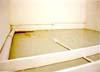
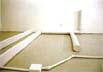
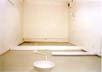
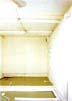
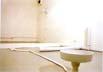
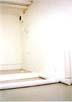
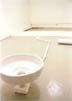
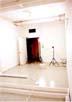
This quarter I took an upper division ceramics class. This was my first upper division Art Studio class, so I tried to put a lot of effort into it. We were supposed to do a site specific work and an audience specific work. The goal of the site specific work is to take a site and add your medium in relation to that site by taking into account what makes up that area, who goes into it, and what purpose does it serve? For cermics, one also has to think about how ceramics can be integrated into this site. I chose a gallery space that is normally used for installations, and my work was really nothing outside of an installation. However, my goal was to replicate and immitate the abstractions of the room that people take for granted such as the lamps that light the room, the wood beams that support it, or the pipes that run through the room carrying water and other liquids. After creating the abstractions, I wanted to organize them around the room in a way that would turn the room upside down and make one question what their purpose is and bring attention to the regularly ignored parts already in the room. All of the objects on the walls are either hand made or pushed out of a plug mill except for the copper brackets holding up the piping, and plastic connectors. In some cases, the clay abstractions were directly juxtaposed against their immitated objects, and in some cases, they are cut off or just "misplaced".
My goal was to create a rather seamless connection between some of the parts because most of the clay is pieced together in sections either with tape or metal joints. This really questioned the limitations of clay and added a hand made feel to the installation. While all of the objects already inhabiting the room were mechanically made, my clay pieces were hand built and fired.
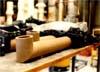
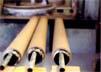
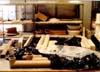
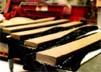
The pictures below document the proccess by which the objects were made. You can see all the smaller sections of clay in these pictures. Each section of the wood beams weighed 30-40 pounds and the pipes were about 30 pounds each as well. |