

depth
m e m e n t o
Very few films astound me in the way that Christopher Nolan's complex, inspired and groundbreaking masterpiece Memento did when I first saw it.
Merely from the opening I knew this film was going to be different; a Polaroid photograph develops backwards to a blank print and the scene continues to flow backwards into reversed footage of a shooting between two men in an abandoned building, stopping moments before trigger is pulled. From here, the scene cuts away and the footage returns to real time; the narrative however does not. This scene now depicts the events shortly prior to the shooting, and finishes with a shot of the dead body from the previous scene. As the scene cuts once more, the true nature of the story's structure becomes apparent; time traces backwards once more and we are now watching events prior to the two men arriving at the derelict building, and at this point you know you are in for something special. And this is how the narrative unfolds throughout the entire film; broken up into scenes that trace back time and constantly leave the viewer with unanswered questions whilst offering new, yet inconclusive information. This is a superb narrative style indeed, but the really clever part comes as we learn of the disabilities of the main character, Leonard Shelby (Guy Pearce). Leonard speaks of how he was left with a rare and incurable form of short-term memory loss as a result of an attack which also cost his wife her life and now he is out to avenge her death by finding her killer; he knows who he is, he knows what happened, but he is unable to form any new memories and things he learn simply fade away after 15 minutes or so. In searching for his wife's killer however, Lenny has developed a system to aid him; He jots down information, keeps Polaroid photos, and goes as far as tattooing vital clues and information on his body. Of course these notes effectively are Lenny's only guidance and he takes these as fact and learns to trust them wholly; when Lenny reads a note, the audience too is forced to believe this information. Therefore, the viewer has just about as much idea what is going on at present as Lenny does, as he can't remember the past, and we haven't seen the past yet. We can only trust the notes and tattoos, just as Lenny does. Imaginative, original, beautifully executed and above all it actually works.
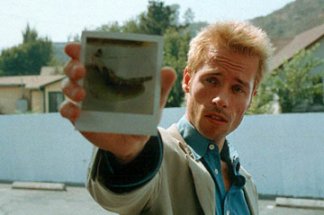
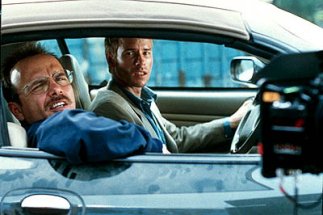
Of course, this narrative style now opens up a thousand opportunities to really exploit itself. As I mentioned, there is the most prominent aspect being the fact the audience tends to know just about as much as Lenny does. (Except for the fact we know Leonard's future, but that is the substance of the film, naturally) This provokes a superb sense intimacy between Lenny and the audience that I have never experienced before in a film; we react as he would, we share his emotions, and also as characters begin to abuse Lenny's condition, the audience too is deceived due to our lack of knowledge from past events in the story. Physical matter is also used to convey the theme of memory being unreliable in an extraordinary manner; mistakes or possibly deliberate errors made by Lenny and his memory, effect things we see in the real world. For instance, Lenny notes down a license plate number incorrectly at the end of the film, (We see the plate before he actually makes a note of it), but earlier in the film (or chronologically AFTER Lenny made the note and had it tattooed) we see the license plate has now changed in accordance with his mistaken note. (This is also in the screenplay, evidence it was intentional) There are a number of other moments like this, which would look like unintentional errors in most other films, but with Memento you know nothing can be taken at face value as we are dealing with the issue of unreliable memory, and an unreliable narrator.
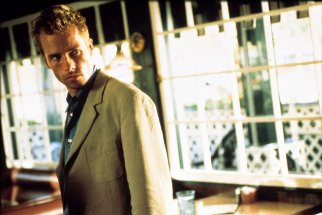
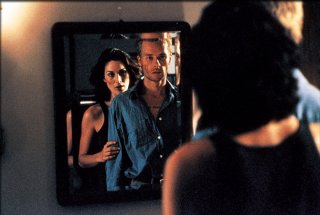
Memento doesn't simply rely on its main feature to do all the work however; as you would expect from any good film, the acting is top class with wonderful lead performances from Guy Pearce, Carrie-Anne Moss (Natalie), and Joe Pantoliano (Teddy). The camera work is also very nicely done, Nolan having opted for a somewhat freehand and natural feeling to the majority of shots.
To top it all off, Memento features an excellent soundtrack which includes David Julyan's beautiful (if a little repetitive) score, combining classical strings with subtle techno, and most memorably David Bowie's "Something In The Air' which runs over the closing credits.
In my opinion, no other film achieves anything so near to cinematic perfection as Memento does. It doesn't focus on lacing the story with deep, philosophical questions about humanity, yet it is still eerily thought provoking. It doesn't blatantly attempt to barrage the audience with emotion, yet the ties experienced with Lenny subtly tap into your emotions and are genuinely moving. It is a magnificently structured puzzle, and imaginatively original. Any film that could possibly knock Memento off my top spot would have to be inconceivably incredible.
http://www.otnemem.com - Official Site
http://www.christophernolan.net - Unofficial Christopher Nolan Site
http://us.imdb.com/Title?0209144 - Memento's IMDB page
http://www.designpattern.org/mementofaq.htm - An incredibly helpful FAQ on the film
Site design and images created by Ben Kavanagh 2001-2002 & protected by Intellectual Property Design Rights
'Memento' images are Copyright © 2001 Newmarket Time
© tarmac