
A typical banded pattern occures in Mill Creek chert. The bands run parallel to the outer surface of the lenticular nodule. The interior of the nodule is course in texture, but the knapping characteristics are favorable (Spielbauer 1984).


|
|
|
|
|
|
|
|
|
|
|
|
|
|
|
|
|
|
|
|
|
|
|
|
|
|
| Mill Creek | |||||||||||||||||||||||||
| Recent studies suggest that Mill Creek chert is formed in the Warsaw-Salem Formation, formerly it was thought to originate from Keokuk limestone (Spielbauer 1984). The Warsaw-Salem formation is of Mississippian age (Willman 1975). It is exposed along Mill Creek, Lingle Creek, and Cooper Creek in Union and Alexander counties (Morrow 1988). Mill Creek Chert has a rough and weathered exterior, that is generally rusty brown. The exterior can also be grey or brown, but these colors are not as common as the the rusty brown color (Spielbauer 1984). The interior of Mill Creek chert comes in a variety of colors and is described as "greyish tan to brown," (Spielbauer 1984) "blue beige, grey, yellow, pink, or reddish brown" (Morrow 1988). A typical banded pattern occures in Mill Creek chert. The bands run parallel to the outer surface of the lenticular nodule. The interior of the nodule is course in texture, but the knapping characteristics are favorable (Spielbauer 1984). |
|||||||||||||||||||||||||
|
|||||||||||||||||||||||||
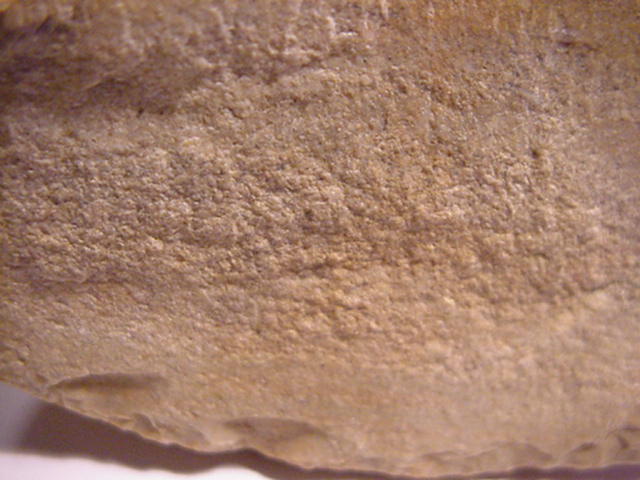
| Notice the large grain size of Mill Creek Chert. | |||||||||||||||||||||||||
|
|||||||||||||||||||||||||
|
|||||||||||||||||||||||||
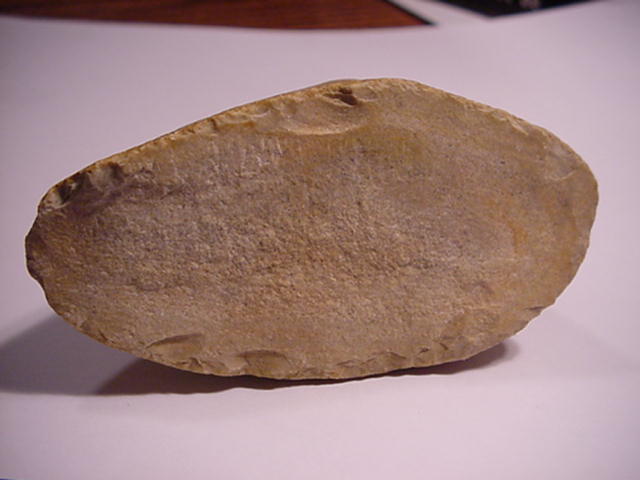
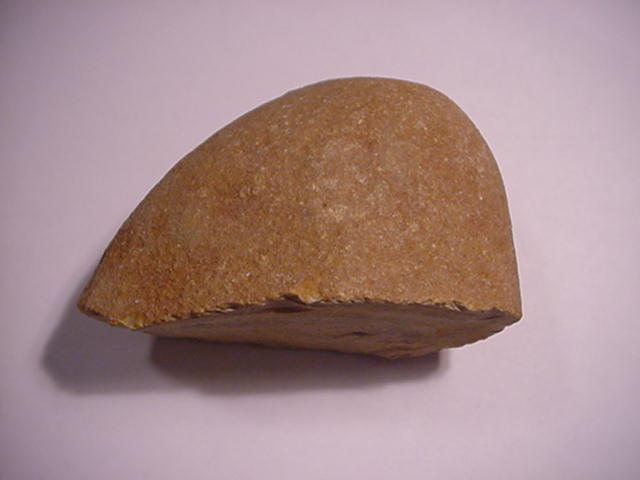
| The tipical ovid cross section (middle) and the nodular shape (bottom) of Mill Creek chert make it a ideal chert for hoes production. | |||||||||||||||||||||||||
|
|||||||||||||||||||||||||
|
|||||||||||||||||||||||||
|
|||||||||||||||||||||||||
| Timeline | |||||||||||||||||||||||||
| Types | Bibliography | ||||||||||||||||||||||||