
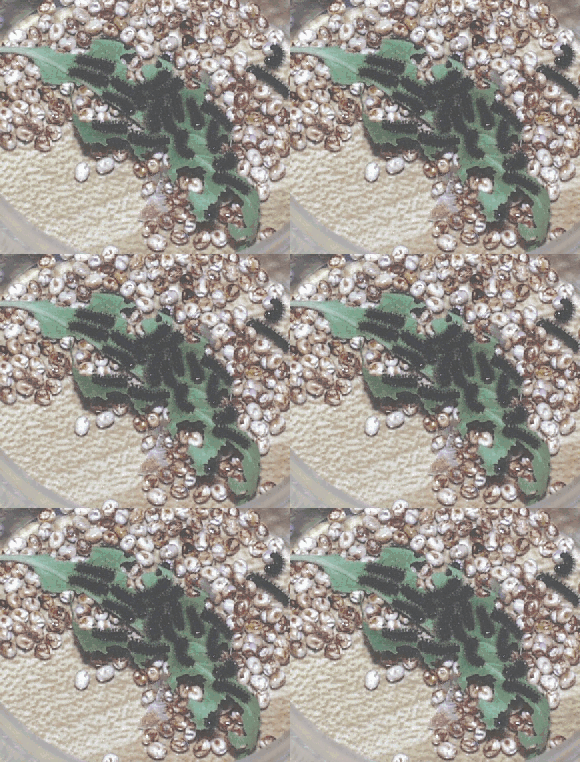
To make sure your caterpillars stay healthy, simply place a wet papertowel (wring as much water as you can out, because if you don't, this could cause a bacterial disease) and put it in the container. Then, place the leaf upon the papertowel and put your caterpillars in.
Make sure to clean up their feces (Frass) every day and give them fresh food. This is the best method of keeping caterpillars in the house
This will also work for the older more mature caterpillars, as long as you take in to consideration their space requirements. When I first began doing this at the age of 5, I didn't have very many caterpillars to deal with. So I would keep them in the little zip-lock container until they had shed their skin twice (or they were in the third instar) and then move them to a larger container. Be sure not to crowd caterpillars as this promotes disease.
Now because of the huge mass of caterpillars I am raising, I typically place them outside in a sleeve. A sleeve is anything that breathes well and allows for the caterpillars to move freely among the branches. Click here for illustration of a sleeve. After being in the caterpillar stage for six-eight weeks, the caterpillar will then start to form a cocoon. Remember that each instar lasts about a week except for the longer fifth instar which lasts about two weeks. The caterpillar will empty its gut (as an adult, it needs no digestive tract etc. because the adult moths cannot feed) via a loose runny stool. When you see this, you know that your caterpillar is about to spin up.