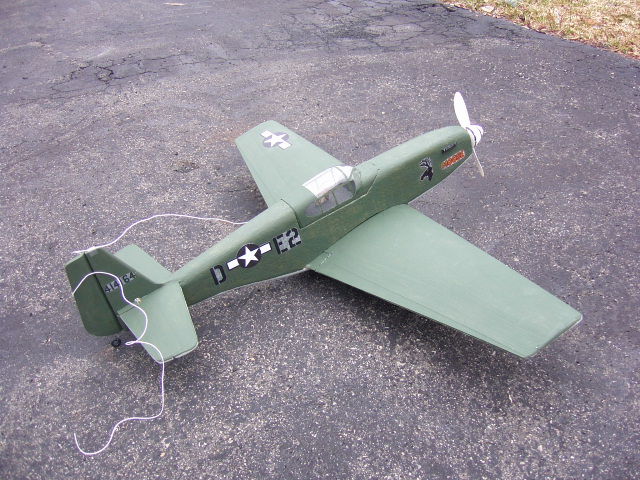
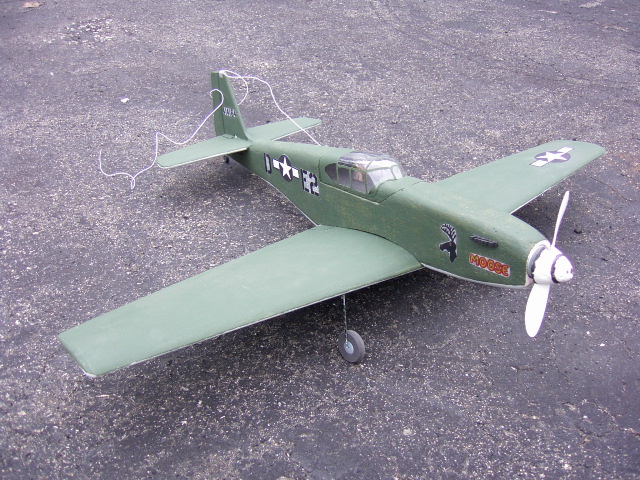
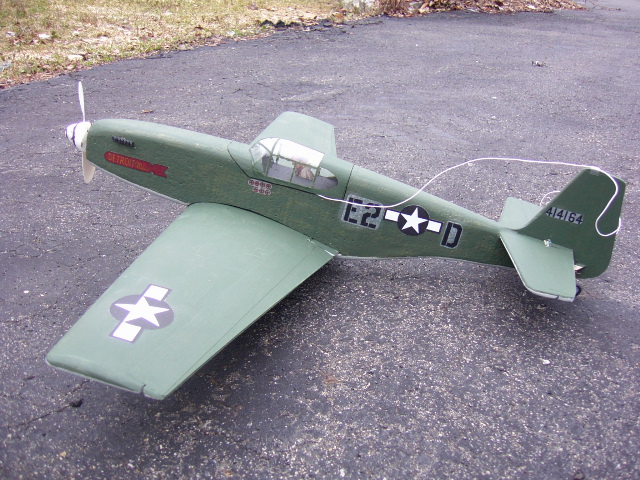
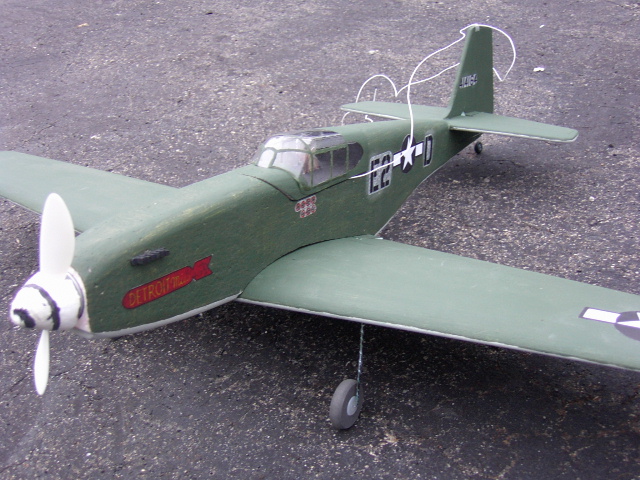
Mustang P51 B |
Design from Philippe Carpentiers dit
"Papy Kilowatt".
Modified by Louis Dionne.
|
|
|

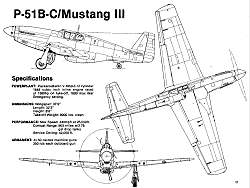
Summary/Caractéristiques
:
Scale/Echelle : 1/16 eme
Wing Span/Envergure : 70 cm
Weight/Masse : 204-280 gr
Profile/Profil : Clark Y, 2° washout
Equipment/Equipement :
| Motor/Motorisation |
speed 280 6V (modèle standard, pas " 280plus ", pas Permax 280 pas 330
et pas speed 300) Prototype: equipped with a home made CD-ROM motor on a Gunther prop. |
| Prop/Hélice | GUNTHER 125 x110 (5 x4,7) |
| Accus |
7 éléments NiMH Sanyo Twicell 750 (700) Prototype: 2S 700mAh etec li-po pack |
| ESC/Variateur | 10A ESC |
| Servos |
2-3 µservos 5 à 9 gr Prototype: 2x 3.3g servos (rudder/elevator), 1x 9gr (aileron) |
| Receiver/Récepteur |
µ récepteur genre indoor (mais attention à la portée, certains ne
vont pas très loin) 5 à 15 gr. Prototype: Berg 4 |
Material/Matériaux :
Extruded polystyrene for the wings and tail feathers then
expanded polystyrene for the fuselage.
Glue:
- Water based contact glue
- Foam friendly CA
- Colle universelle BISON ou VELPON qui est transparente, peut s'utiliser comme une colle normale ou comme colle de contact et ça n'attaque pas le polystyrène. En plus une fois sèche, elle se ponce très bien.
- Epoxy
- Polyurethane glue.
Peint/Peinture :
- peintures acryliques (à l'eau) au pinceau ou rouleau mousse
- bombes/spray n'attaquant pas le polystyrène. (Krylon H2O)
Hinges/Pentures:
You could use micro hinges or wick type flat hinges, but the foam is quite fragile. I prefer to use tape for this. I use 3M Transpore ou 3M Blenderm.
Decals/Décoration :
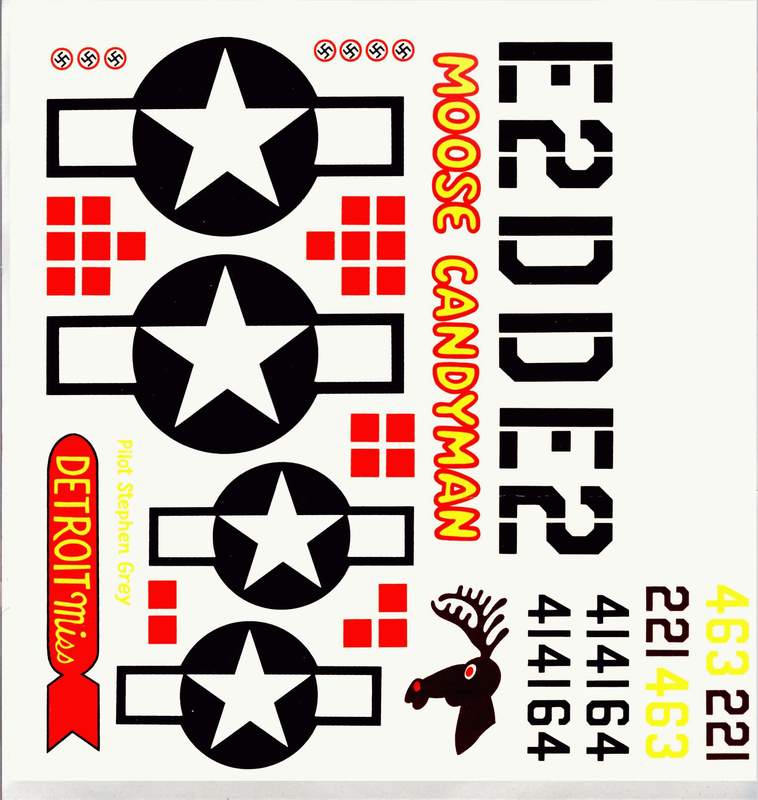
- imprimée au jet d'encre sur papier (puis vernis) ou sur papiers autocollant spéciaux (polyester blanc ou transparent).on trouve des pin-up sur Internet pour faire de beaux nose-art.
- Here is something to work with: planche de décoration
| Construction |
| 1) Les ailes |
|
| 2) Fuselage |
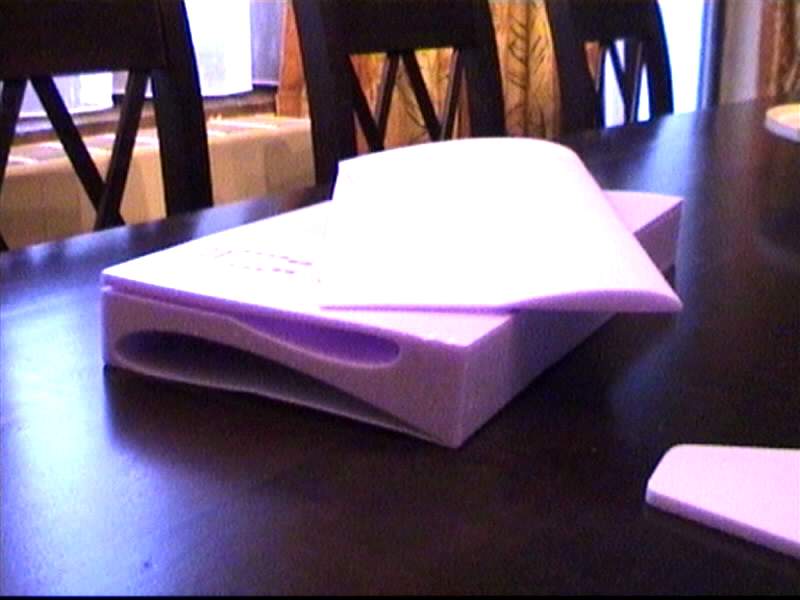
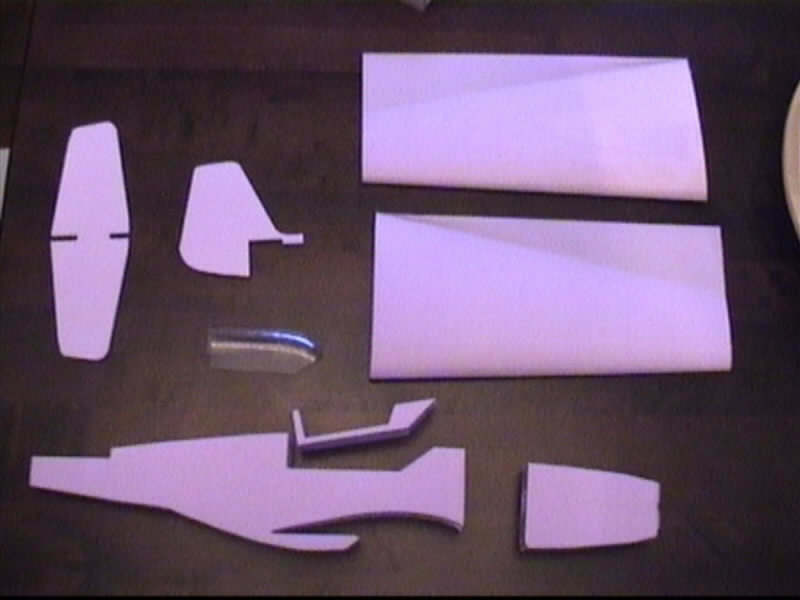
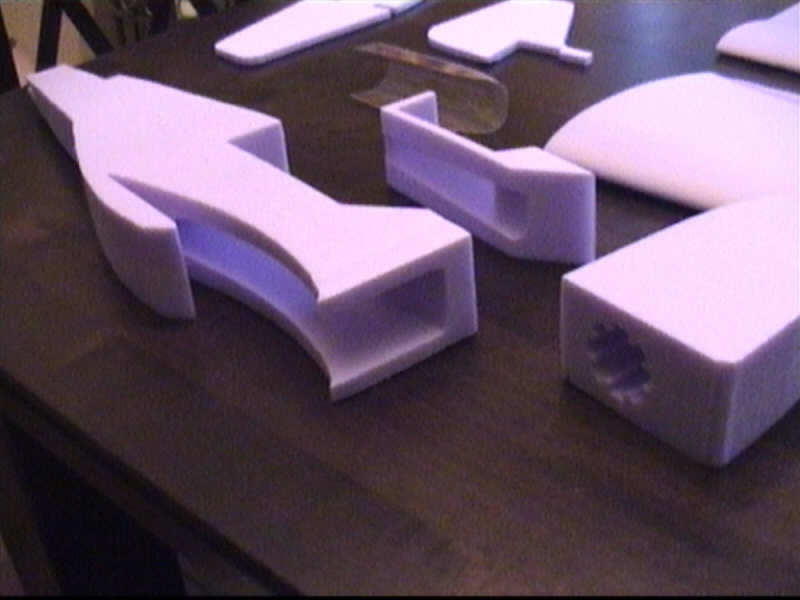
The fuselage comes in three sections;
the nose, the main section and the cockpit section
on top of the fuselage and acting as an opening to
connect or charge the battery pack.. The nose section has
a round hole through it to fit a larger CD-ROM
motor. The pictures shown above of the nose section
is the original one for brushed 280 motors. The two section have a slot at the bottom
where the hot wire exited.
|
| 3) Stabilizer/Stabilisateur |
The stabilizer and elevators come in a single piece.
-
Round the LE using a sanding block.
-
For the looks, you may want to taper the TE, but this will weaken the foam in case of a sudden impact with Terra Firma.
-
Cut the elevators at 45mm from the front of the stab. That should make the elevator about 30mm at their widest.
-
Join the elevators halves using a 1/8" hardwood dowel.
| 4) Fin & Rudder/Dérive |
|
|
|
|
|
|
|
|
|
| Final Assembly |
Glue the stab to the fin and inside the fuselage slots at the rear, making sure everything is square. Use light sparkle to fill the holes left by the hot cutting operation in the fuselage tail.
If you install
rudder, add a small tail wheel to a tail bracket glued to a slot cut half way
through the rudder. End the top of the tail bracket in the rudder in an inverted
L shape to transfer torque from the rudder to the tail wheel.
You can glue the wing to the fuselage permanently, but I
preferred to use a 1/8" dowel glued to the TE (and sliding into an aluminum
tube glued in the fuselage at the TE point) and a pair of strong neodymium magnets
to retain the front of the wing.
Make yourself a few control horns (using credit cards, thin PCB or thin plywood) and glue them to the elevator and rudder if installed. You can use .040" carbon rods for pushrods ending with a thin music wire glued to the pushrod using a wrap of Kevlar thread and CA. Install your servos in the fuselage. Set their neutral points and route the carbon rods through the fuselage and the rear bulkhead where appropriate to reach the servo and minimize the binding in the pushrods.
Use masking tape to protect your servos and then use foam friendly glue to fix them to the fuselage sides and in the wing slot.
To fly indoor or from ground, best to use a landing gear and rudder for ground control. I located the landing gear legs 110mm from the centerline, 10mm from the LE. The landing gear is made of thin music wire, looped and screwed into place in a plywood base glued to the bottom of the wing. Use light weight wheels.
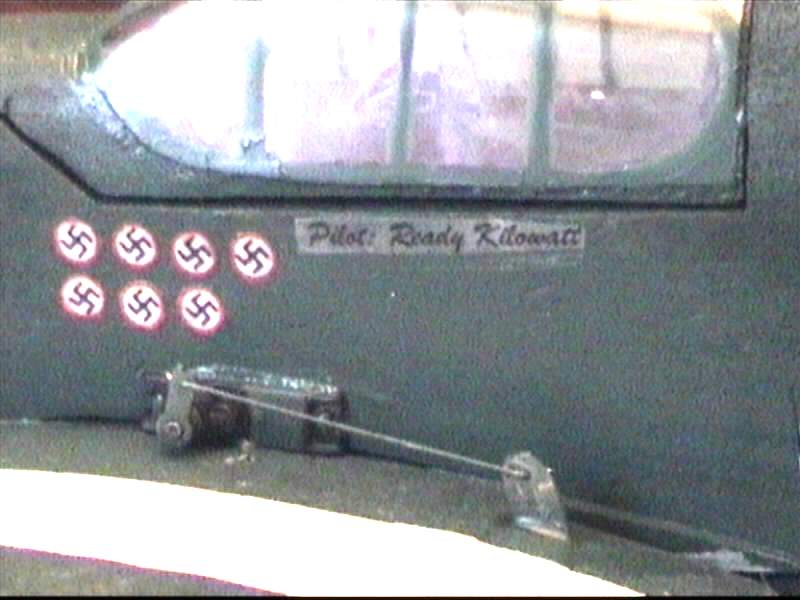
This is an alternate method to drive a single aileron from a single aileron servo.
There is enough control using a single aileron on one side, but you need to provide more down travel than up. I preferred a central servo driving torque rods as described in the text earlier; it drives two ailerons with a single servo still and is completely enclosed in the fuselage.
| Canopy/Verrière |
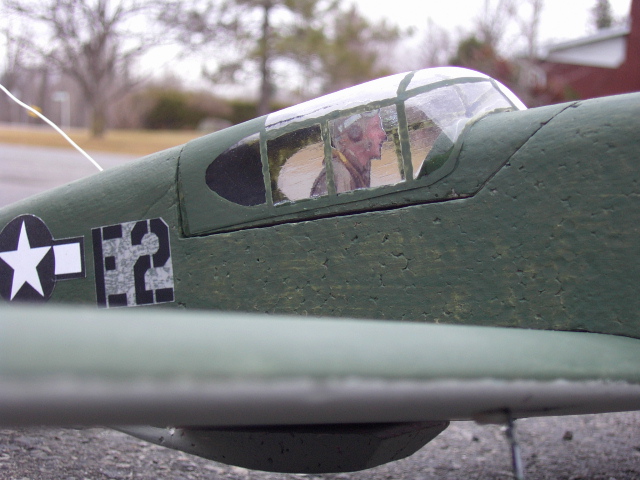
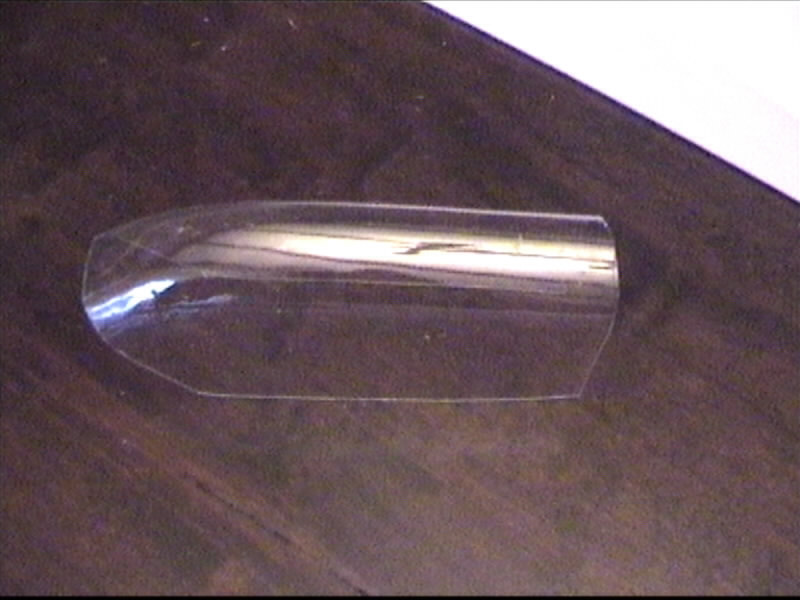
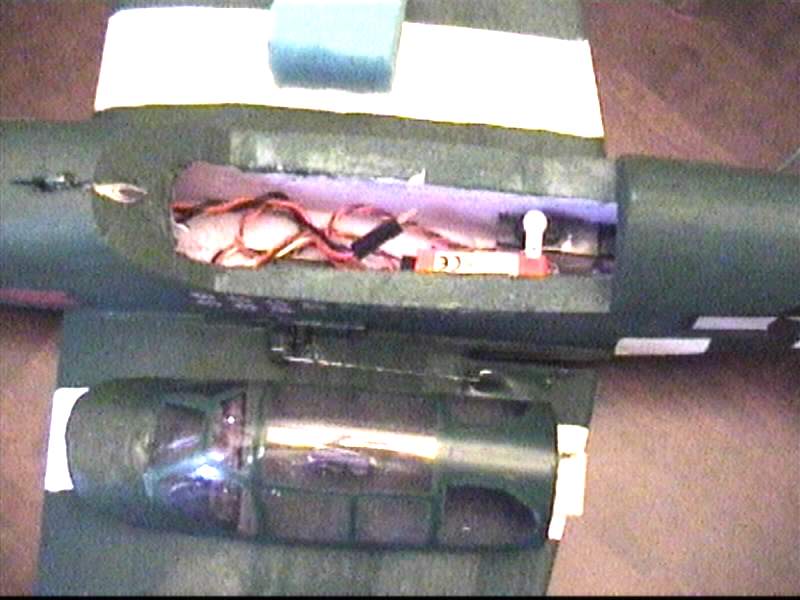
I made a wooden mold for the canopy and vacuum-formed the part that is included. You will need to cut along the pencil marked line on the canopy and adjust for the sanded shape of your foam fuselage and cockpit section. Use the picture below to paint the cockpit structure.
Paint the inside of the cockpit black and make sure you add a pilot to your cockpit before you glue the canopy to the foam cockpit section.
| Light Spackling |
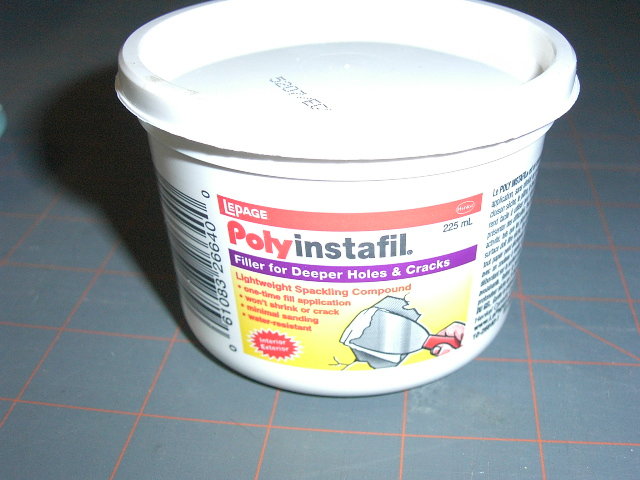
Use light sparkle to fill all the tiny foam holes and sand smooth. Cover the whole fuselage, let dry, then sand lightly. I use a Lepage brand from the local hardware store; light and far less costly then the hobby version.
| Paint/Peinture |
Paint a few layers of polyurethane varnish (PUV), like Varathane, to provide a harder shell to the foam. Sand smooth between every layers.
Use cheap acrylic from the dollar store and either spray paint of brush a couple of layers starting with the light colors first.
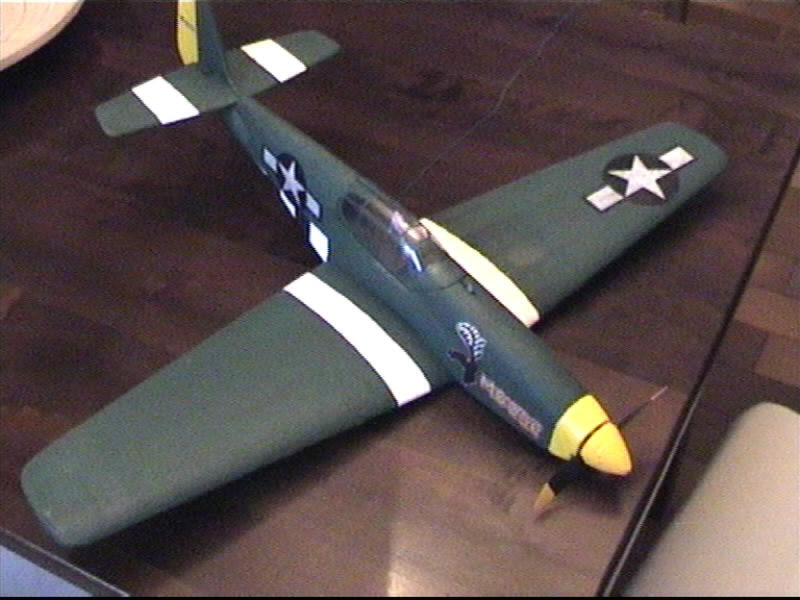
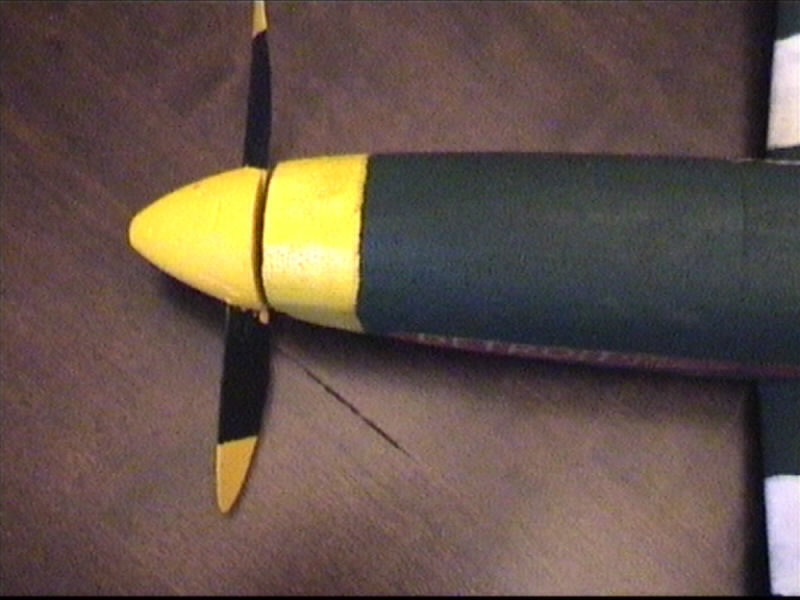
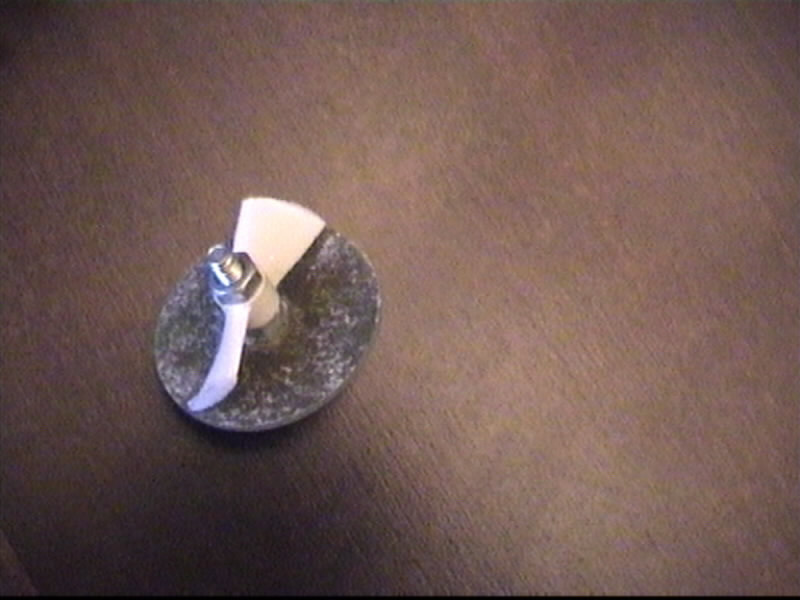
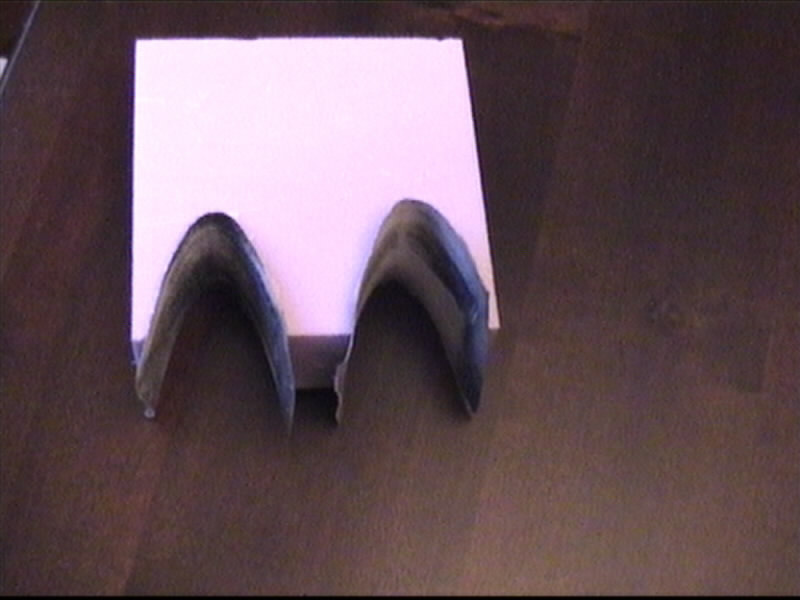
You can also make you own spinner by turning a foam chunk on the mandrel of a drill press. Cut a slot for the prop before temporarily gluing the cone to the base. You can finish the foam cone using the same method as for the fuselage.
| Trimming and Flying |
CG : 45 mm from LE of the wing slots.
Wedge the li-po pack in the front of the fuselage. Adjusting it's position to
get the correct CG.
Deflection of the elevator set to 6 à 10 mm.
Deflection of the ailerons to 30° of even more to get quick rotation on the
rolls.
Propeller:
The Gunther prop is a good and low cost prop, but the black retaining cap is made to hold to a 2.3mm shaft and will not hold if removed once from the shaft. You may prefer to make a prop adaptor to fit the Gunther prop to your 3mm CD-ROM shaft.
Graunper produces a 6x3 folding prop for 2.3mm shaft; it is very light, but would require to enlarge the shaft hole to 3mm. Two setscrews are then securing the prop adaptor to the shaft.
Here is how Papy Kilowatt makes Gunther prop adaptors...
|
Astuces :
pour l'hélice Gunther, comme
celle-ci est prévue pour des
axes de 2,3 mm et que le speed
280 a un axe de 2mm, il faut soit
augmenter le diamètre de l'axe
en l'étamant avec un peu de
soudure à l'étain soit utiliser
un porte hélice adapté. Le
collage ne fonctionne pas car
après quelques minutes de vol,
l'axe chauffe et l'hélice fiche
le camp en plein vol. Je fabrique moi-même mes adaptateurs d'hélice : j'utilise une vis M4 que je fore dans l'axe d'abord avec une mèche de 1,5 mm coté tête de la vis sur une profondeur de 10 mm (Si on a pas de tour, on place la vis dans le mandrin de la foreuse sur pied et la mèche dans l'étau, c'est plus facile pour bien centrer), puis je fends la tête de la vis sur 8 mm avec une scie à métaux ou un disque Dremel. Ensuite, je fore dans le premier trou mais avec une mèche de 2 mm. Le trou devient plus ou moins conique car la matière s'écarte. Il ne reste plus qu'à visser un premier écrou M4 sur la vis placée sur l'axe de 2 mm, lorsqu'on le serre vers la tête de la vis, celle-ci tient fermement sur l'axe. On peut alors placer l'hélice et la serrer avec un second écrou. |
| More Pictures |
From my own prototype