|
|
|
|
|
|
|
|
|
|
|
|
|
|
|
|
|
|
|
|
|
|
|
|
|
|
|
|
|
|
|
|
|
|
|
|
|
|
|
|
|
|
|
|
|
|
|
|
|
|
|
|
|
|
|
|
|
|
|
|
|
|
|
|
|
|
|
|
|
 |
|
|
|
Threats and Conservation |
|
|
|
Proposed offshore windfarm threathens IBA and an EU funded Life Project |
|
|
|
 |
|
The Maltese Government in looking into the possibilites for establishing the first offshore wind-farm. The chosen site is known as Is-Sikka l-Bajda situated some 4km off the North East Coast of Malta. This site lies directly in front of an important breeding seabird colony holding an estimated 500 pairs of Yelkouan Shearwaters Puffinus yelkouan. This is the largest concentration of P yelkouans in the Maltese islands, holding one-third of the Maltese population. An EU Life funded project is currently underway at this colony. Malta holds 10% of the world's popualtion of P. yelkouan |
|
|
|
|
|
 |
|
|
|
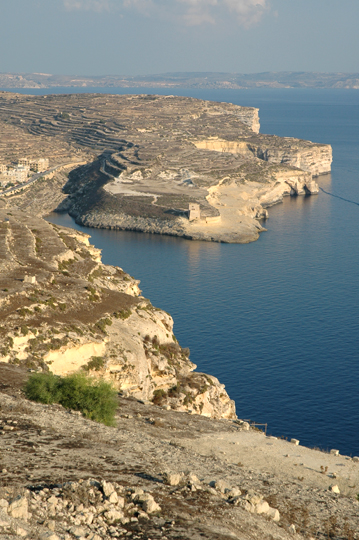
Authorities are planning to install a bollard on a rocky outcrop in an Important Bird Area (IBA) at Xlendi Bay, Gozo. The idea is to encourage cruise-liners to berth off Xlendi Bay. The floating hotels with their intensive lights and constant noise generated from the ship as well as the constant ferrying of passangers from the liner to shore and vice-versa will have a very negative impact on the seabirds nesting in this area. The area holds about 200 pairs of C. diomedea and some 50 pairs of P. yelkouan (both are Annex I species of the EU's Bird Directive). |
|
|
|
 |
|
|
|
Cruise-liner berthing threatens IBA |
|
|
|
|
|
|
|
Xlendi Bay, Gozo |
|
|
|
|
|
|
|
|
|
|
|
|
|
 |
|
|
|
Direct Killing of Seabirds |
|
|
|
|
|
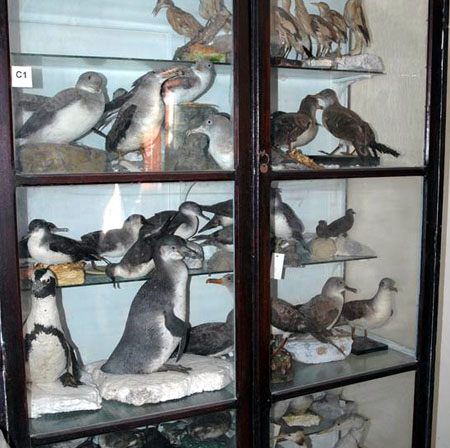
Shearwaters and petrels although protected by law are still shot at by the so-called Maltese "sportsman". Stuffed and mounted birds in private collections is the main cause for this slaughter. |
|
|
|
|
|
|
|
|
|
 |
|
|
IBA saved from Tuna Penning development |
|
|
|
|
|
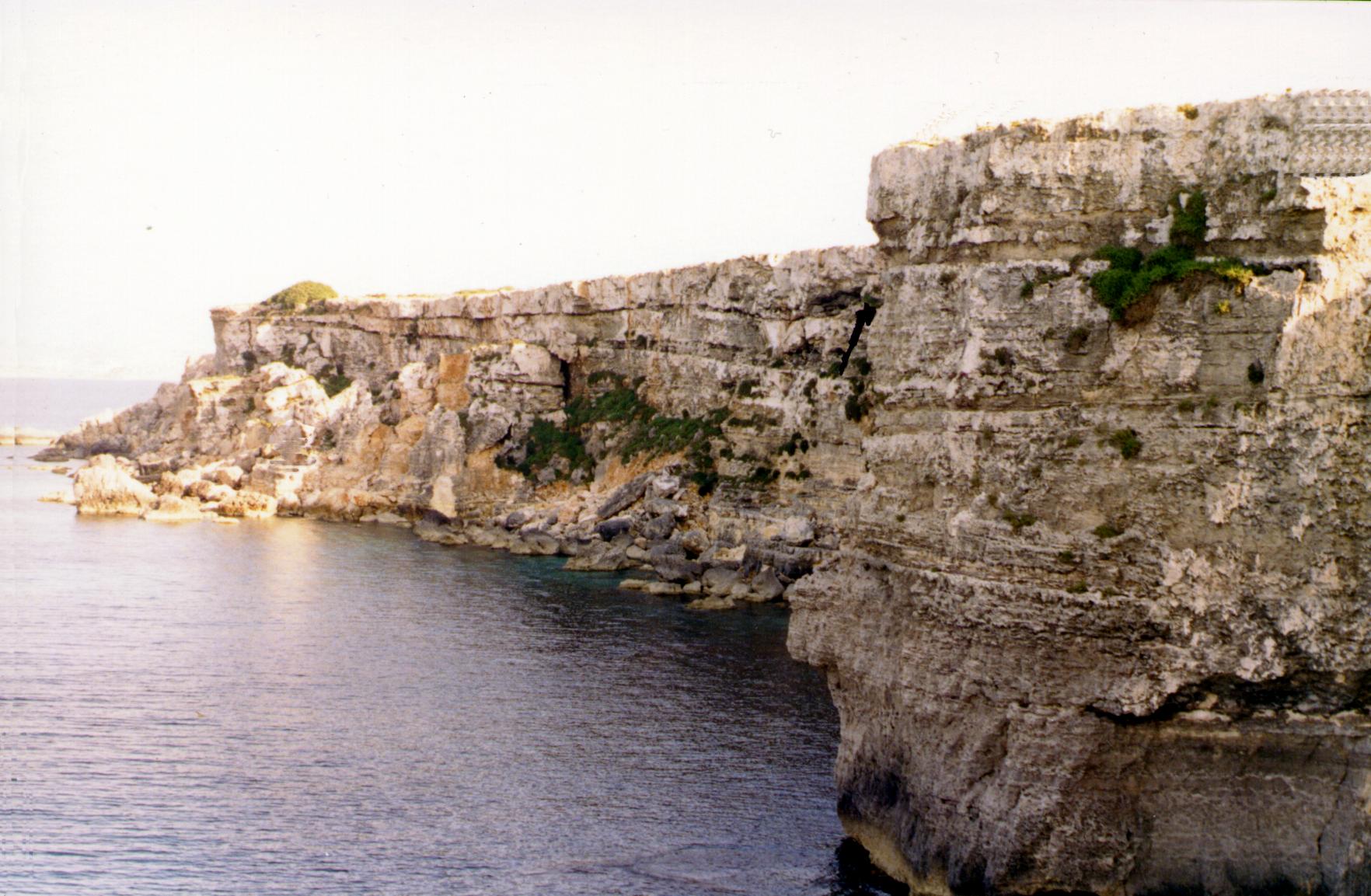
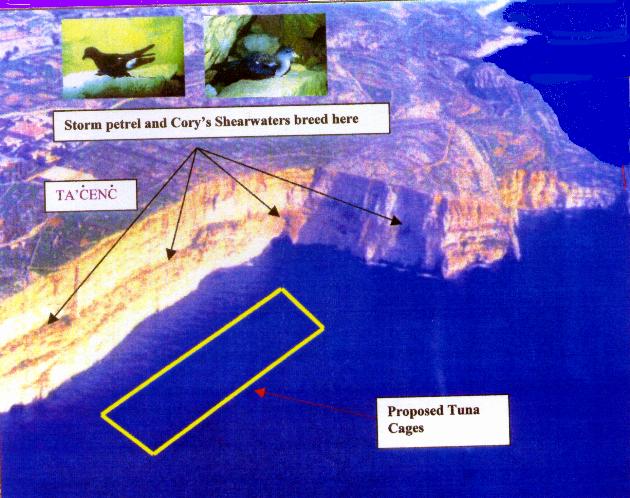
The seabird colonies at Ta'Cenc Cliffs on the southern coast of Gozo came under threat early in 1999 when an application for a tuna penning project was submitted to the Planning Authority. The proposed Tuna pens would have been placed right below the colonies, thus creating continuos disturbance to the breeding seabirds. |
|
|
|
|
|
Ta'Cenc holds no less than four species of breeding seabirds; Calonectris diomedea (1000+ pairs), Puffinus yelkouan (c.a.200 pairs), Hydrobates pelagicus melitensis (25+ pairs) and 1-4 pairs of Larus michahellis. |
|
|
|
|
|
|
Ta'Cenc Cliffs, Gozo. |
|
|
|
|
Credit: BirdLife Malta |
|
|
|
|
|
The proposed penning project was first brought to the attention of the general public through an article in the local press where BirdLife Malta expressed its concern about the proposed project.
Between April and August 1999 the daily papers carried letters, features and articles for and against the tuna pens. |
|
|
|
In the first week of August 1999, the conservation committee of BirdLife Malta agreed on a different and novel strategy to carry forward its message. Invitations were sent to all the daily papers as well as all the television stations for a boat trip beneath the cliffs as well as to see first hand the incoming shearwaters.
All the local papers as well as the television stations were present. On the boat they were briefed on the importance of Ta' Cenc, why it had been identified as an IBA as well as on the habits and life histories of the seabirds. The reporters and cameramen were thrilled with the unique spectacle of the incoming shearwaters and this was reflected in the following day when all the papers carried out the story on their front pages.
The news on the local media gave the event its due priority. |
|
|
|
In the end the Planning Authority refused the developers application and an alternative site was chosen. |
|
|
|
|
|
|
|
 |
|
|
|
Long-line fishing - A hazard to seabirds |
|
|
|
|
|
 |
|
|
|
|
|
click on banner for information on this conservation issure |
|
|
|
|
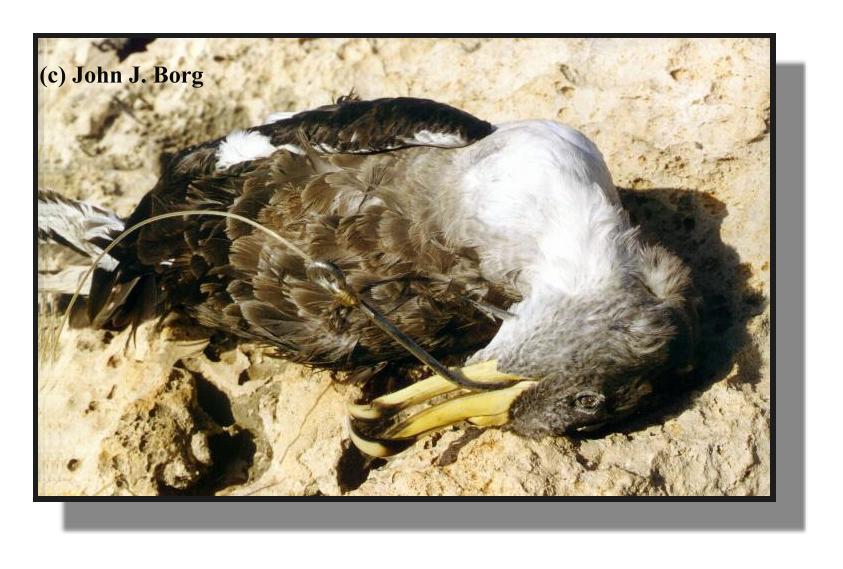
Adult C.diomedea with a fishing hook - Malta 2003 |
|
|
|
|
|
|
Current studies show that seabirds are being caught by long-line fishing. What is not yet known is the number of birds involved. Spanish, Italian, Greek and Maltese orntihologists have discovered that like their cousins the Albatrosses and large petrels, shearwaters in the Mediterranean are also being caught by fishing hooks. Recent studies have shown that locally, the majority of hooked birds being C.diomedea, while very few P.yelkouan's have been recorded as caught on hooks. |
|
|
|
|
|
|
|
 |
|
|
|
Mammal predation on shearwaters |
|
|
|
|
|
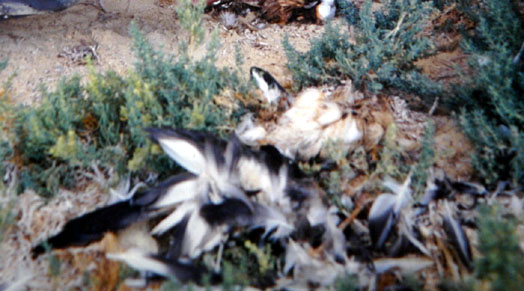
Dead Cory's Shearwaters killed by a cat - Gozo 2000 |
|
|
|
|
|
The increase of rats population is creating immense pressure on our wildlife incuding seabirds. In some years Black Rats Rattus rattus are known to kill the young chicks of P. yelkouan. In recent years there has been an increase in the numbe of feral cats in towns and villages and these have now spilled into the countryside as well as on cliff ledges. Incubating C. diomedea are sometimes taken by these cats. In two instances dogs were seen killing newly-fledged Cory's shearwaters. |
|
|
|
|
|
|
|
 |
|
|
|
Predation by Yellow-legged Gulls on Storm petrels |
|
|
|
|
|
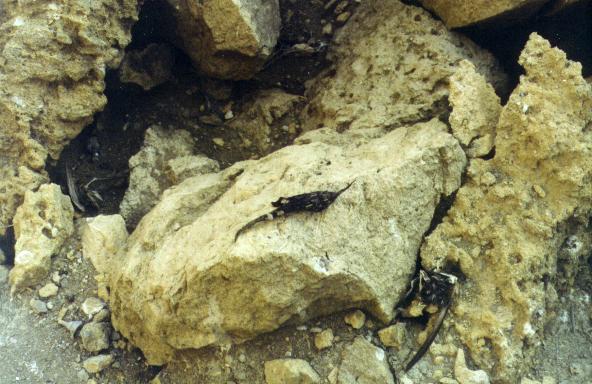
Pellets containing Storm-petrel remains - Filfla 2007 |
|
|
|
|
|
The Yellow-legged Gull population breeding on Filfla Island has been estimated at just over 150 breeding pairs. Filfla also holds the largest colony of Mediterranean Storm-petrels Hydrobates (pelagicus) melitensis in the Mediterranean. A number of pairs of YLG have specialised feeding techniques. Numerous pellets containing remains of storm petrels are regularly found amoung the boulder screes. Up to 12 fresh pellets containing petrel remains have been found from a single gull's nest. |
|
|
|
BACK TO COLONY |
|