The Dinosaur Days - 30 April 2000
The bands featured this week are: ( Ray Owen's Moon,
NDR Big Band with Inga Rumpf ,
Phil Collins' Big Band, Deep Purple,
Focus,
Ekseption,
Cressida,
Murphy Blend, Lucifer's Friend)
Ray
Owen's Moon
Ray Owen's Moon - Free Man, taken off his first and only seff-titled
solo album, released in 1971. Ray Owen was the original vocalist in British
outfit Juicy Lucy, and he appeared on their first self titled album in
1969. He left the band, his replacement being Paul Williams, and formed his
own band, with Dick Stubbs and Les Nicol on guitars, Ian McLean on drums
and Sid Gardner on bass. Their first and only album, which is quite rare
and collectible, was released on Polydor Records, and it featured a number
of really good riff laden tracks, in addition to a stunning version of
Hendrix's "Voodoo Child", which Owen would redo in the mid 90's when he
reformed his own version of Juicy Lucy. His career after Ray Owen's Moon is
much of a mystery, as no record can be found of any other bands he may have
featured with afterwards. As was mentioned, he reformed Juicy Lucy in the
mid nineties and released an album called "Here she comes again" on HTD
Records, with three unknown, but very good, musicians. For the record, Paul
Williams also reformed another version of Juicy Lucy in the mid to late
nineties, under the name "Blue Thunder".
NDR Big Band with Inga Rumpf
NDR Big Band with Inga Rumpf - It's a Man's World, the title track of
their 1993 album ( it's not clear how many albums this great band have
made, as they've featured with the likes of Volker Kriegel, Abdullah
Ibrahim, Dexter Gordon and Georgie Fame, just to mention a few ). Inga
Rumpf, of course, should be quite familiar to Dinosaur Days listeners and
readers of these pages - she was the singer/songwriter in The City
Preachers/Frumpy/Atlantis/Rockship, in addition to being a very
accomplished jazz and blues vocalist. NDR Big Band albums aren't that easy
to find here in South Africa ( believe it or not! ), but if you do happen
to spot one, give it a spin - awesome stuff!
Phil Collins' Big Band
 Phil
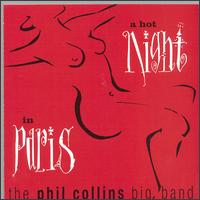
Collins' Big Band - That's all, off their "A Hot night in Paris"
album, released in 1999, the band's first album. ( Phil Collins is the
subject of this week's Dino Quiz. A copy of this album is the giveaway
prize ). Phil Collins joined British progmeisters Genesis in 1971 from
their "Nursery Cryme" album onwards as drummer and vocalist. One of his
early bands was Flaming Youth, a band with whom he released one fairly
collectible album in the late sixties. Collins remained with Genesis for a
number of years, taking over the lead vocal spot when Peter Gabriel left in
May 1975, at the end of "The Lamb lies down on Broadway" tour. Collins is,
apart from a tremendously successful solo artist, a world class jazz/fusion
drummer, and his "other" band, Brand X, which he co-founded with guitarist
John Goodsall, bassist Percy Jones and keyboard player Robin Lumley in
1976, gave him a perfect avenue to demonstrate his abilities. In 1998,
Collins took his Big Band, complete with a 14 piece brass section, on tour
to the US and Europe during 1998. Albeit an excellent album with some
flawless playing, we've read one or two reports mentioning that the tour
wasn't as successful as was hoped, the main reason being that the audiences
were expecting to hear Collins sing as well as play! This is a non-vocal
album, and should be appreciated as such. The man is a top class performer
in every sense of the word, as his drumming abilities are equally as good
as his singing abilities.
Phil
Collins' Big Band - That's all, off their "A Hot night in Paris"
album, released in 1999, the band's first album. ( Phil Collins is the
subject of this week's Dino Quiz. A copy of this album is the giveaway
prize ). Phil Collins joined British progmeisters Genesis in 1971 from
their "Nursery Cryme" album onwards as drummer and vocalist. One of his
early bands was Flaming Youth, a band with whom he released one fairly
collectible album in the late sixties. Collins remained with Genesis for a
number of years, taking over the lead vocal spot when Peter Gabriel left in
May 1975, at the end of "The Lamb lies down on Broadway" tour. Collins is,
apart from a tremendously successful solo artist, a world class jazz/fusion
drummer, and his "other" band, Brand X, which he co-founded with guitarist
John Goodsall, bassist Percy Jones and keyboard player Robin Lumley in
1976, gave him a perfect avenue to demonstrate his abilities. In 1998,
Collins took his Big Band, complete with a 14 piece brass section, on tour
to the US and Europe during 1998. Albeit an excellent album with some
flawless playing, we've read one or two reports mentioning that the tour
wasn't as successful as was hoped, the main reason being that the audiences
were expecting to hear Collins sing as well as play! This is a non-vocal
album, and should be appreciated as such. The man is a top class performer
in every sense of the word, as his drumming abilities are equally as good
as his singing abilities.
Question ( of the Dino Quiz number 159 ): Name the famous British prog
outfit Phil Collins joined in 1971 ).
Answer: Genesis.
Deep Purple
Deep Purple - Smoke on the Water, taken off 1999's stunning "In Concert
with the London Symphony Orchestra", in response to many requests to hear a
track off this amazing double album. We've played a few other tracks from
this album in the past few months and it's also been mentioned and reviewed
on these pages previously, so we won't labour the point here. Suffice to
say that this is an epic album by an epic band, and it should find a spot
in your collection. Oh yes, you may have heard the featured track once or
twice before. But probably not with Ronnie James Dio helping
out, nor with the LSO in full swing.
Focus
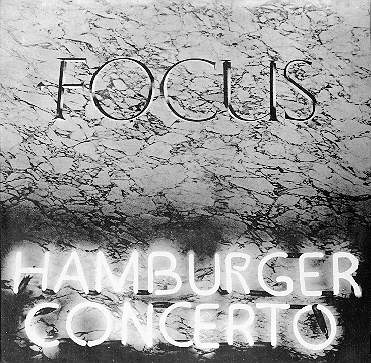
 Focus - Harem Scarem - taken off "Hamburger Concerto" in 1974, their
5th album. Focus were one of Holland's best and best known bands. They were
formed in 1969 by former Amsterdam Consevatory student and keyboard
player/flautist/vocalist, Thijs Van Leer. Joining him were bassist Martin
Dresden and drummer Hans Cleuver, and, prior to enlisting the services of
ex-Brainbox guitarist Jan Akkerman, the three musicians had previously
backed Cyril Havermans, Robin Lent and other Dutch singers. Their first
recording assignment was as accompaniment on a Dutch version of "Hair",
but, heartened by audience response, the band decided to release a bona
fide debut album, "In and out of Focus", in 1971. This album contained the
single "House of the King", which sold well in continental Europe. Their
follow-up album, "Moving Waves", produced by Mike Vernon and released the
same year, was probably their best album. It contained another hit, "Hocus
Pocus", which became a UK Top 20 hit. At this stage, the band's line-up and
been reshuffled, with only Van Leer and Akkerman remaining from the
original quartet ( Cleuver had been replaced by Pierre van der Linden and
Dresden by Cyril Havermans ). Havermans, in turn, was replaced by Bert
Ruiter and Colin Allen from Stone the Crows took over the drumstool for
"Hamburger Concerto". Akkerman left Focus after 1975's "Mother Focus" album
to embark on a successful solo career, in the process becoming known as one
of the world's best and most respected guitarists. He did collaborate with
Van Leer in the reformed Focus in 1985, although only one album was the
result of this short-lived reunion. Van Leer continued in the band after
Akkerman left, with guitarists Philip Catherine and Eef Albers and vocalist
PJ Proby also sharing the stage with him, but Focus ceased to exist after
1978's "Focus con Proby" album. According to the March 2000 edition of
Classic Rock magazine, Focus will be performing at the Canterbury Music
Festival on July 31st this year, together with Caravan, Gong, Man,
Colosseum and Arthur Brown. They unfortunately don't mention who's in Focus
nowadays, but can you imagine what that's going to be like to see these
great bands in concert on the same bill?!
Focus - Harem Scarem - taken off "Hamburger Concerto" in 1974, their
5th album. Focus were one of Holland's best and best known bands. They were
formed in 1969 by former Amsterdam Consevatory student and keyboard
player/flautist/vocalist, Thijs Van Leer. Joining him were bassist Martin
Dresden and drummer Hans Cleuver, and, prior to enlisting the services of
ex-Brainbox guitarist Jan Akkerman, the three musicians had previously
backed Cyril Havermans, Robin Lent and other Dutch singers. Their first
recording assignment was as accompaniment on a Dutch version of "Hair",
but, heartened by audience response, the band decided to release a bona
fide debut album, "In and out of Focus", in 1971. This album contained the
single "House of the King", which sold well in continental Europe. Their
follow-up album, "Moving Waves", produced by Mike Vernon and released the
same year, was probably their best album. It contained another hit, "Hocus
Pocus", which became a UK Top 20 hit. At this stage, the band's line-up and
been reshuffled, with only Van Leer and Akkerman remaining from the
original quartet ( Cleuver had been replaced by Pierre van der Linden and
Dresden by Cyril Havermans ). Havermans, in turn, was replaced by Bert
Ruiter and Colin Allen from Stone the Crows took over the drumstool for
"Hamburger Concerto". Akkerman left Focus after 1975's "Mother Focus" album
to embark on a successful solo career, in the process becoming known as one
of the world's best and most respected guitarists. He did collaborate with
Van Leer in the reformed Focus in 1985, although only one album was the
result of this short-lived reunion. Van Leer continued in the band after
Akkerman left, with guitarists Philip Catherine and Eef Albers and vocalist
PJ Proby also sharing the stage with him, but Focus ceased to exist after
1978's "Focus con Proby" album. According to the March 2000 edition of
Classic Rock magazine, Focus will be performing at the Canterbury Music
Festival on July 31st this year, together with Caravan, Gong, Man,
Colosseum and Arthur Brown. They unfortunately don't mention who's in Focus
nowadays, but can you imagine what that's going to be like to see these
great bands in concert on the same bill?!
Trace
Trace - Bourree, taken off "Birds", their second album, released in
1975. For such a small country, The Netherlands could certainly produce
some musical giants! Trace was a progressive/classical/jazz trio put
together by keyboard player extraordinaire Rick van der Linden, who first
learnt to play the piano when he was seven years old. He later studied the
organ, achieving honours in piano, organ, harmony and counterpoint. He
became a teacher at the Haarlem Conservatoire and also taught elsewhere,
later developing an interest in rock, jazz, ballet and classical music. In
1965, he joined the "Occasional Swing Combo", essentially playing jazz
standards, but, at the same time, he was touring Holland playing with
symphony orchestras and appearing as soloist in concerti by Bach,
Rachmaninov, Beethoven and Mendelssohn. Van der Linden later joined an
outfit called The Incrowd which ultimately evolved into Ekseption. He
remained with Ekseption for six albums before leaving in 1974 to form Ace (
later changed to Trace when they learnt that an English band of the same
name was already in existence ), with drummer Pierre van der Linden ( no
relation) from Focus, on drums, and Jaap van Eik, ex-Cuby and the
Blizzards, on bass. They released their first, self-titled album in
September 1974 and it sold in excess of 50,000 copies in The Netherlands
and quickly attained gold status.It also did very well in the rest of
Europe, the US and Japan. For this second album, English drummer Ian
Mosley, previously with Walrus and Darryl Way's Wolf ( Way appears as a
guest violinist, accompanying van der Linden playing harsichord, on the
incredible "Opus 1065"), replaced Pierre van der Linden. This second album,
released in July 1975, also did well for Trace, and they had the perfect
opportunity to promote themselves that month as they shared a bill with
Osibisa and Curved Air at a festival near Eindhoven. A third and final
Trace album, " The White Ladies", was released, with a number of
ex-Ekseption musicians, in 1977. Van der Linden reformed Ekseption when
Trace split up and recorded three further albums with them. He also
appeared with Jack Lancaster in "Wild Connections" in 1978, and he worked
with the likes of flautist Chris Hinze and Dutch group Kayak, to name just
a few. Drummer Ian Mosely, in the meantime, went on to find fame with
Marillion. All three Trace albums have been released on CD by the French
Musea label, and are essential listening.
Ekseption
Ekseption - The Peruvian Flute, taken off "Trinity" in 1973, their
sixth album, and the last to feature keyboard player Rick van der Linden
before he left to form Trace. Ekseption's roots go back to the late fifties
when they were formed as The Jokers in Haarlem in The Netherlands. The
Jokers evolved into The Incrowd, with trumpeter Rein van der Broek being
the only original remaining member. It was van der Broek who spotted van
der Linden playing in a jazz club and he asked him to join The Incrowd. It
was at this stage that they discovered that another Dutch group already had
the name The Incrowd, so they changed it to Ekseption. Other members of
Ekseption were Cor Dekker on bass, Peter de Leeuwe on drums, Rob Kruisman
( later replaced by Dick Remelinck) on woodwinds and Huib van Kampen on
guitar. Ekseption's initial repertoire consisted entirely of cover
versions, but after seeing a concert of Keith Emerson and The Nice, van der
Linden wanted to combine his love of jazz and classical with a rock feel.
They won a "battle of the bands" contest at the famous Loosdrecht Jazz
Festival in 1968, and their prize was a contract with Philips Records, for
whom they would go on to release most of their nineteen or so albums
during their career. Problems were developing with the other members of
Ekseption in that press coverage of the band was now concentrating on van
der Linden as band leader due to his composer/orchestrator role, and he was
asked to leave the band after the release of "Trinity". His replacement was
Hans Jensen, and the subsequent album, "New Formula", although very good,
was more jazzy as opposed to classically influenced, as had become
Ekseption's trademark. Further albums, such as 1975's "Mind Mirror", are
amongst the finest the band ever recorded. Van der Linden returned to
Ekseption when Trace split in the late seventies. Unfortunately, as far as
we know, not too many Ekseption albums have been released on CD, baring the
odd classical compilation, although a really good double CD, featuring some
of their more progressive/jazz/rock tracks, did surface a few years ago.
Cressida
Cressida - Asylum, the title track taken off their second and final
album, released in 1971. Both Cressida albums can be used as an example of
what is interesting and worthwhile about British late sixties/early
seventies progressive rock. They can quite easily be described as the next
best thing to Spring, in that they borrowed from almost any style of music
imaginable, creating a unique atmospheric blend of light-heartedness and
seriousness. Their music is intelligent and melodic, with singer Angus
Cullen having one of the most agreeable voices around at the time. Their
first self-titled album, released on the Vertigo swirl label in 1970, is
more song orientated, with "Depression" and it's stunning John Heyworth
guitar solo being the stand out track. This second album, though, was by
far the better one, with long instrumental passages and more elaborate
arrangements, as can be heard on the best track, "Let them come when they
will". This album was also released on Vertigo, and both have now been
released on CD by Repertoire, and are wholeheartedly recommended. A bit of
trivia, if you're at all interested ( what else is new on these pages?!):
Drummer Ian Clark replaced Keith Baker for Uriah Heep's "Look at Yourself"
album in 1971.
Murphy Blend
Murphy Blend - Speed is coming back, taken off their first, and only,
album, "First Loss", released in 1970. Berlin band Murphy Blend were a bit
of a mystery. Named after a pipe tobacco, they were a rarity in early
German rock, combining the early psychedelic Krautrock sound with heavy
rock, classical and blues. Apart from the fact that they sounded a bit like
early Jane and Pell Mell, they were pretty unique, with a strongly accented
vocalist in Wolf -Rudiger Uhlig ( who sang in English and also played a
heavy, chunky Hammond organ ).The guitarist was Wolfgang Rumler, Achim
Schmidt occupied the drum stool, and solid bass lines came from Andreas
Scholz. They had the potential to go far, but they unfortunately split
shortly after the album's release, with Uhlig moving to Hanuman and Scholz
to Blackwater Park, who are featured on our first Dinosaur Days CD.
Lucifer's Friend
Lucifer's Friend - Toxic Shadows, taken off their self-titled debut
album, released on Vertigo Records, in 1970. The history of this Hamburg
based progressive hard rock outfit is complex, confused and not that well
documented. What is known is that the band evolved from two Hamburg pop
bands, The Giants and German Bonds, in the early sixties. Around 1969, a
consistent nucleus of five members established a band called Asterix, which
is believed to be an early incarnation of Lucifer's Friend. Once
established, Lucifer's Friend were primarily a studio band, as all the
musicians had other careers within the music industry. Indeed, a number of
the band members were also used as backing musicians in the James Last
band! The band was formed by Peter Hecht on keyboards, Dieter Horns on bass
and vocals, Peter Hesslein on guitars, Joachim Reitenbach on drums and
English vocalist John Lawton. This debut album, released in November 1970,
is generally believed to be the best debut album of any of the German bands
at the time, although it was their next album, with the unlikely title of
"Where the Groupies killed the Blues", that proved to be their finest, with
a more complex and progressive rock, blending in classical and jazzy
elements. Their "Banquet" album, complete with strings and horns, was one
of the best album releases of 1974. Lawton moved to Uriah Heep in 1977 and
stayed with the British rockers for three albums before being replaced by
John Sloman. Lucifer's Friend, in the meantime, had recruited another
English vocalist, Mike Starrs, from Colosseum 2, to replace Lawton, and he
recorded two moderately successful albums, "Good Time Warrior" in 1978 and
"Sneak me in " in 1980, with them. Lawton returned to the band in the
eighties and they released a final album, the more metal orientated "Mean
Machine" in 1981, before Lucifer's Friend was finally laid to rest.
Lucifer's Friend 2, put together by Lawton and Peter Hesslein, together
with bassist Andreas Dicke and keyboard player Jogi Wichman, and featuring
world famous drummer Curt Cress, surfaced with a new album, "Sumogrip", in
1994, but, as far as we know, nothing further has been released by this
great German band. ( Lawton toured South Africa with Uriah Heep in 1995).
Most of Lucifer's Friends' albums have been released on CD.