Photosynthetic Pigments
Dinoflagellates have chloroplasts that contain chlorophylls a, c, and accessory pigments. Each individual usually produces several types of pigments because each type of pigment can only react within a narrow range of the light spectrum.
Chlorophyll is a greenish pigment, which is primarily responsible for photosynthesis. Energy from the sun excites electrons within the chlorophyll, which provides the energized electrons to other molecules, which will eventually produce sugars. Chlorophyll contains a stable, ring-shaped porphyrin molecule (Speer and Waggoner 2002). This molecule allows electrons to move freely, thus the ring has the potential to gain or lose electrons.
Accessory Pigments allow the dinoflagellate to absorb light within a larger portion of the light spectrum that the chlorophylls a and c are unable to use (Lewis 2001). Carotenoids are red, orange, or yellow accessory pigments that are incorporated by dinoflagellates. They are made of two small six-carbon rings connected by a chain of carbon atoms; this keeps them from dissolving in water (Speer and Waggoner 2002). They need to be attached to membranes inside the cell wall. Carotenoids are not able to use energy from the sun directly; they need to pass the energy they absorb to the chlorophyll in order for the energy to become incorporated into the photosynthetic pathway. Peridinin is another accessory pigment that is associated with dinoflagellates. The excess energy produced by the dinoflagellates is stored as oils or polysaccharides. (Division Dinophyta)
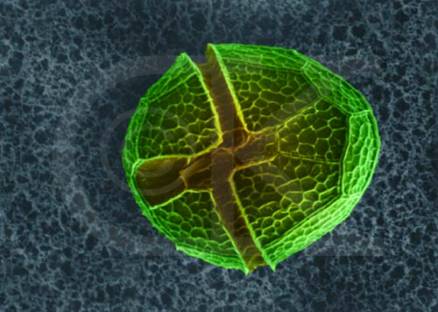
Figure 1. Peridinium sp. (SEM x 3,500). (Kunkel 2001)
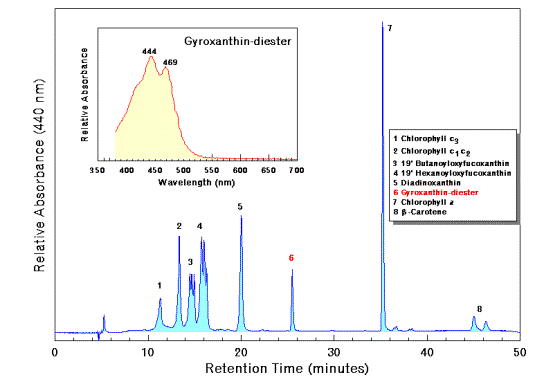
The following figures are from a study conducted in Texas by the Department of Oceanography at Texas A&M University on dinoflagellate-produced harmful algal blooms, commonly known as red tides. These figures illustrate how HPLC is used to identify various species of dinoflagellate by analyzing their distinctive peaks of absorbance. (Pinckney and Örnólfsdóttir 2001)
Page created by: Sam Gary