Topic 2: Krissie's Fitness Tips
For my next Kritique, I've decided to talk about what I feel is currently a pressing issue for many individuals -- keeping in shape. Now, I absolutely love going to the gym and getting a good workout. However, being a college student, I don't have a lot of time to spend in the gym, so over the years I've developed a personalized workout regimen that I think is effective for getting great results in a short amount of time. In my opinion, all it takes is a little commitment and a few hours a week to improve your stamina, increase your strength, and build confidence inside and out. So here is a sampling of weight machines and exercises I like to do in the gym when time is short... enjoy!
Cardio: A good cardio workout is essential to making the most out of your time in the gym. Not only do you burn calories and fat, but it's also good to get your heart rate up to a healthy level. Personally I enjoy running on a treadmill, though I also like to try different machines, such as stationary bikes, ellipticals and stair climbers, from time to time. Any of these machines will give you a good warm-up, but you have to know what you're doing to prevent injuries. Since most of my cardio workout is spent running, I'll give you a few pointers on good running form and how to organize a treadmill workout.
* Basic layout: If you want to get the best possible workout on a treadmill, it's a good idea to run for 20-30 minutes at about 70% of your maximum heart rate. Running for longer periods of time is good for fat-burning, but if you're like me and are more focused on the cardiovascular benefits, a shorter run will suffice. I usually try to run between 7 and 8 mph for 8-10 minutes, with a 2-minute cool-down at 4.5 mph.
* Leg positions: Good running form consists of a long, steady stride accompanied by smooth transitions between foot strikes. It's a good idea to relax your hips, and let your legs do the work. You want your foot strikes to be smooth, so don't come crashing down on your heels, but rather let the balls of your feet take the majority of the impact. This will help prevent shin splints and other problems in the lower leg. Always lift your knees when coming off the ground - your legs bend at the hip, too, so let them. Keeping your knees up will help to open up your stride and keep your form steady. It's also important to not shuffle your feet, but rather use them to push off the ground and get maximum power out of the foot strike.
* Arm positions: Running doesn't only affect your legs - your entire body is being worked, and with that comes the need to keep good form throughout the upper body as well. It's important to make sure you keep your arms bent at about a 90 degree angle, and let them swing back and forth about the middle of your ribcage. When people get tired they often let their arms bunch up around their chest, which puts a lot of strain on the shoulders. It's also essential to keep your chest open to ensure that you're getting enough air into your lungs, and remember to breathe in through your nose and out through your mouth to prevent side cramps.
Weights: After completing your cardio workout, your body is warmed up and ready to begin resistance training. Lifting weights helps keep your metabolism up by burning calories and fat, and also helps to sculpt and strengthen your body's major muscle groups. Here are some of the weight machines I like to use to isolate multiple muscles in a short amount of time, and to get in a good total body workout.
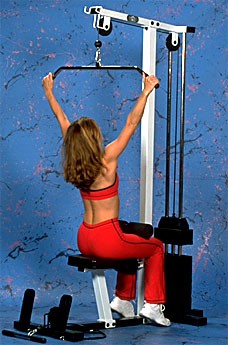
The Lat Pull-Down: This machine works numerous upper body muscles, including the lats, rhomboids and biceps. Most machines of this type also include interchangeable bars and ropes to allow you to isolate certain muscles and add variety to your workout. Using this machine really improves the major muscles involved in maintaining good posture as well.
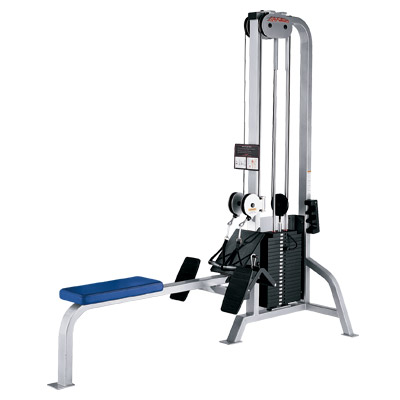
The Low Row: This machine is concerned with strengthening the triceps and many upper and lower back muscles. Like the Lat Pull-Down, many Low Row machines will also have interchangeable bars. If you're just beginning to exercise, this is a great way to go easier on the triceps, as they are not completely isolated, but strengthened nonetheless.
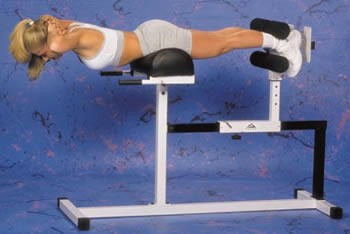
Hyperextension: This apparatus is great for isolating and strengthening the lower back muscles, which are used all too frequently when doing other exercises, and are very easily strained. One important thing to remember when doing hyperextensions, however, is to never lift your body higher than horizontal (shown in photo). Lifting too high can cause painful lower back injuries, but when done the proper way, this is a very beneficial exercise.
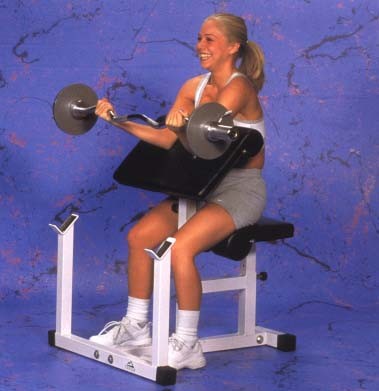
Preacher Curl: If you're not comfortable with the basic standing curl, this is also a great exercise for the biceps. Many preacher curl machines have adjustable weight stacks and back support pads (not shown here) to help prevent injuries when lifting. Too often people (especially men) will try to lift a large amount of weight and arch their back to make it easier, but this only leads to problems. This is a great machine to use if you're just beginning to exercise.
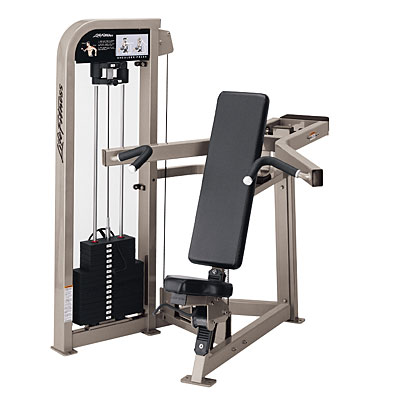
Shoulder Press: This machine effectively targets both the front and rear deltoids, and also works the triceps. If you're looking to improve your bench press technique, it really helps to have strong shoulder muscles.
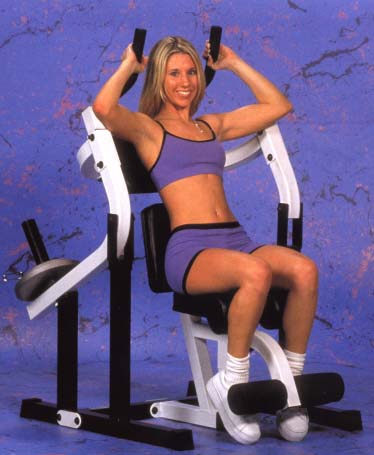
Abdominal Crunch: A lot of people (mostly women) stay away from any abdominal machine that utilizes weights, because they think it will give them that bulky body-builder look. This idea is not totally correct, however, because any abdominal exercise, including simple sit-ups, uses some form of resistance (such as your own body weight) to strengthen the muscles. A machine like the one shown here merely allows you to adjust the amount of resistance used. This machine is really effective in strengthening the central abdominals (rectus abdominus), and having strong abs helps stabilize the entire torso.
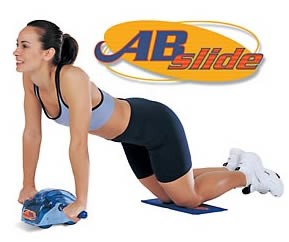
The Ab Slide: Ok, so this isn't a machine you'll find in the gym - it was originally sold on infomercials aand was later released in stores. Now I know how skeptical many people are about buying products advertised on TV, and furthermore there are countless products for abdominals currently on the market. But I, personally, own an Ab Slide (because I got a good deal on it with my discount at work), and it's really not bad. It's probably not the best thing in the world to strengthen the abs, because it requires perfect positioning of the shoulders and back to work, but when done right you can really feel your abs working hard. I wouldn't recommend this gadget to people just starting to exercise, but if you're in the intermediate area and are sick of doing regular crunches, this machine is good to have. It also helps prevent neck injuries associated with crunches.
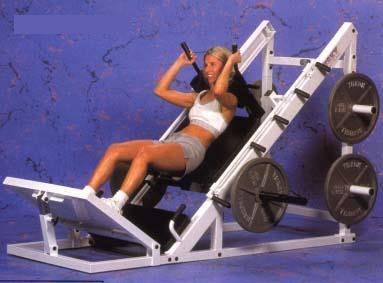
Hack Squat: This machine is great for anyone who doesn't feel comfortable doing a normal squat, because it provides excellent support for the back and neck, and also releases some tension, as you're positioned at a 45 degree angle (as opposed to standing upright). The Hack Squat uses movable weight plates, so you don't have to worry about injuring yourself with heavy bars, but you still get a great workout for the quadriceps.
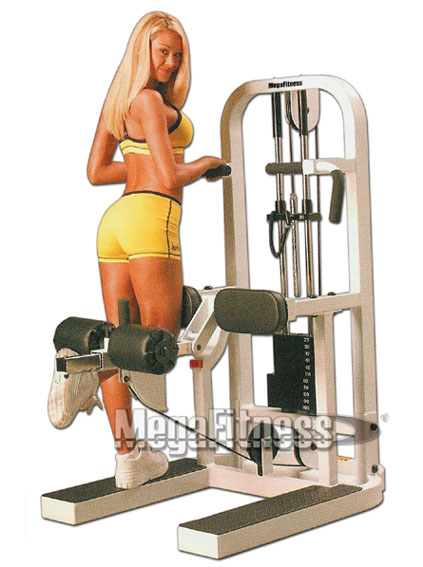
Standing Leg Curl: This is a great exercise for the hamstrings, and really helps to lift your gluteals for that "tight butt" look. It's a little bit more challenging than the traditional hamstring curl (done laying horizontally on your stomach), but once you get the hang of it, you can get a really good workout in for the back of your legs. This exercise is especially helpful to women looking to get rid of that unsightly cellulite that congregates on the upper rear of the legs.
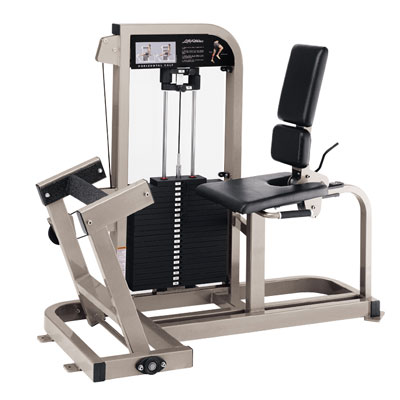
Calf Press: People often overlook the importance of building strong calf muscles, so they rarely isolate them in a given exercise. This machine helps to strengthen those muscles, which are essential for running, jumping, climbing, etc. Having well-defined calves also gives adds great shape to your legs.
There are also certain exercises (not listed here) that I also like to do a few times a week, but not necessarily in every workout. These include hip abduction/adduction, bench press, pec deck, tricep extension, and free weight exercises. I would suggest doing a total-body workout 3-4 times a week, and isolate certain areas of the body as you see fit.
Additional tips:
* Drink lots of water to keep your body hydrated during your workout.
* Bring a towel and wipe down equipment after you use it.
* If you use free weights or metal bars, it's a good idea to wear gloves to prevent calluses and blisters.
* Try to eat something within 30 minutes after your workout, like a piece of fruit.
* Remember to stretch before and after your workout, to reduce muscle soreness.
Well I hope this Kritique has been helpful, and if you have any comments or questions, sign the guestbook. Thanks for reading!