RESEARCH
Re-search...seach again, the same literally...In College days involved with Science exhibition...While in university started to handle few analytical instruments...the re-search was yet to start...during M.Tech the so called research did started and on galvanic cell and later done some work on environmental friendly pickling. Truely those two years of study inspired me to do research. During that time also involved with small projects like heat treatment of steel and coloring of steel. Early years of PhD were really on a roller coaster rides, involved with many research oriented works and discontinued abruptly as future looked bleak with those topics. My focus was never derailed and stick to photovoltaic solar cell all the time, which gave me a direction in later part of PhD.
Summary
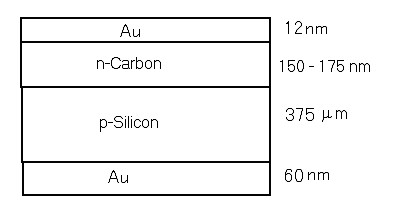
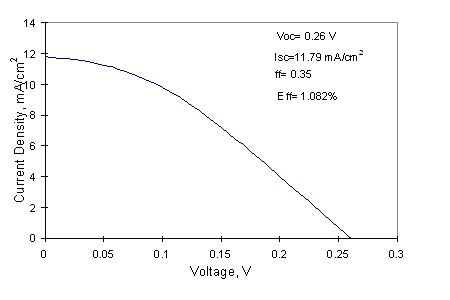
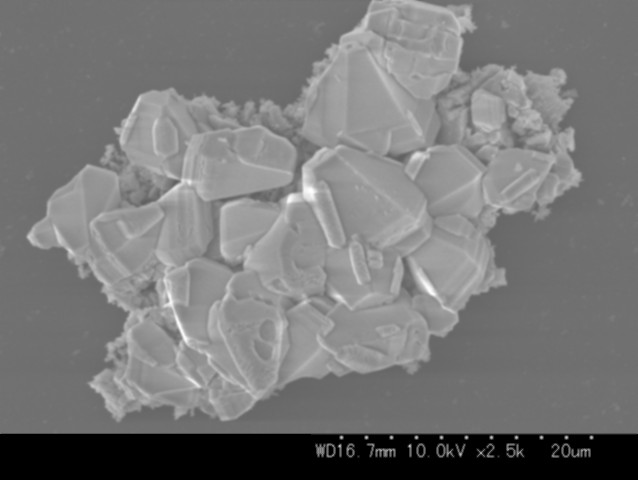
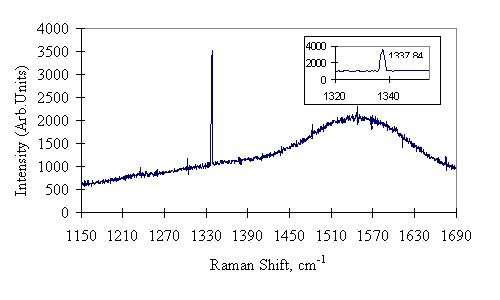
of the Ph.D Thesis: Thesis titled as, "Preparation, characterisation and application of amorphous carbon for Photovoltaic solar cell". My research is comprised of growth, characterisation and application amorphous carbon thin film. The growth was carried out with the help of Pulsed laser deposition as well as chemical vapour deposition. Various characterisation techniques were employed to find out the composition, optical, electrical, and microstructural properties of the film. In the process of deposition different kinds of carbon films(a-C:H,a-C:H:N, a-C:N, diamond) were grown and their properties analysed. The formation of Hydrogenated amorphous carbon was possible using Pulsed laser technique because camphor(C10H16O, a non-pollutant and natural product) was used as precursor of carbon for the thin film deposition. For the purpose of doping, Boron trioxide and Urea were used for the films. Urea is found to be a successful dopant material for amorphous carbon from the XPS study. A heterojunction between amorphous Carbon and Silicon was constructed which produced a representative solar to electrical conversion efficiency of 1.08%. The local microstructural studies (ESR,Raman,XPS) of carbon were carried out to see the influence on photovoltaic property. Pulsed Laser Deposition also formed diamond crystals of micron sizes at room temperature, which was reported for the first time in thediamond growth.The formation of diamond crystals is confirmed by the micro Raman study.
Thermal CVD deposited carbon films were also tested for their photoresponse in combination with silicon. A junction of carbon film and lead oxide was also tried for the photovoltaic study. Summary
of the M.Tech Thesis: The project titled'"Electrolytic pickling of mild steel in neutral electrolyte". The
aim of the project was to see the feasibility of electrolytic pickling as comapred to conventional acid pickling Both the processes were compared by doing AES,XRD, Optical micrographs and electrochemical polarisations. By adopting electrolytic pickling there could be reduction of corrosive and polluting environment, and also the corrosion rate, after the pickling as compared to conventional acid pickling.
RESEARCH EXPERIENCE Deposition processes: ·
Growth of carbon thin film by Chemical Vapour Deposition and pulsed laser deposition. ·
Growth of lead oxide by electrochemical as well as pulsed laserdepositions. ·
Growth of metal(Gold and aluminium)thin films by vacuum deposition(resistive heating and e-beam) for making contacts to do electrical studies. Characterisation: ·
Stylus step method for thickness measurement,Optical studies for band gap calculation,FTIR for the presence of hydrogen as the vibration frequency is predominant,Raman spectroscopy indicates the film contains clusters as well as chain type structures, ESR indicated the local microstructure of amorphous carbon, EDAX, AES and XPS were employed to analyse the composition of carbon thin film, XPS also indicated local chemical environment of the film, which found to be important for the purpose of true doping. Four probe, Hall and Current-Voltage measurements were done to know the electrical property, Quantum efficiency study also carried out for selective samples where the solar to electrical efficiency found to be notable. . Application: ·
Amorphous carbon is used in photovoltaic solar cell, heterostructures as diode and could be a possible material for photodetector, Lead oxide also could be used for diode with the p-Silicon, Junction of lead oxide and carbon gives an encouraging result and the current -voltage plot indicates rectification. Urea could be used as an n-type dopant for amorphous carbon
Instrumental Skills: ·
Scanning electron microscopy,UV-Vis,
Raman spectroscopy,Auger electron spectroscopy,X-ray diffractometer and Cyclic Voltammetry