| What is Digital Soaring? | ||||||||||||||||||||||||||
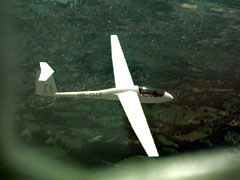
| Until recently, all soaring activities were biologically based. Hawks have been soaring in thermals for millions of years, the Albatross has been soaring in the wind gradient over the oceans about that long too. More recently, humans learned to soar by donning wings of various types and catching ridge lift, and then thermal lift. Then came a breakthrough- the ability to remotely control a soaring aircraft! That removed the human from the cockpit of the aircraft and put humanity one step away from Digital Soaring. All of the flying objects discussed to this point have been controlled by a biological brain, either human or animal. Now the next step is to remove the need for a biological control agent and replace it with something else. The natural choice for this is a digital computer aided by some sensors. Hence, DigitalSoaring ! In general, there are three types of soaring. The simplest is called static soaring. This is when a flying object (sail plane, hawk, hang glider, or even a hail stone) hang out in air that is traveling up. The only real stipulation is that the updraft be strong enough that the object gains altitude. Hailstones require much stronger updrafts than the other flying objects listed above. The next type of soaring is Dynamic Soaring, or Shear Soaring as it used to be called. Dynamic Soaring (DSing from here on) does not rely on rising air. This means that the flying object has to do more than just hang out. It has to fly a certain pattern through a shear layer in order to gain any altitude. The flying object's path is required to be dynamic, hence the name of the technique. This is employed by the Wandering Albatross (the bird) and a handfull of Radio Control glider pilots. The third is turbulence soaring and is similar to DSing, only much more complicated. |
||||||||||||||||||||||||||
![]() |
||||||||||||||||||||||||||
| My Favorite Links: | ||||||||||||||||||||||||||