Choosing an average light level
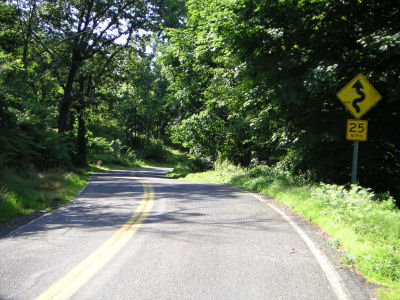 When choosing the right exposure, the camera has two challenges.
We saw the first challenge, lack of dynamic range. This problem isn't so bad as it looks at first
sight. A dynamic range is not absolute, it only refers to the differences between two extremes. There
is still white and black, it's just that the number of gray shades in between is limited. Besided that,
the camera has (usually) a very limited angle of field. There may be a tremendous diversity in the
light that we see in a scene, the camera captures only a small rectangle in that scene - thus
limiting the range of light levels as well.
When choosing the right exposure, the camera has two challenges.
We saw the first challenge, lack of dynamic range. This problem isn't so bad as it looks at first
sight. A dynamic range is not absolute, it only refers to the differences between two extremes. There
is still white and black, it's just that the number of gray shades in between is limited. Besided that,
the camera has (usually) a very limited angle of field. There may be a tremendous diversity in the
light that we see in a scene, the camera captures only a small rectangle in that scene - thus
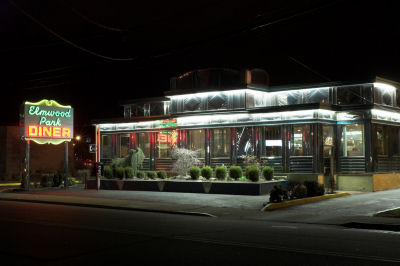
limiting the range of light levels as well.But there is a second challenge. And that is what the camera sees. It doesn't have any background information. We see a night scene with an illuminated sign. The camera just sees a black rectangle and will think "I'll need to shift my dynamic range to the left side of the spectrum somehow".
Choosing the right exposure
 So, what will the camera do? It will aim for an
exposure where on average the intensity level is around 50%. Notice that I left the exact definition
vague, on purpose. What is 'on average'?
So, what will the camera do? It will aim for an
exposure where on average the intensity level is around 50%. Notice that I left the exact definition
vague, on purpose. What is 'on average'?That depends on the way metering works - spot metering, matrix, centre weigted average, etc. But the bottom line is that the camera has no clue what it is looking at, and will decide based on some kind of average what the target exposure will be.
Why is this important? Because if you don't realize this, you will not understand why your picture can be so badly exposed - and you will not be able to correct the problem. The camera does not aim for a 'correct' (50% gray) exposure based on light that you see. It aims for a 'correct' exposure based on the light that the sensor receives.
Extreme experiment
The following experiment is fun because it is something that everyone can do at home. It is very simple and it can be done with any camera.- First, take a picture of a white sheet of paper. Make sure that there is plenty of sunlight illuminating the paper. Get the camera as close as possible to the paper. What is 'as close as possible'? Anything, as long as the shadow of the camera doesn't interfere with the picture. Outside that, the closer the better. Don't care about focussing, your assignment is 'white rectangle'. Shoot in automatic mode - or when manual, use exposure as suggested by the camera.
- Second, repeat the process for a black sheet of paper. Or anything else black - a laptop bag, your camera bag, etc. Take a picture in the shadow, or in a room without direct sunlight. Again, don't care about focussing, your assignment is 'black rectangle'. Again, use automatic (P) mode.

Conclusion
No matter how advanced the metering of a camera is, it will aim for 'correct' exposures in average situations. Aside from the fact if a technical correct exposure is a artistically correct exposure, this means that in many cases your exposure will be off if you stick to what the camera of light meter says.Be especially aware of counter-intuitive situations like taking a picture of the moon. What we see is our subject - brightly lit and highly visible. What the camera sees is a mainly black sky with a white disc in it - the disc only being a small part of the entire picture. To get a 50% gray exposure, the camera will badly overexpose in order to lighten up that black sky.