

Questions and Answers with Lee Bennett Hopkins:
(From HarperChildrens web site- interview with an author- accessed at: http://www.harperchildrens.com/authorintro/catalog/author_interview_xml.asp?authorid=12232&interviewID=158657
Question: How do you find the poets whom you choose to anthologize? Are you drawn to certain genres of poetry or styles of writing?
Answer: One of the hallmarks of my anthologies is that they include both well-know works and newly published works by some of today�s most prominent authors. I have a group of people around the country I fondly refer to as my �Take-Out Poets.� I send them the theme I�m working on, and they reply with brand-new poems. I am drawn to more serious poetry rather than light verse. Although light verse is fine, I feel children get enough of it via popular poets such as Shel Silverstein, who remains among the best writers in this genre. I want children to read, feel, the serious impact poetry can give.
Question: What challenges did you face when finding poems for young readers in the I Can Read book of poetry Sports! Sports! Sports!: A Poetry Collection?
Answer: In Sports! Sports! Sports!, as in any of my I Can Read poetry books, the challenge is to find works that will appeal to the audience they are being done for � young readers. Again, I blend published works with works never before seen.
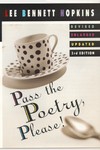
Question: In Pass the Poetry, Please! you�ve created a classic reference book for teachers that helps make poetry come alive in the classroom. What is the main thing you hope teachers will gain from this book?
Answer: Teachers should read Pass the Poetry, Please! and come away with the understanding that poetry is reachable, is teachable, and should come to children as naturally as breathing! One needn�t ask hundreds of questions about poems, nor dissect or analyze them to death. Just read poetry, love it to pieces, and enjoy it to the fullest.
Question: You used to be an elementary school teacher. What advice would you give to those teaching poetry to children? What advice do you give children who aspire to be poets?
Answer: Children must read and read and read. Reading comes first� then comes writing. Poetry should be read every single day of the year, at all times, for all times. �Poetry is magical, mystical�.