Prophet
in the New Testament - Part 2:
The Other Prophets
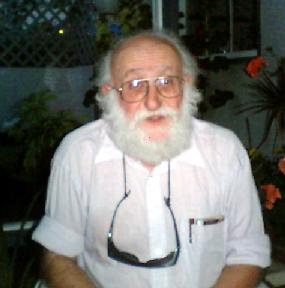
by Dr. Michael Zarb, Cobble Hill, BC
 Part
1 presented a brief picture of Jesus as the prophet in the Gospels and
Acts. Part
1 presented a brief picture of Jesus as the prophet in the Gospels and
Acts.
Part 2 offers an overview of the other prophetic figures and movements
in the New Testament.
(In the NT there are many references to Old Testament prophecy: to the
words of the prophets as fulfillment of the christological significance
of Jesus, or to prophets as writers, again as fulfillment; or to prophets
as individual personages mainly in comparison to Jesus; or to events
in his life as presented by the NT writers. However, since these are
not pertinent to the present topic, they will not be considered.)
Paul
For Paul, the prophets are especially gifted leaders in the congregation;
he lists them among other functionaries in 1Cor 12.8ff- [10] ‘to
another the working of miracles, to another prophecy, to another the
discernment of spirits, to another various kinds of tongues, to another
the interpretation of tongues’, and in 12.28f ‘And God has
appointed in the assembly first envoys, second prophets, third teachers;
then deeds of power, then gifts of healing, forms of assistance, forms
of leadership, various kinds of tongues. 29 Are all envoys? Are all
prophets? Are all teachers? Do all work miracles?’ and also again
in Rom 12.6 ‘We have gifts that differ according to the grace given
to us: prophecy, in proportion to faith...’
What was the nature of the prophet’s function for Paul? This question
may be answered by stray passages where Paul sometimes compares prophecy
with other gifts of the Spirit. Especially instructive are passages
in chapters 12 to 14 of 1 Corinthians where Paul deals with rivalries
or factions regarding the possession of spiritual gifts especially those
that are the most demonstrative, i.e. the gift of tongues, which he,
preferring prophecy, puts in its place.
Prophecy obviously involves the acquisition and disclosure of some type
of knowledge. In 1Cor 13.2 ‘And if I have prophetic powers, and
understand all mysteries and all knowledge, and if I have all faith,
so as to remove mountains, but do not have love, I am nothing’
Paul connects prophecy with the understanding of the divine mysteries.
However, it is debated whether these are characteristics of prophecy
or a listing of similar charisms; he may be indicating the three kinds
of spiritual instructors namely 1. prophets, 2. ‘all mysteries’
may refer to the wisdom of the envoys (apostoloi) and 3. ‘all
knowledge’ may refer to that of the teachers (didaskaloi).
By ‘faith’ is meant wonder-working faith, enough ‘to
remove mountains,’ not doctrinal ‘belief.’ In the immediate
context (vv.1-3) all the four classes of gifts are included: ecstatic
(v.1), instructing (v.2), wonder-working (v.2) and administrative gifts
(v.3).
The passage that tells us most on the nature of the community prophet
is 1Cor 14.1-5: ‘[1] Pursue love and strive for the spiritual gifts,
and especially that you may prophesy. [2] For those who speak in a tongue
do not speak to other people but to God; for nobody understands them,
since they are speaking mysteries in the Spirit. [3] On the other hand,
those who prophesy speak to other people for their upbuilding and
encouragement and consolation. [4] Those who speak in a tongue build
up themselves, but those who prophesy build up the assembly. [5] Now
I would like all of you to speak in tongues, but even more to prophesy.
One who prophesies is greater than one who speaks in tongues, unless
someone interprets, so that the assembly may be built up.’ Comparing
‘glossolalia’ and prophecy, Paul encourages his readers
to strive more after prophecy (v.1, 5; cf. also 1Thes 5.20) and in v.3
briefly describes the work of the prophet, namely upbuilding of members,
encouragement and consolation - those who are weary and under some kind
of adversity find help from the prophets of the community, reminiscent
of, though not equivalent to the prophets of the OT consulted by people
even with respect to personal problems.
Assuming an extreme case for the sake of argument by presenting two
hypothetical scenarios, one where all members of the community speak
in tongues and the other where all prophesy, Paul concludes the latter
would be very much better (1Cor 14.23-25), because prophecy scrutinizes
and manifests the secrets of the heart thereby effecting conversion
and submission to God: ‘After the secrets of the unbeliever's heart
are disclosed, that person will bow down before God and worship him,
declaring, "God is really among you." (v.25). Thus, possibly,
the prophets served as the conscience of the community and obtained
converts. (Note: v.22 ‘ ... while prophecy is not for unbelievers
but for believers.’ may not be a contradiction to v.25 if this
verse is taken to be, in the diatribe style, the thought of the imaginary
opponent.)
In Paul, prophets seem to be local functionaries; he doesn’t mention
any itinerant ones. In Corinth there was obviously a greater number
of prophets, for those who spoke at the assemblies had to be limited
to two or three, I Cor 14: 29 ‘Let two or three prophets speak,
and let the others weigh what is said. [30] If a revelation is made
to someone else sitting nearby, let the first person be silent. [31]
For you can all prophesy one by one, so that all may learn and all be
encouraged. [32] And the spirits of prophets are subject to the prophets,
[33] for God is a God not of disorder but of peace.’ It is clear
that a) the knowledge of the prophet comes through revelation (v.30)
not from tradition or what he has thought up himself - (see v.26, the
‘revelation ‘ is what the prophet contributes just as the
‘lesson’ is what the teacher (didaskalos) contributes
and the ‘tongue’ and the ‘interpretation’ are contributed
by the speaker in tongues and his interpreter); b) when two or three
prophets speak, the other prophets present have the task of weighing
(v.29), i.e. discerning whether what is being said is really inspired
because only the prophets can test the prophets (v.33); c) again we
learn that the prophet imparts ‘learning’ and ‘encouragement’
(v.31; cf. v.3); and d) Paul also advises order when prophets speak
in the assemblies to prevent the temptation of continuing to speak after
their message was delivered, occupying the whole time to the exclusion
of others (v.30).
This passage also shows that Paul’s prophets, though they receive
revelations, are not characterized by visions and auditions which transport
them out of the world as in the case of the prophet of Revelation. They
are not ‘seers,’ they are not possessed by the Spirit so as
to have no control over themselves; when they speak they can break off
if a revelation is given to someone else.
Paul deals with public prayers and prophecy in 1 Cor 11.4f - [4] ‘Any
man who prays or prophesies with something on his head disgraces his
head, [5] but any woman who prays or prophesies with her head unveiled
disgraces her head-- it is one and the same thing as having her head
shaved.’ First, here is evidence of women having the ability to
prophesy, regardless of Paul’s view on woman’s inferior position
with regards to men (vv.3, 6ff). This prophesying of women apparently
was not to be carried out in the assembly according to 14.34 ‘the
women should keep silence in the assemblies.’ These passages indicate,
however, that women in fact were prophesying, even without the veil,
in the assemblies of Corinth but Paul was attempting to stop the practice.
Second, this coupling of prayer and prophecy here can be viewed together
with 1 Cor 14.13-19 where prayer and ‘glossolalia’ are also
connected in a context in which prophecy is compared with the latter
in relation to prayer ‘with the spirit’ and ‘with the
mind.’ Thus prayer is an integral part of the comparison (v.15),
and also, taking into consideration the concept of ‘upbuilding’
(v.17) and Paul’s preference to speak with the mind, [‘nevertheless,
in the assembly I would rather speak five words with my mind, in order
to instruct others also, than ten thousand words in a tongue’(v.19)],
it is appropriate to infer that prophets probably led the prayers of
the community to which the people responded with the ‘Amen’
(v.16).
Prophets and teachers are frequently mentioned as the significant instructors
of the community (I Cor12.28 f.; Rom 12.6 f). They both mediate knowledge,
yet they are not the same; the difference lies in the source of knowledge.
Whereas teachers expound scripture and tradition, the prophets speak
to the congregation on the basis of revelations.
Though prophecy was esteemed in the primitive community, and though
Paul rated it highly, he reminded his readers of its transitoriness,
‘Love never ends. But as for prophecies, they will come to an end;
as for tongues, they will cease; as for knowledge, it will come to an
end.’ (1Cor 13.8)
Paul never calls himself a prophet but an ‘envoy’ (apostolos).
Gospels
Mark
John the Baptist
John the Baptist is mentioned only in the gospels and Acts in the NT.
Mark refers to John the Baptist by the term ‘prophet’ only
once, in Mk 11:32 where it is said that the crowds ‘regarded John
as truly a prophet.’ - ‘But shall we say, "Of human origin?"
-- they were afraid of the crowd, for all regarded John as truly a prophet.’
Also in Mk 8:28 John is mentioned among prophet types, ‘And they
answered him, "John the Baptist; and others, Elijah; and still
others, one of the prophets."’ However though Mark distinguishes
him by the known nickname ‘baptist’ or ‘baptizer’
he sees him as Elijah. The conflated quote in 1.2f (v. 2b = Ex22.20a;
v. 2c = Mal 3.1 [Heb]; v.3 = Is 40.3) inaccurately attributed to Isaiah,
already connects John with Elijah in that the messenger of v.2c (Mal
3.1) is clearly Elijah in Mal 4.5. Mark further builds the picture of
John on the model of Elijah even as to his external appearance, ‘Now
John was clothed with camel's hair, with a leather belt around his waist,
and he ate locusts and wild honey.’ (1.6) In 2Kgs 1.8 Elijah is
described as a ‘hairy man’ and ‘girt with a leather girdle
about his loins’. [Cf. also Zech 13.4 for the ‘hairy’
garb of the prophet] Further, Mark’s Jesus says that Elijah has
already come implicitly identifying him with John, "But I tell
you that Elijah has come, and they did to him whatever they pleased,
as it is written about him." (Mk 9.13)
Apart from the general statement that John preached ‘a baptism
of repentance for the forgiveness of sins’ (1.4) the importance
of John for Mark consists in John's being the herald of Jesus, that
he announces the ‘coming one’ (1.7).
The concept of the ‘wonder-working’ prophet in relation to
John is seen in Mk 6.14 where the powers of Jesus are attributed to
the idea that John had been raised from the dead and was performing
wonders.
In the account of John's execution (6.16ff), Mark again presents him
acting in the manner of the OT prophets, that is, speaking to kings
when they had done wrong (e.g. Elijah to Ahab, 1Kgs 21.17ff), which
brought about his death, a reason quite different from that Josephus
gives, namely, the fear of John's popularity and the possibility of
his leading a revolt: ‘…Herod, who feared lest the great influence
John had over the people might put it into his power and inclination
to raise a rebellion…’ (Jos. Ant. 18. 5. 2) Herodias is depicted
as John's Jezebel; note the similarity in the characters of this story
with that of Ahab and Jezebel (1Kgs 21), the men, Herod and Ahab are
reluctant to do what is wrong while the women, Herodias and Jezebel,
incite and scheme surreptitiously. Also Jezebel threatens to kill Elijah
(1Kgs 19.2) and Herodias procures John's death. Mark’s story of
the execution of John was at least partly inspired by the OT story.
John, like OT prophets, e.g. Elijah, had disciples, ‘When his disciples
heard of it…they took his body and laid it in a tomb.’ (Mk
6.29)
Matthew
John the Baptist
Matthew (3.1ff) follows Mark in his introduction of John the Baptist
even as to his appearance in the clothing of Elijah. Though here he
quotes only the Isaianic part of Mark's conflate. However, Matthew uses
Mal 3.1 in 11.10 in the speech of Jesus praising John, "What then
did you go out to see? A prophet? Yes, I tell you, and more than a prophet"
(11.9) and "among those born of women there has risen no one greater
than John the Baptist."(v.11) Then in 11.14 "and if you are
willing to accept it, he is Elijah who is to come" Jesus explicitly
identifies John as Elijah as Mal 4.5 identifies the ‘messenger’
of Mal 3.1 as Elijah.
To Mark's words of John announcing the ‘coming one’ Matthew
amplifies with a vituperative saying (3.7-10 (Q)) against the Pharisees
and the Sadducees, thus likening him more to the OT prophets in their
threats of judgment and demands of radical conversion.
Matthew follows Mark closely in narrating John's execution (Mt 14.5-12);
they both make of him a martyr of righteousness (Mk 6.20).
Matthew again identifies John with Elijah in 17.12f (//Mk 9.13)- "
but I tell you that Elijah has already come, and they did not recognize
him, but they did to him whatever they pleased. So also the Son of Man
is about to suffer at their hands." The explicit identification
is done in the editorial note of v. 13, ‘Then the disciples understood
that he was speaking to them of John the Baptist.’
Matthew reports that the people regarded John as a prophet also at 14.5
‘he (Herod) feared the crowd, because they regarded him as a prophet’,
in 21:26 ‘for all regard John as a prophet’ and in 16:14 John
is counted among prophet types, ‘And they said, "Some say
John the Baptist, but others Elijah, and still others Jeremiah or one
of the prophets."’
Community prophets
Matthew has some references to the prophet-leaders of the Matthaean
community. In 7:22 he has Jesus warn against the complacency of the
community leaders, ‘On that day many will say to me, "Lord,
Lord, did we not prophesy in your name, and cast out demons in your
name, and do many deeds of power in your name?"’ and warns
that these powers, - note the close connection of prophecy and wonder-working
- will be of no avail if the will of the Father (v.21) is not followed;
by ‘that day,’ Matthew has in mind the judgement of 25.31ff
and other instances of judgment, a Matthaean theme. Luke, in the parallel
passage (Lk13.25-27) does not deal with the theme of prophecy and ‘deeds’
but with his more favourite theme of commensality.
Again in 23:34 ‘Therefore I send you prophets, sages, and scribes,
some of whom you will kill and crucify, and some you will flog in your
synagogues and pursue from town to town," Matthew refers to some
persecution or adversity suffered by his group of believers - the ill
treatment of their leaders is presented by the author as a prediction
of Jesus. Mt 10.41 [M] invites the community to respect their leaders,
‘Whoever welcomes a prophet in the name of a prophet will receive
a prophet’s reward; and whoever welcomes a righteous person in
the name of a righteous person will receive the reward of the righteous’
- the 'righteous' (dikaioi) may be taken as parallel to ‘prophets’
thus referring to the same persons or to the true disciple of Jesus
who is supposed to practice ‘righteousness’ (dikaiosunê),
a favourite theme of Matthew (cf. 6.1-18).
A reference to false prophets is to be understood, in the context of
the Matthaean community, as a warning to the community regarding their
own prophets, which is indicative of intramural tensions between ‘good’
prophets and ‘false’ ones: ‘Beware of false prophets,
who come to you in sheep's clothing but inwardly are ravenous wolves.’
(7.15)
On the other hand, in view of their eschatological context, as in Mark
(Mk 13:22), the sayings in 24.11 "And many false prophets will
arise and lead many astray." and 24.24 "For false messiahs
and false prophets will appear and produce great signs and omens, to
lead astray, if possible, even the elect" refer to the future,
the eschatological false prophets as the signs of the ‘parousia’.
Luke
John the Baptist
Only Luke narrates stories of the childhood of John the Baptist,
borrowing themes and narrative techniques from the OT. He parallels
the announcements, births, naming, circumcisions and growth of both
John and Jesus without compromising his main purpose, namely the subordination
of John to Jesus. For Luke, John is an extraordinary prophet: he is
announced by Gabriel to his father as ‘he who will be great in
the sight of the Lord’, ‘even before his birth he will be
filled with the Holy Spirit’ (1.15), and ‘With the spirit
and power of Elijah he will go before him’ (1.17); and Zechariah
addresses him, "And you, child, will be called the prophet of the
Most High" (1.76).
Luke (3.1ff) introduces John on the preaching scene with a most complete
introductory note in imitation of the introductions of the prophets
in the prophetic books, including the year of the reign, seven political
and priestly rulers, the phrase ‘the word of God came to’
and the name of the prophet with his paternal identification; compare
e.g. Jer 1.1; Ez 1.1-3. Like Matthew, Luke here quotes only the Isaiah
part of Mark’s passage, but even more fully in order to emphasize
his favourite theme of ‘salvation’ (Is 40.3-5); he uses Mal
3.1 at 7.25 in Jesus’ praise of the Baptist, (a parallel Q passage
to Mt 11.7ff - ‘more than a prophet’ etc.), but does not identify
the ‘messenger’ i.e. John with Elijah as Matthew does. Luke
also leaves out Mark's external appearance of John/Elijah - he doesn't
seem eager to emphasize the Elijah image since he prefers to see Jesus
alone as the one who ushers in the ‘kingdom’, in contrast
to Matthew who puts on John’s lips ‘the kingdom of heaven
is at hand,’ i.e. John also proclaims the ‘kingdom’ (Mt
3.2). Luke avoids John’s identification with Elijah also by omitting
those passages indicating this identification in Mark (Mk 9.13) and
Matthew (Mt17.12f).
John has ‘the spirit and power of Elijah’ (Lk1.17) but he
is not unmistakably Elijah who has come back. In John's speech, to the
declaration of the ‘coming one,’ Luke (3.7-14) adds even more
words of the Baptist than Matthew does over Mark.
Luke does not narrate John's execution; he only mentions his imprisonment
(3.19f) and beheading (9.9), possibly because he wants to present Jesus
alone as the martyr of righteousness.
Pre-Christian prophets
Luke mentions or refers to prophets in between the OT prophets
and the Christian community prophets. He mentions four who are not yet
Christians.
Of Zechariah Luke writes, ‘Then his father Zechariah was filled
with the Holy Spirit and spoke this prophecy,’ (1.67). The Benedictus
is for Luke more than a personal thanksgiving but an insight, through
the Spirit, into the mysteries of God about to unfold.
In the account of the meeting between Elizabeth and Mary the words prophet
or prophesy are not used but Elizabeth is said to be 'filled with the
Holy Spirit and exclaimed with a loud cry ,’ indicating prophetic
speech, and she is able to know the undisclosed past and see the hidden,
she greets Mary as the mother of the Lord as if she knows the angel’s
message and Mary’s reply (1.41ff, 45, 38).
Similarly with Simeon, endowed with the prophetic Spirit, ‘the
Holy Spirit rested on him’ (2.25), he is told by the Spirit that
‘he would not see death before he had seen the Lord’s Messiah.’
(v. 25) and going into the temple ‘in the Spirit’ sees the
Messiah in Jesus and speaks about him prophetically (vv.27ff).
Anna is expressly called a prophetess and she ‘began to praise
God and to speak about the child to all who were looking for the redemption
of Jerusalem’ (2.36).
John
John the Baptist
In this gospel John the Baptist is introduced as ‘a man sent
from God’ (1.6); 1.15, gives John’s witness of the ‘coming
one’ and v. 19 starts the dialogue with the emissaries of the priests
from Jerusalem. The author presents John confessing very emphatically
that he is not the Messiah, nor Elijah, nor the Prophet (1.19ff) -"Why
then are you baptizing if you are neither the Messiah, nor Elijah, nor
the prophet?" (1. 25) but describes himself in the words of Is
40.3, that he is the one who comes before the Messiah (cf. also 3.28).
Then John points out the ‘Lamb of God’ and discloses a prophetic
vision and audition he had regarding the Spirit descending as a dove
upon Jesus and the prophetic message as to the identity of the recipient
of the Spirit, i.e. "the Son of God" (1.32-34).
For his theological purposes the author of John presents an unexpected
prophet, the high priest, ‘He did not say this on his own, but
being high priest that year he prophesied that Jesus was about to die
for the nation,’ (Jn. 11:51).
Acts
Prophecy for all
From the outset Acts introduces prophecy as the action of the Spirit;
This is how the Spirit is introduced after the account of its descent
on those gathered together on the day of Pentecost, ‘All of them
were filled with the Holy Spirit and began to speak in other languages,
as the Spirit gave them ability.’(Acts 2:4) This speaking in languages
is not the phenomenon of ‘glossolalia’ of the Pauline
writings, but as is evident from v.6 ‘each one heard them speaking
in the native language of each’ and v.8 ‘we hear, each of
us, in our own native language,’ it means proclaiming in foreign
languages. Then in Peter’s first speech to the public, he explains
this phenomenon as prophecy foretold by Joel for the community of the
last days, ‘In the last days it will be, God declares, that I will
pour out my Spirit upon all flesh, and your sons and your daughters
shall prophesy, and your young men shall see visions, and your old men
shall dream dreams’ (2:17) and ‘in those days I will pour
out my Spirit; and they shall prophesy.’ (v.18)
On the other hand the ecstatic utterance in tongues, as a gift of the
Spirit, is mentioned in Acts in 10.46 where there is no question of
foreign languages, and again in19.6 where speaking in tongues is coupled
with prophecy as the effect of possession by the Spirit, ‘When
Paul had laid his hands on them, the Holy Spirit came upon them, and
they spoke in tongues and prophesied.’
For Acts prophecy is not restricted to a few men and women in the early
communities. According to 2:4; 4:31 all are filled with the prophetic
Spirit and according to 2:16 ff. it is a specific mark of the
age of fulfillment that the Spirit does not only lay hold of individuals
but that all members of the eschatological community without distinction
are called to prophesy.
Individual prophets
Acts mentions several individual prophets of the early communities.
There were prophets in Jerusalem and some went to Antioch one of them
named Agabus who predicted a famine which ‘took place during the
reign of Claudius’ (11.27f). We find him again in Caesarea where
he went from Judea (21.10). This time he performed a prophetic action,
similar to the OT prophets: ‘He came to us and took Paul's belt,
bound his own feet and hands with it, and said, "Thus says the
Holy Spirit, "This is the way the Jews in Jerusalem will bind the
man who owns this belt and will hand him over to the Gentiles."’
(21.11) He also introduces his prophecy in the style of the OT prophets,
‘Thus says Yahweh’ except that the Holy Spirit takes the place
of Yahweh: "Thus says the Holy Spirit". Definitely Agabus
is presented as a wandering prophet who predicts the future in the manner
of the OT prophets.
The community of Antioch also had resident prophets and teachers, some
of these are named, ‘Barnabas, Simeon who was called Niger, Lucius
of Cyrene, Manaen a member of the court of Herod the ruler, and Saul.’
(13.1) Acts does not distinguish who of these five was prophet or teacher
or both. Two of these prophets/teachers, Barnabas and Saul were selected
and sent on a special mission; again an indication of itinerant prophets.
Another two prophets, ‘Judas and Silas, who were themselves prophets’
(15.32) were sent (v.22, 27) by the Jerusalem assembly to deliver and
explain the letter to the Antioch community. It is interesting to note
that these two are reported to have ‘said much to encourage and
strengthen the believers’ (v.32) comparable to the ‘encouragement’,
a task of the prophet, in 1Cor 14.3.
In Caesarea there were also female prophets, Philip’s four unmarried
daughters ‘who prophesied’ (21:9), but nothing is indicated
regarding the nature of their prophesying.
Paul, in Acts is considered as a prophet not only by enumerating him
among the list of five in 13.1 but also several times he is presented
predicting events. He tells the Ephesian elders in 20:22 f. that sufferings
await him, and in 20:29 f. he warns them that false teachers will ravage
the congregation. During the storm on the journey to Rome Paul predicts
that none of those on board will be lost, and that they will come to
an island (27:22ff). Paul’s curse against Bar-Jesus immediately
takes effect (13.9-11) comparable to similar predictions of punishment
of the OT prophets (e.g. Elijah predicts that the dogs will lick Ahab’s
blood, 1Kgs 21.19; 22.38)
Acts mentions a false prophet. At Paphos, Barnabas and Saul meet a Jewish
magician, Bar-Jesus /Elymas, whom the author calls a false prophet
probably because, in their discussions with the proconsul Sergius Paulus,
he sought ‘to turn the proconsul from the faith.’ (13:6ff)
Paul ends up performing one of his punitive wonders by blinding this
man!
From Acts’ emphasis on the Spirit’s activity on all the members
of the believing community according to Joel’s words that all members
are prophets, one may conclude that in the author’s mind the directives
by the Spirit in the activity of the community are prophetic revelations,
e.g. 8:29 the Spirit tells Philip to go to the eunuch; 10:19 &11:12
the Spirit instructs Peter; 13.2 tells the community to set apart Barnabas
and Saul; and 16:6f prohibits evangelization in Asia.
Other Writings
Ephesians
The letter to the Ephesians reduces the long Pauline lists of gifted
people to five, ‘that some would be envoys, some prophets, some
evangelists, some pastors and teachers’ (4.11).
This writing places the prophets with the envoys (apostoloi)
in connection with the foundation of the household of God, ‘built
upon the foundation of the envoys and prophets, with Christ Jesus himself
as the cornerstone.’(Eph 2.20) The metaphor here is that of a building
made up of people (fellow citizens, saints, members v.19), the first
layer of stones being the envoys and prophets and Christ the most important
stone in the first layer, the cornerstone, ‘in whom the whole structure
is joined together’ (v.21); this building ‘grows into a holy
temple’ part of which are also the converts, ‘you are also
built into it’ (v.22). Compare 1Cor 3.10f. where Paul lays the
foundation ‘which is Jesus Christ’.
Again, this author, couples the prophets with the envoys as the special
recipients of the ‘mystery,’ namely that ‘the Gentiles
are fellow heirs’ and ‘partakers of the promise’: ‘In
former generations this mystery was not made known to the sons of men,
as it has now been revealed to his holy envoys and prophets by the Spirit.’
(3.5)
1 Timothy
As we have seen Acts presents the Spirit as the vital power in the
activity of the early community even in choosing and appointing certain
people for certain tasks, understood as the work of prophecy, 1Timothy
makes this more explicit and calls it prophecy. The appointment of Timothy
to leadership by the elders is considered done through prophecy, ‘I
am giving you these instructions, Timothy, my son, in accordance with
the prophecies made earlier about you, so that by following them you
may fight the good fight,’ (1:18) and ‘Do not neglect the
gift that is in you, which was given to you through prophecy with the
laying on of hands by the council of elders.’ (4:14)
1 John
1Jn. 4:1 ‘Beloved, do not believe every spirit, but test the spirits
to see whether they are from God; for many false prophets have gone
out into the world.’ This instruction concerning false prophets
is understood to connote a context of factional divisiveness in the
community, i.e. the existence of community prophets teaching a different
doctrine from that of the author. The picture becomes clearer in view
of the ‘antichrists’ who have separated themselves from the
community (1Jn 2.18f.), the ‘deceivers’ of 2 Jn 7, and the
rival of the ‘Elder’ in 3 Jn [2 and 3 John are companion writings
of1 John]. The plural indicates that it is not just one individual who
is meant but more. Here as in Paul the spirit needs to be tested whether
it is from God, the criterion being the confession of the incarnation
of Christ (v. 2), the orthodox doctrine of the author.
Revelation
There is no doubt that the book of Revelation is conceived and intended
as a prophecy or prophecies delivered by a prophet. Possibly it is an
example of the works and material produced by some of the first and
early second century messianic prophets, especially those with an eschatological
bent. That is, they spoke on these lines perhaps even to the extent
of preaching ‘fire and brimstone.’
The author is a prophet; already in the prologue he is said to have
received revelation and vision (1.1f); he is told to prophesy in 10.11,
‘Then they said to me, "You must prophesy again about many
peoples and nations and languages and kings."’
The writing itself is called ‘the words of the prophecy’ in
1.3 and it is described as ‘the words of the prophecy of this book’
four times (22.7, 10, 18, 19);
The author stresses the authority of this writing. His proclamation
is the word of God and testimony of Jesus Christ, 1.2; 19.9. His words
are declared to be reliable and true by the supreme authority, God himself,
21.5; and "These words are trustworthy and true, for the Lord,
the God of the spirits of the prophets, has sent his angel to show his
servants what must soon take place." (22.6); the author even threatens
by plagues and other punishments those who add to or take away from
the words of the prophecy (22.18,19).
Like Acts, Revelation brings out the similarity between early Christian
prophecy and that of the OT. The vision of prophetic calling in Rev
1.9 ff. reminds us of the visions of the OT prophets in Is 6.1 ff.;
Ez 1.1 ff. Further, John, like Ezekiel (2.8-3.3), has to swallow a small
book (10.8-11), and in a symbolic action he has to measure the temple
with a reed (11.1).
The prophets of the community occupy a prominent place; they seem to
be the leaders. The author employs two terms to designate the constituents
of the community: ‘the saints’ for the believers and ‘the
prophets’ for the leaders. Thus, ‘because they shed the blood
of saints and prophets’ (16:6) and ‘in you was found the blood
of prophets and of saints’ (18:24), the reference here is to the
persecution of the members and leaders of the community.
In 11.18, ‘The nations raged, but your wrath has come, and the
time for judging the dead, for rewarding your servants the prophets
and saints and all who fear your name, both small and great, and for
destroying those who destroy the earth,’ it is unclear whether
‘slaves / servants’ goes with prophets (most probably cf.
10.7), or indicates a separate group; whatever the grammatical connection,
the prophets are especially mentioned denoting leadership of the community.
Again, in the author’s apostrophe to heaven we have ‘saints
and prophets’ but with ‘envoys’ (apostoloi) in
between, considered by some as a later insertion because it is inconsistent
with the author’s pattern. ‘Rejoice over her, O heaven, you
saints and envoys and prophets! For God has given judgment for you against
her.’ (18:20)
The prophets were the recipients of the mystery of God, ‘the mystery
of God will be fulfilled, as he announced to his servants the prophets.’
(10:7). Though the expression, ‘his servants the prophets’
is common in the OT, here it refers to the Christian prophets contemporaries
of John the seer. The OT prophets touched slightly or not at all on
the problems John deals with, i.e. the fight against the ‘saints’
- ‘slave/servant’ (doulos) is a common term of this
author for those who are on the side of God whether they are angels
or human beings.
The prophet of Revelation was not the only one in the community. ‘Then
I fell down at his feet to worship him, but he said to me, "You
must not do that! I am a fellow servant with you and your brethren who
hold the testimony of Jesus. Worship God! For the testimony of Jesus
is the spirit of prophecy."(19:10) The ‘brethren’ refers
to other prophets, as it is clear from the doublet of this passage in
22.9. The prophets are those ‘who hold the testimony of Jesus’
which is ‘the spirit of prophecy.’ This equivalency is found
only here in the book. The words, ‘For the testimony...’ is
considered by some a gloss equating the testimony of Jesus with the
spirit of prophecy but, on the other hand, others consider the whole
of19.9b-10 as an interpolation or the addition of a later editor, for
if this were by the original author the second attempt to worship the
angel would be strange indeed, i.e. it shows that the prophet did not
learn his lesson! This passage places the prophets on the level of angels
while 22.9 places ‘those who keep the words’ as well on the
same level, ‘but he said to me, "You must not do that! I am
a fellow servant with you and your brethren the prophets, and
with those who keep the words of this book. Worship God!"’
(22:9)
Other prophets, rivals of John, are indicated at 2.20 and 2.14. The
community at Thyatira is chastised for tolerating a woman leader ‘who
calls herself a prophetess’ and probably was recognized as such
by the members, but typologically called Jezebel (cf. 1Kgs 16) by John
since he considered her his rival in her teaching which he metaphorically
brands ‘fornication.’ - ‘But I have this against you:
you tolerate that woman Jezebel, who calls herself a prophet and is
teaching and beguiling my servants to practice fornication and to eat
food sacrificed to idols.’ (2.20) He doesn’t call her ‘false
prophet’ since he reserves this term for one of the eschatological
enemies, the companion of the Dragon and the Beast in the visions (16.13;
19.20; 20.10). Another rival that John condemns is a teacher or teachers
in Pergamum, whom, though he does not call ‘prophet’ yet typologically
he refers to as ‘Balaam,’ (an OT non-Hebrew prophet, Num 22-31
passim) whose teaching is also branded as ‘fornication,’ ‘But
I have a few things against you: you have some there who hold to the
teaching of Balaam, who taught Balak to put a stumbling block before
the people of Israel, so that they would eat food sacrificed to idols
and practice fornication.’ (2.14). These are indications of factions
having prophets as leaders in the messianic movements.
This prophecy of John is replete with ecstatic features. The words ‘was
in the Spirit’ are used in 1.10 and 4.2, resulting in audition
and a vision respectively; and the words ‘carried away in the Spirit’
in 17:3 and 21:10, denote the ecstatic rapture in which he hears and
sees what is beyond the senses. The many visions and auditions in the
book make him more a seer than an early Christian prophet as known from
Paul or Acts.
He is undoubtedly a prophet who predicts the future. His chief concern
is to declare imminent eschatological events. The clause ‘To show
his servants what will shortly take place’ (1:1; 22.6 f) states
the apocalyptic theme of the book: the disclosure of the course of the
world and its end, the destruction of ungodly powers, the setting up
of the new world. Yet for John, his prophecy includes much more than
simply foretelling the future. The letters to the churches (chapters
2-3) though minatory, are also to be regarded as admonition and comfort.
However, the view of prophecy is patently different from that of Paul.
For the prophets of the Pauline Epistles exhortation is paramount and
predictions are mentioned only incidentally; in Revelation prediction
is central and the exhortations are more or less on the margin.
Conclusion
I conclude with some personal remarks. We have seen that the prophets
of the 1st and early 2nd centuries had a prominent function in the communities,
especially in the doctrinal aspect. Their ‘inspired’ words,
containing revelation of sorts, served as the directive to the communities
in many ways, such as future events concerning both individuals and
the whole community, the exposition of certain beliefs and the encouragement
and comforting of the communities. These were times when the members
of the Jesus movements believed in the intervention of the ‘Spirit’
within the community itself without the need and sole intervention of
a self-styled ‘infallible’ centralized headquarters, which,
unfortunately, presumes that the ‘Spirit’ is its monopoly,
while in fact there is more ‘Spirit’ in the rank and file
than in the leadership. In other words, the prophets of today are from
and among the people rather than from the hierarchy and in ‘Rome.’
|