|
|
|
|
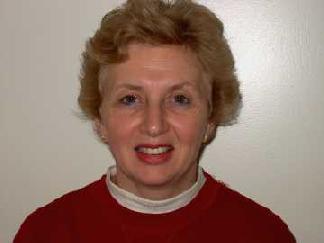
by Dianne Peck, Sydney, NS
His conclusions are based on twelve years of study and research, and his treatment of this phenomenon is authoritative and exciting. The whole point is this: we are in a longevity revolution; life spans now commonly reach into our 90’s and 100’s. But what are we doing with all those extra years? Are they just more years in which to be "old", or are they the second half of a vibrant life? I have always loved Robert Browning's line, "Grow old along with me, the best is yet to be". But until my introduction to Third Age philosophy, the concept that the best is still ahead has been more one of wishful thinking than of an established game plan. Sadler's advice is: by all means, get a game plan for the second half of your life. Following that advice will call for an alternative mindset, a revolution of images. He labels the conventional middle-age images as the D-words. They are: Decline, Disease, Dependency, Depression, Decrepitude, and of course the biggest D-word, Death. The revolution called for is to overthrow this mindset and replace it with one whose tags are the R-words: Renewal, Rebirth, Regeneration, Revitalization, Rejuvenation, and I like to add my own, Resurrection. As Corpus members or as members of any renewal movement know, revolution or paradigm shift isn't easy. The expectations for middle age have been long and solidly established. There are the jokes, such as " I m at an age when a short pencil is better than a long memory"; or "You know you re old when you bend over to tie a lace and automatically look around to see what else you can do while you re down there". They re funny, but they also add another layer to the conventional mindsets that say we are "over the hill", "too old for new opportunities", "past our prime", etc. And this fatal diagnosis begins at forty (it used to begin at thirty-five), when we still have a possible fifty years left to live. Sadler's presentation resonates for me not only because it is great news, but also because of the direction his Six Principles take. His Six Principles for turning middle age into the most important growth stage of our lives are: (Sadler, p.12) -1- balancing mindful reflection and risk-taking
The tone of these principles is in sync with that of Diarmuid O Murchu In Our World in Transition, in which he pleads for the New World that "is struggling to be born in our time". He also describes six dominant developments characterizing this paradigm shift: (O Murchu, p.146) -1- the Integration of Chaos
For both Sadler and O Murchu, the revolution at hand must take place in the personal (Sadler) and the collective (O Murchu) psyche. Not a small task for us Third Age arrivals. But a challenging, creative, and gainful one, especially since "politically, economically, and spiritually our world yearns for a whole new way of being". (O Murchu, p.152). The Focus Topic for this edition of the Journal asks if the question, "What would Jesus do?" is still a viable approach to some of the global moral dilemmas we face. These issues give abundant witness to the need for a revolutionized world view, and for a new way of being in the world, for a paradigm shift. I would like to first comment on the question itself. Part of my personal interior revolution has been to move away from structures and language that confine. For me the question "What would Jesus do?" falls into that category because in my childhood experience it and its counter-part, which was, "What Jesus wouldn’t do", have been misused. They have been over-applied, trivialized, and used to induce guilt. So my first response to the question "What would Jesus do?" is to de-code it. In order to intuit an answer I first have to reframe the question. I have been greatly assisted in this process by the concept of the Cosmic Christ as Matthew Fox presents it in his book, The Coming of the Cosmic Christ. For Fox, the issue for our millennium is the paradigm shift from the quest for the historical Jesus to the quest for the Cosmic Christ. Not that he promotes the latter at the expense of the former. What he offers is a "three-partnered dance, a trinitarian relationship between Science (Knowledge of Creation), Mysticism (experience or union with the Mysteries of Creation), and Art (the expression of our Awe at Creation). (Fox, p.78). Fox lets Hildegard of Bingen tell us who the Cosmic Christ is: I, the fiery life of divine wisdom,
We are told that every moral dilemma reveals the symptoms of an underlying dis-order, a dis-ease; that each symptom is a cry for release from the pain of alienation from the good, or from the pain of the unbearable weight of our unfulfilled yearnings for the good. And so, for myself I translate "What would Jesus do?" into "How do we respond to the yearning for good? How do we inject the divine, Hildegard's good , into all the human and planetary pain?" I have found some answers in the works of Thomas Berry and Brian Swimme, and Diarmuid O Murchu in which they address Einstein's theories of relativity and the New Science . These cosmologists are about unraveling the mysteries of the Universe. They assure us that fires from the beginning of time empower us right now. We are able to interact physically with photons from the beginning of time. We are in direct contact with the origins of the Universe. Elementary particles that constitute the Universe fluctuate in and out of existence endlessly. There was no fireball, and then the fireball erupted. Emptiness is the source of everything. Things can be understood only in relation to each other (Einstein). We humans are connected to all things because we are made out of the same matter as everything in the Universe. "And all of it dances, the stars, and every subatomic particle in them and in us, swirling about each other in the silence of the gravitational embrace". (Swimme, Hidden Heart of the Cosmos). There is something breathtaking about all this. We hear Thomas Berry say (PBS Interview), "Scientists now know that every atom is in relationship and immediately present to every other atom without passing through the intervening space no matter how many light years they are away from each other", and we catch our breath and fill up with awe. We know that somehow the answers we seek for the imbalances, the dis-eases of our world are in these mysteries. They loiter deep within us, "untapped resources of creativity & energetic potential that is longing to enter physical form and intuitive impulses that are directives for what to do next" (Carolyn Myss, www.myss.com). Our part is to flow with the paradigm shifts because they are about uncovering the archetypes and myths necessary for our time. And when a culture identifies its myths and archetypes it finds the key to its healing. Last evening, since dusk was getting serious, I decided to leave the walking track. In a backward glance I caught the silhouette of the last remaining walker. Her white hair indicated she was a well-established member of the Third Age, but her brisk gait belied it. Her body was taut, poised like an arrow in a bow as she leaned into the wind. I knew that she and the wind, the ground she walked on and the evening sky above her were one. And I knew that in this basic human activity she was creating the New World order, she was filling up the immense yearning of the Universe for good.
|
|
|
| |
|
| |
|
| |
|
 I have just learned a new name for my mid-life
stage. It is called the Third Age. According to this theory, the
First Age of our lives is the learning stage, the Second is the stage
in which we establish career/family, the Third is the growth stage,
and the Fourth is the aging stage. I like this theory. It classifies
our growth stage as the years between forty and ninety. Almost too
good to be true. But William Sadler, Ph.D., in his book, The Third
Age: 6 Principles of Growth and Renewal After Forty, is very convincing.
I have just learned a new name for my mid-life
stage. It is called the Third Age. According to this theory, the
First Age of our lives is the learning stage, the Second is the stage
in which we establish career/family, the Third is the growth stage,
and the Fourth is the aging stage. I like this theory. It classifies
our growth stage as the years between forty and ninety. Almost too
good to be true. But William Sadler, Ph.D., in his book, The Third
Age: 6 Principles of Growth and Renewal After Forty, is very convincing.