 
|
|
|
|
by D'Arcy Coulson, Luskville, Quebec
There were some who were disappointed and hurt when I left, I know. There were letters. I was heartened to realize that most of the people I worked with or knew were supportive. Many are still friends. As a family, we were to become active in a number of parish communities wherever we lived. A new member of Corpus, I have learned that my story is not unique. Are we in Corpus members of a 'transition team' looking for a role to play, and hearing the sound of silence? I remain convinced that had I been able to remain in ministry, we could have made a contribution. Anglican, Presbyterian and Jewish friends are married clergy, and are exemplary and effective. We have friends who are resigned priests, and friends who are still active in ministry, doing exceptional work . Together, we sense that organized religion in the midst of a secular sea of disinterest is in a transition period with a new Mission suited for the times that remains to be articulated. Over the years, even after I 'left', I became more annoyed and angry with my own hierarchical leadership the more I learned about the 'celibacy file'. There were problems in most countries but official silence years ago when I was in the seminary. The officials were less than forthright, in retrospect. They were good 'men of the Church', good men, but silent and terribly discreet. In effect, they misrepresented the hard truths of celibacy as a policy which was even then too often discredited in practice, choosing to 'protect' us from the truth, as the laity is now being 'protected' by silence from discussion of the continuing problem. But then I was a young adult, a college graduate, responsible for my own decisions and of age, and probably seen as a good candidate for ordination. Not surprisingly, today we have an emerging crisis in the Roman Church. I worry about the Church as a people and an institution. What can the people in charge be thinking of, given the statistics and current and expected problems? Do they have any idea what the people in the pews think? Or the people no longer in the pews? Why the reluctance to seriously consider change of Church practices and structure and policy for optional celibacy? What on earth are the people in charge waiting for? The 'sensus fidelium' supports major change. Given the choice between current policy and the preferences of the people, I would opt for the people, for the 'sensus fidelium'. The customer, as they say, is always right. Is there a mixed message, sanctity in marriage but not for married priests? Has there been discussion about celibacy as a special calling? Have there been discussions of practices in the Anglican, Protestant and Orthodox churches where marriage and ministry are blended callings? Have there been discussions of different options for ministry, full or part-time ministry, new ministry for women, celibate and married clergy working together? New approaches to training for 'work in the Church'? The reported statistics for various countries now available describe high numbers of resigned priests, very few seminarians, and an aging population of working priests in ministry soon to retire. There are sex scandals in most countries served by the Church. The present short-term problem is a manpower problem. Defined in other terms, an organizational problem which necessarily leads to a manpower shortage. And the effect? Loss of credibility, a severe shortage of clergy, change on hold, neglected and abandoned millions of Catholics, neglect of a call to ecumenism and service to those who do not believe, and maintenance of a tired and ineffectual structure with a very difficult and stressful work culture. In historical terms, a troubling transition phase from what is to what will be with few or halting efforts to bridge the two. Born of pain, a new sense of the Church and its Mission is emerging. Our problems were recognized by Vatican II, which called for policy review and openness to change. For its own reasons, present Vatican leadership seems to have assumed the role of a spoiler, resisting change, hunkering down and resorting to a strategy of denial or of silence. The silence of the Church has two dimensions: first, silence with respect to difficulties world-wide with mandatory non-optional celibacy as a policy and practice now discredited; second, silence with respect to the impending crisis of shortage of priests, an expected massive reduction of Eucharistic and other services, and probably major closure of parishes. Faced with parish closures, why the silence from the chanceries? Is there a gag order from Rome, forbidding open discussion of the impending crisis? Do they really think the laity are not aware and not deeply concerned? Surely Catholic laity and their families deserve better, deserve open discussion of the problem, and deserve an opportunity to have a say in identifying solutions. Surely there is a key and central role for our informed laity now before a more critical crisis descends. Existing polls suggest an almost universal desire for change in Church discipline. In effect, the policy of mandatory celibacy for clergy is in disrepute in the existing RC Church and will not be continued in the Church of the future. The church is in the news not for 'the Good News' but in response to the latest scandals or court cases. If the 'bottoming out' phase of AA programming is essential for change, is the Church in a 'bottoming out' mode before being forced by circumstances to change the way it operates globally and locally, while it maintains a discredited policy and practice on celibacy? Is there a shortage of vocations? There more probably are people who will not follow their calling under the present policies and practices in a Church organization that seems reluctant to bless major reform and change as needed by any global organization that would be effective wherever it operates. Closer to earth in human terms, the RC Church can be seen to have an organizational problem in 'organization' terms. As a global organization led by very human executives, the Church has an unflattering organizational profile; it has a highly centralized head office function and structure, is insensitive to regional differences, delegates inadequately, handcuffs regional managers, has faulty recruitment and job training, does not listen to the customer, follows outmoded practices, is weak on policy development and timing, has questionable advertising, has poor morale, has credibility problems, has weak market research and staff quality control, needs a renewed sense of Mission, and is unclear on accountability. And this despite excellent strategic planning through Vatican II, which seems to have been put on hold. Despite all of this, the Church has assured survival status, and is divinely mandated. At the same time, local parishes here seem vibrant and very much Vatican II parishes, though severely understaffed, even now. Preaching, participation and music are stronger locally. The remaining pastors are exceptional if exhausted. Who will help them, cover for them on holidays , or, if they are ill, who will replace them? Who will serve the people? Who will do what they have no time to do? Do those of us interested in change too quickly look for esoteric alternatives to the modern parish as a basic unit of service? Short of a renewed sense of Mission and consequent major and healthy change reflecting the best practices and successful staffing in other faith communities, in Protestant and Church of England communities and in Orthodox communities, which all benefit from a married clergy, can we expect a positive response to a critical situation? The Church should even now be researching the organizational implications of a new sense of Mission, an optional married clergy, the implications for a continued option for celibacy, the return to ministry of married priests, the implications of ordaining married men, other forms of ministry and ministers, new structures and service delivery, the welcoming of full and part-time clergy and other ministers, job training and the new financing of Church work and staffing, in consultation with the laity. One can only be sympathetic with our Bishops who must deal with awareness of the problems in their dioceses but who seem restrained from even mentioning them. One can only admire our fellow priests now active and doing their good work with very little help. The Holy Spirit remains in charge, but expects those of us who are Church
to do what is necessary, surely. Has the time come for public discussion
and lay leadership to act in the name of the People of God before the crisis
becomes more profound?
|
|
|
| |
|
| |
|
| |
|
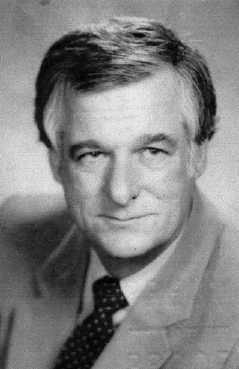 As with most other colleagues who decided to
"leave the priesthood", I struggled before coming to a decision to leave.
I loved the work and the people I worked with, clergy and laity, fine people.
I sensed that I was called to the priesthood but not to celibacy, and had
to do something about it. Too many good men and good friends had
left or were in trouble. It was worrisome. Something important
was happening in the Church and I realized that I was part of it.
I requested dispensation. My bishop was understanding and helpful.
Later, I was to meet and marry Ann, a Master in Social Work as I was, and
a good Presbyterian. We have two children. I was to run social
agencies in Montreal and to work later on social policy and senior management
development for provincial and federal governments in Edmonton and Ottawa.
As with most other colleagues who decided to
"leave the priesthood", I struggled before coming to a decision to leave.
I loved the work and the people I worked with, clergy and laity, fine people.
I sensed that I was called to the priesthood but not to celibacy, and had
to do something about it. Too many good men and good friends had
left or were in trouble. It was worrisome. Something important
was happening in the Church and I realized that I was part of it.
I requested dispensation. My bishop was understanding and helpful.
Later, I was to meet and marry Ann, a Master in Social Work as I was, and
a good Presbyterian. We have two children. I was to run social
agencies in Montreal and to work later on social policy and senior management
development for provincial and federal governments in Edmonton and Ottawa.