|
|
|
|
by Richard Haughian, Ottawa, ON (Corpus-NCR) Every month our local Corpus community gathers for a liturgical celebration. Corpus members take turns hosting these celebrations and take responsibility for preparing the liturgies. Prayer is followed by a wonderful potluck dinner, wine and socializing. After December's celebration at Jim and Norma’s home, I had a few reflections that I think would enhance our prayer time together. I would like to share these with you and welcome your comments. At our liturgical celebrations, after the scripture readings, the host usually offers a few introductory reflections on the scripture, and then invites others to share their reflections or insights. My observation is that, although the host begins with a thoughtful reflection on the scripture passages, very quickly the sharing leaves the scripture behind and enters into a discussion of various topics and issues, some of them quite predictable. During this discussion, some comments express a personal reflection, perhaps related to the scripture or the liturgical season; other comments respond to what someone else has said, which, in turn, invites another response, discussion or disagreement. Although I appreciate hearing comments or discussion on particular topics of interest, I often feel confused as to the type of group we want to be and how we are to participate. I don’t know if we are having a group scripture reflection - sharing what the Word is speaking to us that day; or a discussion group on current issues and favourite topics. I think that there is an important difference between these two types of groups - the dynamics and interaction can be very different. With the scripture reflection there is an emphasis on listening to the scripture in a prayerful manner, sharing what we have heard and understood, and seeking a deeper insight into the scripture and how it is speaking to us personally. This, of course, may lead to a reflection on current issues or topics, but the prayerful context and scripture focus are not lost. A discussion group, on the other hand, is often more intellectual, encourages interaction, response, disagreement, and the development of particular topics or themes. My preference is that the dialogue at liturgical celebrations be a reflection on scripture rather than a discussion group. There is a richness in scripture and a wealth of prayerful experience in our group that, I feel, need to be tapped. I know that I would welcome a more focused engagement around the scripture of the day and the way it is speaking to each of us. Such a focus could enrich our lives and transform us individually and as a group united in the Lord: For the word of God is living and active,
What do you think?
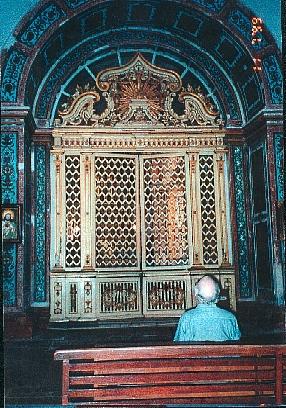
Our man in Goa at prayer |
|
|
| |
|
| |
|
| |
|