|
|
|
|
by Dan Driscoll, Goa, India
I 'returned to lay status’ (whether by reduction or promotion I know not’, God knoweth), now more than thirty years ago, My whole ‘ministerial life’ can be summed up--five years teaching senior secondary classes at St. Pat’s in Ottawa, and five more at Jasper Place; three baptisms, three burials, and one marriage other than my own. What I have to say may need some piecing together to make any sense, but perhaps something can be distilled from it. I have been much intrigued with the exchange between Chris, Jim, Francois Brassard, and Phil Little re: ‘MP participation in Parish affairs and practice---Parish Coordinators’ and I was equally impressed by printed contributions in The Journal ( 200l) by M.Zarb, F.Brassard, J. Noonan, H. Vogles and A. Menu. High caliber stuff! Makes more sense now than in Ottawa Scholasticate days when, couched in the Latin language, it went right over, under, or straight through, my head. But in the reading of The Journal, I kept feeling that I was missing out on something, and I wasn’t able to get things perfectly straight via the Web site because of vision difficulty. Now, as of a week back, I got delivery by post (overseas post can be quirky at times), with the great piece by Chris, ‘analogy of the upholstered chair’ (Chris always was a pretty good teacher); then the ‘leadership’ article by Art Menu, and Ruth Irving’s ‘Agape’, and Dr. Zarb, who surely looks every inch the scriptural scholar, with his contributions on overseer, elder, and diakonia. It is all a great read leaving me with a lot to think about. As I review my own intuitive wavering over the years, the only serious intention about 'service and participation' I can remember having was the thought of getting employment as the caretaker of a fine old church- one of any X’ian denomination, I guess, but with lots of that heavily varnished Canadian pine/fir woodwork; thus to qualify as 'servant of the servants of God' and incidentally gain rest for my feverish, Federal Civil Service tortured soul. As regards any continuance of 'ecclesial status' I regarded my dispensation as 'statutory closure' to that epoch of my life. I may not have wanted it precisely that way, but I am something of a fatalist. "Order of Melchizedek", 'indelible mark' {as per Butler's Catechism, etc.)---no longer in contention; 'strike three, and you're out; it's over when it's over.' I preferred, as my own spin doctor, to think of myself as 'returned' rather than 'reduced' to the lay state'. When it comes to ritual and devotional practice, in public, local-circle, or personal guise, I do sometimes wonder if the Lord of All really needs as much of it as has been an assumption of our culture over past generations. Perhaps 'the Church as we know it should simply be let 'die on the vine', with most 'practicing Christians' observing a generation or so of ‘The Grand Silence" while the ever evolving syntheses of world religious cultures, accelerated by new applications of communications technology, go on with a process of substitution & replacement--'the times they are a' changin'. As for the vine itself I do think of it as 'a living vine' which will not, cannot, die & which seemingly dies only to live again, over eons of cultural time in "the Garden of God." I tend to think of this more by way of ‘The resurrection’ than ‘the empty tomb’. Thus it's possible that my little janitor job might have served a valid enough purpose: simply to preserve for the contemplation and edification of future generations some tangible elements of a great cultural history (Faith of our Fathers, Holy Faith) now on the list of endangered species though I tend not to think of any species, cultural or otherwise, as ever being really 'endangered'; sap in the vine just tends to ebb and flow. The janitor job could amount I suppose to little more than my being keeper of a museum, but that might be enough; honest day's work for an honest day's pay. When the Sunday hordes come they will have a nice clean place for their 'rituals'; which in no way should be denied them, but it is not for me to 'teach them to pray'; I might better be over at the Community C'tr (more like 'the magnetic pole of the emergent Christian community) where someone might be needed to sweep up after the Saturday night dance, as I used to do when I was a reverend teacher and compulsive 'youth organizer' in the High Schools. Neither would I be completely neglectful of 'prayer': "Lord, let not there be too much spilled coke, scattered potato chips, ketchup on the drapes. Thank you Lord". Very private, personal, internal stuff, almost synonymous with one’s breathing; perhaps my Hindu friends and neighbors here are onto something about how we should pray. However, in agreement with Francois Brassard and Ruth Irving, I'm inclined to think that we will see more of the 'agape-type gathering', whereby people come ‘to gather together in His Name'. They may indeed choose for themselves a leader, perhaps even an M.P. (I don't like the word and wish we could find a better one; it looks and sounds too much like other types of M.P.!), but with the least accent on deliberation just about any lady, gent or child would do to serve as leader, for that occasion, and most likely for that occasion only; unless of course one or another proves to be especially good at it, in which case the lot might fall again and again, and new things begin to happen; but as my mother used to say, "That's a horse of another color". So much for 'parish coordination'. There may certainly be a place for it, but let no one given the prayer-leader role indulge in a hankering for things much beyond that, shortage of priests or no; with the mystical powers priests and bishops have enshrouded and enrobed themselves one might not be surprised if just three or four could do for an average sized city; once 'shortage of priests' becomes an issue there can never be enough. Here, where I am in Goa, the old Portuguese culture had practically every well-off citizen building his own chapel, so he could have a comfortable little walk for Mass, daily if you please; and perhaps Father could lead in evening rosary as well. So, you may be sure, things indeed have changed. Let Spirit shine like lightening, from the East even unto the West; 'so shall the coming of the Lord be'. What is probably needed is more takers than givers, when it comes to blazing trails for direction and flow of the Spirit. When it comes to organization and institutionalization, let us or those who come after us 'see what the future holds'. As it is I don't even feel very comfortable with a 'block devotional group' “small faith community', either for organization of it or attendance at it, and I'm not about to feel that this is a form of even mild apostasy. In fact I feel much less comfortable with that than with my old 'churchianity habit' which for some reason still dictates that I be off to my local chapel for 'Sunday Mass' whether I feel much like it or not. I call it "standing up with the Community"--'least I can do'; but it's more likely plain old 'conditioning'; from when my mother used to say, "Do WHAT you're told WHEN you're told, and we were told to go to church on Sunday. Perhaps many of us would all be better off waging a 'sunday jehad' against local filth and garbage bags. I do like the trend whereby natural human events, of family, local community, even National rejoicing, mourning, or whatever, dictate our getting together for group expression of spiritual need, and perhaps more appropriately in one another's homes than in a church. Babies are born, grandpas and grannies get sick or die, individuals become depressed; then families, friends and neighbors, even one or other from the wayside perhaps, may come together; and I have a feeling that selection of 'a presider' in such cases will be very intuitive on the part of the whole group. When the real need is there, the right person will emerge. Other than that why not simply get together for a social purpose, to meet our friends, let the children play, to sit down for a nice meal. The Eucharist probably grew out of that anyway, so we need only to say thanks without too much by way of ritualistic fuss lest we are again tempted to sermonizing and devotional cant. A piece in the local paper recently was contributed by one who had just come out of hospital. One day he waited so long for the nurse to come that he wandered through the corridors to see where everyone was. He found them in the hospital foyer having 'a prayer meeting'. I have a feeling from reading Chris Diamond that he is leading in a good way when he agrees to celebrate 'with anyone who asks and is a believer' .'I am vaguely tempted to ask, "Believer in what?", but I think that he may mean pretty much ANYONE who asks; proof of believing is in the asking? On the other hand I might not even ask; am I a believer or not? My notion would be that there is perhaps no one on the face of the earth who is not in the final analysis 'a believer'; believer in the whole of material creation as shot-through with Spirit Light; and this must be the foundation of all sacramental belief and practice in whatever cultural milieu it may be found. Perhaps I'm a little tired, though hopefully not too cynical, but I cannot be fully at ease when at beginning of the meal everyone must join hands around the table, and someone begins to make a little speech with 'thanks to the Lord' for so many things; the list of course can be completely 'inexhaustable', and sometimes there can be danger of a 'back to the pulpit hour'. I think of that great old fellow in The Beverly Hillbillies: who at beginning of mealtime would look up, wave his hand to embrace everything and everyone including the whole world itself, and say quite matter of factly, "for what we are about to receive, much obliged." "New institutions may indeed become necessary for meeting with new conditions,
just as was the case in the past. Is it not likely that the institutional
creations of the early Church HAD to happen, if there was not to be a proliferation
of cult kinds of activity in times when 'religion' seemed to border on
obsession and fanaticism. Here is where I begin to fall back more on 'separation
of church and state. There surely must be regulatory process, but is the
state authority not as well able to manage it without another vast regulatory
institution as well. The tragedy may have been that purely human (and perhaps
at times something even a bit less-than-human) ambition prevailed in many
of the earlier institutional creations. Holy Roman Empire, (neither Holy,
Roman nor Empire) and to top it all the pretensions of 'the sainted’ Pius
IX. Would all this and more be thought of in the reference Phil Little
makes to "something very wrong". But, this too shall pass.
|
|
|
| |
|
| |
|
| |
|
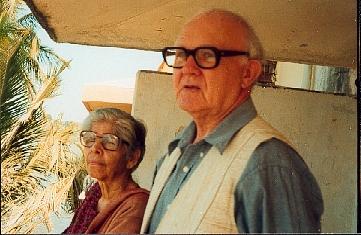 It
took me years to find Corpus Canada and when I did I was very pleasantly
surprised to find two old partners, Jim Noonan and Chris Diamond. I am
sending the following paragraphs now without any further tinkering even
if pretty rambling and wordy.
It
took me years to find Corpus Canada and when I did I was very pleasantly
surprised to find two old partners, Jim Noonan and Chris Diamond. I am
sending the following paragraphs now without any further tinkering even
if pretty rambling and wordy.