|
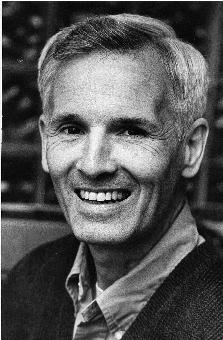
by Terry Dosh, Minneapolis, MN Terry Dosh, national coordinator of Corpus USA from 1984-90, was the initiator for Corpus Canada. His continued search from place to place connected married priests in many different ways. At that special gathering in Saskatoon in 1989, he led us through the historical path of Corpus US and inspired us all to begin Corpus Canada. He was always there to help all the leaders of Corpus Canada in so many ways. Now he has presented this fine historical analysis of the priesthood as it exists today. Bread Rising , his newsletter, has once again highlighted some aspects in this article on US demographics. We are grateful to him and pleased to be able to reprint this for our Corpus Canada community. C. Kurtenbach.
A demographic perspective of the Catholic Church in the United States over the last three decades reveals a church undergoing significant changes. Using 1967 as a base year and comparing it with the present year 2001, we arrive at some startling contrasts. The Catholic population rose 36%, that is, from 47 million to 61 million. That population is not evenly distributed. 37% live with 400 miles of New York City in the Northeast of the US. 27% live in the Midwest; or the upper tier states between Ohio and Minnesota/Missouri; 15% live in California; 9% in Texas and Louisiana; 5% in Florida. The remaining 7% are scattered over half the nation's land. The booming Hispanic population growth makes the real figures for California, Texas and Florida higher than indicated above. The Midwest is the most progressive; the East is conservative. Historic and social reasons explain this difference. Characteristics of the American Catholic Church during the last 35 years since Vatican II are as follows: • steady growth of population and economic wellbeing • steadily increasing size of parishes • rapidly increasing number of parishes without a resident priest • rapidly declining number of priests, sisters and brothers—and the rising average age of the those who remain • rapidly increasing number of lay ecclesial ministers • comparatively small number of seminarians, of which most are conservative
• continuing, steady stream of priests and religious resigning from canonical ministry. Declining number of priests and religious Using the aforementioned dates—L967 to 2001—as a framework, we first note the rapidly declining number of priests, from 60,000 to 46,000, or a drop of 23%. A quarter of these priests is now retired, which leaves 34,000 active priests. Compounding this decline is the increased average age of the priest from the mid-40s to 60. This means a mass retirement in a very few years. At present one priest is ordained for every three priests who resign, retire or die. That ratio will soon widen to 1:4, then 1:5, and so on. Chicago, the largest archdiocese is the U.S., is already at a ratio of 1:6. From 1990 to 1994 there were 600 ordinations a year. From 1997 to 2001 there were 500 per year. But we also know that 300 resigned from the classes of 1997 to 2000. That is 15% of the 2000 priests ordained during these four years. This is a significantly higher rate of resignation than existed in the earlier years 1967 to 1990 when 20% resigned within 10 years of ordination, 35% within 15 years and 42% within 25 years. A survey of those ordained since 1992 who have resigned indicate three reasons for resigning 1) celibacy; 2) loneliness; 3) lack of appreciation. The number of religious sisters and brothers has plummeted between 1967 and 2001. Sisters dropped from 170,000 to 79,000, or 55%. Brothers dropped from 12,500 to 5,500, or 56%. Here the aging factor also significantly colors the picture: today, sisters' average age is over 70; brothers' average age is over 60. The total change in numbers for priests and religious is 250,000 in 1967 to almost half of that, or 130,000 in 2001. Significant parish changes Megaparishes, especially in the suburbs of large cities, are becoming the norm. [An abnormally large parish in Los Angeles has 18,000 parishioners.] The shortage of priests is the major reason for this. A conscious awareness of this shortage is not strong. Only a quarter of the population recognizes the reality of the situation; the young are particularly oblivious of this reality. In 1967, essentially none of the nation's 18,000 parishes lacked a priest. Big city parishes commonly had 3,4,5 priests. Today there are 5,000 parishes (of a total 19,700)—that's 27%—with no resident priest. Big city parishes often have only one priest. He is often ordained but a few years, overburdened and overwhelmed by the task. [Vatican statistics report that almost 200,000 or half the parishes in the world do not have a resident priest.] The book, They call her pastor by Ruth Wallace, which details the pastoral, administrative care of 20 priestless parishes tells the story Most of these pastoral administrators are sisters. The 'circuit rider' priest is being replaced by a religious sister, a lay ecclesial minister, or a deacon. The average Catholic parish size has increased from 2,600 to 3,250, or by 24%. The ratio of diocesan parish priests to people has increased 63% from 1 1,270 to 1:2,075. The percentage of the faithful who participate in Sunday Eucharist varies from 25% to 40%, which on a worldwide scale, is relatively high. Ethnic diversity is the hallmark of the Eucharistic celebrations: 54 languages used in Los Angeles; 37 in New York; comparable numbers in Chicago, Philadelphia, Houston and other major cities. 25% of priests in the U.S. are foreign-born. Most who recently arrived are from Nigeria, India, Poland, Mexico, and Philippines. All but the Polish priests are needed back home. Lay ecclesial ministers Filling in the vacuum created by the shortage of priests and creating a new kind of Vatican II church in the process, are the lay ecclesial ministers. Only 5,000 in 1975, there are 30,000 today—with another 30,000 in the pipeline over the next ten years. Their ministry is liturgical, pastoral, educative, and embraces justice. As you can surmise, in short order the lay ecclesial ministers will overload the ecclesiastical system. Given that 85% of these ministers are women, you can see what this might do to the question of women's ordination. Over half of the current students in advanced theological or seminary studies are women. The number of women scholars is rapidly proliferating. This augurs well for the church, but will appear threatening to those opposed to change. There are several dozen brilliant women scholars who are leading the U.S. bishops and the church in a new feminine, holistic, non-dualistic, liberating direction. This trend bears watching. In 1975 there were 900 permanent deacons today there are 13,400. Their primary task has been one of service in the parish or diocese. With the shortage of priests, however, several bishops are modifying the original definition of this service into one directed more towards liturgical functions. Many deacons are resisting this trend. Seminarians The future of the institutional church, as currently understood, lies in its seminarians. But the picture here is bleak. In 1967 there were 45,000 seminarians. Today there are 5,000. They now enter later and the average age for ordination is 33. Most are conservative. The number of homosexual seminarians is proportionately much higher than the number of homosexuals found in the larger society. A recent national study reports several disturbing factors: the aforementioned two, a lower intellectual caliber than a generation or two ago, and a difficulty with a collaborative-style ministry. The big question is: Are today's seminarians prepared to become pastors in just a couple of years given the overwhelming amount of work they will face, the need to work collaboratively with lay ecclesial ministers (most of whom are women), and their own personal needs. The immediate next generation of priests faces huge individual and collective problems that their predecessors faced at a more mature age, with more pastoral experience and with more fraternal clergy support. Married priests There are fewer comparable studies on married priests (or some would say resigned) than there are on celibate priests and seminarians. In addition to the studies on married priests, there is also a growing number of autobiographies, novels, plays, TV dramas, and personal reflective essays that are making the church and the public notice a significant chapter of American Catholic Church history—one with a past and also one which wishes to gift future generations of believers. There is a serious need for research and study of this important group of unique individuals and their lives over the last 40 years. I would also ask for similar studies on religious women and men who have resigned that noble calling, often for marriage and a different vocational choice than their original one. Since 1967 some 23,000 priests have resigned the active ministry. Most of them _ married. They have also been able to use their many talents to create a new life for themselves and their families, and to help give a new vision to their church. Every third priest ordained since 1955 has resigned and married. There are as many married priests under age 65 as there are celibate priests. The number of 23,000 married priests is fast approaching the number of parish priests, 27,000. A married priesthood is a stated goal of every significant reform organization: CORPUS, Federation of Christian Ministries, Celibacy is the Issue, Women's Ordination Conference, FutureChurch, Call to Action, Association for the Rights of Catholics in the Church, Catholics Speak Out, Renewal Coordinating Community; and many local groups nationwide. Most of these organizations have existed for 20 to 30 years. More than a thousand married priests are involved in reform Organizatlons. Momentum for reform The momentum for changing the law of mandatory celibacy is here. The votes are in. The issue is a given in the Catholic psyche. Many surveys in the past 25 years indicate a sharply rising acceptance of a married priesthood [70-80%] and of women priests [60-70%]. The Holy Spirit inspires progressive movements and organizations to
strategize ways of melting the huge ecclesiastical iceberg of stolidity,
rigidity, and habit. We believe that soon—with time, history, the people
of God and the Holy Spirit guiding us—we will all be winners in a renewed
and reformed church with married and women priests. You have to believe
that!
|
 The married priests' organization in the Philippines asked me
to give them a picture of US Catholicism since Vatican II. Here is my assessment.
—Terry
The married priests' organization in the Philippines asked me
to give them a picture of US Catholicism since Vatican II. Here is my assessment.
—Terry