|
"When we change the level of our awareness, we start attracting a new reality." Gaston St. Pierre "Violence is a symbolic language of the politically dumb trying to communicate with the politically deaf." "The call of the mystic is to be more perceptive than anyone else." Leonardo Boff "You and I are destined to live out our years in the middle of a paradigm war - a world wide conflict between three mythic systems; the technological-economic myth of progress, authoritarian religion and a new emerging spiritual world view." Sam Keen "When institutional realities no longer touch the heart, are we abandoning our faith or have we simply out grown our need for them as a child outgrows her clothing?" "Even if we feel that we have outgrown our need for the Church, does the Church still need us?" "Many black African Bishops tend to be far more patriarchical than their western counterparts." "We have a deep spiritual hunger that needs to be addressed." "Prayer is love awaiting a word." Question: "Do you believe in God?"
________________________________ With quotations, reflections and comments like these, Diarmuid O'Murchu, priest, psychologist, spiritual writer and social worker, serving inner city poor in London England, enthralled, irritated, inspired and discomforted an audience of 150 laity, religious and clergy. The O'Murchu Conference was held at the Sisters of Providence Spirituality Centre, Kingston, April 28-30, 2000. The title of the conference: Spirituality for the New Millennium. As a conference speaker Diarmuid excels at eliciting and stimulating thought in his audience. He does not ask his audience to agree with him, only that they "follow him," i.e. hear what he has to say. And follow him they do, either with enthusiasm or irritation, as he fires up new ways of looking at traditional realities and comfortable values. "Beware the hypnosis of social conditioning" says Deepak Chopra. Few challenge this hypnosis more powerfully and effectively than O'Murchu.
Patriarchy In his opening session, Diarmuid challenged his audience to alter their passive and non-judgmental attitude towards the proclaimed values and structures of social institutions. Drawing heavily from a number of Christian feminist authors, such as Marie Harris, Sandra Schneiders, Joan Chittister and Elizabeth Schüssler Fiorenza, O'Murchu invited his listeners to re-examine, in a spirit of skepticism and suspicion, many of our comfortable social assumptions. Do the proclaimed social and spiritual values of our institutions actually correspond with their direction and activities? Do we have instances of institutional behaviour based on a hidden or a camouflaged agenda? What is the role of power, control and self-preservation in these establishments and how are they being exercised? To get our mental processes working O'Murchu bluntly asserted: "-that all forms of patriarchical power: political, ecclesiastical, socio-economic, scientific, medical, educational are primarily concerned with self-perpetuation. -that information from patriarchical sources is aimed at controlling its hearers and consequently is nearly always false and misleading. -that history is heavily biased towards the triumph of the victor; the loser is often made invisible. -that the claim to absolute truth is always a lie, and frequently aimed at curtailing the freedom of the hearer. -that the creativity of the imagination is the primary target of the patriarchical will to power (the myth of "control and conquer"). and -that the human desire to master creation is the greatest delusion
of all time and is responsible for most, if not all of the meaningless
suffering in the world."
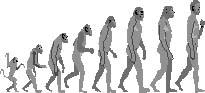
One example of the above is the fact that all of the Christian Church history books written during the first 1000 years, neglected to report almost entirely on activities of women in the Church. In some instances there might be a total of three paragraphs dedicated to women. O'Murchu believes that today many people lack faith in most of our patriarchical institutions. There appears to be a pronounced lack of confidence in leaders who represent patriarchical systems. After ten thousand years of being governed by authoritarian institutions, is it possible that we are witnessing the beginning of a terminal stage of the patriarchical era? The Human Species Beginning with the assumption that God is fully at work in creation from the beginning, Diarmuid next challenged his audience regarding their awareness of the evolutionary history of the human species. In the context of our evolving planet, (see Swimme and Berry - The Universe Story), Diarmuid wondered how conscious are we of our human history as it has unfolded over the past five million years? As humans, what is our understanding of our relationship to the cosmos and planet earth? Do we realise that our bodies are made from the carbon and base metals created by the stars? Do we understand the time frame of the human race within the planet and the universe? Or are we a community suffering from an extensive ignorance of our human history, of the history of our planet within God's womb of creation, the universe?
Two million years ago is the date currently designated as the era of Homo Erectus. However it appears that humans were walking on two legs as long ago as 3.6 million years. Homo Erectus also designates that time when humans were first engaging with the earth's environment in new ways. The use of human hands in creative and innovative task accomplishment is being documented as occurring in this period. By 600,000 years ago humans were clearly using fire as a tool even though fire may have been discovered long before this. Humans at this time were learning about energy in the context of fire. To this day, Hindus consider fire as a sacred gift and bless themselves with fire rather than water. O'Murchu expects that eventually we should be able to trace the history of human spirituality to this early period. Two-hundred thousand years ago is marked by the presence of our own human species which we call Homo Sapiens. These people were very similar to ourselves and marked by the same degree of intelligence that we find in our species today. At 100,000 years ago, scientific research has discovered that languages were common. Linguistic capability was in place. This implies that for 90% of our time on earth as a species, human communication was non-verbal. Could this mean that non-verbal communication is much more powerful and innate to us than verbal communication? Up to about ten years ago, scholars were predominantly of the opinion that it was language skills that marked the beginning of the human species. This is now being seriously challenged by scholars who argue that language is so sophisticated and complicated, that to begin with, it could only be developed by a highly intelligent human species. Creatures would have had to possess high intelligence in order to create languages. On this topic it has also been proposed that our language and speech capabilities are the cumulative effect of our sensitivity to the sounds of nature over a long period of time. At 70,000 years ago, archaeologists have found substantial evidence for human spirituality. This is particularly evident from burial customs. It is very clear that people of this era understood the sacredness of life and the sacredness of the earth and perceived the entry into dying and death as a journey. O'Murchu deals with some of this material in his most recent book entitled "Religion In Exile," which will be available in Canada shortly and is currently available in the United States.
Ten thousand years ago we had the agricultural revolution. It now
appears to scholars that women were the primary agents of this transition
and that they pioneered agriculture. It was assumed that earth was the
body of the goddess and the source of all living things. At this time cooperation
between the sexes was pronounced. But about eight thousand years ago, there
appears to be a change from collaboration between the sexes to a mode of
domination. Our modern history books designate "the Dawn of Civilization" at 5,500 years ago. This appears to mean primarily two things: (a) the development of writing skills in 3500 BC and (b) the development of the first urban cities in the Middle East.The problem is that if we identify these two features with the concept of civilization, we may be implying that everything that went before is "uncivilized." O'Murchu suggests that doing this is to abuse the meaning of the word "civilized" and manifests a great disrespect for the intelligence of our ancient ancestors. Five thousand years ago formal patriarchal religions appear. They appear to have been primarily focussed on the conquer and control paradigm and set themselves over against the goddess religions. Yahweh in his original form appears even in the biblical literature as a tribal war god in conflict with rival feminine or masculine deities. Current theological orthodoxy in acceptable God imaging and symbols for the great western religions of Judaism, Christianity and Islam has its foundation in Yahweh's relatively successful defeat of opponents back in this early period. And then Christianity appears two thousand years ago. O'Murchu believes that Christianity and all formal religions today need to be situated against this larger background of human history. In understanding the human as a religious being, there is a great need to open up our horizons of human evolutionary time. A better understanding of the history of human evolution will reintegrate us more intimately with nature and may enable us to better express our relationship to other peoples, to the earth and to the cosmos through modified stories and new rituals. As a human species, we are rediscovering ourselves as the work of God in a dynamically creative rather than a static universe. Spirituality - The Shifting Foundations Traditionally, both the Catholic Church and her spiritualities were static, closed and manageable. In the past, the clerical hierarchies of many of the formal religions including Judaism, Islam, and Christianity were able to rigidly define and guard their orthodoxies. Exclusivity manifested itself in various guises such as intolerance: "Outside the Church No Salvation!," canon law and dogma - all powerful tools of control. It was assumed that few if any people could have a spiritual life outside the structures of formal religion. Trends in contemporary spirituality are beginning to break down some of these control mechanisms. Many of the newer models of spirituality tend to be inclusive, mobile and interconnected. For example, when we review the parables, there appears to be nothing in the proclamation of Jesus that indicates that the Kingdom is for Christians only. A "radical inclusiveness" is a key ingredient in the Reign of God. Jesus never gives a concrete definition of the Kingdom but always speaks of it through the metaphor of parables and miracles (acted out parables). Compassion appears to be the golden rule in the miracle stories. Jesus is very radical in not excluding anyone—tax collectors, lepers, prostitutes, sinners of various descriptions who were ritually unclean according to Jewish law. These parables and miracles present Jesus as pointing away from himself to a "new way of being" in the world. The Kingdom proclaimed by Jesus appears to be a new world order marked by compassion, right relationships, justice, love, peace and freedom. The emphasis of the parables then is on "right relationships" with all people to the exclusion of none.
Taking their cue from Jesus' preaching on the Kingdom, many of the new trends in spiritualities are relationship (covenant) centred. They are focussed on right relationships with God, with others, with the earth and with the cosmos. We might even say that the mystery at the heart of theology is the relationality of God. The traditional doctrine of the Trinity points to the centrality of relationality. Every world religion with the exception of Islam has some sort of Trinitarian doctrine. Whatever God is about, God is about relationships. Spiritual writer, Katherine Zappone, in her book "The Hope For Wholeness" defines spirituality as "the relational component of lived experience. Why not begin where God begins - at the beginning of creation? The story of our cosmos has the divine imprint all over it. And so we ask, "What is our relationship to the whole of creation?" How do we live in a correct relationship with the earth? I enter into the world through the loving relationship of my parents. Who I become as a child is relative to my parents, my siblings, my relatives and my friends. Relationship is foundational to who I am and to who I become. Quarks, some of the basic particles discovered by science, cannot be isolated but always emerge in groups of two's or three's. Even weaving patterns of energy in physics appear to be based on relationality.
There is a change in these spiritualities from the traditional Catholic concept of revelation which is centred exclusively on Scripture, Apostles and Church Magisterial Teaching. In contemporary spiritualities the primary revelation of the divine is through creation. If we do not get our understanding and relationship to creation right, we will not get our relationship to God right. Everything is interconnected and the principle that nothing can be understood correctly apart from the whole is essential. Spiritual writer Sam Keen suggests that the metaphor of "the hero" (martyr?) so much a part of the patriarchical ideal, is beginning to break down. When American soldiers returned from Vietnam, few people received them as heroes. Keen is hoping that the new spiritual metaphor will be that of "the lover." In the meantime as we become more disillusioned with the hero metaphor we have ended up with "the rebel," hopefully on an interim basis. Working Towards Justice In our time, spirituality demands networking relationships for the promotion of justice. The shift of consciousness towards the Kingdom that Jesus proclaimed, is a call to a new set of just and inclusive relationships. Love without justice is a charade. Here we are talking about tough love. If the essence of our spirituality is relational then the essence of our sinfulness and guilt is also relational. We are a sinful community tied into sinful systems and sinful structures. However, the sinful systems and structures cannot be used as scapegoats. Justice requires changes at all these levels but in our own behaviour as well. And this requires political action through networking on our part. Greenpeace and Friends of the Earth are examples of important network groups who are composed of people from every spiritual heritage and who work to shift corporate, political and global consciousness. Some of the women's networks are also among the most creative social groups in the quest for social justice. But doing this spiritual work as individuals is extremely difficult, and very often, not much easier in an ecclesial context. Thoughts on Prayer and Contemplation Prayer is love awaiting a word. It is more an activity of God in us rather than something we do. It is the Spirit of God who prays in us. Prayer is about the experience of connection and the allurement of our interconnectedness. It is a quality of presence, stillness and silence. Contemplation links us deeply into the world and the cosmos. Choosing a good method of meditation is very important for everyone. Conclusion In conclusion, O'Murchu has reminded us that the human race has been
suffering deeply from loss of memory -- amnesia. We have forgotten our
cosmic origins and our human story. Before us lies a huge task of remembering
- re-member - put back together - the memory of our own evolutionary story. But by rediscovering that we are a people in relationship to God, to the cosmos and to the planet, we remember what our foreparents knew millions of years ago and we have forgotten. By re-membering our planetary and universe story we regain our sense of belonging, our sense of place and our sense of relationship (covenant). Re-discovering that we are a people in relationship to God, to the cosmos, to the planet and to all creatures and things will bring a new experience of faith, hope and love and a new passion for justice as the dynamic principles of our lives. Claudia and Maurice Sullivan,
|
 O'Murchu
informed us that a number of palaeontologists have now designated the beginning
of the human species at 4.4 million years, based on studies of human brain
capacity. It is even possible that this number may be pushed back to 5
million years in the near future. In O'Murchu's view religious incarnation
begins with the origin of the human species. Incarnation in this sense
implies that God has been coming in human flesh all this time. The coming
of Jesus marks, affirms and celebrates a maturation of the human species
but the evolution of the human mind and spirit continues.
O'Murchu
informed us that a number of palaeontologists have now designated the beginning
of the human species at 4.4 million years, based on studies of human brain
capacity. It is even possible that this number may be pushed back to 5
million years in the near future. In O'Murchu's view religious incarnation
begins with the origin of the human species. Incarnation in this sense
implies that God has been coming in human flesh all this time. The coming
of Jesus marks, affirms and celebrates a maturation of the human species
but the evolution of the human mind and spirit continues.
 During
the period between 40,000 and 10,000 years ago, which is called the Palaeolithic
period, humans were celebrating life with music and art. Also during this
time, there was a strong sense of the femininity of God - that God was
about a prodigious fertility. At this time the serpent was a symbol of
sexuality and fertility. Is there any connection between the snake as a
symbol of sexuality in this early period and the Christian image of the
Blessed Virgin Mary crushing the serpent under her heel, O'Murchu wonders.
During
the period between 40,000 and 10,000 years ago, which is called the Palaeolithic
period, humans were celebrating life with music and art. Also during this
time, there was a strong sense of the femininity of God - that God was
about a prodigious fertility. At this time the serpent was a symbol of
sexuality and fertility. Is there any connection between the snake as a
symbol of sexuality in this early period and the Christian image of the
Blessed Virgin Mary crushing the serpent under her heel, O'Murchu wonders.
 There
was a transition from a cooperative to an aggressive mode of behaviour.
Before ten thousand years ago scholars have no substantial evidence of
war. But about this time the patriarchal mode of behaviour arrives with
signs of warfare breaking out as the shadow side of the agricultural revolution.
(See: Raine Eisler, The Chalice and the Blade)
There
was a transition from a cooperative to an aggressive mode of behaviour.
Before ten thousand years ago scholars have no substantial evidence of
war. But about this time the patriarchal mode of behaviour arrives with
signs of warfare breaking out as the shadow side of the agricultural revolution.
(See: Raine Eisler, The Chalice and the Blade)
 Many
of the early Church Fathers saw the distinction between the Kingdom and
the Church clearly and described the role of the Church as "Servant and
Herald of the Kingdom," not as an institution to be worshipped and glorified
in herself. (e.g. Holy Mother Church).
Many
of the early Church Fathers saw the distinction between the Kingdom and
the Church clearly and described the role of the Church as "Servant and
Herald of the Kingdom," not as an institution to be worshipped and glorified
in herself. (e.g. Holy Mother Church).
 So
the newer trends in spirituality are focussed on becoming conscious of
oneself in the context of the whole of reality; my relationship to God
as revealed through the cosmos, planet earth, all creatures, human communities
and my immediate neighbours and friends. In this context we might ask,
"Do we require spiritual direction or spiritual accompaniment?"
So
the newer trends in spirituality are focussed on becoming conscious of
oneself in the context of the whole of reality; my relationship to God
as revealed through the cosmos, planet earth, all creatures, human communities
and my immediate neighbours and friends. In this context we might ask,
"Do we require spiritual direction or spiritual accompaniment?"
 By
forgetting our past, we have forgotten who we really are. By forgetting,
we have found ourselves living by a religion called "Consumerism" which
treats people, animals and things as commodities only. "Get a job, get
money, buy stuff" is the creed we live by with incessant daily homilies
from all the electronic and print media. In living by the religious values
of consumerism, we increase our distance from creation and move more and
more towards alienation and despair.
By
forgetting our past, we have forgotten who we really are. By forgetting,
we have found ourselves living by a religion called "Consumerism" which
treats people, animals and things as commodities only. "Get a job, get
money, buy stuff" is the creed we live by with incessant daily homilies
from all the electronic and print media. In living by the religious values
of consumerism, we increase our distance from creation and move more and
more towards alienation and despair.