| The Spirituality of Diarmuid O'Murchu
On April 25th, 2000 "The Journal" interviewed Diarmuid O'Murchu, a member of the Sacred Heart Missionary Congregation, at Queen's House of Retreats in Saskatoon, Saskatchewan. The Irish-born O'Murchu is a priest and social psychologist with a special
interest in paradigm shifts in the fields of theology and spirituality.
He divides his time between working with the homeless in London's East
End, facilitating workshops and writing some very provocative books. His
works include Religious Life: A Prophetic Vision (1992), Quantum
Theology (1997), Reclaiming Spirituality (1998), Poverty,
Celibacy and Obedience: A Radical Option For Life (1999), and his soon
to be released Religion in Exile: A Spiritual Homecoming.
The Journal: Is Quantum Theology a cross between Quantum Physics and theology and was that intentional? Diarmuid O'Murchu: I'm coming at it from a somewhat different angle. I'm looking at the philosophy behind Quantum Physics, which is about interpreting the universe from the principle that the whole is greater than the sum of its parts. This is distinct from classical science, which is more about the whole being equal to the sum of its parts and therefore can be reduced down to its various parts. If the greater whole is becoming the model through which we understand life at large, then I started to ask what the greater whole is in which theology needs to be reinterpreted or measured. St. Thomas Aquinas said that theology is the Queen of the sciences. I am more inclined to agree with an emerging theory that cosmology is the Queen of the sciences and that theology must become a servant science serving a larger wisdom. My book Quantum Theology is not a science versus religion approach. I'm trying to get away from that dichotomy or dualism and engage in much broader questions. The Journal: Quantum scientists and astrophysicists sound more and more like philosophers and theologians lately. People like Stephen Hawking openly discuss religious issues and concepts in their works. Diarmuid O'Murchu: That is why I followed Quantum Theology with an exploration of the distinction between religion and spirituality. Behind religion and beneath it, because formal religion is only 4,000 or 5,000 years old, is a spiritual raison d'être or hunger which is at the heart of creation itself and which I call spirituality. I have further explored this definition of spirituality in a recent book, Religion in Exile that is coming out very soon. The Journal: How long has Quantum theology been around? Diarmuid O'Murchu: The book was published in 1997 and it took four years to write it. One of the first people to give rise to this Quantum visual and new reality was Deepac Chopra in his book Quantum Healing that came out in 1986 I think. Then various economists started to talk about quantum economics and other people were discussing other quantum concepts. The time seemed to be right to bring theology, religion and spirituality into that landscape. This is what I have attempted to do. The Journal: Is Quantum Theology drawing from the wisdom of Teilhard de Chardin? Diarmuid O'Murchu: Oh yes, very much so! He would be one of the seminal, pioneering figures behind what I discuss. He is also behind the revival of creation spirituality and the new cosmology now taking place. The Journal: Parts of Quantum Theology remind me of Matthew Fox's ideas. Diarmuid O'Murchu: In more recent times, Matthew Fox would be an inspirational figure and is a person who has deeply inspired me. I think his book Original Blessing is quite an important work in our time. But the perennial wisdom figure behind this whole new emergence is Thomas Berry. Berry is more profound and eclectic than Fox with an even bigger vision of things. Thomas Berry, together with Brian Swimme, who is a lay person and a physicist, have written what is the most creative work around this whole new vision called The Universe Story. It is a book that a lot of people like myself and other contemporary explorers of this type use as a basic text. I quote from it extensively in the book Quantum Theology. The Journal: How has this theology been received by the church and the general public? Diarmuid O'Murchu: That's difficult to gauge because I've never had particularly close affiliations with the church. I am a social psychologist by profession and that's the work I've always been involved with. I've been involved in social ministry rather than parochial ministry. I've worked with homeless people, people suffering with HIV before that, and in education as well. I aim a lot of my work at that section of the human population that tend to move on the margins: the margins of the church, and the margins of political reality. I try to address the more serious side of the New Age Movement; the people who have a sense of disillusionment about the way things are and believe they could be different or better. I aim myself at a kind of "lay market" and that's where I've received some of the best reactions. I first broke into the world of writing through some of my works on religious life. My first published book in North America was called Religious Life: A Prophetic Vision. Most of the invitations I get to the USA and Canada are from religious women. A smaller proportion of clergy would also be familiar with my work, but religious women are my biggest demographic. Lately, what fascinates me is the lay people who are attending my workshops who are primarily of older age. They are age 55 and upward and are clearly "searchers" and are retired. My book about religious vows is called Poverty, Celibacy and Obedience and my publisher tells me that out of 12,000 copies sold, approximately 7,000 copies have been bought by lay people. So, I reach a different market and not so much a church-based one per se. It is the searching and exploring women religious and lay people that I hope to reach. The Journal: Your work speaks about the issue of patriarchy in the Church and appears to have touched women religious and lay people quite significantly. How are you addressing this issue and how do you see it being moved forward and healing brought about? Diarmuid O'Murchu: I approach it somewhat differently than a lot of writers. I try to depict a bigger picture and look at patriarchy from a more historical perspective and cultural significance. Part of my background involves studies in anthropology. This field has had a huge impact on my thinking. I give a lot of importance to post-agricultural times when humanity dramatically changed its attitudes on the land and creation attempting to master them both. This attitude, beginning with the Agricultural Revolution, has been with us for about 8,000 years. It is beginning to crumble very seriously. When I use the word "patriarchy" I am using it in that historical context which has inevitably had a profound influence on formal religion and its value system. They existed during the same time period. I am not bashing the Church or current institutions. I am depicting an issue, which is a bigger historical and justice-based question that invites religious women and lay people into a deeper quality of engagement. This carries some credibility for them. The Journal: How do you see hope or change coming about for people and institutions with respect to the patriarchy issue? Diarmuid O'Murchu: For a lot of the people I meet on retreats, they are connected to the church in a number of ways and are very conscious of the ways in which church tradition is oppressive to themselves and to other people. They see a lot of people damaged and hurt by the tradition of the past. They also ask themselves whether they should try to change the institution from within or move outside of it to enact change. There is no simple or easy answer to this question. I remember a conversation I had with a woman about ten years ago who came to see me as a friend and counselor. She apparently tried to explain to her priest that she was no longer attending church because she had outgrown her need for it at that stage of her life. The priest kept accusing her of leaving the church and abandoning the faith. She insisted to him that she may have left the church but most certainly had not abandoned the faith. The priest could not grasp that distinction. To my mind, that example is a very important pastoral moment that we are at right now, very much so in Europe. There are 10% attendance rates in European churches. This is a common reality being experienced in schools, universities, churches and other institutions. I feel we need to address it in a much more humane and pastorally sensitive way. The Journal: The signs of spiritual hunger being seen around the world have sometimes been described as people searching for religious experience without wanting to do the work involved. How do you view this spiritual hunger? Diarmuid O'Murchu: There are several shades of it. It is important to see the bigger picture without getting too much into the distracting elements of it. There is still quite a "New Age" slant to the movement. A lot of it is very individualistic and inward looking with no real sense of the pain and suffering of the world or the call for justice. We need to look at the situation with both the light and the shadow because both elements are there, no doubt about that! I have spent time working in Africa and a lot of African people, even those living in dire poverty, have access to a television and some to the Internet, amazingly enough. Even though they are in impoverished surroundings, the information explosion is reaching them. Communication methods are changing the level of consciousness of people quite significantly. Growing numbers of them are asking for something more of a spirituality in a continent that has a terribly conservative church. Because of the lack of deeper spiritual nourishment, the evangelical cults are moving in and occupying that empty space. This leads to the unfortunate events in Uganda recently with the massacre of 500 or so people. That's the other side of this spirituality we need to be very conscious of. The Journal: Similar to the message of Star Wars, that there is always the dark side of forces. Diarmuid O'Murchu: And in times of transition, and we are in a major one, the dark side can be very strong, frightening and dangerous. It is how we name it and interpret it that is the important thing, not just announcing it. The Journal: As people search for genuine spirituality, in what ways are you encouraging them in this quest? What should they be looking for or doing? Diarmuid O'Murchu: There are few major strands. First, there needs to be a reconnection with nature and creation. This is how we ground our spirituality so it can become much more holistic. Second, there must be a greater grounding with our own bodies. This encompasses our sexuality, which I spend a chapter on in the book Reclaiming Spirituality. This is an integral dimension of embodiment with our own personal bodies and the body of the earth. Third, being able to come home to a place of greater stillness and reflectiveness to counteract this crazy, workaholic stupor we find ourselves in. Fourth, we need to be much more creative around our use of ritual. We need to reinvent or reclaim good quality celebratory ritual that is often lost in our formal liturgies. These are the four major points I try to make regarding reclaiming one's spirituality. The Journal: In your writings you appear to be looking for meaning in the transition that is occurring in the world. Where do you see tangible signs of hope in the world? Diarmuid O'Murchu: I see it in a number of networks. To many people, they might see them as bizarre and outlandish. For example, I was affiliated with a group in my earlier days called CND (Campaign for Nuclear Disarmament). It was only several years later that I began to realize that it was the hammering away at the big institutional wall of Cold War times that eventually helped push public consciousness over a threshold concerning the nuclear threat. This work by CND and many other similar groups brought the major leaders of the world to the point of working for disarmament. Again, I look at the work of an organization like Green Peace, which I think, is a deeply spiritual movement. It is one of the better movements at bringing spirituality and politics together. It's groups like that, Friends of the earth, World watch, etc that keep the ecological issue at a level where creative people can give it a lot of energy and, hopefully in due course, governments will begin to take the issues seriously. I often cite the example of 1979 when a group of students from London called the Radical Ecology Movement held a weekend conference about the hole in the ozone layer. They invited about 50 journalists to come and give their group some publicity. Hardly any journalists came and no one understood what they were talking about. Ten years later every government in the world was talking about the hole in ozone layer. It is these movements that are prophetic, seminal movements that shift public consciousness over a threshold and, lo and behold, we realize something needs to be done. The other major movement that gives me a lot of hope and confidence, but there is a militant and dark side to it perhaps, is the feminist movement. It is a very powerful movement of our time. The Basic Christian Community movement, which is often associated with Latin America and, to a lesser extent, with Africa, gives me a sense of hope in that I see them as small justice and peace movements around the world who again are shifting consciousness. Perhaps a movement like Corpus Canada is another one of these cutting edge movements that can make a difference. It is these small, cutting edge, people engendered movements that give me a lot of hope. Another one that gives me an enormous sense of hope is the growing emergence of the laity in the church. I read somewhere recently that by the year 2010, an estimated 60% of all theologians in the Catholic Church will be lay people, and 75% of these will be women. That, to my mind, must be the greatest revolution happening in the Catholic Church since the dawn of Christianity! The Journal: You had mentioned earlier that you had heard about the married priests' organization in England called "Advent". The equivalent organization in Ireland is called "Leaven". Do you think these groups are having any impact? Do you hear anything about them? Diarmuid O'Murchu: I've been living in London now for 12 years, so I'm out of Ireland for quite a while now even though I do return often each year. The only context in which I have heard about "Advent" is that they are primarily a support group for married priests. They come together to celebrate their own liturgies and for mutual support for one another. I am not aware of the profile of "Leaven" in Ireland but very rarely do they ever make the headlines in newspapers. The last I heard about them was two years ago when some members were on a TV talk show. The Journal: Corpus Canada went through a visioning process some years ago that led to it becoming much more than a support group for married priests. Last year, for example, Corpus Canada participated in the "We Are Church" campaign. Did you hear about this? Diarmuid O'Murchu: Oh yes, that's quite active in both England and in Germany. Those groups have mounted quite substantial protests. The other group that is big in England and Ireland is the movement for Women's Ordination. They and "We Are Church" mount fairly big protests at cathedrals and churches every Holy Thursday, for example. They carry placards and chant at the entrance of the church building. These two groups are publicly very well known and seen as somewhat militant and active in highlighting what they perceive to be injustices. The Journal: Earlier you had said that there was a value to groups of committed individuals persistently working for change until the threshold can be crossed and public consciousness is transformed. Do you think this same reality applies to Corpus Canada and to readers of The Journal? Maybe we need to keep "hammering away" for justice and inclusivity in ministry and priesthood. Diarmuid O'Murchu: There are several factors to this. Now I haven't thought this one through that clearly. One of the issues that's coming up a lot for me recently, especially when I celebrate the Eucharist with groups of women, is that there are all sorts of underpinnings to this concept of priesthood that need to be examined very radically. I like the notion that Edward Schillebeeckx has given voice to. Which actually came first, the ordained priesthood or the priesthood of the people? If it's the priesthood of all the people that came first, then it gave birth to the ordained priesthood. And if that's the case, then what is stopping all the people from laying a claim to their priesthood? That's just one factor and I really believe it is a very serious theological and spiritual question for our time. Another factor struck me about ten years ago when I was doing a workshop about composing Eucharistic prayers for special occasions. Theologically, I've always believed that the epiclesis is a very important part of the Eucharistic Prayer. It struck me during the workshop that the real transformation or transubstantiation that happens during the Eucharist is through the invocation of the Holy Spirit and not through any particular power of the priest. All the people worshipping can and do invoke the power of the Spirit to transform the gifts. So, we are right down to asking what is unique about priesthood. I have said on occasion that God does not need priests, the Church does. The other issue that is going to become an enormous one in Britain particularly, is the emerging sense of frustration and disillusionment of recently ordained Anglican women. They have not been able to effect any change in the institution and claim that patriarchy in their church is alive and well. These are just some of the questions that maybe an organization like Corpus Canada could delve more deeply into. Instead of the external action of protests that have their own value and I am not opposed to, there is also something to modeling Christian community and working to change public consciousness. I often quote from a little known French Philosopher, Gaston St. Pierre, who said, "It's when we change the level of our awareness that we start attracting a different reality!" In other words, it is a more poetic version of the old philosophical dictum that "action follows thought". It's the consciousness you need to change and in due course the action will follow. Meanwhile, we do have a grave injustice in the Catholic Church around many issues related to priesthood, the exclusion of women being one of them. Another is the acceptance into the Catholic Church of married Anglican priests who are against the ordination of women. On Sunday, you then have the situation where a married Anglican priest is allowed to celebrate the Eucharist while a married Catholic priest is relegated to the pews where he cannot celebrate as an equal. The injustice of that scene is horrendous! The Journal: You mentioned at the beginning of this interview that lay people are searching for authentic spirituality more than ever and are really attracted to the things you are saying about religious life. What do you think is attracting them? Diarmuid O'Murchu: It's partly a search for community. The other thing lay people are searching for are values. In my book about the vows, Poverty, Chastity and Obedience: A Radical Option for Life, I approach them as foundational values rather than as laws. These values are ones that we share with the whole people of God. The role of Religious men and women is to be on the cutting edge in exploring how to inculturate those values in the world of our day. I address the values around ecology and sustainable living under the reformulation of the vow of poverty for example. That is something that touches every person's reality. The chapter of the book that touches lay people most deeply, judging by correspondence received, is the one on celibacy. In that chapter I discuss the need to revamp our whole understanding of human sexuality. People tell me I am giving expression to something they have been feeling and thinking about for years but have never had the courage to say themselves nor never seen it written on paper. It affirms people's search for a more intimate, integrated sense of human sexuality. I have looked at the vow of obedience around issues having to do with a greater sense of cooperation and collaboration as a more effective way of working rather than the competitive, authoritarian way in which we often work. That too seems to have some appeal for people. I use my whole notion around the reframing of the vows that really all our vows, if lived out of a value base, are about non-violence as a fundamental value. That's a phrase that has a lot of meaning for people in their own search for a more wholesome way of living. So, the search is about community but it's also about the search for more integrated wholesome values. The Journal: Any other comments that you would like to make that haven't been raised yet? Diarmuid O'Murchu: It would be quite interesting to hear the reaction of Corpus Canada members and "The Journal" readers to my most recent book called Religion in Exile: A Spiritual Homecoming (New York: The Crossroad Publishing Company, 2000). I have gone a step further than in Reclaiming Spirituality by using the metaphor of exile. I suggest that growing numbers of people in our world today are feeling a sense of exile and that religion itself is contributing to it. The exile is not one from God as many spiritual writers have claimed in the past because one can never really be exiled or alienated from a God who loves us unconditionally. Our alienation and exile is actually from creation as a result of an older spirituality that promotes our mastery of the world, the abandonment of the world and the rejection of its values and wisdom. Much of this spirituality emerged out of the celibacy issue. We now must befriend our world and befriend the God who creates within that world. This is what I call the jour-ney home, which is the second major metaphor and the title of the second half of the book, Religion in Exile. It would be interesting to hear the reflections of "The
Journal" readers who have been through a lot of exile in their personal
journey and what "coming home" has meant for them. To what extent is that
experience reflected in the book or could other parts of the book be further
developed to highlight the appropriateness of that metaphor? I certainly
would welcome some feedback on that.
Interview conducted by Sheldon Oleksyn,
|
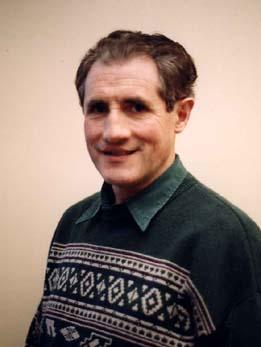 An
Interview With Diarmuid O'Murchu, msc
An
Interview With Diarmuid O'Murchu, msc