Go to Journal 26

Guestbook
Comments?
"The consequent removal of all vestiges of the polytheistic cults of the past centuries is a good indication of how thoroughly assimilated to the common paganism of the Syro-Palestinian people the Jerusalem monarchy had been. It was not only the Asherah--a cult symbol of unknown nature, though certainly a stela of some sort--but also a host of pagan idols and cultic installations, including even booths of some sort serving cult prostitutes in the temple itself. The horses and chariots of the deified sun are mentioned, recalling the Greek myths concerning Helios and his daily chariot ride across the sky. The defilement of the local 'high places' as well as the Tophet, where the aristocrats of Jerusalem, like those of Carthage, sacrificed their surplus offspring to Molech (?) is described at some length."
"Jerusalem from 1000-63 BC" by George E. Mendenhall in Jerusalem in History, K.J. Asali ed. with an introduction by Rashid Khalidi Olive Branch Press, New York/Northhampton 2000, p. 62
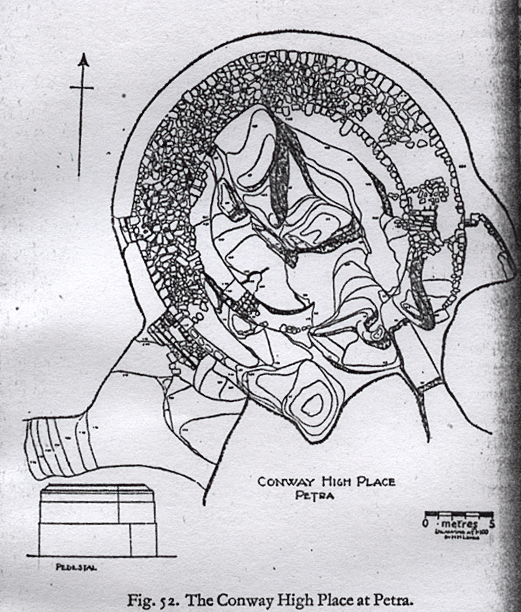
2. The circum-ambulatory design of the Dome of the Rock, similar to the "tawwaf"(Arabic=going around the Ka'ba at Mecca) of Muslim ritual at Mecca indicates that this rock outcropping was the pagan 'high place.' See the line drawing of the pagan high place at Petra