
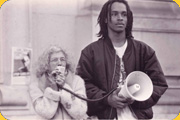
Significantly, San Francisco State's strike for Ethnic Studies prompted a similar strike on UC-Berkeley's campus. The resulting Ethnic Studies departments at both SFSU and Berkeley were the first of their kind in the nation. After the SFSU strikers successfully shut down the campus on three separate occasions, they eventually gained the support of the American Federation of Teachers (AFT). The AFT went on strike along with the students for several weeks.
On a general level, the strike signified the potential for change through direct and grassroots action. This discovery empowered both the students and community leaders who sought to represent their community's racial and ethnic diversity. More importantly for the Asian American community, the participation of Asian American students in the strike signified a shedding of silence and an affirmation of their identity.
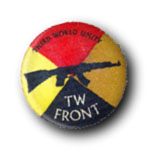
Besides various Asian American student organizations and groups, the two major groups involved in the student strikes were the Third World Liberation Front (TWLF) and the Black Students Union (BSU). At the beginning of the strike, each group gave a list of demands for the school and its administration.
1. That all Black Studies courses being taught through various departments be immediately part of the Black Studies Department and that all the instructors in this department receive full-time pay
2. Dr. Hare, the chair of the Black Studies Department, must receive a full-professorship and higher salary
3. The Department of Black Studies will be able to grant a Bachelor�s Degree
4. All faculty and staff of the department will have to sole power to hire faculty and control and determine the destiny of the department
5. All unused spots for black students from Fall, 1968 under the Special Admissions Program will be filled in Spring, 1969.
6. All black students wishing admittance to SFSU will be allowed entrance in Fall, 1969
7. Twenty full-time teaching positions will be allocated to the Department of Black Studies
8. Dr. Helen Bedesem, the Financial Aid Officer, will be replaced by a black person
9. No disciplinary action will be administered against any students, workers, teachers, or administrators due to their participation in the strike
10. The California State College Trustees will not be able to dissolve any black programs on the SFSU campus
11. George Murray will keep his teaching position for the 1968-1969 academic year
1. A school of Ethnic Studies for all of the ethnic groups involved in the TWLF be set up with the students in each particular ethnic organization having the authority and control of the hiring and retention of any faculty member, director, or administrator, as well as the curriculum in a specific area study.
2. That 50 faculty positions be appropriated to the School of Ethnic Studies, 20 of which would be for the Black Studies program.
3. In the Spring semester, the College must fulfill its commitment to the non-white students in admitting all those who apply.
4. In the fall of 1969, all applications of non-white students be accepted.
5. George Murray and any other faculty person chosen by non-white people as their teacher be retained in their positions.
1. 1964-1966 = The end of the civil rights era is marked by the ideals of "racial harmony" and "participatory democracy"
2. 1966-1967 = The implementation of programs under the banner of "serve the people" and "self-determination"
3. Fall 1968-Winter 1969 = A struggle by "any means necessary" (strike)
4. Spring-Summer 1969 = The repression of protest and continued "commitment to the community"
1. Strike occurred at a working-class campus and involved a coalition of Third World Students
2. Strike was rooted in the tradition of resistance by past generations of minorities in America
3. Strike leaders drew inspiration from Third World and other international leaders
4. Strike confronted basic questions of power and oppression in America
5. Demands raised through mass mobilizations and militant, direct action