
Grandma's back pantry was visual proof of her poverty. Just past the square tub wringer washer, standing stoutly in the corner like a suit of armor, sunlight filtered through the plastic-curtained window. Perched on the sill were orange tree seedlings, garishly in tune with the decor in their tincan nurseries. Grandma had planted those orange trees from the seeds of fruit received in Christmas baskets.
On the walls of the pantry hung dishpans of all sizes, old calendars with older pictures and a clothespin bag made from a well-worn little girl's dress.
Against the back wall was a two-piece sideboard, covered with so many layers of paint the drawers groaned when opened. The top section housed the food of winter: jars of every size and shape and filled with jams, jellies, meats and vegetables. Beneath these, drawers and doors hid items that could not be discarded, lest their worth be wasted.
The left-hand drawer was the treasure chest of my childhood. A treasure to race to before we'd even say hello. But Grandma would always smile as though we'd just hugged her.
Ahh, the treasure.
Empty wooden thread spools and used shoelaces; a partial set of worn dominoes, with dragons on the back side; one cap gun - no caps; sometimes a cast iron car and sometimes not.
And that was all.
Below the drawers and in the doors, old hometown newspapers were neatly stacked. They would line the walls and keep the winds of winter at bay, and also provide bored teenagers with tuition-free lessons in history. A history filled with outlandish fashions and unheard of retail pricing, all spiced with the foibles and fanfare of relatives and the relatives of friends.
A good time was had by all.
There's a merchandising promotion on my pantry wall from the Cozy Cafe. An art print on cardboard about the size of a big postcard -- it has eleven leaves of a calendar stapled in a pad to the middle of the backside. January is missing.
The picture on the front is of a man pushing a baby carriage with a woman and six children trailing behind. The caption?
VE GET TOO SOON OLDT -
TOO LATE SCHMART
The Cozy Cafe, now a vacant lot, served hot meals on heavy, white platters. While my ma waitressed out front, I washed dishes.
I loved my job. On my knees on a chair, its back to the sink, I was draped in a wide, white apron with strings wrapped twice around and tied in front. That apron was always wet, but I was lulled by the sizzle of the griddle and warmed by the muted laughter and the soft clinks and clanks of fork-to-plate from the front room. While I scrubbed stacks of heavy dishes, I was in turn bathed in the camaraderie of a small town eatery.
Once the noon rush was over, I got to sit at the counter on a red vinyl-covered swivel stool and eat hot mashed potatoes and gravy on one of those heavy white platters I'd washed myself.
The best perk of my first job? It didn't take much wiggle to set that stool to spinning. And in those days being told to sit on it and spin was a good thing.

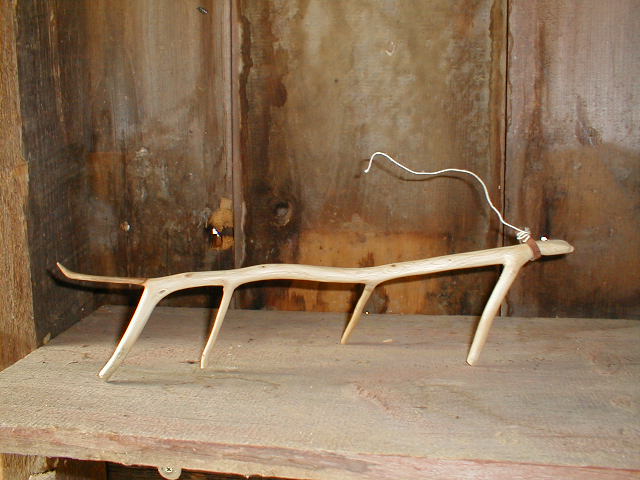
the Dog - Eastern Red Cedar
If all but myself were blind, I should want neither fine clothes,
fine houses, nor fine furniture.
Benjamin Franklin

