Preamble Works,
Kubrick Retrospective, Dr Strangecoke, John Laws King Hit, South
Park's brilliant lyrics.
PREAMBLE
WORKS
I think the preamble actually sounds really good.
It contains no "mateship", refers to all the important
aspects of our history and refers to the indigenous people. While
some have attacked it as not going far enough with regards to
indigenous people, I would argue that it is better than the
original version and also that this is the best possible preamble
anyone could have hoped to get out of Howard. The whole republic
and preamble question would've taken a different role with a
Beazley PM and Costello opposition - but a few electors in
marginal seats have denied a truly unique opportunity to come up
with anything better. But still, you've got to be impressed with
Howard. He's a committed monarchist and has kept his promises in
regards to the referendum. But the preamble to me strikes me as
concise and gets across "our" values without being as
patriotic as the Americans. It won't be too hard for people to
learn off by heart, so I can imagine that school kids will learn
it as part of their education. Compromising can work, and it
looks like the new Conservative-Democrat coalition is changing
the shape of policy in Australia (that's an article in itself -
the Democrats have made the Government look relevant and not as
conservative as it did a few years ago).
KUBRICK
RETROSPECTIVE HIGHLIGHTS GENIUS
I've always been a fan of Kubrick. The cinematic
style was matched with an intellectual edge that made the movie
accessable to many people but at the same time a work that would
reward people who paid attention to detail and watched movies
over and over. In fact, I would argue that Space Odyssey requires
at least two viewings and comment should be reserved on that film
until after multiple screenings. Full Metal Jacket is another
example of a film that keeps on gaining more and more from
viewing after viewing. The reason why people usually don't
appreciate his longer films would not like it at first is that
they are so differently tuned to more traditional Hollywood
narrative. Who, for example, would shoot a sequence showing a
battery being changed in space, or a man shadow boxing while
doing exercise in the space craft? But scenes like that because
they are "slow" are not slow by any visual standard.
Anyway, I digress.Here are reviews of almost every one of his
feature films:
THE
KILLING, PATHS OF GLORY, LOLITA, DR STRANGELOVE, 2001:
A SPACE ODDYSSEY, A CLOCKWORK ORANGE, BARRY LYNDON, THE
SHINING, FULL METAL JACKET, EYES WIDE SHUT
DR
STRANGECOKE?
Rudolph Pereira,
otherwise known as Dr Strangelove, has been inspired by Eyes Wide
Shut to reveal that his constant need for coke comes from a
"repressed" childhood that continues to this day. His
desire from this repression excises itself whenever he is amongst
his fellow humans with the utterances "coke - need coke -
need more coke." Professer Dumsign has been consulted by AV
editors in order to ascertain the veracity of such a claim, and
to see how much repression has resulted in this
desire for "coke":
"We can
see that desire comes from repression (in which knowledge forms
itself as knowledge). When Focault said that criminality becomes
a "repressed" so as to make "normality" exist
(or the dominant term), so too can we say of Rudolph that his
constant cries for coke, make us normal. But this doesn't go to
the fact of HIS REPRESSION. For Freud, desire was primary to
knowing - and it was connected to one economy of desire, one
libido, and this was masculine - it was based on the phallus -
its presence and its absence (castration). It's not surprising
that Pereira would have this reaction after watching a Kubrick
film - especially since he did see Dr Strangelove as well. But it
is not Freud alone who termed desire in terms of presence and
absence - Grosz points out that both cultural and philosophical
history has this DESIRE emerging as a point of something being
inherently lacking. So, because Rudolph has coke lacking in his
childhood and perhaps in his own home (as Freud would say - the
place of the mother/father battle and as I would say, the place
where the castrating mother presides supreme), he is castrated so
to speak, and craves for it whenever on group events. But then,
one could say: "why doesn't he stop the craving when he
drinks the ten litres or so every group meet"? Grosz says:
"For
Plato, desire is a yearning for access to the good and beautiful
which man himself lacks. This platonic model in which desire is a
lack, an absence, a yearning for an object (in this case, a
sugary drink), provides the most pervasive model of desire in the
history of philosophy"
This platonic
model therefore tells us that desire cannot exist without lack -
and even when we have our desire satisfied, it is not satisfying
fully (hence the success of materialism). Therefore this constant
need for the coke. It can never be fulfilled - only to find the
desire magnified in intensity over the period in which he can
satisfy the unquencheable desire."
Professor Dumsign
has also made the extraordinary link between freudian theory and
Pereira's need for coke in a specific way:
"Freud
always said that phallus as symbol identifies with power of
father to avoid lack of mother. And this can be taken in the
metaphorical context. The absence of coke in the Pereira
household is like the absence of a phallus - and this coupled
with "home" as the primary place of the castrating
mother makes the trauma all the more apparent. Pereira therefore
has an oepidal complex in that he wishes to enter the power of
patriarchal society, and coke therefore becomes the object by
which he can physically meet out his desire to exist within this
sphere. One must therefore pity Pereira when he says "coke.
need coke." It is a guttural cry that stems from this
oepidal devastation. It is not surprising therefore that whilst
watching films about desires, or films coded in Freudian imagery,
that Pereira is able to come to terms with his coke desire.
Indeed, one wonders whether his constant need for coke during a
film is symptomatic of this hidden desire that has acted as a
mask for so long. And in Eyes Wide Shut when Dr Bill sees his
mask for all it is and sees that it is the mask that has been in
the bed of his wife for so long, so too does Pereira begin to
realise what is behind that real need, the real desire for coke -
more coke."
The end result is
the hope that we can all take time to understand the complex
interplay between the Dr Strangelove and his coke. If we can all
become understanding of the imbedded psychosis behind it, instead
of sneering at it, we can see it for what it is - the arrested
development of childhood paranoia and outdated philosophy.
SOUTH
PARK REACHES BRILLIANT HEIGHTS
For a movie with crap animation, vulgarity on a scale that
puts to shame the Farrelly brothers, swearing that puts to shame
Tarantino, exaggerated sexual situations, depictions of violence,
personal attacks on celebrities and irresponsible comments on
celebrities, South Park is perhaps one of the year's most
relevant, thoughtful and outstanding films. Behind this layer of
sewer lies a message that needs to be said about the state of
"censorship", the double standards that society places,
and the culture of blame that runs rampant in today's society.
For a film so "outrageous", this film has a heart that
is extremely conservative in its outlook. It prides itself on
individual responsibility and individual action - over what a
society is responsible for. It locates responsibility in parents
and not in the state. All of these thoughts are the staple diet
of conservative ideology. But when it comes to censorship -
conservatives tend to be the opposite of themselves. They
advocate free trade and personal responsibility on economic
matters - but with morality and the arts, there is this desire
for control and societal action. It is a contradiction that comes
out in South Park, as the parents go to the ridiculous lengths of
blaming another country (and even funnier from anyone that knows
the america/canada rivalry) Canada, for the vulgar film that has
children speaking like crude adults. Apart from the multitude of
visual gags in the film, and film references from Star Wars Ep I
to Forrest Gump, and celebrity bagging, there is also some very
interesting social comment. The frontline soldiers for the
American army is really funny as satire, and so to is the Jar Jar
quote (clearly telling us who they think Jar Jar is a caricature
of).
South Park begins with a hilarious almost sound of music
type opening number where Kyle talks about the wonders of
Southpark - this "little red neck" town. It borrows and
parodies from the great musical traditions with the chorus'
ending expanding after each singing. There are little visual
touches and word turns that set you up for South Park, which
turns traditional animation music on its head thematically. The
boys then set out to go see the new Terrence and Philip movie
"asses of fire" - the whole point of these two is that
they fart - fart and swear - and the boys find it very funny.
This is the first clue to the message - not everyone finds
certain sorts of comedy or certain types of portrayals as funny
or desirable or good. Anyway, the boys are not allowed in because
it is "R" rated (or MA in Australian terms). So they
pay the homeless man 10 dollars (also part of the social
commentary in the first song of the film) to buy them tickets (R
movies are like MA, you have to be accompanied by an adult). Now,
the funny thing is that the same thing hapenned to us when we
bought tickets to South Park film because we had a 14 year old.
The attendant said something like this: "The movie is MA,
it's not for children... it should have been rated R". And
I'm thinking, how arrogant is that - surely responsible adults
should not be told by some poorly paid nim wit what sort of film
they can take children (14 year old ones at that) to see. A
Grandmother, exasperated by the amount of patrolling, told the
security guard at the door - "please don't give me that
warning again." If only they had warned me about the dangers
of "Blade" - maybe I would have reconsidered when
taking my cousin into it. If we had been told that there were
scenes of a vampire sucking blood off a human being, my cousin
would have known not to go in - but alas, with the word Fuck,
shit, arsehole, clitoris and a multitude of sexual references, it
is a much higher standard. Having said that, South Park does push
the barrier on swearing, on everything. It is deliberately crude.
They did not make this movie for kids, they made it for adults -
and if adults are discerning enough or stupid enough to let kids
under 10 watch it, then that's a bi product of their stupidity. I
mean, why should a 14 year old, who is intelligent and
understanding of satire, humour and language be disallowed into
this movie (in my opinion, the classification in Australia was
right not to give it an R rating - even though if you look at
Orgazmo, South Park amazingly escaped an R rating). It is in my
opinion a great satire, and should be shown to mature children as
an example of mob mentality over censorship issues (among other
things). In and of itself it is funny as well. As Roger Ebert,
the sharp cut between the content and the basic animation
constantly surprises. And seeing children utter things like this
is very naughty. And that a movie like this can shock us, shows
how well brought up we have been. Movies like South PArk,
Something About Mary, Dumb and Dumber, AUstin Powers are slowly
attacking the politeness that has veiled much of our society -
sometimes behind politeness lies ignorance and stupidity - so
when it is brought to the fore, and characters say what they mean
- we as an audience can realise our own prejudices. South Park
does this as well. The references to Jews and the depiction of
Saddam Hussein are really exaggerations of images society has had
implicitly throughout respective time periods.
Anyway, without wrecking the plot, America calls a war on
Canada, Hell and Saddam are "partners in crime" and
Kyle Stan and Cartman have to save the world. It is the stuff of
hollywood narrative - but again, done with brilliant musical
numbers. The Les Miserable send ups are extremely funny (the le
resistance pieces): the Devil's Disney send up is also
outstanding (forget the words - how did they get it to sound just
like a disney film): George Clooney's guest appearance (though
not musical) and heaps of other things. This movie is perfect for
its time, and the cleverest film of the year. The satire in this
film hasn't been matched in film for a while yet. This movie
setsout to be so bad but in the end affirms why film
classification boards should allow parents to make choices for
their children, and why personal responsibility should rest in
the end on the individual first, rather than fingerpointing
everyone and everything else.
87/100
LES MISERABLE, MUSICALS AND SOUTH PARK
Those familiar with the musical Les Miserable, will be in
tears of laughter at the opening chords and notes and
orchestrations of some of the tunes in South Park. Blame Canada,
takes on the resonance of Do You Hear the People Sing, but the
highlight of the Les Miserable references comes in the brilliant
medley: LA RESISTANCE. Not only does Les Miserable do a rousing
medley in its musical, mixing up all the themes, but even the
opening words, vocal expression and key changes are almost
identical to the musical style of the slower les miserable songs
that build up in intensity. Bring Him Home is the one that sticks
out, but if you have a Les Mis CD at home, you'll know straight
away. By the end of the medley, when all six themes are going on,
most if not all the audience will miss out on the lyrics the
yardale boy sings. So here, from the beginning are the lyrics of
this song, which quickly turn crude (mirroring the quickly
turning crudity of the film after the "Sound of Music"
like opening - including a Maria like turn from Stan on the
pavement):
(yardale boy) God has smiled upon you this day
The fate of a nation in your hands
And blessed be the children
Who fight with all our bravery
Till only the righteous stand
you see the distant flames
they bellow in the night
you fight in all our names
for what we know is right
and when you all get shot
and cannot carry on
though you die - La Resistance lives on.
You may get stabbed in the head
With a Dagger* or a Sword
You may be burned to death
Or skinned alive or worse
But when they torture you
You will not feel the need to run for
Though you die, la resistance will live on!
------
(kyle's mum starts)BLAME CANADA;
(army men) Tommorrow night our lives will change;
(Satan) Up there;
(terrence and philip) Shut your fucking face;
(kyle and co) Why did our mothers' start this war, what the fuck
are they fighting for;
(kyle's mum again)When we win this war, No more Celine Dion
(Kyle's mum):
-------
(yardale boy) They may cut your dick in half
and serve it to a pig
and though it hurts you'll laugh
and your God's* a dickless chick
but that's the way it goes
in war your shattered lung
though we die, la resistance lives on!
Other musical references include a parodying of the Disney
musical style - including the key change and the over-exaggerated
ending of Up There. Even the way Satan staggers before his first
note evoke the Beast from Beauty and the Beast, and even the
songs of the Hunchback of Notre Dame. By playing on the Disney
musical style, it makes Satan's personality even wierder than
already presented (just like animated kids who swear is funny,
just like fart jokes and toilet humour canadians are funny -
think Jim Carrey). The ending of up there though, suggests also
making fun of the way "popular" singers interpret
Disney songs. I usually like the way the animated characters sing
it, not the mariah carey or big star version. The music in SOuth
Park should surely be the frontrunner in the score category for
the oscars next year. I suspect it will be overlooked for the
work of Disney, the very studio it makes fun of. but wouldn't it
be funny for Trey Parker and Marc Shaiman to pip Phil Collins
(Tarzan) for best song at the oscars.
EXCLUSIVE
SNOW REPORT FROM THE LUXURY OF THE THREDBO VILLAGE
 |
JOHN
LAWS KING HIT
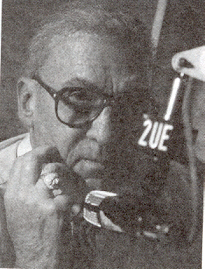
For those of us who
thought that the end of the days of Stuart Littlemore
would bring an end to the Media Watch
we loved had our fears almost completely allayed last
night as John Laws took one of the mightiest blows of
Media Watch since Channel Seven's fake Spain footage.
Media Watch showed that John Laws had changed his tune on
the banks (from outrage to now positive remarks), not
only for over a million dollars, but that it was he who
came to the banks with the proposal. The question
everyone would want to know therefore would be was John
Laws being so harsh on them to get the advertisment - and
if so, did he bribe or blackmail them - albeit in an
underhand understated way?
|
John Laws, who
makes a segment called "the whole story" on his show
every day, is PAID 1.2 million dollars a year by the banks to
provide the "whole story" about banks. I listened to
the John Laws show with utter amazement and laughter when he said
"banks are made of people too... so there" (or
something like that). The amazement was because Laws had been one
of the most outspoken critics of the banks on his show - which
reaches up to 2 million Australians - most of them older
Australians angry with the banks for the exhorbitant fees they
charge for over the teller deposits, non-bank ATMs and long
waiting queues in banks. It was obvious to me that it was an
advert because when he says "my friend at" - that means
it is a paid advert. So - "my friend at Toyota" means
that he is getting paid by them to do that sort of stuff. It is
something Laws gets paid personally to do because his personal
endorsement of a product is done with that John Laws touch. Now
to me, it was funny to see how quickly his views had changed
because of the paid advert - but this to me was nothing knew.
Laws had called John Howard almost a political whore because
Howard favoured Alan Jones (breakfast announcer) over him during
the election campaign. No surprises that he has changed his mind
since then. Even with advertisers, it's up to the highest bitter
- no wonder then he changed from Morteinn to Raid in adverts. And
if anyone has read Philip Adams book on the radio Kings, he calls
Laws the least with principles because he doesn't have any. Back
then, Adams had made these amazing little observations that are
now entering the mainstream:
"Laws is an
undeniably talented communicator.... It's a voice paid to fame by
Mortein (dated - he has switched to "the better
product") and Valvoline, now beloved of Optus and Toyota and
an incalculable number of well-satisfied advertisers. His poise
is such that he can hold a 'spontaneous' 4 minute conversation on
the merits of a flower shop, or appear on TV with 11 of his
motocars pligging their lubricator, and keep a straight
face." Seeing him talk to a listener about how beut the
Toyota Camry is (Has he even driven one?) is always a highlight.
Anyway back to Adams: "Laws's 2UE salary of about 3 million
plus proit share, only opens the bidding on his annual take. His
resonant live ad "reads" bring him $150 a pop, or
$24000 for the 160 reads he averages each week on 2UE alone - not
taking into account any payment for reads broadcast on the 78
syndicates. (Adams notes he also has country music collections,
top selling poetry). On the strength of all this, 2UE showcases
Laws's 9.00am to noon program as 'The Fortress of Knowledge', a
semi tonge-in-cheek apellation which both recognises his
impregnable position on the airwaves and flouts his desired
commercial reputation as the last bastion of truth in a silly,
silly world. Aided by his 'hand maidens', Laws is able to tend to
any inquiry put to air, rolling out answers, editorials and ads
in a seamless drawl of beguiling certainty. As the end of this
book may suggest it's a dangerous brew in the wrong ears."
This
"dangerous brew" of mixing editorial, ad and answer was
exposed in full eloquence by Media Watch on Monday night as Laws
appeared to be nothing short of bribing the banks. He allegedly
(according to the bank association confidential memo) approached
the association saying that he could provide more positive
editorial if they support his whole story segment. Laws has
admitted that the banks do support that section of the show - but
he has maintained that the banks approached him. That he
approached them is shocking - as I say, it looks like blackmail.
But either way, having a paid advert in between "the whole
story" segment - no matter who approached who, is disgusting
and shows yet again how easily Laws can be bought by anyone. If
anyone is a radio whore, it is Lawsy in the morning.
Unfortunately many of you don't watch his show, so below is a
link to Adams's book of the way Laws mixes conversation with
advertisement. They are hilarious and as Adams says, don't need
any parodying. But what Laws did with the banks was more sinister
- the problem is the banks have been in the spotlight publicly
over their failure to provide adequate services to the most
vulnerable of customers - pensioners and the poor. That Laws is
popular amongst these people makes the whole exercise even more
distasteful and cowardly. Laws of course will survive this one -
but the mainstream coverage (except in the daily tele - I'll get
to that in a sec) of the expose will be a lesson to media
announcers to exercise their care. Why should anyone trust Laws
on any matter if he thinks this arrangement is OK? The problem
is, the stupid fools who are unable to come to grips with such an
ethical dilemma will support laws and get caught up in the
dangerous brew of editorialadverstising. Even with Toyota,
Valvoline and Optus it was very dicey what he was doing ethically
- but now, as part of a "dream teamm", he can hold many
people to ransom through his views only to change them when they
cough up enough dough. And 1.5 million dollars is peanuts to the
association when a positive word is put in during the "whole
story" (he reads the daily piece brilliantly - and there are
some really good stories - the type that make listeners proud to
be aussies and by association more open minded about why banks
lob 2.50 over the counter charges - because yes, they are made up
of "people" just like the church). Is it any wonder he
doesn't see anything wrong with his bank editorials because he
doesn't see his relationship with them any different from Toyota,
Optus, grass growing company, coffee companies, restaurants, etc.
- they're all just mates, so long as theey keep paying up.
CLICK HERE for funny Ad-Conversation excerpts
from Talkback: Emperors of Air
PS. I said I was
going to mention the Daily Telegraph. Well, don't be surprised if
the story hardly makes an appearance in that paper until Laws
okays it (with the editors in that paper right behind him - watch
out for Piers Akerman to do an anti-ABC pinkocommotrotski's piece
in the coming days saying that Laws has done nothing wrong). So
far, it has been out of the limelight in Murdoch press whereas
all the networks I've seen have had it as a major story
(including Today Tonight's lead). Why? Well, Laws is not only a
columnist for new limited Sunday Telegraph BUT he is also the
front for the Foxtel (news corp part owned) show that he hosts. I
also wouldn't be surprised if Lawsy's trouble was also not
reported on the nine network - or not very prominently. The Nine
Network's owner also has a substantial share in Foxtel (it could
be half - though I'm not entirely sure). Anyway, this is very
interesting - and something to look out for in any editorial or
news story to be published in any Murdoch papers. One of the
problems with such a concentration of media ownership is that
things like this would be even harder to become public knowledge
when there is such power held by one player. If seven, ten and
nine were not separate to newspapers and radio, God only knows
how much harder it would be for the media watch expose (and with
ABC cuts, who knows what could happen).
return
to archives
return
to main page