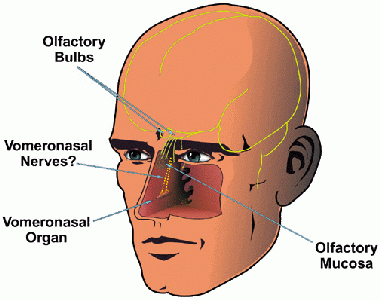
Importance of the Vomeronasal Organ
Sixth Sense: The Vomeronasal Organ
VNO in Human and Animal Systems
The Science of Human Pheromones
- sex
- hunger
- fear and anger
- body temperature
- heart rate
It was identified in humans more than one hundred years ago, but scientists assumed it was a vestigial or useless organ because of its small size compared to the larger size found in other animals such as pigs who rely primarily on their VNO for survival.
However, in one study in 1958, histological examinations of the nasal septum revealed the presence of the vomeronasal cavities in approximately 70 percent of all adults. Years later in 1991, microscopic examinations revealed the presence of VNO's in 100 percent of adults.
The existence of a VNO in human fetuses has been known
for a long time but its usefulness in adults has been rarely reported mainly
because of the fact that in the animal kingdom, higher level animals (primates,
humans) have significantly reduced VNO's due to the evolution of more advanced
means of communication. There are many skeptics
to the claim that humans indeed have a functional VNO because that it has
diminished in size over a long period time, because we have become more
reliant on visual and auditory cues in terms of mate selection.
Back To Top
2001 Jennifer N Singleton
Last Updated July 17, 2001