Boda 22/6/2003 Wedding



|
Boda 22/6/2003 Wedding
|
|
|
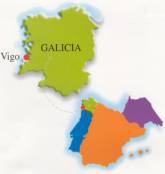
The first thing we want you to know is that Vigo belongs to Galicia, part of what it’s called “Green Spain”. So think not of the typical tourist Spain – the sun, sand and high-rise hotels. This is an expanse of land, rich in history, unique landscapes and beauty. An area that has it's own individual attractions, with a coastline full of cliffs, beaches, tiny ports, major cities and even inland mountain ranges with hidden valleys. Now that we have caught your attention, we will really try to make your trip as smooth as possible. We have attached a little guide to Vigo, and instructions about how to get there.
A little guide to VigoHow to get to VigoMoving aroundUseful telephonesMap
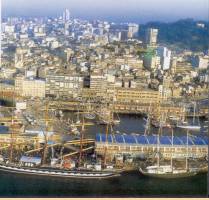
It is a large city (around half a million inhabitants). In fact, it is the city of Europe which has grown most over the twentieth century, although it has been capable of maintaining its rural origins, its traditions, culture and its many natural delights.
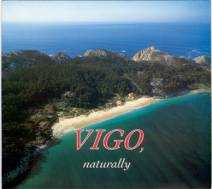
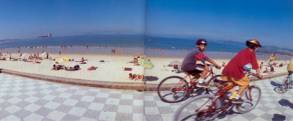
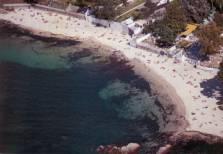
Vigo enjoys a mild and warm climate throughout the whole year, with 120 sunny days and temperatures varying between 14 and 27ºC. This excellent climate enables you to take advantage of 22 white sand beaches, all of which with facilities (toilets, telephone, food etc.), recreational areas, complementary sports facilities, green areas, and thick vegetation right up to the sea edge. Cíes Islands is a natural paradise, only forty minutes by regular crossing ferry. It is the home to 15,000 nesting pairs of birds and its surrounding waters (declared a Natural Park) are filled with seaweed and anemones, where there is a rich variety of fishes and sea food. Vigo and its surroundings has three golf courses- Aero Club, Ría de Vigo Golf and Mondariz. On top of the city parks, Vigo posses 11 forest parks to go trekking or simply enjoy nature.
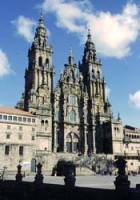
The cathedral is the seed of Santiago. It was built to shelter the remains of the Apostle James, and it suffered several reformations. The impressive Baroque front modeled in the middle of the 18th century holds the most significant Romanesque cathedral in the Christian world. Behind the sublime front we can see the top work of the Romanesque, the Pórtico da Gloria, made by the Mestre Mateo in the 12th century. The cathedral is surrounded by five squares; all of them magically structured to harmonize the cathedral. The best way to perceive the essence of the city is to go around by its streets. Each building in the old city transmits a part of the history of this impressive city museum. The medieval streets are finished in the squares. The life from other centuries is between the stones.
It is useful to know that on June the 23rd is celebrated the traditional Bonfires and St. John's Eve Fiesta in almost all the neighborhoods of Vigo. St John's Eve is one of the most important fiestas in Galicia from an anthropological standpoint. Deeply rooted in pagan customs, it is a celebration of the arrival of summer with bonfires and all sorts of festivities revolve around them. Many magical rites are associated with this tradition: jumping over the bonfire, gathering the traditional herbs and plants, washing oneself in spring water at dawn, and many more. Finally, we recommend to you to take a little phrase book Spanish-English. Due to not being a “typical” tourist place, most restaurants won’t speak English. However, most youngsters will have a basic knowledge of English (it is compulsory to study it since you start school). WE HOPE YOU ENJOY YOUR STAY!!!
How to get to VigoBy Plane: This is your most probable choice for you. The modern airport of Peinador, located 10 km away from the city center, provides a wide offer of regular flights to Madrid, Barcelona, Bilbao, Paris and Frankfurt, as well as charter flights. Unfortunately there are no direct flights from UK to Vigo, but all air companies will take you there via Madrid and Barcelona. The cheapest option is taking your fight from London and then changing in Madrid or Barcelona. You may also get the first flight from Manchester. Cardiff offers flights to Spain, but to the Mediterranean coast (Málaga and Alicante), and from there you’d have to get another plane to Vigo (usually via Madrid). If you wish, you could also get a direct flight from London to Santiago de Compostela (100km), or Porto (150 km), and then take a bus or a train from there to Vigo. By Road: From inland Spain, you can get to Vigo by taking the Autovía del Noroeste, which connects directly with Madrid (667 Km). The autovía de las Rías Baixas connects Vigo with Tui, and the Autopista do Norte de Portugal, which passes through Braga and Porto. The Autopista del Atlántico, connects Vigo with the North of Galicia, and passes through Pontevedra, Santiago and A Coruña. The city is accessible by these three routes, and if you decide to drive a car, it is around 5 hours away from Madrid, under 2 hours from Porto and 1 hour from Santiago. By train: Vigo’s railway station is in the city center. As well as frequent services to Santiago, you can also take daily express trains to Madrid and many other cities. By Bus: Vigo’s bus station has links with all the main Iberian cities: Madrid, Bilbao, Porto... as well as international routes to the UK. But, if you decide to go to Vigo by bus, it’s going to be a long journey!!
MOVING AROUNDHiring a car: There are car-renting agencies in the airport and in the train station, and they will charge you between £75-100 for 3 days renting and £150-190 for 8 days, depending on the car you choose. Remember that in Spain you drive on the right, and IT IS DANGEROUS if you are not used to it. Expect heavy traffic on the city and quite a few rude and nasty drivers together with a lot of hooting. Taxi: All taxis are white, and you can flag them down, get them in a taxi rank, or phone the telephones 986 272 829 / 986 252 700 / 986 470 000. Note that if you phone them, they will charge you from the moment you make the phone call. If you take a taxi for a long distance (out of the city), they are supposed to charge you around 77 cent of Euro per kilometre. Local buses: They are green buses that function from 6 am to 11 pm, approximately. Only one single ticket is sold which is valid for the entire trip. Sea transport: The Company Naviera Mar de Ons provides a regular sea transport service between Vigo and the localities of Cangas and Moaña, with daily departures and arrivals throughout the whole year, every hour or half-hour according to the route. During the summer, its service is extended to include tours and expeditions to the Cíes Islands. There is also a daily tourist cruise along the Ría (Bay) that lasts an hour and a half, in witch you can enjoy tasting the typical products, and includes a crossing to Cangas and Alcabre, together with a trip through the Strait of Rande, that gives the name to the battle it was held against the pirate Francis Drake some centuries ago. Telf 986 225 272 The tourist bus: It is in service normally from June to September. For a low price, the traveler has a complete trip through the city, in which he is told about the history of Vigo ant of its monuments. As well as learning about may of its interesting features. You can get off where you like and take the bus again later. Telf 986 810 302

|