R. BHASKARA NARAYANAN on Web
SAURASHTRA STATE WAS CONQUERED IN TO TWO STATES NAMELY GUJARAT AND MAHARASHTRA AFTER INDEPENDENCE.
SO BOTH GUJARAT AND MAHARASHTRA STATES IN PART OF OLDEN SAURASHTRA STATE.
Saurashtra (Now renamed as Gujarat) figures in the Puranic Literature and the epics. The regions of north
Gujarat are also known as Anarta after Sharyati's son. Anarta's son Revata rules
Kushsthali, the present Dwarka, which was the capital of Anarta. The river
Narmada is also known as Reva after a descendent of Revat of the same name.
Mount Girnar is also known as Raivataka which is also derived from Regvat.
Lord Krishna, the hero of the Puranas, the author of GITA, the song
celestial, and one of the most endearing, colourful and loving Gods of Hinduism,
left Mathura along with his maternal grandfather Ugrasen and others of his Yadav
followers and settled down in Saurashtra near its coast. Lord Krishna carried th
banner of the Aryan culture over a large tract covering the whole of Gujarat and
beyond. He fortified the ancient Kushsthali which later became famous as Dwarka
meaning gateway. Lord Krishna's brother Baslaram got married to Revati the
daughter of Kukudmi of the Revat dynasty. Varja, the son of Anirudha and
grandson of Lord Krishna, was the only survivor of the internecine strife among
the Yadavs, Arjun, the famous character of the Mahabharata, crowned Vajra as the
ruler of Mathura and with that came to an end the Yadav dynasty's sway over
Saurashtra.
Apart from Anart, parts of present Gujarat were also known by other names
like Lata, Saurashtra, KUchchh, Aparanta etc. in the earlier days. These areas
differered from time to time. This led to development of varied traits in these
regions. Devoid of read political identity the different areas developed
independent social and cultural identity. This lack of real political identity
was more than compensated by the people themselves by acquiring an aggressive
individuality.
The early historynof Gujuarat is full of imperial grandeur of Chandragupta
Maurya who conquered a number of earlier States of Gujarat. Pushyamitra , a
Vaishya, was appointed Governor of Saurashtra by the Mauryan regime. He ruled
(322 B.C to 294 B.C) Giringer (present Junagadh) and built a dam on the
Sudarshan lake. Emperor Ashok, the grandson of Chandragupta Maurya, not only
ordered engraving of his famous edicts on the rock at Junagadh, but asked his
Governor Tusherpha to take out canals from the lake where an earlier Maurayan
Governor had built a dam.
Between the decline of the Mauryan power and Saurashtra coming under the sway
of Samprati Mauryas of Ujjain, there was a Greek incursion into Gujarat led by
Demetrious.
For nearly 400 years from the start of the first century, Saka rulers played
prominent part in Gujarat's history. Wheather beaten rock at Junagadh gives a
glimpse of the Ruler Rudradaman (100 A.D.) of the Saka satraps known as
Kshatraps. Mahakshatrap Rudradaman I founded the Kardamaka dynasty which ruled
from Anupa on the banks of the Narmada upto Aparanta region which bordered
Punjab.
The Kshatrap dynasty was replaced by the Gupta reign with the conquest of
Gujarat by Chandragupta Vikramaditya. Vikramaditya's successor Skandagupta has
left an inscription (450 AD) on a rock at UJunagadh which gives details of the
repairs of the embankment, damaged by floods, of Sudarshan lake by his Governor.
Anarta and Saurashtra regions were both part of the Guipta empire. Towards the
middle of the 5th Century A.D. the Gupta empire started to decline. Senapati
Bhatarka, the Maitrak general of the Guptas, took advantage of the situation and
in 470 AD he set up what came to be known as the Maitrak kingdom. he shifted his
capital from Giringer to Valabhipur, near Bhavnagar, on Saurashtra's east coast.
Maitrakas of Valabhi became very powerful and their writ prevailed over large
parts of Gujarat and even over adjoining Malwa. Maitrakas set up a university
which came to be known far and wide for its scholastic pursuits and was compared
with the famous Nalanda university. it was during the rule of Dhruvasena Maitrak
theat Chinese philospher-traveller Huan Tang visited in 640 AD.
Dadda, the founder of Pratihara dynasty, established the Gurjar rule at
Nandipur (Nandol). Dadda III wrested Broach from the Maitraks whose citadel had
started shaking. In fact, there were three powerful dynasties which were ruling
different parts of Gujarat: the Gurjars had their sway over the north, the
Chalukyas ruled the south and the Maitraks were saddled in Saurashtra. The
vaccum created by the fall of the Maitrak dynasty was filled up by the
Pratiharas from the north and Rashtrakutas from the south.
As vassals of the Valabhis, Chavadas held their sway over parts of north
Gujarat. They assumed independent control after the fall of Valabhi. Vanraj,.
the most prominent of the eight Chavada kings, founded a new capital at
ASnhilpur Patan. he reconquered his father's lost territories and founded the
Chavada dynasty which lasted a shade under a century.
Samantsinh, the last Chavada ruler, did not have an issued and he adopted
MUlraj who overthrew him in 942 AD and set up what came to be known as the
Solanki dynasty. Ambitious as he was, he started expanding his frontiers and
established his complete and total hold over Saurashtra and Kachchh by defeating
Grahripu of Junagadh (Saurashtra) and Lakho Fulani of Kachchh. M ulraj Solanki's
reign marked the start of the most glorious period in the history of Gujarat
during which Gujarati culture flowered as manifested in art, architecture,
language and script. It is described as the golden period in Fujarat chequered
history. Mulrag himself adopted the title lof Gurharesh ( King of Gurjardesh).
The territoporieds under the sway of the Solanki dynasty same to be knon by
different variations of teh wokd Gurjar like Gurjardesh, Gurjararastra,
Gurjaratta and finally Gujarat.
Two mames stand our in the Solanbki dynasty. The fiest is that of Sidhrag
Jayasinh who ruled for 47 years from 1094 A.D. and the second prominent Solanki
King Kumarpala's reign lasted for 31 years from 1143 to 1174 AD Apart from
Saurashtra and Kachchh, Sidhraj Jaysinh also conquered Malwa. One of the
favourite legends with the Gujarat Bards is woven round the siege of Junagadh by
Sidhraj Jaysinh. The fort was ultimately captured by hims along with Ranakdevi,
the Queen of the ruler Rakhengar. However, in the true tradition of the Rajputs,
Ranakdevi preferred to become a 'sati' rather than marry Sidharaj Jaysinh who
was persuaded to allow Ranakdevi to commit 'Sati' by burning herself on a pyre
at Wadhavan. A temple was built on the hallowed place where she became a 'Sati'.
The temple still stands in Wadhavan, Saurashtra, as a mute testimony to the
woman who preferred death to marriage with the person who had humbled her
husband. The temple is called Ranakdevi's temple.
The guardian family deity of the Solankis was Somnath at Prabhas. Ironically,
it was during the Solanki's rule that the scared shrine was sacked by Mahmud
Ghazni who defiled and despoiled the fabulously rich shrine and put 50,000
Hindus to sword. The temple was destroyed with its Linga during the regime of
Bhimdev I Bhimdev's successor Karandev defeated a Bhil chieftain and founded
Karnavati. Karandev married Minaldevi by whom he begot Sidhraj who ushered in
Gujarat's golden period. Sidhraj's successor Kumarpala encouraged Jainism. Bal
Mulraj successfully repelled the incursions of Mahmud of Ghor who had the
ambition of repeating the act performed by Mahmud Ghazni.
After the fall of Solanki rule, VAghelas who were in the service of the
Solanki's established a rather shortlived (76 years) but powerful dynasty. The
two rulers of this dynasty, Virdhaval and Vishaldev, were responsible for
consolidating the stabilising the prosperity of Gujarat after the fall of the
Solankis. While Vishaldev built the famous temples of Daboi and founded
Vishalnagar, the credit for building magnificient temples at Abu, Girnar and
Shetrunjay goes to two distinguished Dewans - Vastupal and Tejpar - of Virdhaval.
Of the sack of the Somnath by Mahmud Ghazni, Kinlock Forbes, a British
historian, had this to say "Mahmood of Ghuznee had hardly accomplished his
disastrous homeward retreat, leaving behind him Unhilwara despoiled and Somnath
a heap of ruins, when the sound of the hammer and the chisel was heard upon
Arasoor and Aboo, and the stately fanes began to arise at Koobharea and Delwara,
in which an elaboration almost incredible and a finish worthy nof the hand of a
Cellini, seemed to express the founder's steadfast refusal to believe in mlechh
invaders, or iconoclastic destroyers, as other than the horrid phntom of a
disturbing dream."
Karandev of the Vaghela dynasty was the last Hindu ruler of Gujuarat. he was
defeated and overthrown by the superior forces of Allauddin Khilji in 1297 With
his defeat Gujarat not only became part of the Muslim empire but the RAjput hold
over Gujarat lost for ever.
Muslim Period
 Before they finally
entrenched themselves in 1298, the Muslims had only an occasional contact with
this part of India. This was either as sea-farers or traders. They were allowedx
to establish two small settlements in Cambay and Broach. Abdulla, a missionary
from Egypot, who came during Sidhraj Jaysinh's regime and was allowed to
preach,. is credited with the formation of Bohra community among the Muslims.
However, after the defeat of Karandev Vaghela at the hands of Allauddin Khilji,
Muslim rule continued for nearly 400 years either under Delhi's viceroyalty or
under Muslim Sultanates till the MUghal viceroy, Monimnkhan was defeated by the
Marathas who captured Ahmedabad in 1758.
Before they finally
entrenched themselves in 1298, the Muslims had only an occasional contact with
this part of India. This was either as sea-farers or traders. They were allowedx
to establish two small settlements in Cambay and Broach. Abdulla, a missionary
from Egypot, who came during Sidhraj Jaysinh's regime and was allowed to
preach,. is credited with the formation of Bohra community among the Muslims.
However, after the defeat of Karandev Vaghela at the hands of Allauddin Khilji,
Muslim rule continued for nearly 400 years either under Delhi's viceroyalty or
under Muslim Sultanates till the MUghal viceroy, Monimnkhan was defeated by the
Marathas who captured Ahmedabad in 1758.
Zafar Shah, a vicerory of Delhi for Gujarat, was responsible for starting
tyhe Sultanete in Gujarat. he fully exploited the then prevailing conditions in
Delhi to his advantage. He shook off his loyalty to the emperor, declared
independence and became the first Sultan. he assumed the title of MUzaffar Shah.
His successor Ahmed Shah founded a new city, following a dream, on the banks of
the River Sabarmati and named it Ahmedabad after his own name. Since then, this
new city became the Capital of successive regimes. It grew into a flourishing
city city and became next only to Delhi in importance.
Mahmud Shah succeeded Ahmed Shah, Mahmud became a powerful ruler and was
successful in over powering and subduing most of the Rajput chieftains. As a
conqueror Mahmud was ruthless, as an administrator efficient and as a builder a
great one. Apart from subduing the RAjpuit chieftains, Mahmud also successfully
checked the Portuguese menance with the help of a naval fleet raised by his
slave named Malik Ayyaz. He set up his Naval base at Diu off the Sautrashtra
coast.
Under Mahmud Shah Gujarat once again became prosperous and there was a great
deal of progress and building activity. Patan, the ancient seat of Hindu
learning, once again became a seat of learning in Islamic disciplines. The
avilable infrastructure at Patan was exploited by Mahmud Shah. The decline of
the Sultanate started with the assassination of Sikandar Shah. Because of this
decline Gujarat became an easy prey to the great Mughal Emperor Akbar's armies.
Bahadur Shah, the last Sultan, was defeated which marked the begining of the
Mughal rule which lasted some 185 years.
Notwithstanding the fact that Gujarat became a part of the MUghal Empire its
importance did not diminish as is apparent from the selection of the ablest
princes as Gujarat's viceroys. Murad, Shah Jahan, Dara Shekov were all made the
Viceroys of this West coast region. The formal MUslim rule in Guijarat ended in
1758 when Momin Khan surrendered to the Marathas.
The Marathas and the British
 When the cracks had
started developed in tghe edifice of teh Mughal empire in the mid 17th century,
the Marathas were consolodating their power in the west, Chatrapati Shivaji, the
great Maratha ruler, attacked Surat twice first in 1664 and again in 2672. These
attaackes marked the entry of the Marathas in Gujarat. Hooever, before the
Maratha in-roads into Gujarat, the Europeans had made their presence felt here
with the Portugese leaeding them follwed by the Dutch and the English.
When the cracks had
started developed in tghe edifice of teh Mughal empire in the mid 17th century,
the Marathas were consolodating their power in the west, Chatrapati Shivaji, the
great Maratha ruler, attacked Surat twice first in 1664 and again in 2672. These
attaackes marked the entry of the Marathas in Gujarat. Hooever, before the
Maratha in-roads into Gujarat, the Europeans had made their presence felt here
with the Portugese leaeding them follwed by the Dutch and the English.
The Pesghwas had establish ed their soverrighty over Gujarat including
Sauratstra and collected taxses and tributes throgh their representaaves. DAmaji
Geakwad and Kadam Bande divided the Peshewa's territory between them with DAmaji
establishing the sway of Geakwad over Gujarat and made Barodssa his CApital. The
ensuing internecine war among the Marathas werte fully explotied by the
Britishers interfering in the affairs of both Geaskwads and the Peshwas. The
Britishers also wmbarked upon their policy of Subsidiary Alliance. With this
policy they establoshed their paramountcy over one princely state after another.
Anadrao Gaekwad joined the Alliance in 1802 anbd surredered Surat and adjoining
territories to the English./ In the gasrb of helping the MArathas the Britishers
only helped themselves and slowly and gradully the Marathas power came to an end
in Gujkarat in 1819. Geakwad and other big and small rulers accepted the
Briuthsh Paramonthcy.
Pre Independence
Pre Gujarat has played a key role in the freedom struggle specially after
Mahatma Gandhi's taking over of the leadership of the fredom movement. Besides
Mahatma Gandhi, Gujarat has been the home of such stalwarts like Dadabhai
Naoraji, Pherozshah Mehta, Badruddin Tayabji, Vithalbhai Patel, Sardar
Vallabhbhai Patel who took a leading part in India's struggle for freedom. A man
of tremendous foresight and endowed with an earthy rustic sense, Sardar
Vallabhbhai patel was the one person responsible for persuading the princely
|States to merge with the Indian Union when the Britishers left India dividing
the country into India and Pakistan. The house of Tatas, the pioneers in the
industrial advancement in the country, and Swami Dayanand Saraswati, the great
social and religious reformist, also belonged to Gujarat.
www.1upindia.com
There was a tribe named Gurjaras who came in Gujarat around the 5th century
AD. The name Gujarat comes from these Gurjaras.This was the time when the Huns
came marauding up north. A large number of Gurjaras settled up north, but a
majority moved towards the western coast where they settled for a Gurjara
Rashtra. These lands were ruled over by Hindu regents for several years. This
was also the entry point for the Zoroastrians into India, who fled Persia to
escape victimisation from Muslims who had by then, virtually overrun the middle
east. Parsis were welcomed into the Indian community by the local Rajas, in turn
they adoped Gujarati as their language.
Gujarat had long been prized property,
especially because of its coast. The Rajputs managed to ward off the Muslim
invaders for a while, but their superior armies soon took over the entire
region, and the Sultans of Gujarat ruled these lands from the 11th century right
through to the 17th century, when they finally lost their lands to the
Europeans. After Independence, British-ruled Gujarat and the several princely
states were clubbed together to form the state of Bombay, subsequently split
into Maharashtra and Gujarat.
Gujarat is one of the most prosperous
states in the country, with Gujaratis counting among the most financially secure
communities. In India and abroad, Gujaratis with their indomitable spirit have
emerged among the world's premier business communities.
INDIAVISIT.COM
Situated on the western
coast of India, the name of the state is derived from Gujjaratta, which means
the land of the Gujjars. It is believed that a tribe of Gujjars migrated to
India around the 5th century AD. The real cultural history of these people,
however, is believed to have begun much earlier. Many Indus Valley and Harappan
centers have been discovered in the state like Lothal, Dholavira, Rangpur,
Lakhabaval, Amri, and Rozdi and established the earliest known history of
Gujarat to around 3000 BC to 2200 BC. At that point of time, Lothal was the main
port of this civilization. With the advent of the Yadava tribe led by Lord
Krishna, some 3,500 years ago, came the glorious days for Gujarat. It was
followed by 100 years of Lord Krishna's rule.
It is believed that Ashoka, the Mauryan king extended his kingdom to Gujarat.
The fall of the Maurya Empire led the small kingdoms to establish their power in
this state from time to time. The state achieved a high level of prosperity
during the time of Solankis from the 9th century. In the 12th century AD,
Allauddin Khilji, the Sultan of Delhi defeated the Waghela king of Gujarat and a
long era of Muslim rule over Gujarat started. The Marathas ended the Muslim rule
in the 18th century only to be handed over to the British in the early 19th
century. Surat was the center of the first factory of the East India Company in
India. After the First War of Independence in 1857 the region came under the
British monarchy along with the rest of the country.
Gujarat was a part of the erstwhile Mumbai state till 1960, when the people of
Gujarat decided to have their own state on the basis of their distinct language
and culture. This led to formation of the two new states of Gujarat and
Maharashtra.
AHEMADABAD.COM
Gujarat turns 42 - garvi history
Gujarat marks its 42-year of
formation after independence today. Historians say that people settled there in
the Stone Age and Gujarat's historic period is linked with the spread of the
Harappan civilization, which flourished in the 3rd and 2nd century BC.
The known history of Gujarat
goes back to the Mauryan dynasty and the rule of Emperor Asoka. During the reign
of the Gupta dynasty Gujarat progressed remarkably in the economic and cultural
fields.
Ahmed Shah, the first
independent sultan of Gujarat, founded Ahmedabad in 1411. It was in the 16th
century that the Marathas took over Gujarat from the Mughals. The British East
India Company took charge of the administration of the state in 1818.
With Indian independence in
1947, all of Gujarat except the states of Kachchh and Saurashtra were included
in Bombay, which was a state at that time. On May 1, 1960 Bombay was split into
Gujarat and Maharashtra.
Gujarat derived its name
from the Gurjara, who ruled the area during the 8th and 9th centuries AD. Our
Garvi Gujarat is rich in culture and heritage. Gujaratis have shone in India and
abrod also. Despite the 2001 quake people in Kutch and Bhuj, the worst affected
areas, have tried to bring life back to normalcy.
Gujarat boasts of a
coastline of around 1500-km and is one of the most highly industrialized states.
Architectural perfection is seen at temples of Dwarka, Modhera, Girnar, Palitana
and Somnath.
Great leaders like Gandhiji
and Sardar Patel were born in Gujarat. Poets like Umashanker Joshi, Narmad,
Sundaram and Ramesh Parekh also belong to the state.
Industrialists like
Jamshedji Tata, Dhirubhai Ambani and Karsanbhai Patel also from Gujarat. Gujarat
has seen eminent media personalities like Shaurabh Modi and Sanjeev Kumar.
Renowned scientist Homi Bhabha also belonged to this place.
Recently there was news that
a 7000 year old civilization was found at the creeks of Khambhat. Though it is
yet to be confirmed, if proved true Gujarat will change the course of history
JAMNAGARONNET
The Jamnagar district, originally constituted as Halar district, is
not only recent in its origin but also in its modern set up. But the region
comprised therein is of great antiquity and dates back to ancient periods of
Jamnagar. According to Pauranik literature, Lord Krishna established his kingdom
at Dwarka, now in Jamnagar district, after his migration from Mathura and it is
to this great Yadava race that the Jams of Nawanagar trace their descent.
The
foundation of Nawanagar State is credited to Jam Raval. In AD 1540 after winning
conquests Jam Raval founded the city of Nawanagar.
During
the rule of His Highness Jam Ranjitsinhji, between 1920 - 1930, he developed the
city according to western architecture and built Power House, Vibha Vilas
Palace, Jam Bunglow (Bhavendra Vilas Palace), Pratap Vilas Palace, Mann Vilas,
Amar Vilas, Arch Vilas, Badminton House, Filtzer House, Coach House, Irwin
Hospital, Solarium, Vegetable Market, Grain Market, Nana-Ashapura's Temple,
Sajuba Girls' High School, Wellington Crescent, Bedi Bunder, Rajput Boarding,
Infantry Lines, Jam Raval's Statue, Jam Ranjit's Statue, Nursing School, Dayaram
Library, Port Office, Central Bank, Summair Club, Railway Station, Parsi Agiyari,
Anandabava Ashram, extention of Lal Bunglow, Ranjit Road, Central Bank Road,
Rajendra Road, Khambhalia Gate Road, Jam Bunglow Road, Talav-ni-Pal Road, being
the main ones.
After
His Highness Jam Ranjitsinhji, His Highness Digvijaysinhji was bethroned (1933 -
1948) and he built Digvijay Woollen Mills, Aerodrome, Dhanvantri Mandir,
Digvijay Plot, Gulabnagar, Valsura, Ranjit Swimming Pool.
The
present district takes its name from the city and capital of Jamnagar so named
after the rulers who styled themselves as Jams.
The
Halar district which was constituted for the first time in the year 1949 after
the merger of princely states into the state of Saurashtra, constituted of the
former Indian states of Nawanagar and Dhrol, Dhrafa Thana and part of Jalia
Dewani. After re-organization several territorial changes were effected in
practically all the districts of Saurashtra. On June 19th 1959, the
boundaries of the district got enlarged by the inclusion of the adjoining
Okhamandal, when Halar district was renamed Jamnagar. This district became part
of the newly born State of Gujarat on the bifurcation of the composite State of
Bombay on May 1st 1960.In the year 1961 the district consisted of 720
villages and 15 towns.
Languages
|
|
Gujarati is the mother tongue of 95.48% of the population of
Jamnagar district. The number of speakers of other languages is
insignificant. The Gujarati script used universally by the speakers of
that tongue is very much akin to Devnagari, but unlike Devnagari it is
written without the line overhead. "Kachchhi" the next important
language of the district is spoken slightly differently but written in
Gujarati script.
|
TRADEWINGS.COM
Gujarat has a history which is 2000 years old. This region has
seen the rise and fall of the Mauryans, the Guptas, the Pratiharas, the
Chalukyas and the Marathas. Its coastal location has been subjected to many
foreign invasions, like the Moghuls, Portugese and British. Prior to
Independence Gujarat was a part of Erstwhile Bombay Presidency. The separate
State of Gujarat was formed in 1968. Gujarat is also the homeland of Mahatma
Gandhi. Currently it is the foremost among the Industrialized states in the
country.
A brief history of Gujarat:
|
2500 BC
|
Harappans settled here from Northen India and formed towns and
cities.
|
|
100 to 500 BC
|
Yadavas ruled Gujarat with Dwarka as capital.
|
|
100 AD
|
The Satraps took charge.
|
|
388 AD
|
The Guptas came to power with Vallabhi as capital.
|
|
1000 AD
|
Chauhan (Solanki) ruled Gujarat.
|
|
1299 AD
|
Muslim rule was established under Alauddin Khilji.
|
|
1307 AD
|
Muzaffar Shah's declaration Independence from Delhi marked the
foundation of the Sultanate of Gujarat.
|
|
1500 AD
|
Moghul Emperor Akbar conquested.
|
|
1613 AD
|
The British East India company set up original Indian Headquarters
in Surat.
|
|
1818 AD
|
British rule was established.
|
|
1960 AD
|
Bombay state was split and Gujarat State was created.
|
|
Current
|
Gujarat is currently one of the most industrialized State in
India, with textile Industry and trading activities being predominant.
|
Somnath
is about 5km from Veraval and had a checkered history. It is believed that the
Somnath temple here was originally built by Somraj, the Moon God himself, out of
gold, then rebuilt by Ravana in silver and then by Krishna in Wood, then by
Bhimdev in stone. Ghazni Mohammed descended on Somnath in 1024 when the temple
was so prosperous that it has 300 musicians, 500 dancing girls and 300 barbers
to shave the heads of visiting pilgrims. There is a description to this effect
by Al Biruni, an Arab traveller. After a two-day battle, Ghazni Mohammed carted
off its fabulous wealth and also destroyed the temple, thus setting a precedent
of Muslims destroying the temple and Hindus rebuilding it, for it was razed
again in 1297, 1394 and finally in 1706 by Aurangzeb, the Mughal emperor who was
notorious for such acts. The temple which stands today was built in the
traditional pattern on the original site by the sea, thanks to the efforts of
Sardar Vallabhbhai Patel.
Sasan
Gir
The
sanctuary covers 1400 km. Apart from lions, there are also bears, hyenas, foxes,
deer and antelope.
Somnath
Temple
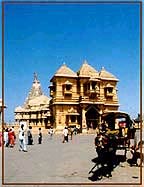 Somnath
is one of the 12 jyotirlingas of lord Shiva. In the Shiva Purana and Nandi
Upapurana, Shiva said, `I am omnipresent but specially in 12 forms and places,
the jyotirlingas`. Somnath is one of these 12 holy places. Today, Somnath offers
a holy pilgrimage, a beach holiday and a number of places of historic, religious
or scenic importance.
Somnath
is one of the 12 jyotirlingas of lord Shiva. In the Shiva Purana and Nandi
Upapurana, Shiva said, `I am omnipresent but specially in 12 forms and places,
the jyotirlingas`. Somnath is one of these 12 holy places. Today, Somnath offers
a holy pilgrimage, a beach holiday and a number of places of historic, religious
or scenic importance.
The shore temple of Somnath is believed to have been built in 4 phases-in gold
by Lord Soma, in silver by Ravana, in wood by lord Krishna and in stone by
Bhimadeva. Tales of it's riches brought in a series of invasions, but each time
the temple was raided, whether by Muhammad Ghazni who took back the silver doors
and treasures or by Aurangzeb in a fanatical vein, it was restored by zealous
Hindu worshippers to it's original glory.
The present incarnation of the temple was commissioned by Sardar Patel, the much
loved Gujarati leader, in the 1950s. The temple has imposing architecture, a 50
meter high shikara tower, intricate carvings, silver doors, a pretty Nandi, the
Shivalinga, a number of holy idols and images, and a splendid location facing
the Arabian sea. Aarti is held at 7, 12 and 19 hours. The temple is open from
6-21.30 hrs.
Prabhas
Patan Museum
The
museum houses art treasures of various periods from Somnath. Holy waters of
different rivers, 5 domes, inscriptions, pillars, 12th century toranas, 11th
century stone apsaras and statues of lord Agni, lord Vishnu, Uma Maheshwara,
Natraj Bhairava and Parwati.
Somnath
Beach
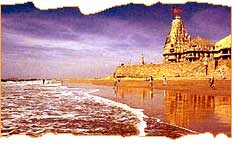 Just
behind the temple is the Somnath beach, with pleasant sands, great sea views,
camel and pony rides, coconut stalls and snack places.
Just
behind the temple is the Somnath beach, with pleasant sands, great sea views,
camel and pony rides, coconut stalls and snack places.
Ahilya
Mandir
This
creamy colour domed temple was commissioned by the famous queen, Ahliyabhai
Holkar of Malwa. Nearby, along the coast, Shivalingas washed ashore by the sea
have been re-installed.
Triveni
Tirth
A
river is holy in Hinduism, and the meeting place of 3 rivers-Hiran, Kapil and
Saraswati-with the Arabian sea, is triply important. The Triveni tirth is an
important place of pilgrimage, specially to immerse ashes and pray for dear
departed. At the Triveni ghat is the chattri (umbrella) of lord Krishna, and
important temples, including one dedicated to lord Laxminarayan.
Surya
Mandir
The
Sun temple of Prabhas Patan, probably dates from the time of the Solanki Rajput
dynasty in Gujarat. Like the Sun temples of Modhera, Ghumli and Kera, it has a
sabha mandap, sanctum sanctorum and intricate carvings. Next to the temple is
the Pandav Gufa, a cave associated with the 5 Pandawas, with mosaics of lord
Ganesh and other religious art.
Places
around Somnath

Bakhla
Tirth
A
short distance from the Somnath temple is Bakhla Tirth, where Lord Krishna was
hit by accident by an arrow of a Bhil tribal.
Veraval
Beach
4
kms from Somnath, Veraval has a picturesque fishing harbour, where sea worthy
shows are handcrafted by expert artisans without using any modern machinery,
mechanical, electrical or electronic. The Veraval beach is a good place to
relax, with benches and a jogging path. Near the beach is the old beach palace
of the Nawab of Junagadh, now deserted. The town has intricate gateways, one
facing Prabhas Patan, the other Junagadh.
INSURAT.COM
|
History
|
Before
|
Independence
|
|
Lord
Krishna stopped with his cows
|
The
existence of Surat city dates back to the years of Mahabharat i.e. about
year 3,000 B.C. It is said that Lord Krishna stopped with his
cows on his transition from Mathura to Dwarka city and the images of the
cow's foot prints are still visible to the devotees at a place popularly
called "Gai Pagli" (Foot steps of cows)..
|
|
|
|
|
In
old Sanskrit scriptures, reference of "" is prominent. This area
comprised of the entire South Gujarat belt. Western Chalukyas conquered
Lata Pradesh in 610 AD and thereafter Hindu domain continued upto 12th
century, when Kutb-ud-din, the general of Muhammad Shahb-ud-din Ghori
penetrated upto Rander town.
|
Lata
Pradesh
|
|
A
trading city on the western shore near Gujarat
|
Sir
T. Herbert (1626) identified Surat with Muziris of Ptolemy and Ogilby.
More lately, Surat has been supposed to be Hiouan Thsang's (625-640)
"Sow-ra-ta", a trading city on the western shore near Gujarat.
But according to Reinaud, this is not Surat on the river Tapi, but Sorath
or Kathiawar and this view is now generally received by all.
|
|
|
|
|
|
Persian
and Arab writers do not speak of Surat till after 12th century. As Abbe
Reynal says, "at the beginning of 13th century, Surat was nothing
more than a mean hamlet." Learned Brahmins called city of Surat as
Suryapur (say around 15th/16th century) when Surat was already a city of
great trade. Modern Surat is supposed to be built on the site of old Hindu
town of Suryapur. Sir Monies Williams suggests that the old name of the
town was "Suraj" (Sanskrit Surya)- city of sun. A Muhammadan
ruler wishing to change its Hindu into one more significant Muslim
domination, converted "Suraj" into "Surat" (a chapter
in Kuran).
|
Learned
Brahmins called city of Surat as Suryapur
|
|
Bunder-
e-Khubsurat
|
Another
story about naming of the town reveals that the Tapi river at surat was
used as one of the major ports for exports and also for Muslim pilgrimage
(Haj) to Mecca. In Farsi/Persian languages, this was recognised as "Bunder-e-Khubsurat",meaning
a beautiful port. The word "SURAT" seems to have derived from
this popular phraseology.
|
|
|
|
|
|
Long
before Surat came into prominence, Rander was the principal commercial
centre, south of Broach. It was ancient town where Arabs and Kafa came and
settled in 11th/12th century. They over powered Jain population and became
rulers. Trading with Malacca, China, Sumatra, etc., spices, silk, musk and
porcelain was the major business.
|
Spices,
silk, musk and porcelain was the major business
|
|
The
port of Surat enjoyed great prosperity
|
As prosperity of Rander declined in 16th century, on account of
raids by Portuguese, Surat began to assume importance. The port of Surat
enjoyed great prosperity in 16th, 17th and 18th centuries. With rise of
Bombay, it ceased to be a port of importance.
|
|
|
|
|
Subsequent to Muhammad Sahab-ud-din Ghori, the next mention of
Surat is in 1347 A.D., in connection with the rebellion of Gujarat during
the reign of Muhammad Tughlak (1325 to 1351). In 1373 A.D., the emperor
Firoz Tughlak(1351 to 1388) is said to have built a fort at Surat to
protect the town against Bhils. During 15th century, Muzzafar Shah was
governor of Suart.
|
|
|
Hindu
trader called Gopi settled in Surat
|
In about 1496 to 1521, a rich Hindu trader called Gopi settled
in Surat and he attracted other rich traders in the city. He built large
houses, a garden and a small lake.(Gopipura, Ranichakla, etc.are named
after him).Portuguese chronicles describe Mallik Gopi as Governor of Surat.
|
|
|
|
|
|
In 1512, shortly before Barbosu was in Gujarat, Surat is said
to have been burnt by the Portuguese. Annoyed by the destruction of Surat,
the Ahmedabad king gave order for building of a strong castle.(1546).
|
Surat
is said to have been burnt by the Portuguese
|
|
Akbar
marched on to Surat
|
In 1559-60 A.D. Changiz Khan came upto Surat and Portuguese
sent him back. In 1572 A.D. Surat fell into the hands of Mirza, then in
the rebellion against the emperor Akbar. In January 1573, Akbar marched on
to Surat and after a vigorous seige of about six weeks, the fort
surrendered. At the time of this conquest, Surat district comprised of 993
towns or villages and yeilded annual tax revenue of Rs.0.4 million.
|
|
|
|
|
|
During Moghul regeime, Surat generally enjoyed peace and rose
to the level of one of the first and prosperous cities of India. However,
during 49 years of Aurangzeb's reign (1658 to 1707), Surat's prosperity
was checked by :(i) Maratha raids, headed by Chatrapati Shivaji (1664 to
1685), (ii) by growing importance of Bombay (1677 to 1707) and (iii) 27
years of increasing disorders by local governors.
|
One
of the first and prosperous cities of India
|
Continued
on next page
Two more
|
History
|
Before
|
Independence
|
Continued
From first page
|
English
people allowed to trade through this port
|
The first sign of opposition to Portuguese influence on Surat
waters was in August, 1608 when an English ship arrived at river Tapi and
commander Captain Hawkins brought message of His Majesty for emperor
Jehangir, who later allowed English people to trade through this port.
|
|
|
|
|
Years 1608 to 1615
witnessed many battles between English and Portuguese sailors for control
over Surat waters. In 1624, first trade with Holland was negotiated
through Surat with export cargo of Indigo
|
Battles
between English and Portuguese sailors
|
|
Export
from Surat
|
During
first half of 17th century (1608 to 1658), principal cargo of export from
Surat was cloth, both silk and cotton. The cloth was used by all people
from Cape of Good Hope to China.
|
|
|
|
|
|
French
arrived in Surat for the first time in 1620 A.D. and started international
trade with a modest beginning. After Portuguese, English and Dutch, they
became the fourth European community to settle and commence trading
relations with this historically prosperous city.
|
French
arrived in Sura
|
|
Plague
|
Outbreak
of great plague affected social life of the city very badly from A.D.1684
to 1690.
|
|
|
|
|
|
Since
centuries, Surat has been popular for gold based "Jari" (Yarn)
business and weaving activities, in addition to providing an export outlet
for agro based products from Magdalla port. It is known that Maharaja
Shivaji who ruled western India in 17th century, attacked Surat about
seven times for valuable booty.
|
Shivaji
attacked Surat seven times
|
|
Surat
witnessed unprecedented floods
|
Surat
witnessed unprecedented floods in the years 1822,1835,1837,1843 and 1849.
Some of the floods were even named as "Mahajagat" (Ultra
universal) floods.
|
|
|
|
|
Surat
witnessed major fire out breaks in 1822,1837,1842 and 1848. The fire of
1837 (20th April) was visible upto 30 miles and it destroyed about 9,373
houses with value approximating to Rs.4.6 million at that time.
|
Surat
witnessed major fire
|
|
30,000
people participated in anti government agitation
|
In
1844, about 30,000 people participated in anti government agitation
protesting against increase in salt levy by the Britishers.
|
|
|
|
|
|
Surat
also participated in anti government agitations in 1860 and 1878 for
protesting against ruthless tax laws.
|
Protest
against ruthless tax laws
|
|
Weekly
publication of 'Gyan Sagar'
|
Poet
Narmadashanker established association of democracy loving citizens in
1851/52 and started weekly publication of "Gyan Sagar".In 1851,
missionaries started publication called "Peherejgir"under
guidance of famous Shee Mahipatram.
|
|
|
|
|
|
The
municipality of Surat was established as long ago as 1852 and since then
civic amenities like hospitals, public gardens,etc. have gradually been
growing.
|
Municipality
of Surat was established
|
Continued
on next page
(One More)
|
History
|
Before
|
Independence
|
|
First
major steps in the field of Textiles,
|
In the field of Textiles, first major steps
was taken by Zafarali Mills which started operations in 1861. In
1873, first Gin press was commissioned by Shree Pestonji Bejanji and Shree
Gokuldas Sheth.By 1891, Surat had one weaving mill, one spinning mill,
four gin presses, one Iron factory and one paper mill.
|
|
|
|
|
The
first news paper in Surat, "Surt-Mitra", was published on 13th
September, 1853 ; its name was later changed to Gujarat - MIn old Sanskrit
scriptures, reference of "Lata Pradesh" is prominent. This area
comprised of the entire South Gujarat belt. Western Chalukyas conquered
Lata Pradesh in 610 AD and thereafter Hindu domain continued upto 12th
century, when Kutb-ud-din, the general of Muhammad Shahb-ud-din Ghori
penetrated upto Rander town.itra.
|
First
Newspaper
|
|
Bridge
across the Tapi
|
In 1877
was constructed a bridge across the Tapi at a cost of Rs.8,13,000. It is
known as Hope Bridge and it has facilitated communication with Broch and
its neighbouring area in the north.
|
|
|
|
|
|
For the
first time in India, a public body was incorporated for electricity
business in 1883.(The Surat Electricity Co.Ltd.).
|
Surat
Electricity Company
|
|
First
bank in Surat
|
Shree
Premchand Raichand started first bank in Surat in 1864,viz.'Bank of
Surat'.In the next year, 'The Bnk of Gujarat' commenced operations in this
historic city".
|
|
|
|
|
|
During
middle and last half of 19th century, Kavi Narmad carried out various
activities for upliftment of society.
|
Kavi
Narmad
|
|
Home
Rule League
|
The holding of the historic 23rd session
of the Indian national congress in Surat in 1907 A.D. was an event of
great importance. Branch of Home Rule League established by Sir Annie
Besant was established in Surat in 1915. .
|
|
|
|
|
Sir
Ferdunji Sorabji Parekh donated Rs.46,000/- in 1915 (about Rs.2,500
million at today's price) to the Government of Surat for development of
educational and cultural activities.
|
Sorabji
Parekh donated Rs.46,000
|
|
Sarvajanik
Educatuion Society was established
|
Sarvajanik Educatuion Society was established by Shree
Chunilal Ghelabhai Shah and associates in 1914 . This institution manages
many educational organisations even today.
|
|
|
|
|
|
Smt.
Naniben Gajar and Smt.Bajigauri Munshi established Vanita Vishram in 1907
for woman rights and charities.
|
Vanita
Vishram was established
|
|
Colleges
for Law, Commerce and Ayurveda
|
Colleges
for Law, Commerce and Ayurveda were started in 1935, 1942 and 1946
respectively.
|
|
|
|
|
|
After
Indian independence in 1947, Surat has witnessed socio-political roller
coster rides.
|
Indian
independence
|
USERSTOTALISE.CO.UK.COM
Gujarat is one of India's most
industrialized states, in western India, covering an area of 196,024 sq km
(75,685 sq mi). It has a fertile plain land in the south cut by several rivers,
low hills in the west, and broad mudflats in the north that adjoin the Thar
(Great Indian) Desert.
Gujarat has a colourful profile. The land is fertile, beautiful and prosperous
on the coastline from Kutch in the west to Daman in south, the hill-line from
Aravalli in east to the western hills with lush green forests, thick and thin
rivers as well as the plains in the middle. The rivers and reservoirs, farms and
fields, villages and towns, suburbs and cities, markets and industries, temples
and complexes add to its physical prosperity and unfold the prosperity of its
historic base. The nature and the tourist spots add new dimensions to the beauty
of Gujarat. Number of historic monuments, religious places, industrial complexes
and educational institutions glorify the cultural pride of Gujarat. It reminds
us of great traditions of lord Krishna to Mahatma Gandhi. Many legends, tales
and stories of bravery and generosity, efficiency and imagination, prosperity
and charity, penance and sacrifice, knowledge and devotion are spread in the air
and atmosphere of Gujarat. The hard-work and civilised approach of the people of
Gujarat are evident at the coast of Dandi in South Gujarat where Gandhiji
accomplished the salt-satyagraha, at Somnath on the coast of Saurashtra where
the echoes of eternal tranquility is heard, history and religion appears to be
the way of life at Pavagadh or Girnar, business booms at the markets of
Ahmedabad and Surat, folk-life rules the streets of Jamnagar and Bhuj, water of
life flows in Narmada and Mahi and greenery plays with the wind in forests of
Dang and Gir. The journey through the width and breadth of Gujarat is not merely
a physical tour of the land, it is a treat with its people. A treat, which gives
an opportunity to know them in real sense, which would arouse feelings of pride.
This Paragraph Courtesy of GujaratMail.
Geography
The climate of Gujarat is varied. The northwestern part of the state is dry,
with less than 500 mm (20 in) of rain a year. In the more temperate central part
of the state, the annual rainfall is more than 700 mm (28 in). In the southern
part of Gujarat, rainfall averages 2000 mm (79 in) a year. In the winter
temperatures average between 12° and 27° C (between 54° and 81° F), although
freezing levels have been recorded in the state. In the summer temperatures
average between 25° and43° C (77° and 109° F) and have been known to reach
as high as 48° C (118° F).
People
The population was 41,309,582 at the 1991 census, giving it an average density
of 211 persons per sq km (546 per sq mi). More than 70 percent of the population
is Hindu; there are also significant minorities of Muslims and Jains in Gujarat
In 1991 more than 60 percent of the population was literate.
Education
Gujarat has two official languages: Gujarati, which is derived from Sanskrit,
and Hindi. Several universities are located in Gujarat including Bhavnagar
University (founded in 1978) in Bhavnagar, Gujarat University (1950) in
Ahmedabad, Sardar Patel University (1955) in Kheda, and Saurashtra University
(1967) in Rajkot.
Agriculture
The leading crops are rice, maize (corn), peanuts, cotton, and tobacco. Among
livestock raised are buffalo and other cattle, sheep, and goats. Salt,
manganese, limestone, and bauxite are mined. Petroleum production began in 1960,
and an oil refinery is located at Vadodra.
Industries
One of India's most industrialized states, Gujarat maintains a variety of
industries, the principal ones being general and electrical engineering and the
manufacture of textiles, vegetable oils, chemicals, soda ash, and cement. New
industries include the production of fertilizers and petrochemicals.
Political
The state capital is Gandhinagar. The state has a single-chamber legislative
assembly with 182 members. The state sends 37 members to the Indian national
parliament: 11 to the Rajya Sabha (Upper House) and 26 to the Lok
Sabha (Lower House). Local government is based on 19 administrative
districts.
History
Signs of civilization in the region that is now Gujarat date back to the period
from 3000 to 1500 BC. The region was part of the Mauryan Empire in the 3rd
century BC under King Asoka. In 1818 the British East India Company took
control of Gujarat administering the state through local princely rulers. With
the independence of India in 1947, Gujarat became part of the state of Bombay.
In 1960 Bombay state was split up, and Gujarat was formed from the northern and
western portions, which were predominantly Gujarati-speaking areas. The
remainder of Bombay state became Maharashtra state.
Milestones
·
2500 BC. Harappans appeared from Northern India to settle down, and
established over a hundred towns and cities.
·
100 to 500 BC. Yadavas, Krishna's clan, held power over much of Gujarat,
with their capital at Dwarka.
·
200 BC. Political history began with the powerful Mauryan empire,
established by Chandragupta with its capital at Junagadh, and reached its peak
under Ashoka.
·
100 AD. Satraps, members of the Saka tribes, gained control over
Saurashtra.
·
388 AD. Guptas, and then Maitrakas, established their their capital at
Valabhi.
·
1100 AD. Saurashtra came under sway of the Solanki (Chauhan) dynasty.
·
1299 AD. Khalji conquested and the Muslim rule was established.
·
1307 AD. Muzaffar Shah's declaration of independence from Delhi marked
the foundation of the Sultanate of Gujarat.
·
1500 AD. Moghul emperor Akbar conquested.
·
1531 AD. The Portuguese, already settled in Goa, captured Daman and Diu.
·
1613 AD. The British East India Company set up original Indian
headquarters in Surat.
·
1818 AD. British sovereignty was established.
·
1960 AD. Bombay state was split and Gujarat state was created.
·
Today. Gujarat's textile industry is still the largest in India, with the
trading of the business-minded community helping to mantain its wealth.
Indus Valley Civilization (2500-1700 BC), was the earliest known
civilization of South Asia, corresponding to the Bronze Age cultures of ancient
Egypt, Mesopotamia, and Crete. Harappa and Mohenjo Daro belonged to this
civilization.
Before the Mauryan empire took hold in the fourth century BC, the Indus
Valley was the largest, well-planned and sophisticated civilization in India.
The cities Mohenjo Daro and Harappa were discovered in 1920s. This society
spread from the present borders of Iran and Afghanistan to Kashmir, Delhi, and
Gujarat, covering an area larger than the Egyptian and Syrian dominions put
together. It lasted until the heavy floods swept away the towns and villages in
Sind, Saurashtra, and South Gujarat.
Lothal, close to the Gulf of Cambay in South Gujarat, was a major
port, and source of shells which the Harappans made into jewellery. The work of
Indus Valley artisans shows a high degree of craft specialization.
Characteristic artifacts include a distinctive black-on-red pottery, ceramic
toys and figurines, etched carnelian beads, metal (bronze, silver, and gold)
ornaments and tools, and stamp seals with an undeciphered script.
The Indus Valley civilization was first defined by the British archaeologist
Sir John Marshall's diggings at Mohenjo-Daro and M. S. Vat's excavations at
Harappa in 1920s.
Religion:
Hindu:
Vedic Dharma was popular and from the remains found from the Indus
valley Civilization, it is believed that worship of goddesses, Sun, Shiva,
was followed. The temple of Somnath, in western coast, is one of
the twelve jyotirllingas of Shiva. There is no definate record as of
the origin of the temple (which is believed to have been built during
Mahabharat times) but the earliest record is of the dates of 10th century.
In Norther Gujarat, there is an eleventh-century Sun-Temple, at Modhera.
Near Mehsana, the town of Siddhpur is known for Rudramala Temple, built in
12th century. Goddess-worship was followed in ancient times and popular amongst
them are temples at Pavagarh, Kherhbrahma and Ambaji. The oldest temple of
Dwarika has become a pilgrimage place to worship Krishna.
Jain: The Jainism is widely followed in Gujarat since years. The oldest
temple is believed to be of Shankheshwar Parshwanath in North Gujarat. Taranga
temples were built during the Solanki period and they are better preserved than
the temples of Mount Abu, Girnar and Shatrunjay. Palitana, is India's principal
Jain pilgrimage site, the temples dated 5th century.
Muslim: Through the sea-route which was open for trade, the people from
Iran and Arabic countries started coming in Gujarat. The trade system was
established and the Indo-Islamic culture got flourished. This is a marked
feature of many Gujarati cities. The famous mosques are built during Mughul
times. These include Sidi Sayyid's mosque, Jami Masjid, of Ahmedabad,, Alif
Khan's mosque in Dholka, Jama Masjid of Bharuch,etc.
Buddha: About the same time as Jainism, Buddhism also got popular. There
were Buddhist temples also and the remains of the same are found from all over
Gujarat. Ashokan Buddhist edicts engraved on a rock are near Junagadh. These
remains are of 3rd century BC.
Parsi: In 10th century, Iranian Jarthost followers came to Gujarat and
got settled here first at Diu, and then at Sanjan, Udvada -in South of Gujarat.
Sanjan and Udvada are today main pilgrimage places of Parsi followers.
Sports:
Desi Games:
These games are largely played in Gujaratis since years. A lot of them are
family games, and played by group or groups. There are minor games and major
games -played according to rules.
Amongst the minor games are - Jhula, Ball games, Long and High Jump, Saat-taali
(catch someone), KhoKho , Langadi (played with one leg), Hutututu (Kabaddi),
Santa-kukkadi (hide and seek), marbles, tops, kite-flying, Gilli-dada (ball and
sticks), Ambali-pipli (played on trees), skipping, swimming, wrestling,
gymnastics, trekking, playing cards, chess, Antakshari, Races, etc.
The major games are those, which have strictly observed rules. The popular ones
played are Cricket, Table-Tennis, Tennis, Volleyball, Basketball, Badminton,
Carrom, Chess, Boxing, Hockey, Football, Billiards, Snookers,etc.
Mountaineering:
Basically soft-natured Gujaratis donot go further in for Olympic games. But
it was remarkable when Guajartis joined in the Adventurous Mountaineering and
succeeded in the sixties. In past 20 years, 20 more Himalayan peaks were
successfully covered.
Major Cities
Cities having population over 100000
·
Ahmedabad
·
Jamnagar
·
Rajkot
·
Surendranagar
·
Bhavnagar
·
Junagadh
·
Porbandar
·
Gandhinagar
·
Nadiad
·
Anand
·
Vadodara
·
Broach
·
Surat
·
Navsari
·
Gandhidham
EHOLIDAYS.COM
|
Gujarat
is a vibrant land with a historical and cultural tradition. Verdant
jungles, blushing sunsets, mighty Gir lions, old palaces, marble temples,
water parks, colourful fairs and festivals and exquisite handicrafts
characterise Gujarat. It is also home to various archeological sites and
historical monuments. Nature has bestowed on Gujarat some of the most
breathtaking locations & scenic landscapes.
Capital : Gandhinagar
Language : Gujarati, Marathi, Hindi, English
Temperature : Winter 10 C- 36 C, Summer 23 C- 41 C
Tourist season : Oct-March
Airports : Ahmedabad, Rajkot, Jamnagar, Surat, Baroda, Bhavnagar,
Porbander, Bhuj
Mode Transport : Well connected through rail, road and air routes.
|
|
Gujarat may not
sound like one of the conventional tourist destinations in India, but rest
assured it has some of the most interesting places full of culture and
colour which will give you the true essence of real India. Gujarat is the
north-western state on borders of Pakistan, to the north of Gujarat is
Rajasthan and towards the Northeast, Madhya Pradesh and Maharastra, its
coastline is on the Arabian Sea.
A BRIEF HISTORY
Gujarat has a history dating back 2000 years. This north-western region
has been under the rule of many dynasties such as the Mauryans, Guptas,
Pratiharas, Chalukyas and the Marathas. Gujarat being a coastal state has
also been subjected to many foreign invasions, the Persians, Portuguese
and the British, have all resided and ruled over this region. Prior to
Independence, Gujarat was a part of the Bombay Presidency. Gujarat was a
home Mahatma Gandhi making it one of the important states in Indian
history. Gujarat was formed in 1968, it has since, grown and is respected
as one of the most industrialised states in the country.
TOURIST DESTINATIONS IN GUJARAT
Gandhi Nagar is the capital of Gujarat.
It is situated on the western bank of the Sabarmati River. Shamlaji and
Akshardham are the places of tourist interest in this region.
Rajkot: The Rajput ruler Kunwar
Vibhuji founded Rajkot in the sixteenth century.
Aji Dam, Mahatma Gandhi's home,
Lal Pari Lake and Renderda, Sardar Smriti Bhawan, Watson Museums and
Jubilee Gardens are some of the tourist places in Rajkot
Jamnagar: Famous for Handicrafts
like silken and zari embroidery and tie and dye fabrics.
Dwarka: One of the most holy
Pilgrimage sites for the Hindus. There are many temples here - Dwarkadish
Temple, Bhadkeshwar Temple and Rukmani Temple are the important ones. The
other tourist spots are Sunset Point, Shri Jagalguru Shankaracharya Math,
Ved Havan, Lighthouse and Shardapath Math Museum.
Porbandar: Mahatma Gandhi was born in this place. Today, it has
been developed into a sea side resort. The various places to see here are
the Arya Kanya, Gurukul, Bharat Mandir, Kirti Mandir, Sudama Mandir and
the Planetarium
Somnath Veraval (Prabhas Patan):
the Somnath Temple has one of the 12 jyotirlingas (Shiva Shrines). Holy
sites here are the Somnath Temple, Triveni Ghat, Ahilyabai temple,
Junagadh Gate, Bhalka Tirth, Dehotsarga and Manipur Masjid.
Sasan Gir: the Gir Forest is the
natural habitat of the Last Asiatic Lion. The forest is also a home to
other animals like the Sambar, Chittal, Nilgai etc.
Junagadh (Old Fort) The places
to see in Junagadh are the Uparkot fort, Shrine of Narsi Metha, Ashoka's
Eddicts, Mahabat Maqbara, Damodar Kund, Girnar Hills and Temple,
Willingdon Dam, Darbarhall Museum, Sakkarbag Museum and Sakkarbag Zoo.
Wildlife
The Rann of Kutch Wildlife sanctuary
The Sasan Gir National Park
|
INDIAPROFILE.COM
Fascinating Chabutras of Gujarat
The gentle
and peace loving people of Gujarat are well known for their concern about the
welfare of all life forms. Perhaps putting bird feeding tables—commonly known
as chabutras—in their homes and gardens is a reflection of their benign
attitude.
Some years
ago when we came to live in Ahmedabad the chabutras was among the first things
to arrest our attention. The type to be seen most commonly is the ek-dandia
chabutras which is essentially a platform covered with a dome or hood and
mounted on a 5-6 feet high pole. On the platform a dish of water and some food
is put for the birds.
Gujarati
chabutras can be of various shapes and sizes, as we learnt later, while
discussing the folk art forms of Gujarat with Esther David—an eminent art
critic, columnist and author of a book on Ahmedabad. Some can be as large as a
room. Built from stone and bricks these are elevated platforms which provide
refuge to a variety of birds, ranging from the small sized sparrows, mynas and
pigeons to large ones such as peacocks.
Chabutra is
a popular colloquial terms derived from the world ‘Kabutar’, for pigeon.
Interestingly enough, in some illustrations on Gujarati arts and crafts done by
artists during the British period chabutras have been referred to as ‘pigeon
houses’, as Lalit Kumar, Curator of the Lalbhai Dalpatbhai Museum of Indology
in Ahmedabad informed us. The word chabutras itself may have been kabutra for
some time before it finally became what it is today.
Although
chabutras are commonly seen all over Gujarat, similar bird feeding tables are
also to be seen in Rajasthan and Maharashtra. Indeed, the hood of the chabutras
is believed to have been influenced by the ‘chatri’, so commonly seen in
Rajasthani architectural design. According to Lalit Kumar, there has been a
significant amount of fusion between the design forms of Rajasthan and Gujarat
over the centuries and the chabutras is a manifestation of this rich ‘Maru
Gujarat’ cultural tradition.
According to
Kirti Patel, a well known artist who has also documented local art forms in
considerable detail, the chabutras has a deep sociological and religious
significance in Gujarat. Although the form of the chabutras incorporates the
influences of Hindu, Muslim and Jain architectural designs, the practice of
putting up these bird feeding tables is undoubtedly linked to the Jain faith
which preaches non-violence and humanity. Like the ancient Egyptians, many
communities in Gujarat also believe that after death a persons soul assumes the
form of birds and animals. So by caring for birds by putting food and water and
providing shelter in chabutras they are also caring for the souls of their
departed ancestors.
To known
more about chabutras we interviewed a variety of people and came across some
interesting explanations. According to one view, originally chabutras were meant
to be the destination of message carrying pigeons in the royal households. It is
well known that long before the day when wireless and telephone existed,
messages were carried by trained pigeons. In India too pigeons were widely used
for carrying messages from one point to another. It is believed that, at least
in Gujarat, chabutras or similar structures were the logical destination point
of all birds, including the message bearing pigeons.
Even though
chabutras may have been of some use for message carrying pigeons in earlier
times, there is bound to be much more than this, as far as their significance
and evolution is concerned. Yatin Pandya, an architect in Ahmedabad and the
Director of Sangath—an organization working for the preservation of the
cultural heritage, interpreted chabutras to us from the perspective of town
planning and architecture. He opined that in earlier times chabutras were an
important element of urban design and served to enhance the utilization of space
judiciously and aesthetically in pols i.e. traditional urban settlements
in Gujarat. Even now, old chabutras in villages and pols are located very
prominently in the centre—the place where most community interactions and the
celebration of festivals take place.
One can
imagine that in the days when community life in the pols was much more vibrant
than it is now, chabutras would have had great relevance. But now, as human
population size is increasing more and more, people are living in box shaped
housing colonies in the newer parts of the town. Naturally, everything which was
in vogue traditionally is now also going out of favour including chabutras.
During our rambles in the countryside and in the city of Ahmedabad we noticed
chabutras everywhere—in villages, in housing colonies and in the midst of the
busy bazaars of the city. Although many chabutras in the old parts of the city
looked in bad shape—having being encroached upon or plastered with bill boards
and loudspeakers—those in the new colonies appeared different. So the
questions is then do chabutras have any relevance today?
Judging from
the fact that they are to be seen all over Gujarat, the chabutras does seem to
have some contemporary relevance. Many houses in the localities where the
well-to-do people live, chabutras can be seen in gardens and terraces. Obtained
from antique furniture shops or from the local Gurjari shop these chabutras are
often gaily decorated with Rajasthani style designs and wood carvings. In a
certain sense these are ‘brand’ chabutras—more of decorative items
adorning the gardens and terraces in fashion conscious homes. However, in the
rural areas—in village squares and in the lower and middle income group
housing colonies of Ahmedabad—we get to see chabutras which appear more
functional than ornamental. These are fabricated from steel, bricks and stone.
The tall ones have a small ladder which can enable a man to climb up and put
food and water for the birds.
About a year
ago a local newspaper carried a photograph of a traditional chabutras in the
Karanj area of Ahmedabad. The photograph had an interesting caption which said.
“A dilapidated chabutras meant for feeding birds in Karanj has became the
centre of a controversy. The corporation wants to remove its parts for repairs
while the locals want it repaired on the spot”. Intrigued by this report we
decided to visit Karanj and find out for ourselves what the controversy was all
about. After taking to some locals we discovered that the area was rife with
rumors that the corporation had planned to remove that chabutras and transfer it
to an upcoming museum on the crafts and history of Gujarat, in Ahmedabad. But
what had angered the locals was that all this was in the guise of taking the
chabutras away for repairs. The attempt had been strongly resisted by the local
residents who could not bear to see their beloved chabutras being taken away.
The above
incident clearly indicates that people can offer resistance when it comes to
removing such nondescript objects as the chabutras from their localities. But
sadly, popular support alone may not be enough to save beautiful and traditional
chabutras. The growth of population and the resulting congestion in the city is
obliterating all traditional artifacts. During our walks we discovered many
beautiful chabutras dying due to neglect and with strange and discordant
structures having grown around them. Some had even become fused with modern
buildings—a sad testimony to the horrific changes taking place in the urban
environment, in total disregard to traditional relics. The chabutras were once
symbolic of man’s concern for weak and helpless life forms but, in today
context, many of the traditional chabutras in the city are victims of urban
decadence. But still, in the midst of the hustle and hustle of congested city
life or in the middle of villages, they stand tall and majestically silently in
their stoic grace and elegance—beautiful to look at and a refuge for the
little winged creatures.
WEBINDIA123.COM
HISTORY - GUJARAT
Gujarat
forms an area that housed the regions of the Indus Valley civilization and
Harappan sites. Around 50 Harappan sites are found in Gujarat. Lothal, Rangpur,
Amri, Lakhabaval, Rozdi etc. are some of these sites. This makes it an important
territory that reveals the history of India. The Dravidian tribes were said to
be the original inhabitants of this region. Even before the Aryan occupation of
Gujarat it is said to have had trade contracts with Sumer, the Persian Gulf in
about 1000-750BC. Rock edicts in the Girnar hills indicate that Ashoka extended
his domain into Gujarat. It was during the Mauryan rule that this region
witnessed the influence of Buddhism. The Mauryans also promoted trade and helped
in spread of its culture. In about 150BC the Bactarian Greeks under Meander is
said to have instilled their rule. Till 40AD they are said to have had trade
contracts with Rome. From about AD130-390 the Scythians ruled it. After
300AD the Guptas established their reign which lasted till 460AD. The Vallabhi
established their sway in between (500-700AD). After the death of Harshvardhana,
the Gujjars controlled it till 746AD. The Solankis ruled over Gujarat till 1143.
Gujarat attained its greatest territorial extend under the Solan
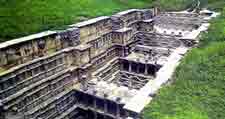 ki
dynasty, from the 9th century. Muhammud of Ghazni attacked Somnath in
Gujarat leading to the downfall of the Solankis. The conquest of Ala-ud-din
Khilji king of Delhi in 1288 also influenced the conditions in Gujarat. The
Sultans of Delhi had their sway over Gujarat from 1298-1392AD. Ahmad Shah I, the
first independent Muslim ruler of Gujarat founded Ahmadabad in 1411. Then the
Mughals ruled for about 2 centuries till the Marathas terminated their rule in
the mid 18th century. It was during the18th century that
Gujarat was divided among number of chiefs. From 1803-1827 the British set up
their administration. The British East India companies first head quarters in
India was at Surat. It was later moved to Bombay. Finally in May1,1960, the
state of Gujarat was formed from the north and west portions of Bombay state,
the remainder being renamed the state of Maharashtra.
ki
dynasty, from the 9th century. Muhammud of Ghazni attacked Somnath in
Gujarat leading to the downfall of the Solankis. The conquest of Ala-ud-din
Khilji king of Delhi in 1288 also influenced the conditions in Gujarat. The
Sultans of Delhi had their sway over Gujarat from 1298-1392AD. Ahmad Shah I, the
first independent Muslim ruler of Gujarat founded Ahmadabad in 1411. Then the
Mughals ruled for about 2 centuries till the Marathas terminated their rule in
the mid 18th century. It was during the18th century that
Gujarat was divided among number of chiefs. From 1803-1827 the British set up
their administration. The British East India companies first head quarters in
India was at Surat. It was later moved to Bombay. Finally in May1,1960, the
state of Gujarat was formed from the north and west portions of Bombay state,
the remainder being renamed the state of Maharashtra.
The Aryans
were the first people to come from the north who either conquered or drove
away the Bhils, the traditional rulers of Gujarat. Apart from these two
distinct classes, a third class of people known as 'Kolis' are
equally important and occupy an intermediate social position between the Aryans
and the Bhils. Aryans are now commonly recognised as Hindus. The immigration
during the medieval period brought Islam and Zoroastrianism to Gujarat and
initiated the growth of a multi-religious society.
The
peninsula of Kathiawar is named after the Kathis who came
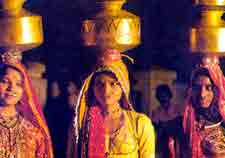 to
Saurashtra at the close of the fourteenth century. Their origin is not fully
known but it is possible that they were driven southwards by the Muslim
invaders. 'Khachar' and 'Chotila' were the most important seats of the Kathis.
Worshippers of the Sun, they were essentially nomadic and had developed, among
other pastoral occupations, the art of horse-breeding. Successive waves of
immigrants from other parts of India have led to a superimposition of different
communities and cultures in Kathiawar. The powerful royal families, which
conquered Saurashtra later on established their rule over there.
to
Saurashtra at the close of the fourteenth century. Their origin is not fully
known but it is possible that they were driven southwards by the Muslim
invaders. 'Khachar' and 'Chotila' were the most important seats of the Kathis.
Worshippers of the Sun, they were essentially nomadic and had developed, among
other pastoral occupations, the art of horse-breeding. Successive waves of
immigrants from other parts of India have led to a superimposition of different
communities and cultures in Kathiawar. The powerful royal families, which
conquered Saurashtra later on established their rule over there.
'Rabaris' are a
community of cattle-breeders who have migrated from Sindh and Marwar and claim a
Rajput ancestry. The Rabaris stand out prominently by their features and dress.
They lead a nomadic life.
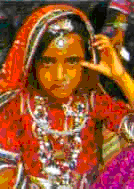 The
Gujaratis, the
people of Gujarat, are found all over the state. These people trace their
lineage from the people originally known as Gurjars. They are believed to have
come to India with the Huns and while passing through Punjab, settled in
Gujarat. Gujaratis were highly influenced by the cultural waves from the
mainland and accepted the monarchies that ruled over them. Various Hindu
traditions like Shavism and Vaishnavism which sprang upon the mainland were
imbibed by Gujarat which in turn developed its own galaxy of saints and devotees
and its own art and culture. The successive waves of immigration were absorbed
in the society that was fast evolving and today the word Gujarati does not seem
to suggest any definite association with a particular stock, a tribe of
immigrants or a specific group of people.
The
Gujaratis, the
people of Gujarat, are found all over the state. These people trace their
lineage from the people originally known as Gurjars. They are believed to have
come to India with the Huns and while passing through Punjab, settled in
Gujarat. Gujaratis were highly influenced by the cultural waves from the
mainland and accepted the monarchies that ruled over them. Various Hindu
traditions like Shavism and Vaishnavism which sprang upon the mainland were
imbibed by Gujarat which in turn developed its own galaxy of saints and devotees
and its own art and culture. The successive waves of immigration were absorbed
in the society that was fast evolving and today the word Gujarati does not seem
to suggest any definite association with a particular stock, a tribe of
immigrants or a specific group of people.
The Kutchis,
who were the natives of the peninsula of Kutch, have their own dialects. The
Kutchis are both Hindus and Muslims and a large number of them have migrated
from Sindh.
The Jadeja Rajputs,
the Lohanas and even the Muslims many of whom are 'Maldharis', the
cattle-breeders, have all come from Sindh consequent upon their defeat at the
hands of some kings or as a result of some religious persecution.
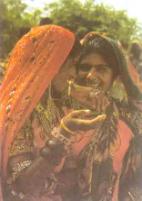
Dress
Gujarati
males generally wear dhoti, long or short coat and turban cap. Nowadays,
pants are becoming common instead of dhoti. The women wear sari and blouse.
Parsi males wear pants, long coat and a headgear. The Parsi women's clothes are
identical with those of the Hindu women with a slight difference marked by long
sleeves of the blouse and a scarf on the head.
Ornaments
With
the changing times, the ornaments of the women are also changing. They have
become simpler and meager. They generally wear rings, ear-rings, bangles and
slender chains. Bangles made of ivory and dyed in red, with a gold chip, are
presented to the bride by her maternal uncle on the occasion of her marriage.
Language
The three important
languages of Gujarat are Gujarati, Urdu and Sindhi. There are eleven
variants or dialects of Gujarati. Kachchi as a mother tongue is important in
Kutch.
Religion
The total population of
the state consists of Hindus, Muslims and Jains. Zorastrians or Parsis
can also be seen in Gujarat.
|
|
The
caste system is strictly followed by the Hindus of Gujarat. Besides the 'Brahmins'
and the 'Banias' whose functions and occupations are fairly well
determined, the community of 'Patidars' owning land is the
strongest force in the economic and political life of the state. Patidars, also
called Patels, are the best agriculturists of Gujarat. They are grouped
into four categories namely Levas, Kadawas, Anjana and Uda. The Levas are most
shrewd and are concentrated in central Gujarat. The Kadawas are most numerous in
Mehsana district.
The
fourth regional group which may have been a native of Gujarat is the community
of aboriginals, locally known as 'Bhils', inhabit the hilly tracts of Gujarat
that border the plains from Abu in the north to Dangs in the south. The Bhils
may be regarded as a hybrid group in Gujarat, on the one hand absorbing Rajput
blood and on the other representing a tribal sub-stratum. The Bhils regard
themselves as belonging to the Kshatriya caste who had to take shelter in the
hills of the Vindhyas and the Satpuras, along the lower Narmada, to save
themselves from the wrath of the Brahmin hero, Parashuram.
The Bhils of Gujarat thus do not possess any racial basis distinct from the
other inhabitants of the region.
The tribals of Gujarat
are found concentrated in the south-eastern part of Gujarat particularly in the
district of Panchmahals, Surat, Baroda, and Broach. The main tribal groups
are the Bhils, the Dublas, the Naika-Narkdas, the Gamits and the Dhankas.
Profession
The
infertile soil in the hilly areas of the tribal settlements has left no choice
except that of subsistence farming to the tribal people. Rice, jowar, bajra, and
groundnut are the main crops grown by them. The tribals engage themselves in
wood-cutting with which they descend to the small towns for getting the daily
necessaries of life. Many have been engaged in organised forest industry, some
collect lac and toddy. Tied down to their ancestral
and social traditions, living in a microcosm of their own where they are
governed by their own social laws, the tribals of Gujarat have yet to develop an
awareness of the fast-changing social and economic conditions of life in the
outer world.
GUJARATPLUS.COM
A
brief description on the history of Surat.
The
first authentic reference to the region is found in the Ashoka inscriptions at
Sopara near Bombay and Girnar in Saurashtra. The region encompassed between
these edicts, and referred to as the Lata region must be the domain of the
Mauryan Empire. The history of the period after the Mauryas is ambiguous.
Satavahanas, who rose to power in the Deccan might have held sway for sometime
but this must be shortlived, as evident from series of coins issued by
Kshatrapas who were at the turn of the fourth century defeated by Chandragupta
The next definite phase of stability and expansion commences with the rule of
Rashtrakutas (740-975 A.D.). The boundaries of Lata expanded upto Mahl River in
the north and Daman in the south. Lata was called both Desa and also Mandala. It
came into conflict with Anhilvad Patan, the Ruler of Gujarat, when Mulrai and
his son Chamunda tried to wrest Lata from the hands of Barappa, the General
in-charge of Lata. Fortunes of Lata continued to fluctuate between warring
dynasties of the Solankis (Chalukyas) of the Anhilvad and the Deccan till 1299
A.D., when the Muslims finally conquered Gujarat.
During this early period Rander was the principal commercial centre south of
Bharuch. It was a very ancient town where Arabs from Kufa come and settled in
the early thirteenth century. They succeeded in overpowering the Jain population
of the town and became its rulers. They were enterprising navigators and traded
with Malacca, China, Tenasarm, Pegu and Sumatra and added to the prosperity of
Rander till the frequent raids from Portuguese turned this fortune. While Rander
was declining Surat grew in eminence. It is believed that one enterprising
merchant named Gopi-even today a ward in the city is known by his name, viz,
Gopipura- settled at Surat. He induced other merchants to settle at Surat and
build large houses and public places. The Portuguese traveller, Barbosa writes
very highly about Surat and its commercial importance. Precisely for this reason
and the wealth generated thereby, that the city fell prey to marauding
Portuguese, first in 1512 and then in 1530. Annoyed by this destruction, the
Ahmedabad king gave orders to build a stronger castle at Surat, the task which
took six years and services of Safi Agha, a Turk ennobled as Khudawand Khan, for
completion. Farishta, the noted historian, praises this fortress, calling it
strong and well constructed. After this fortification, there commenced a period
of growth and prosperity which continued throughout the Mughal period upto
Aurangzeb's accession, when the raids by Morathas unsettled the equilibrium.
87 Much before the Maratha raids, European powers were engaged in the battle for
supremacy at sea. The growing Portuguese influence was checked by the English
who first came in August 1608. The first English ship to arrive at the mouth of
Topi was commanded by Captain Hawkins, however, the English had to wait for more
than seven years before Sir Thomas Roe could present his credentials to the
Mughol Emperor, Jehangir. If took great diplomatic skills on the part of Sir
Thomas Roe, for obtaining important privileges in favour of the English. One
reason for being able to extract such benefits was the decisive naval victory of
the English over Portuguese off the coast of Surat. Thenafter till the end of
the reign of Emperor Aurangzeb in 1707 A.D. the trade continued to flourish,
barring Maratha raias in the year 1666 and 1670, which were led by Shivaji,
causing heavy damage to the city's commerce. It is important to note that during
both these raids the English and the Dutch were left untouched on account of
their military might and political aloofness. After the death of Aurangzeb the
authority of the Delhi court declined and the governors become more independent.
There were internecine struggles for power and supremacy and political equation
kept changing till the situation became ripe for the English to take control of
the city. They had already assumed a political role and gained a firm footing in
Bengal by their victory in the Battle of Plassey. Earlier they had defeated the
naval power of the Marathhas under Tula II Angre leaving only the Siddis as the
major hurdle to be overcome in their race for supremacy in the western coast.
In February 1759, the English troops under the command of Captain Maitland
arrived near the mouth of the Tapi. After dislodging the Siddis from the French
Garden which lay on the left bank of the river, a suitable place was located for
erecting a battery. For four days a brisk fire was kept up from two twenty-four
pounders. This caused breaching of the outer wall, however, the capture of the
inner wall and the castle called for heavier shelling. On 4th March 1759, one
hundred and fifty one years after the first Englishman had landed on the shores
of Surat, the city fell to the attacking army of the English. A new chapter in
the annals of the port-city and the country was to begin with the thud of the
gun and the strokes of diplomatic maneuvers.
For another forty years the Nawabs owing allegiance to the Delhi court continued
as the governors of Surat with the consent of the English. In 1800 A.D., due to
the failures of the direct heirs of the Nawab to assume the undivided
government, the English assumed the entire government of Rander and Surat. The
nineteenth century witnessed considerable educational, cultural and economic
development of the region. The roads and a bridge over Tapi was built. A railway
line was laid down which considerably improved communication and trade and a few
years later the great rise of rices due to the American war brought iarge sums
of money to the district by the sale of cotton.
The wind of resistance to the British Empire blew in south Gujarat, with the
turn of the century. The holding of the 23rd session of the Indian National
Congress in Surat in 1 907 was an event of far reaching consequence because the
session witnessed the tragic split between nationalists and moderates. Another
very significant event in the history of the whole country was the Bardoli
Satyagraho of 1928 against the hike in land revenue by the British. South
Gujarat is also associated with the famous Dandimarch. Dandi, where Gandhiii
broke the saltlaw, is 25 miles south-west, of Surat.
Garhatours.com
Junagadh,
was the capital of the Junagadh state, under the muslim rulers of Babi Nawabs.
In Gujarati " Junagadh " literally means ancient fort. The Junagadh
town is located at the foothills of the sacred hill of Girnar and occupies a
special place in the history of Gujarat. The history of Junagadh is chequered by
the rules of the Mauryans, Kshatrapas, Guptas, Vallabhis, Chudasamas, Gujarat
Sultans and Babi Nawabs. Junagadh, at different times in history, was under the
influence of four major religions : Hindu, Buddhist, Jain and Muslims. Both
political powers and religious influences enriched the culture and created
fantastic edifices leaving their mark on the architecture of Junagadh.
Ashoka's Rock Edicts
Fourteen Rock Edicts of the Emperor Ashoka can be seen inscribed on a great
boulder. These ancient inscriptions date back to 250 BC and carry Brahmi script
in Pali language. Late Sanskrit inscription were added around 150 AD by
Rudrakama and in about 450 AD by Skandgupta. The inscriptions were reported in
1822 by Todd, but really came to light only in 1837 when Rev.Dr John Wilson
copied them and in 1843 when the Royal Asiatic Society published them in the
Bombay branch journal. The 16 principals preach virtues like matery of the
senses, purity of thought, gratitude, devotion, self control, secular thinking
and kindness, while opposing animal sacrifice and greed. They speak of
repentance for death and destruction caused during the wars waged by Ashoka.
Visit
Ashoka's Rock Edicts with us...
Girnar Hill
Rising up on the outskirts of Junagadh is Mt Girnar, whose 3660 foot high summit
is crowned by some of the finest and religiously most important temples. The
climb is a steep one and best undertaken in the very early hours of the morning.
The main entrance to the hill is in front of the Uparkot. On the hill top there
are Jain and Hindu temples standing in a quadrangular courtyard. The main
temple, which is surrounded by pillared cloisters containing 70 cells is
dedicated to the 22nd Jain Thirthankara (God) Neminath. Further up from Neminath
Temple, the Amba Temple is where newly married Hindu prays for a happy marriage.
Visit
the famous Girnar Hills of Gujarat, click here
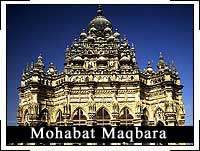 Mohabat Maqbara
Maqbars - the older complex offers some remarkable 18th century architecture
with vertical columns, delicate carved columns, arches, cornices & domes.
The newer complex is a remarkable architectural work with four minarets &
pirouetting spiral staircase, a facade rich in stone carvings, beautifull silver
door & large size domes. A number of Haveli's are known for their jharokhas
& wood carving - specimens of Gujarat doemstic architecture.
Click
here to visit Mohabat Maqbara
Darbar Hall Museum
Darbar hall museum dating back to 1870 a.d. offers an insight into the period of
Nawabi rule in Junagadh with silver plated thrones, fine carpets, huge
chandeliers & a red silk carpet with diamonds like stars of a crimson sky
& some carpets lavishly embroidered with gold thread, huge chandeliers,
royal armoury, potraits & paintings.
Visit
the Darbar Hall Museum
Uparkot Fort
Uparkot, an ancient citadel located on the higher level of the town, was a
stronghold of Mauryans and Gupta Empire and is said to have survived 16 sieges
in the last 1000 years due to its strategic location and difficult access. The
entrance of Uparkot has a fine specimen of Hindu Toran, leading of flat land
dotted with archeological sites. The major sites are Buddhist caves, Baba Pyara
Caves (2nd century), Adi-Kadi Vav, Navghan Kuvo and Jami Masjid.
The Buddhist caves are fine examples of rock cut architecture with ornamented
pillars, carved entrances, water cisterns, chaitya hall, monastic cells for
meditation and chaitya windows. Adi-Kadi Vav and Navghan Kuvo were built by the
Chudasama Rajputs and unique water structures among the numerous step wells of
Gujarat. The Adi-Kadi Vav (15th century) has a long flight of 120 steps leading
to water, while the Navghan Kuvo ( 1026 a.d) is hewn from the soft rock and is
52 meters deep, reached by a circular staircase winding around the shaft.
Another intersting artefact from past is "Nilam" canon , brought to
Diu from Egypt to fight against the Portuguese and it was manufactured by the
order of Suleyman, the magnificent, King of Turkey.
Visit
the ancient Uparkot Fort with us...
Junagadh Museum (Sakkarbagh Museum)
Located in Sakkarbagh, the museum displays wonderful prehistoric and
protohistoric stone and bone implements, stone sculptures including a standing
vishnu of late 9th century, bronzes, minatures, manuscripts , stone and copper
inscriptions, silverware, glass, porcelain, woodcarving, textiles and folk art.
Thebharath.com
For the last
4500 years, Gujarat has been a hub of human
civilisation. From the Harrapan cities of the Indus
valley civilisation, one of the world's first
urban cultures(2500-1500 |BC), the Mauryan and Gupta
empire(4th century BC-5th century AD), the medieval period
of Chalukyas, Afghan, Mughal and Portuguese invasions,
the rise of the Maratha and Rajput princely states, the
British colonial period and the freedom struggle
launched by Gandhi, Nehru and Patel, Gujarat has
seen great events in the history of India. Pre-historic sites
of dinosaurs more than 65 million years old)
and early man have been unearthed in Gujarat. We
visit the dinosaur sites around Balasinore
and some of the finest wonders of
architecture and town planning in Gujarat.
The ancient
city of Lothal is the perfect place to get
an insight into the excellent town planning, Harrapan
urban culture, maritime architecture, bead, terra
cotta and copper workshops, and
high standard of planning of the Indus valley
civilisation of the 2400-1600 BC period.
The 11th
century Rani-ki-vav in Patan is one of the finest of
the scores of step wells for which Gujarat is famous,
offering a glimpse of the intricate stone
sculpture and attention to architectural detail
characteristics of the Solanki Rajput period.
Built in the
11th century, Modhera is one of the finest temples
of it's time in all of India, with outstanding
architecture, sculpture and planning.
The
geological excavations, around the Nawabi town of Balasinore,
have unearthed one of the three largest
dinosaur sites in the world, including clutches of eggs
dating back 65 million years.
Often called
the Fatehpur Sikri of Gujarat, Champaner has a medieval citadel
with numerous exquisite mosques, minarets, pavilions and
fort palaces of Sultan Muhammad Bhegada of the 16th century
Gujarat sultanate. Even older are the Chauhan Rajput
relics on the Pawagadh hill nearby.
Indus Valley
Civilization(2500-1700 BC), was the earliest known civilization of South Asia,
corresponding to the Bronze Age cultures of ancient Egypt, Mesopotamia, and
Crete. Harappa and Mohenjo Daro belonged to this civilization.
Before the Mauryan
empire took hold in the fourth century BC, the Indus Valley was the largest,
well-planned and sophisticated civilization in India. The cities Mohenjo Daro
and Harappa were discovered in 1920s. This society spread from the present
borders of Iran and Afghanistan to Kashmir, Delhi, and Gujarat, covering an area
larger than the Egyptian and Syrian dominions put together. It lasted until the
heavy floods swept away the towns and villages in Sind, Saurashtra, and South
Gujarat.
Lothal, close to
the Gulf of Cambay in South Gujarat, was a major port, and source of shells
which the Harappans made into jewellery. The work of Indus Valley artisans shows
a high degree of craft specialization. Characteristic artifacts include a
distinctive black-on-red pottery, ceramic toys and figurines, etched carnelian
beads, metal (bronze, silver, and gold) ornaments and tools, and stamp seals
with an undeciphered script.
The Indus Valley
civilization was first defined by the British archaeologist Sir John Marshall's
diggings at Mohenjo-Daro and M. S. Vat's excavations at Harappa in 1920s
2500 BC. Harappans appeared from Northern India to
settle down, and established over a hundred towns and cities.
100 to 500 BC. Yadavas, Krishna's clan, held power
over much of Gujarat, with their capital at Dwarka.
200 BC. Political history began with the powerful
Mauryan empire, established by Chandragupta with its capital at Junagadh, and
reached its peak under Ashoka.
100 AD. Satraps, members of the Saka tribes, gained
control over Saurashtra.
388 AD. Guptas, and then Maitrakas, established their
their capital at Valabhi.
1100 AD. Saurashtra came under sway of the Solanki (Chauhan)
dynasty.
1299 AD. Khalji conquest and the Muslim rule was
established.
1307 AD. Muzaffar Shah's declaration of independence
from Delhi marked the foundation of the Sultanate of Gujarat.
1500 AD. Moghul emperor Akbar conquested.
1531 AD. The Portuguese, already settled in Goa,
captured Daman and Diu.
1613 AD. The British East India Company set up
original Indian headquarters in Surat.
1818 AD. British sovereignty was established.
1960 AD. Bombay state was split and Gujarat state was
created. Today. Gujarat's textile industry is still the largest in India, with
the trading of the business-minded community helping to maintain its wealth.
Dadra & Nagar Haveli
The history of
Dadra and Nagar Haveli is carved in wood and stone in the monuments from the
past that dot the land. Ancient, dilapidated ruins of vast houses maintain an
imposing silence. The intricate carvings on the door have mysteriously remained
intact, perhaps to remind future generations of an ancient, and glorious, past.
The history of Dadra and Nagar Haveli before the medieval period remains
obscure. In AD 1262, a Rajput invader defeated the local Koli chieftains of the
area and became the ruler of Ramnagar, a small state that included Nagar Haveli
in its territory. The region remained under Rajput rule until the mid-18th
century, when the Marathas acquired Nagar Haveli.
Dadra and Nagar
Haveli came under Portuguese rule in the late 18th century. The Marathas ceded
Nagar Haveli in 1783 as compensation for a Portuguese vessel that their navy had
destroyed. Two years later Dadra was acquired, becoming a kind of fief. After
India achieved independence in 1947, Goan nationalists sought to break away from
Portugal; and their first successes were the seizure of Dadra on the night of
July 21, 1954, and their capture of Nagar Haveli two weeks later. A pro-Indian
administration was formed in these enclaves, and on June 1, 1961, it requested
accession to the Indian Union. The Indian government had already acknowledged
their incorporation into the union from the day of liberation but made it
official on Aug. 11, 1961.
Kamat.com
by Dr. Jyotsna Kamat
First Online: October 20, 2000
Last Updated: December 04,2001
The author had the privilege of studying under
Prof. Saletore, a distinguished historian of India.
Excerpted from a lecture given
at the Mythic Society. - Ed
Bhaskar Anand Saletore (pronounced
saa-lae-tho-rae) was born in 1902 and had his school and college education
at Mangalore. He did his B.T. from Madras and M.A. from St. Xavier's college,
Bombay. A brilliant student throughout he had double doctorate degrees, one from
the London University in History (1931) and a second one from the German
University of Giessen in Politics (1933). He knew several Indian languages,
besides English and German. He had illustrious teachers like Rev. H. Heras and
Dr. L.D. Barnett who need little introduction. His liking for details combined
with painstaking research has found expression in a dozen of books and nearly
hundred articles on different aspects of Indian history, from ancient Indian
trade contacts to diplomatic relation from a textbook of civics to ancient
Indian political thought, from Riverside trade to trans-oceanic contacts. The
wide range of his historical knowledge is staggering. He died in 1963 when he
was only 61, hardly after a year of his retirement leaving a number of
incomplete works, vast notes and a valuable library of rare books. Here an
attempt is made at the assessment of some of his works and research approach.
B.A. Saletore (1902-1963)
Students of Vijayanagar history are far too familiar with his two volumes of
"Social and Political Life in the Vijayanagara Empire" which formed
his doctoral thesis submitted to the University of London. Theories regarding
the origin of Vijayanagar empire and Sangama dynasty have been hot favorite
items of the scholars for nearly five decades now and it may continue for
decades to come, whenever a new epigraph or manuscript comes to light in support
of or against the Kannada origin. But what the scholars have done till now in
this region is only to add and confirm whatever Saletore could propound in early
1930s with fewer sources at his disposal.
He was the first scholar to utilize epigraphical sources for the study of
social history which he invariably tried to corroborate with the observations of
the foreign travelers, an approach being followed by other young scholars.
Though the work was completed in London it is a wonder that he has not left
Kannada sources unexplored. Some of the Sanskrit manuscripts. he referred in
India Office, London are yet to be studied in detail.
It is surprising that in many works on Vijayanagar history that followed, the
pattern of study and division of chapters on social and economic conditions, as
social legislations, institutions, corporate life etc., several scholars owe him
a lot whether they acknowledge it or not. He was indeed a pioneer to throw light
on various aspects of socio-economic polity of Karnataka whose scope has
enriched with countless epigraphs and other sources in later years. Whatever has
been written anew, only supplements Saletore.
The book is studied from five points of view a) Legendary, b) domestic, c)
foreign relations of Alupa rulers, mainly, based on epigraphs, (d) folk and
traditional sources, and finally (e) literary sources. He introduced Grama
Paddhati, a work on Tuluva tradition for the first time. The book is a
compendium on life and times in Tuluva depicting village organization, duties of
local officials, system of land distribution, modes of punishment, judicial
administration, and historicity of some families like Hollas, Mayyas, Ballalas
and Karanths. The chapter on everyday life brings out many industries like
ship-building, toddy-tapping, manufacture of cloth, hats and umbrellas, dress,
and ornaments, amusements, means of communication, food etc., and life in the
Budu or manorial house of Tuluva chieftains. A large number of epigraphs
discovered in that region after Saletore wrote this book may not confirm what he
tried to establish earlier. But tapping of sources like legends, mythology,
folklore and tradition for the study of History was again a novel method.
Medieval Jainism with special reference to Vijayanagar Empire came out in
1938. It deals with early migration of Jainism to Karnataka in 297 BC and traces
its history for twelve centuries. Jainism was a live force in Kannada polity and
the contribution of Jain Gurus to prosody, grammar, science are mentioned. The
patronage extended by the Ganga, Kadamba,
Rashtrakoota, Chalukya and the Hoysala
dynasties as also a number of princely families like the Chellaketana, Kongalvas,
Chengalvas and the Shilaharas, Rattas and nobles like those of Nagara Khanda are
dealt with.
Religion unrelated to political power does not leave permanent effect on
society. Jain sages, the great exponents of ahimsa have encouraged great
generals. This land teams with the Bhawyas, who were great devotees and
preceptors who attained salvation through sallekhana. Generals like Chavundaraya,
Shantinatha, Boppa, Punisha and others are depicted in the light of their
conquests and benevolence.
The practical aspect of Jain teachers seemed to acquire allegiance of most
important section of middle class, mainly the trading-community. The Vira
Banajigas were traditional custodians of four gifts of learning, food, medicine
and shelter, primary needs of humanity and the insistence of these gifts on the
part of the people must have had the inevitable effects of drawing to the Jain
fold the larger sections of the populace, Saletore thinks.
Jain centers of learning and worship are described and some are identified;
among these, Poudanapura, is identified with Bodhan in Nizamabad district (in
Andhra Pradesh). Poudanapura is a familiar name in Jain legends, literary works
and epigraphs and must have been an important Jain center in the past. But
having gone into non-Jain hands must have been later descried as an inaccessible
place in later works.
Konkina pulo of Yuan Chang is again identified with Kopana or Koppal. Many
Buddhist monasteries must have been there and discovery of Ashokan edicts in
that place strengthens this view. He quotes 772 Basadis located by Shri N.S.
Rajhpurohit in and around Koppal which according to Saletore, the Chinese
pilgrim mistook for Buddhist monasteries. So Kopanapura might have been
Konkinapulo through it may not sound convincing.
Saletore wrote these works and scores of others when he was in the Bombay
Educational Service and was Professor of History and Politics in Pune and
Ahmedabad. Later as Director of National Archives, he edited Fort William--India
House Correspondence Volume IX.
Then as professor and Head of Dept. of History as also Director of Kannada
Research institute at Dharwad (locate)
he brought out two volumes, India's diplomatic relations with the west and
India's with the east both dealing with diplomatic history based on Kautilya and
Panchatantra.
The 2nd volume, viz., India's Diplomatic Relations with East published in
1960. This book deals mainly with missions to and from China from early
centuries of Xian Era to the thirteenth century A.D.
The Bouddhas conquered by Kashmiri King Lalitaditya are identified by
Saletore with Tibetans and not Chinese as interpreted by earlier scholars.
Similarly the country of Chulien of interpreted by earlier schoars. Similarly
the country of Chulien of Chokua-gua of the Chinese travellers is identified as
Chola country by others has been placed by Saletore in Orissa
as Jajapur or Jjanagara and he puts forth so many arguments to prove it.
Similarly the date of introduction of Indian system of medicine or Ayurveda
in Arab countries, mainly in the capital of Baghdad is placed in the first
quarter of the ninth century A.D.
The chapter on Protocol, Indian and Chinese is as interesting as it is
enlightening. He has made extensive used of Harsha Charita and other works.
Regarding court etiquettes, reception of the envoy, greeting audience,
exchanging of presents etc., were strictly followed. In both the countries, the
system had evolved as a result of both training and age-long convention.
The book (brought out in 1960) finds mention in the introduction, that while
going to the press the political relations between India and China had
deteriorated. With great forethought he had not included the map which otherwise
would have worked havoc. Chinese aggression followed soon after.
His last book Ancient Indian Political Thought and Institutions (came just
before he died in 1963), is considered by some as his master piece. The book
running into 700 pages contains a comparative study of the great Ancient
political thinkers Many and Jammurabi and also Aristotle and Kautilya. He had
great regard for Kautilya and believed that he more than anyone else, epitomized
in himself the fundamental ideas that were agitating the minds of the ancients
in the most formative period of their respective country's history.
I would now like to draw attention to two of Saletore's lesser known and
smaller works but which have better relevance today than any of his other
scholarly works. These happen to be lectures brought out in book form mainly
Main Currents in the Ancient History of Gujarat and Karnataka's Trances-Oceanic
Contacts. In the former he has tried to fill in the gaps in the history of
Gujarat and Saurashtra and has analyzed historical factors for the rise and
achievements of the two greatest sons of that region and of India, Mahatma
Gandhi and Vallabhabhai
Patel. Liberality, courtesy, tolerance, practicability and ahimsa are
the typical traits of the people of Surashtra-Gujarat region which he interprets
as historical heredity: Constant influx of foreign people made them tolerant.
Ancient tradition of Jainism has taken deep root in this land since the days of
Samprati, grandson of emperor
Ashoka whose special efforts to spread its message bore fruit in later
times. The commercial ventures of the community across the sea provided wider
vista.
In the context of interpreting the word "foreigner" he states that
we are prejudiced by the happenings of our own times. Thus to quote, "It
does not take into consideration the great fact that repeatedly and for
centuries our history has been molded by extraneous influences, that social
purity is a myth, which has no place in the field of learning, and as for our
culture, there is hardly any portion of it which can be considered as the
exclusive gift of any particular section of the people.... Now more than ever we
need that broad mindedness and spirit of tolerance which marked the thought and
action of our forefathers, who absorbed as much as possible from all
races."
Karnataka's trans-oceanic contacts is a unique study of characteristics of
Kannadigas from epigrapical, numismatic, traditional and literary sources.
Hereto unknown traits of Kannadigas, mainly magnanimity, tolerance, civic
consciousness are brought out with examples. Rare and innate sense of civic duty
and responsibility to preserve their heritage in the form of inscriptions is
typical of the region for which Saletore gives various modes of imprecations
mentioned at the end of the stone carvings which alerted people to take care of
the inscriptions as civic responsibility.
He further analyzes three sinews of political expansion, energy, enterprise,
and wealth which became part of Kannada heritage and resulted in an age-long
contact of the region with more vigorous and ancient peoples. These included
Babylonia, Assyria, Java and Indonesia. According to Saletore, following traits
which form cultural life of Karnataka are borrowed from Babylonia: a) The cult
of Mother Goddess; b) Symbols of boar, bull and elephant; c) Linga worship; d)
Gandabherunda: the legend of double headed Eagle, and finally e) the legend: of
a prince killing a lion-resulting in the symbol of Hoysalas. According to him
legends lose a good deal of their exterior from but retain their kernel when
transmitted from age to age and from land to land. He further derives the
descendance of Hoysalas from Shatavahanas or Shalivahanas. With more and more
evidence being discovered of India's ancient contacts with West Asia, since
Saletore's observations, he may again shine as a pioneer of this theory.
A point or two could be mentioned about his method of research. He would
always go to the sources, epigraphs or literary. Then he would quote the source
in original pages after pages without a coma or diacritical mark missing. If one
had no access to the original work the passages could be bodily lifted from
Saletore's works; so accurate they would be up to a punctuation point.
Similarly painstaking and intense would be his study. The Vijayanagar volumes
contain a bibliography of 55 pages, running to thousand and odd books and
articles. The notes of his last book, "Ancient Indian Political
Thought" comprising of ninety pages make enlightening and independent study
of various sources.
Some of the identifications or agreements put forth by Saletore may not be
fully convincing. But scholars may think twice in accepting the already
established theories, after reading Saletore's volumes. Volumes of inscriptions
have come to light after his death as also literary works. But as already
observed most of these confirm whatever has been propounded by earlier. Some
might be improvements and some aspects still remain untouched. I may end this
paper on a personal note. I had the unique privilege of being his student in
M.A. He was a wonderful orator, though not a teacher in the conventional way.
His lectures would be full of anecdotes and scintillating humor though not
necessarily confined to subject of study. He was in Germany when Hitler came to
power and he used to tell how his teacher was the first to be jailed. Hitler's
public meetings which he attended were dramatic and electrifying. Saletore laid
great stress on the military and material strength to be developed by any
country. He was very fond of Kautilya and stressed his views on a stronger
nation building. He used to make passing references that India was not strong
militarily and for weak nation, ideology of democracy may spell danger. Pat came
Chinese aggression in 1962 and we could see how prophetic our professor was.
I thank the President of Mythic Society for providing this unique opportunity
to speak about my Guru, which compelled me to go through his several volumes,
which otherwise would have gone unread!
References
 | Saletore
B.A., Social and Political Life in the Vijayanagara Empire (Two volumes)
Madras, 1934 |
| Saletore
B.A., Ancient Karnataka--History of Tuluva, Poona, 1936 |
| Saletore
B.A., Medieval Jainism with special reference to the Vijayanagara
Empire--Poona, 1938 |
| Saletore
B.A., Karnataka's Trans-Oceanic Contacts--Dharwar, 1956 |
| Saletore
B.A., Main Currents in the Ancient History of Gujarat--Baroda, 1960 |
| Saletore
B.A., India's Diplomatic Relations with the East--Bombay 1960 |
| Saletore
B.A., Ancient Indian Political Thought and Institutions--Bombay 1963 |
Emotionsindia.com
|
Gujarat the land of very rich heritage ,
glorious history and traditions is one of the most developed state in
the country . This fertile and prosperous land has a colourful profile.
Wide open to the arabian sea on the west , gujarat had strong commercial
& cultural links with other parts of the world. For centuries , it
was exposed to out side influences through trade ,conquest &
immigration . In the process, it assimilated the elements of a variety
of cultures and simultaneously progressed and prospered with time still
retaining its cultural identity and traditional values.
Gujarat
was the site of the Harappan civilization of the pre-historic period. It
has played an important role in the evolution of the Indian culture from
those days.
Jainism
flourished in the state for many centuries. But later Hinduism
recaptured the lost territories. The early literature is influenced by
Jainism.
It
comprises of three regions.
| The Sourashtra, which is essentially a hilly region with low
mountains.
|
| Kutch on the north-east which is barren and rocky with
deserts.
|
| The mainland which is very fertile.
|
Big
rivers like Narmada, Tapti, Sabarmati, and Mahi make the land suitable
for agriculture.
|
|
History :-
|
|
Gujarat has a rich history down from the
Harappan civilization. It is believed that the Dwaraka of Krishna was in
Gujarat. Many believe that Dwaraka was somewhere near the present
Jamnagar. Mahabharata says that Dwaraka was submerged in the sea after
the time of Krishna.
During
the Muslim period it was part of the Muslim empire and later it came
under the rule of the British.
After
independence, it was part of the Bombay state and Gujarat was carved out
of it in 1960 on the basis of language.
|
|
Festivals :-
|
|
Navratri, Diwali, Dussehra and Holi.
|
|
Places to visit :-
|
|
Ahemdabad, vadodra, gandhinagar, surat,
palitana, sasan gir sanctuary, junagarh, dwarka, bhuj .
|
|
Ahmedabad :-
|
|
Named
after a sultan who found it in 1411 and graced it with splendid
monuments associated with mahatma gandhi, the apotle of peace and non
violence whose simple ashram on the banks of river Sabarmati is now site
of national pilgrimage renowed as a great textile and commercial centre
and as the Manchester of India.
Places of interest
in Ahmedabad
The Jamma Masjid: Described by the some as one of the most
beautiful mosque’s in India. It stands on 260 pillars supporting 15
domes at varying elevations.
Rani Rupmati Masjid: The queen’s mosque in mirzapur built
between 1430 and 1440, is more representative of the pattern of mosque
building in 15th century Ahmedabad. Three domes stand on
twelve pillars each, with the central part so raised as to let in
natural light without direct sunlight.
The shaking minarets: The shaking minarates of Sidi Bashir’s
mosque are unique in its own way, when one minarate is shaken the other
minarate vibrates too.
Bhadra fort : The foundation of this old fort was laid
in 1411 and it once enclosed the royal palaces and garden .
Three gates : The triple –arched gateway was built by
Sultan Ahmed Shah to serve as royal entrance to maiden shah or the royal
square.
Kankaria lake : It is the circular almost a mile in
circumference which was conctructed in 1451 by Sultan Qutb-ud-din in the
centre of the lake & is an island-garden with the summer palace
known as Naginawadi.
Hatheesingh jain temple : The
Hatheesingh temple is the best known of the ahmedabad’s many ornate
jain temples. Built of pure white marble and decorated with rich
carvings, the hatheesingh temple is dedicated to dharmnath, the 15th
jina or jain apostle.
Gandhi
ashram: On a quite, peaceful stretch of the river Sabarmati 7kms north
of the city, Mahatma Gandhi setup a simple retreat in 1915 - this was
his Satyagrah Ashram. The Gandhi ashram has a memorial centre, library
and a sound-and-light spectacle to offer to its visitors.
|
|
Vadodara :-
|
|
Baroda
was the capital of the princely gaekwad state prior to independence.
Preset –day vadodara is a pleasant, mediumized city with some
interesting museums and art galleries and a fine park. The city’s well
known fine arts college attracts students from around the country and
abroad. It’s a good place for a short pause.
|
|
Town Highlights
|
|
Sayaji bagh and vadodara museum: This
extensive park, encircled by a mini railway, is popular spot for an
evening stroll. Within the park is the vadodara museum and art gallery.
The museum has various exhibit ,while the gallery has mughal miniatures
and a collection of european masters. Also within the park grounds is a
planetarium.
Maharaja fateh singh museum:
A little south of the centre, this royal art collection includes
european works by raphael titian and murillo and examples of greco-roman,
chinese and japanese arts, as well as indian exhibits.
|
|
Getting There :-
|
|
By Air : Daily flights by indian airlines from delhi and
mumbai And by jet airways from mumbai
By Bus : Many stc bus services from madhya pradesh and
northern maharashtra .
By Train.: Vadodara is on the main bombay to ahmedabad
railway line. There are various options to choose from.
|
|
Getting Around :
|
|
Hills
of pavagadh which according to hindu legend is actually a chunck of the
himalayan mountain which monkey god hanuman casted of to lanka in an
episode of a ramayana, hence the name pavagadh which means quater of a
hill .
Dakorji : Equidistant from vadodara and ahmedabad ,the
temple of Ranchodai in dakor is sacred to krishna and is a major center
for the sharad purnima in october or november Buses from ahmemadabad
take two & half hours.
Surat : Since the earlist time , the ancient port of
the surat has been renowed for its fine silk and exquisite brockades and
its trades in spices . Surat has been one of the most prosperous of
indias cities in the 17th and 18th century .The
east india company started its first ware houses in surat in 1612.
Getting There :
Surat
is on the main bombay to ahmedabad railway line where you can catch a
number of superfast trains .
Around surat
There
are a number of beaches dumas-a popular health resort , hajira , ubhrad
, tithal, navsari – has been head quarters for the parsi community
since the earliest days of settlement.
Daman : A portuguese enclave and a picturesque port
town is popular gate way for most city dwellers daman has what it takes
and moxs to gratify whims of sun bathers , beach combers , site seers ,
swimmers ,monument lovers , shopers and ultimate escapists . There
exqisite sea food to satisfied the palate, pomphret , prone dadha bombay
duck , crab, while the qaint bards and modern restaurant satisfied the
pleasure of life .
|
|
Beaches and Resort
: -
|
|
Devka sea face and Nani daman : The
beaches of daman are beautiful and unspoilt. Devika sea face is an
excellent tourists spot . The daman administration has developed an
excellent amusement park at devka with multicoloured fountains, which
are indeed a tourists delight .
Jampore beach : It is the right place fore a quite
holiday . The beach line is broad and even , & the serenity of this
lovely spot is seldom disturbed
|
|
Somnath – Veraval :-
|
|
The
historic and holy shore temple of somnath is one of the twelve important
jyotir lingas of shiva in india, and there is a good museum near by with
exhibhits from the original temple before it was destroyed by muslim
invaders. The port town of veraval nearby has interesting docks and
former nawabi palaces.
Sasan
Gir Lion Sanctuary :
The
last home of the asiatic lion is 59 kms from junagarh via visavadar. .
The sanctuary , which covers 1400 sq kms, was set up to protect the lion
and its habitat, and in this respect has been a success; since 1980
numbers have been increased from less than 200 to an estimated 250 .
However, while the lions have been the winners , the local herders have
lost valuable grazing land for their cattle.
General information:
The best
time to visit this sanctuary is from december to april , and it is
closed completely from 16 june to 15 october.
Before you can go on safari , you must get a permit. These are issued on
the spot at the sinh sadan forest lodge office.
Places to stay : About a ten minute walk from the railway
station is the sin sadan forest lodge Gujrats tourism’s lion safari
lodge is down by the river about 200 metres from the sin sadan ,
surrounded by well maintained gardens.
Getting there:
STC buses
between junagarh and veraval travel via Sasan Gir numerous times
throughout the day . The 45 kms trip to veravel takes one and a half
hour.
|
|
Dwarka :-
|
|
On the
extreme western tip of the katiawar peninsula, dwarka is one of the four
most holy hindu pilgrimage sites of india and is closely related to the
krishna legend . It was here that krishna set his capital after fleeing
from mathura. Dwarka nath the name of the main temple here is dedicated
to krishna .
|
Chawra.com
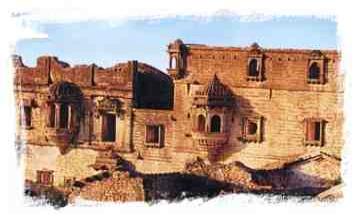
The period of Chawda (Chawra) (Chavdas)
The end
of "Pratihar" rule was the beginning for Chawda dynasty. Their capital
"Ahilyapatak"(Ahilyavaad" was established under new name as
"New Pattan" (presently Patan). Before that during "Maitrak"
period, "Chaap" dynasty (another name of chawda) ruled over "Gurjardesh".
Even in "Vadhvan" "Diu" & "Dwarka" there
were few rulers of same dynasty. They were also known as "Chapotkat"
or "Chawda".
In
addition to this there was Chawda rule in Saurashtra and Kachchh. Thus rulers of
Chawda dynasty played an important role in the history of Gujarat, during "Maitrak"
and post "Maitrak" era.
Gujarat
attained its prosperity in political as well as cultural field in the long
period from 942 A.D - 1300 A.D, during the reign of Solanki rule, who
established their kingdom at "Ahilyavaad", the land of Chawda.
The
description of Vanraj Chawda is found in the literature of Solanki dynasty. But
no description of ancestors of Vanraj Chawda is found in any ancient literature.
Although Jaishikhari, father of Vanraj has been described in Krishna Kavi's
Hindi composition "Ratnamala" written during 17th - 18th century.
It
is quite difficult to determine the exact beginning of Chawda rule in "Panchasar".
- Translated
by Mrs. Vaishali Nagoree
Jaishikhari
Quite
close to the present Randhanpur, was a town named "Panchasar"; ruled
by Jaishikhari. Once Shankar Barot from Panchasar went in the court of King
Bhuvad of Kalyani and sang verses of Jaishikhari's bravery and the prosperity of
his kingdom. Listening to the prosperity of Gujarat, King Bhuvad became greedy.
So under the leadership of his commander Mihir, he sent a big army to gain
victory over Jaishikhari.
On
learning the intention of Mihir, Jaishikhari sent his brother-in-law and his
brave commander, Surpal to fight against him. Mihir couldn't withhold the strong
opposition of Surpal. So he ran away. Annoyed with this King Bhuvad, along with
a very big army attacked Panchasar. For 52 days he encircled the fort of
Panchasar. Neither food nor any supplies or material could enter the fort.
Everybody became frustrated as food supplies were almost over. There was no
other alternative but to face the risk of war.
At this
time the king asked Surpal to take his queen Rupsundari into the jungle and the
leader of Bhil community vowed to take proper care of the queen. While in the
fort Jaishikhari did "Kesariya"(to make one last and desperate effort
in the battle, so called because men on such occasion take large doses of opium
and sprinkle saffron water on their bodies.) The doors of the fort were opened
and soldiers from the fort ran out shouting the slogan of "Har Har Mahadev"
to attack the enemy. Though Jaishikhari fought very bravely, but in front of
Bhuvad's big army, he died in the end. And Panchasar went in the hands of Bhuvad.
VanRaj Chawda
While on
the other hand queen Rupsundari gave birth to a son and named him Vanraj. Loyal
to their king, the bhil community gave utmost respect and took great care of
their queen mother Rupsundari. One day, while passing through the jungle, Jain
sadhu Shilgunsuri saw Vanraj sleeping in the cradle. On seeing the lines of
conduct on the child's face, Jati uttered his future: "This child will
become a great king in future and will be the savior of Jain religion".
When
Vanraj grew up, his maternal uncle Surpal taught him the art of archery, sword
and horse riding. After hearing the stories from his mother and uncle, and with
the guidance of Surpal, Vanraj decided to take back his father's kingdom. Thus
he became "Bharvatiyu", an avenger (one who withdraws himself outside
the limits of the state with a view to harass and molest it by frequent raids
and compel it to come to the terms with them). He started attacking regions
under the reign of King Bhuvad, robbed them and started collecting wealth. And
where possible he added brave men in his team to form an army. In that course
they came across an "Ahil", who was well acquainted with all the
jungle paths, valleys and caves. One day they were waiting silently for some
prey, suddenly they saw a merchant coming towards them with an earthen jug
filled with ghee. He had a bow an arrow in his other hand.
Vanraj
Challenged him "Stay where you are, Vania (a caste in gujarati famous for
trading). If you move you will die."
"I'm
right here. But if you want to die come forward". After saying this Champo
broke two out of 5 arrows from his arrow case and put one of his arrow on the
bow.
Seeing
this all three became surprised.
"Wait,
we also know the art of archery. But why did you break your two arrows?"
asked Surpal.
"Since
you are three, three arrows are enough for Me." replied Champo
"Oh!
Great, you look brave. What's your name?" asked Vanraj
"Champo"
came the reply.
"Champo,
let's stop this argument and hand over whatever you have. You alone cannot fight
with three of us", said Anhil.
"Well
so what you are three. Because of increase in no. Of dacoits in this foreign
land, I'm not afraid of any fight", replied Champo.
"Foreign
rule? So you mean there weren't any robbery or theft in previous rulers
kingdom?" asked Surpal.
"Previous
rule" trusting them Champo said "O, Brother gone are those days when
after hearing aloud the challenge to fight from King Jaishikhari and Surpal
dacoits used to loose their courage."
"Then
listen, I'm Surpal standing in front of you and he is Vanraj - the only heir of
King Jaishikhari. Would you like to join hands with us? Will you help us in
attaining back Vanraj's kingdom?" Champo was astonished with this statement
from Surpal.
"Oh!
The crown of Panchasar" the weapons fell from his hands and he embraced
Vanraj.
In this
way Vanraj got a brave and rich companion/colleague. After that Vanraj and
Surpal made proper plans, collected big army and obtained back the kingdom after
defeating Bhuvad in the battle.
Vanraj
made Patan his capital.
In appreciation for his friend he named it "Anhilppur Patan". Moreover
he also established another city by name "Champaner" to appreciate the
help of another companion in the valley of Pavagadh, near Vadodara.
Pachasara,
Parshvanath's Jain temple was built on the desire of Acharya Shilgunsurini, who
uttered bright future for Vanraj and helped him. With the request from all the
subjects, a statue of Vanraj was erected, which is seen even today.
Vanraj
lived 110 years and ruled for 60 years.
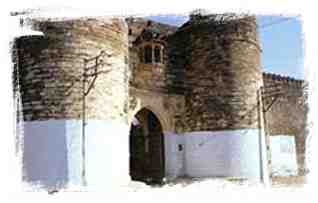
YogRaj Chawda
After
Vanraj, his son Yograj succeeded on the throne of Patan. Yograj was a real
ascetic/devotee, belived in justice, religion and simplicity. But his sons were
a total contradiction. They hold the conduct of robbery. The concept that Vanraj
followed the path of theft and robbery to obtain back his father's kingdom
played an important role in corrupting their mind. With their religious
activities and good conduct Vanraj as well as Yogiraj had ignored it. But his
son made all these efforts go in drain and were trying to prove this impression
true.
Once at
the port of Prabhas Patan few ships got entrapped. Having got this information,
Yogiraj's son Shemraj became greedy: I'll have so much of wealth, if entire
stuff comes in my hands. Shemraj went to Yogiraj and explained "We'll
obtain 1000 horses, 150 elephants and countless wealth without paying any price.
If you give permission, I'll go and rob those ships." Yogiraj said,
"My son, we've to remove the basic impression of Chawda from people's mind.
We are king. We should protect our subjects and not exploit them.
Shemraj
left without listening to his father. He attacked the ships with his team and
robbed horses, elephants and all the wealth. Yogiraj, a saint man couldn't
tolerate this in his life. He sacrificed food and water and entered in the
burning pyre and was burned to death. To penance the sinful action of his son,
he sacrificed his own life
End of Solanki era
Kumarpal Solanki died
without an heir. His brother's son Ajaypal succeeded the throne. Ajaypal
strongly hated Jain religion. Hence he started harassing Jain sadhus. This made
him unpopular among his subjects and was murdered. After that Mulraj came to the
throne. Since Mulraj was young, Paternal Uncle (kaka) Bhimdev ran the
administration on behalf of the king
Bhimdev was very restless
and innocent. With such a nature he spend so much of money that state's treasure
was almost over. Moreover because of his innocence the administration became
weak. All the "samant"(feudatory chief) under him became free and
started acting according to their will.
Bhimdev was very brave. At
that time Shahbuddin Ghori ruled Delhi. Once he attacked Gujarat and Bhimdev
bravely defeated him and sent him back to Delhi.
After a while, his nephew
Mulraj - the real king of Patan, died. Hence now Bhimdev became the king.
Mohammed Ghori didn't
forget the defeat of Gujarat. He sends Qutubuddin, one of his disciples to
attack Gujarat. During his life Bhimdev often fought with Muslims. He was brave
but he didn't have the political insight. And because of that he couldn't live
peacefully in his whole life.
Two years after the death
of Bhimdev, Vishaldev, a son of one of his samanth, defeated his son
Tribhuvanpal. And ruled the throne.
In this way Solanki era
started by Mulraj with the death of Samanthsingh - the last ruler of Chawda
dynasty, came to an end.
Ahamadabad.org
|
King
Karandev – 1, the Solanki Ruler, had waged a war against the Bhil king
of Ashapall or Ashaval. After his victory Karandev established the city
called "Karnavati". This Hindu kingdom of Karnavati retained
its importance till early 15th century when Gujarat fell to the Muslim
Sultanate. This was when Sultan Ahmad Shah conquered Karnavati in 1411
A.D.
|
If
legends are to be believed Sultan Ahmed Shah was astonished to see
that the rabbits on the river bank, instead of running away in
terror confronted his hounds in defiance. Believing the land to be
sanctified he laid the foundation of Ahmedabad-"The city of
Ahmed" at 1.20PM on Thursday the second day of jilkad A.H.
(26th Jan 1411 A.D.)
|
|
|
The city
enjoyed the position of royal capital for a period of about 162 years,
1411-1573 A.D. till the independent Sultanate of Gujarat came to an end
in reign of Murzaffar-III.
|
As
regards the location of the three towns of Ashaval,Karnavati and
Ahmedabad ,Ferguson comments:
|
|
|
Modern
investigation has not yet proceeded sufficiently far to enable it to be
stated with certainty how far Karnavati was contiguous to or identical
with Ashawal and Shreenaggur,both of which names occur in early records
as those of a great city hereabouts,but there can be no doubt that the
new town of Ahmed Shah, to which he gave the name Ahmedabad, and its
suburbs, embraced them all.
|
|
Ahmedabad
was built in an open and spacious plain in the immediate vicinity of
Ashaval to the east of Sabarmati. It then comprised a smaller now known
as the Bhadra Fort or the citadel of Bhadra. Other structures were added
to its from time to time. The city was enclosed by a fortwall six miles
in the circumference containing 12 gates, 189 bastions and over 6000
battlements in 1487 by Mohammed Begdo, the grandson of Ahmedshah, to
protect it from outside invaders. It was planned according to the
ancient Indo-Aryan tradition of a royal capital with main roads,
thoroughfares and subsidiary roads.
|
|
Under
the fostering care of the sultans of Gujarat , the city of Ahmedabad
went on expanding in every direction by the addition of new localities
and suburbs,on both the sides of river, and gradually rose into a well
built city, with well-laid-out residential in marketing areas and
beautified by palaces,mansions, mausoleums and mosques of
reservoirs(lakes) and gardens erected by the noblemen of the
sultans and wealthy merchants of the capital.
|
|
Conditions
of the province were chaotic in the time of Sultan Muzaffar III. Akbar,
the great Moghul emperor, started out the Gujarat expedition and
conquered it in 1573.Though Ahmedabad lost its importance as the capital
of Gujarat during Moghul reign, it retained its importance as one of the
thriving centres of trade in the country and chief city of Gujarat. The
author of "Haft-Iqlim" (1593) refers to its fame as a grand
and flourishing center of commerce and industry in the following words:
|
|
Ahmedabad
is unique in the whole of India in matter of neatness and flourishing
condition, and it is superior to other city in the excellence of its
monuments. It would be no exaggeration to say that in the whole world
there exists no town so grand and beautiful. Its streets are spacious
and well arranged, unlike those in other towns, its shops with two or
three stories each are finely built, and its inhabitants both men and
women are graceful and delicate.
|
|
The
moghul rulers that followed Aurangzeb were weak and the moghul
viceroys(Subas) were busy fighting amongst themselves and with the
Marathas. This resulted in disorder in the country, and from 1737 to
1753, there was a joint rule of Mughal Viceroy and the Peshwa over
Ahmedabad. In 1753 the combined armies of Raghunath Rao and Damaji
Gaeakwad took the citadel and brought an end of Mughal rule at Ahmedabad.
|
|
During
the Maratha regime, Ahmedabad was for all intents and purposes divided
into two halves , one into the hand of Peshwa and the other into the
hands of Gaekwad,the jurisdiction exercised by the Peshwa being
greater.The condition of Ahmedabad, during the 64-year-long Maratha rule
went from bad to worse owing to the constant struggle between the Peshwa
and the Gaekwad and the retrograde and oppressive policy pursued during
this period. During this period of decline and insecurity that
characterized 64 years of Maratha rule, suburbs were deserted, places
and mansions were in ruinous state, roads in hopeless state of
disrepair, and the fortwall that enclosed the city had fallen off at
many places. The area outside Panchkuwa and Delhi gates was reduced to
wilderness visited by wild animals like tiger which was hunted in the
third decade of the 19th century in the mosque at mirzapur.
|
|
It was
in 1818 when the British took over the administration of Ahmedabad,that
the birthing period appeared.The British rule brought the benefits of
peaceful and orderly administration. Ahmedabad gradually started coming
into its own. The population of the city which has gone down
to 80,000 in 1817,gradually went on growing from on decade to another.
Cantonment was established in 1824. A Municipal Committee was
formed in 1834 and regular Municipal administration introduced in 1858.
The railway link between Ahmedabad and Bombay was established during the
year 1864. Thus, in view of such welfare activities and amenities
provided in the public interest, the spirit of Ahmedabad,which was lying
dormant in the preceding century, was now awakened and expressed itself
in all walks of life. After a lapse of another century, destiny chose
Ahmedabad to play an outstanding role in the country's struggle for
freedom under the leadership of Mahatma Gandhi who stated in the city of
his return from South Africa in 1915 and established his famous Ashram
on the banks of Sabarmati.
|
|
Today Ahmedabad
is a unique city, even for India, for it blends harmoniously an ancient
heritage with a vibrant present. A model city in terms of its ideals and
aspirations, what is remarkable about Ahmedabad is its harmony between
art and industry, between a reverence to the past and a vision for the
future.
|
Sourashtra.com
Reference to Sourashtrians in the ancient epics and puranas
of India are legion. The history of the early 56 countries tells us how
Sourashtrians have made themselves a glorious community. The "Sourashtrians
Raga" has a unique place among the "Mangala Ragas" of Carnatic
Music. The names of Sourashtram and Somanathapuram find a distinct place in the
history text books of schools, especially in the political maps of the regions
of Ashoka, Kanishka, Gupta Harsha, Gajini Mohammed etc.
If one looks into recent history, one finds nearly 46 towns in South India
alone, where 4,50,000 people speak Sourashtram as their mother tongue. Madurai,
Paramakudi, Thanjavur, Kumbakonam, Tiruchi and Salem are the most notable towns.
The social customs and the dress patterns of this community vary from place to
place. Generally speaking, these people adapt in Weaving cotton and Silk
fabrics.
Quite a large number of Sourashtrians have gone down in the history of Indian
Independence owing to their patriotic fervour. One great instance is that of
Rastrabandhu Sri L.K. Thulasiram who bravely defeated the British Government's
ban of Bharatiar's Songs and sang them aloud in the the Assembly. These people
are also remarkable for their religious fervour. The installation of the "Navagrahas"
(Nine Planets) in the Meenakshi Amman Temple and the formation of the "Rajagopuram"
(Supreme Tower) at the Koodal Azhagar Perumal Temple are the works of this
community.
At the time of Independence there were about 280 small "Samasthanams"
and "Jamins" ruling themselves as independent regions. When our
leaders conceived the idea of Indian Union, all these regions were placed
together to form Sourashtram, which meant "the affluent state".
("Sou" means wealth or goodness). This is the present-day Gujarat
State. Originally the Gujarathis and the Marathis belonged to the same state,
but when linguistic bifurcation occurred in 1960, Gujarat and Maharashtra became
separate states. The state of Gujarat, then known as Sourashtram and Kathiavar,
is quite renowned for its world famous temple of Somanathar on the seashore.
History makes it clear that from this ancestral home that the forefathers of
Sourashtrians migrated to different parts of the country. Especially Tamil Nadu,
probably, as Sir Athul Chatterji remarks, in Search of a region conductive to
silk-fabric weaving. Since then, these people who have settled in Tamil Nadu for
generations, never left for the home of their origin.
Their contact with Gujarat is barely a verbal one during betrothals, when the
parents-in-law of both families, represented by their eldest members,
narrate the history of their origin through a question-answer system called
"Bahulwas". They would describe themselves as having started on a
pilgrimage from Sourashtra and migrated to Madhirapuri. Apart from this
reference, there is hardly any contact between Gujarat and Sourashtrians
who have migrated from there. Neither marital nor trade relations prevail. At
present, Sourashtrians live their lives in Tamil Nadu. The influence of Tamil on
their language and lives have been increasing since they settled in that state.
As they do not learn their mother-tongue at school, children of this community
use only Tamil words to express their thoughts. The accomplishments and virtues
of Sourashtrians have been glorified in ancient history, as the Motocross
culverts bear evidence. They are adored not only as excellent silk-weaving
artisans but also as magnificent warriors. They lived decent and dignified lives
and established close contacts with royal families. They never compromise for
self-respect, independence and truthfulness. Being keen on doing social good,
they often invest their hard-earned money in temples and arrange their
management through Sabhas (Communal Assemblies). In recent times, apart from
their name as "Pattunoolkaarar" (Silk-weaving class), quite a large
number of these people have earned a name for their immense aptitudes for
learning and research. However, they are highly religious. They are not a daring
and adventurous lot as of yore.
Sourashtrians came under the influence of the Telugu-speaking Andhras also when
they moved to Andhrapradesh. The language and culture of Sourashtrians underwent
a great change as Sourashtrian women increasingly imbibed the traditions and
cultural accomplishments of Andhras. Even to-day, one may see the impact of
Andhra culture on many Sourashtrian families in Tamil Nadu. (In the later part
of 13th Century, most of the Sourashtras were evacuated from Vijayanagar and
they settled in Tamil Nadu). One of the distinct features of Sourashtra is their
traditional recognition of family names. Whatever caste they may belong to, they
are always known by their family names such as Kuttuva, Gujuluva, and Posanna.
Following the South-Indian custom, they place their family names before their
own. (Eg-Thoguluva Rajalakshmi).
History tells us how Sourashtra provided a significant base for commercial
interaction and religious integration. The ancient Greeks and Romans are said to
have held strong trade relations with Sourashtrians who rolled in wealth and
luxury. Yuvan T-Suang the famous Chinese Pilgrim, marvels at their
affluence as follows: "scores of export and import goods lie piled up in
Vala Town; hundreds of millionaires can be seen reveling in the joy of
prosperity. And all religions here go hand in hand in perfect harmony". The
truth of Yuan T Suang's observations is borne out by the fact that
Sourashtram, which had been rooted in Saivism, gave room for Vaishnavam, another
significant sect of Hindu religious tradition, to flourish. Puranas say
that Krishna, the Lord of the Vaishnavites moved from Madhura to
Sourashtra to rescue the Yadhavas from the atrocities of Jarasandhan, and the
whole of his later life was spent in Sourashtram. The fusion of Saivism and
Vaishnavam is exemplified by the episode in which the Lord Krishna worshipped
Somanathar, the presiding deity of Sourashtram.
For centuries - South, especially TamilNadu and Andhra, enormously influenced
Sourashtrians linguistically and culturally, but these people have successfully
kept their own identity in both aspects. Their
custom of putting family names before their maiden names has already
been mentioned. Several family groups of this Community owing to their orthodox
bring up and their capacity for dispensing justice, have been held in high
esteem as the "governing class". "Govindan" and "Nattamai",
two instances of such governing families, had and still have the habit of
smearing the white holy ash on their foreheads and arms, which is a symbol of
Saivite orthodoxy. Saunin is another family group that was regarded with great
respect by other members of the community. Yet another group traditionally
respected was "Bhavthuls" (Singers of the Lord's praise), who
were steeped in devotion to God and showed the other folks the way to lead a
good life.
Apart from their distinctions in the society, family names were classified in
accordance with the places they occupied (Gujili, Vontivillu, Sagalavan), the
names of ancestors (Royallu, Ramana, Seshdasu, Regupathy), Professions (Setti,
Javuli, Banalnu, Govla meaning merchants, textile-dealers, cracker-manufacturers
and shepherds respectively), and also nicknames based on their (bad) habits: (Kulithbhathun
- baked horsegram, Velepeisun filteredd rice-water, Dheimpanin-buttermilk,
Dhovrakholan - aged fox, Buskaan-waste thread).
The
origin is certain, and research has proved the current day Sourashtra spoken by
us is a modern form of pre-Gujarati spoken thousands of years ago.. Their home
language (Sourashtra language) is still a modern form of the old Saurashtri or
Pre-Gujarati as it was over a thousand years ago, which was the language they
brought with them through Maharashtra and Andhra Desa to Tamil nadu. This
language preserves, naturally enough many archaic features in Gujarati and at
the same time shows influence of the sister Aryan languages of Konkani and
Marathi and of Dravidian Telugu besides of course Tamil which has now virtually
become the second mother tongue of the Sourashtrians...."says Suneetkumar
Chatterjee a famous linguist.
But
the time period when they migrated from Saurashtra region to South is still
uncertain.
Theory # 1 :
The first theory is that, during the times when the infamous Ghazani Mohammed
invaded Norther India from Afghanistan, a few families might have migrated South
to escape from the series of invasions.
Theory #2 :
Another assumption is a few families that
came with entourage of Shatrapathi Shivaji when he invaded South, might have
stayed back to form their own community.
Theory # 3 :
This is the most popular and widely accepted theory by historians. During the
Vijayanagaram Empire rule in Northern India, the Nayakars ruled the South as
part of the empire with Madurai as their capital. During that period a few
families from the Saurashtra region were called into Madurai to be the
"Royal Weavers" for the Nayakars. This would explain very high
concentration of Sourashtrians still today around the Thirumalai Nayakar Mahal,
the Nayakar's place. Since Sourashtrians are Silk Weavers by profession it would
also disprove the theory that they came with Shivaji.
Later
Sourashtrians settled in Madurai, spread around to Trichy, Salem, Kumbakonam and
other surrounding areas as the population grew, but still managed to keep their
unique language, and culture intact. Current day, Sourashtrians, refer
themselves as Tamilians as their identities and still speak Sourashtra at home.
An estimated half a million Sourashtrians are living now mostly in Tamilnadu and
a few are spread around all over the world. These days Sourashtrians are working
in different fields and living in countries like U.A.E., Oman, Saudi Arabia,
Bahrain, Qatar, Kuwait, Singapore, Malaysia, Indonesia, UK, Japan, Australia and
the United States of America. I'll be in India, visiting Madurai from 1st Aug
until 19th Aug'99. Would you let me know your office address and telephone
number where you are contactable. It'll be my pleasure to meet you around this
time, if you happen to be in Madurai, as well.
