| Go Goa |
|
|
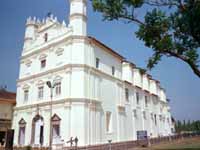
| Goa a vibrant, living entity. But more than being a geographical sunspot on the western coast of India, GOA is ATMOSPHERE. Referred to as "the Rome of the Orient" in days gone by, GOA's recorded history dates back to the 3rd century B.C. A former Portuguese colony. Goa is a delightfully picturesque tropical paradise, with secluded golden beaches, gleaming white-washed houses and amiable, easy-going people. Goa has a charming blend of Indo-European architecture and cultural influences. The rich heritage of Goa is manifest in the brilliant expressions of Goan traditional folk arts, dance, music, drama, literature, colorful pageants, feasts and festivals, majestic temples, churches and mosques. GOA is quietly SEDUCTIVE... A serene countryside amidst sylvan surroundings. With lush green valleys and silver streams. Nature forever in her element. The ideal holiday destination for an entertaining and tranquilizing vacation at unbelievably LOW PRICES. Goa is also famous for its exotic variety of seafood, International, vegetarian and non-vegetarian cuisine. Goa has it all, sun, sand and sea. An unique blend of Latin and Oriental, incredibly rich in monuments and historical sites, dazzling variety of exotic flora and fauna, lush green hinterland, rivers that offer water adventure sports that will thrill you beyond expectation. Know more about Goa Capital : Panaji Language : Konkani, Marathi, English, Hindi Area : 3,800 sq km Tourist season : October to March Climate : Coastal Population : 1.3 million Religion : 70% Hindus, 30% Christians Coast : 97 km Attractions Panaji Most visitors treat Panaji as little more than a transport hub, but this lovely state capital has retained its Portuguese heritage in a lived-in, knockabout kind of way and exudes an aura more reminiscent of the Mediterranean than of India. If it weren't for the crush at the bus depot, the unmistakable buzz of auto-rickshaws and the fact that the bridge over the Mandovi River has fallen down twice in the last nine years, Panaji could seem like any siesta-ridden provincial town on the Iberian Peninsula. It contains all the quaint Mediterranean iconography - from the cramped cobbled streets, pastel-hued terraces and flower-bedecked balconies to the terracotta-tiled roofs, whitewashed churches and those small bars and cafes that are the social lifeblood of secular Portugal. The old district of Fontainhas is the most atmospheric area to walk around, and includes the Chapel of St Sebastian which contains a striking crucifix that originally stood in the Palace of the Inquisition in Old Goa. The Church of the Immaculate Conception, consecrated in 1541, is Panaji's main place of worship, and it was here that recently arrived sailors from Portugal gave thanks for a safe passage. It's worth taking one of the river cruises along the Mandovi River, but try to persuade your captain not to loiter under the bridge spans in order to admire Indian engineering. Old Goa Half a dozen imposing churches and cathedrals and a fragment of a gateway are all that remain of the second capital of the Adil Shahi dynasty of Bijapur and the Portuguese capital that was once said to rival Lisbon in magnificence. Wracked by cholera and malaria epidemics, eroded by monsoon rains and choked by creepers, Old Goa has declined from a vibrant city of over a hundred thousand souls to little more than a handful of potent architectural relics. Old Goa is still the spiritual heart of Christian Goa, and its most famous building is the Basilica of Bom Jesus, which contains the tomb and mortal remains of the peripatetic St Francis Xavier, credited with introducing Christianity to much of South-East Asia. Also of interest is the Convent & Church of St Francis of Assisi, which has gilded and carved woodwork, murals depicting scenes from the saint's life, and a floor substantially made of carved gravestones. The largest of the churches is the Portuguese-Gothic Se Cathedral, dating from 1562, which houses the so-called 'Golden Bell', whose resonant peal can be heard thrice daily. Other gems include the Church of St Cajetan which was modelled on St Peter's in Rome and the Royal Chapel of St Anthony. Not a single secular building remains standing, so don't say God doesn't work in mysterious ways. Anjuna The collection of people attracted to the beach settlement of Anjuna in North Goa may seem eclectic at first glance, but there are common (if loose) organic and spiritual threads woven between the hippies, artists, mild crazies and supposed ex-materialists who congregate here. Chapora & Vagator This is a fascinating part of the Goan coastline and more genuinely salubrious than Anjuna. It boasts a patchwork of coconut palms and the enigmatic character of Chapora village, which is more unruly farmyard than a fishing community doubling as a beach resort. Calangute & Baga Calangute was the it beach for hippies, where pujas, ganja, drug-addled musicians and other lost artistic souls predominated, a beach of the truly half-baked that modern Leonardo di Caprioan versions couldn't hold a psychedelic candle to. But alas for those who still seek the 'revolution', or the occasional naked group frolic, Calangute is no longer Hippy Central. |
 |
| Photos |
 |
 |
 |
 |
 |
 |
 |
 |
 |
|
 |
 |
 |
 |
| International Packages |
| Goa Packages for 3 nights , 4 nights with All meals and sight seeing please click here |
| Goa Packages for 3 nights , 4 nights with All meals and sight seeing please click here |